Table of Contents (click to expand)
Yes, FaceApp is generative AI. It uses Generative Adversarial Networks (GANs), a type of neural network, to learn what realistic faces look like across categories such as age or gender. It then transfers those learned features onto the photo you upload, producing the look of the filter you picked.
If you’ve been online lately, you have probably come across the viral challenge of aging your face 60 years into the future. Everyone from celebrities to your weird aunt seem to have hopped on this trend, which comes courtesy of FaceApp.
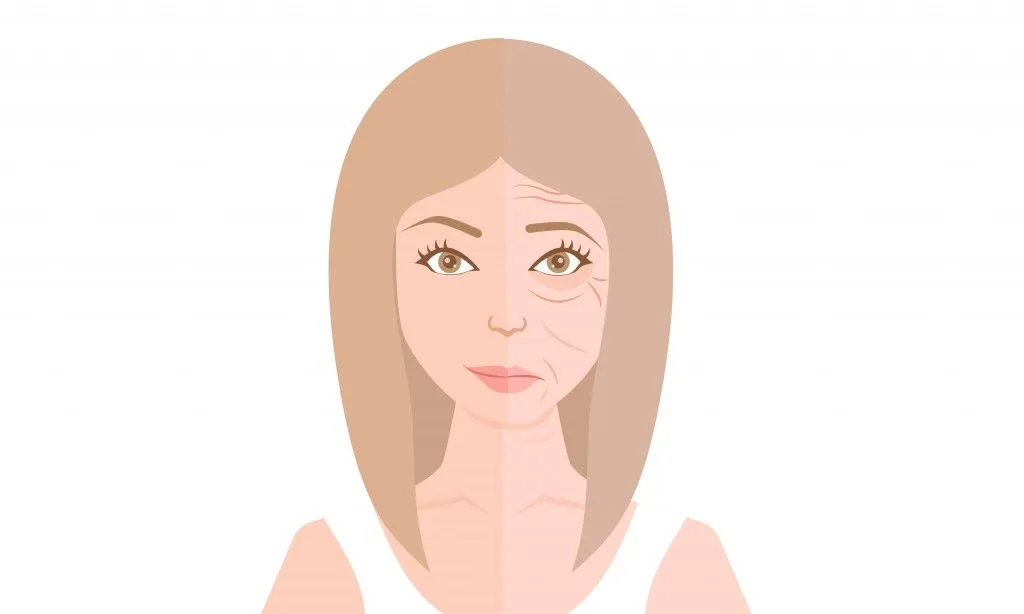
FaceApp is an image-manipulation application that enables users to post their selfies and retouch them in photorealistic alterations. One of the most famous uses of the app is to age your face into your 60’s and 70’s, essentially predicting how you’ll look later in life. It also enables gender-swapping, to see how you would look if your gender was reversed, in addition to enabling users to add features on your selfies, such as different beards or hairstyles.
The features have garnered a lot of mainstream attention and rightfully so, as the results are very realistic and occasionally unnerving. How do they manage to achieve such highly precise, on-the-spot image manipulation? Let’s find out!
Background
FaceApp was created by Yaroslav Goncharov, a former Yandex and Microsoft engineer, through the Russian studio Wireless Lab, and was first released on iOS in January 2017. The app mainly focuses on selfies or photos with faces, transforming them to make the image smile, look older, look younger, envision additional features (hairstyles, beard) or change the gender. The product is now operated by FaceApp Technology Limited, a company based in Cyprus.
FaceApp went viral in 2017, as people began posting challenges to transform their selfies with the app’s features. The image results of the app are very convincing (and entertaining), which helped it spread like wildfire on Facebook and Instagram. During that 2019 surge the app reached the top of the iOS App Store charts in over 100 countries, and it has since been downloaded close to 500 million times across iOS and Android.
The app uses neural networks to quickly manipulate the images. The results are truly something to behold, as it is very difficult to discern an altered image from reality. The app gives some glimpse into the prowess of artificial intelligence in image and video manipulation, employing tested methods to garner app growth.
How Does It Work?
FaceApp uses machine learning to manipulate the images you feed it. These photos come from your library or are snapped within the app. The app provides various manipulation features in both its free and paid versions. Once transformed and saved, you can then post the images to the platform of your choosing, such as Facebook, Instagram or WhatsApp.
FaceApp uses a very specific type of machine learning technique called a neural network. These networks are modeled on the neuronal processes of the human brain and can be trained to recognize and manipulate specific tasks. The training data goes through multiple layers (much like the brain), from which it extracts the specific features that make up that set of data.
To enable the program to recognize faces and add modifications that produce the desired effect, FaceApp uses a class of neural networks called Generative Adversarial Networks (GANs). This is exactly the kind of generative AI you have probably heard about elsewhere: a model that does not just classify images but generates brand-new ones.
Generative Adversarial Networks (GAN)
GANs operate two neural networks pitted against each other to create a realistic image. One of the networks is called a generator and its job is to take noise vectors (a list of random numbers) and generate an image. These random numbers ensure variation in the generated image so that it produces a different image every time.
The second network is called a discriminator and its job is to critique the images created by the generator. The discriminator critiques the images on the basis of the real-world data it is fed. It will continually reject the images and provide feedback on the parts that are flawed. Given enough time and computation power, the generator will eventually pass all the criteria of the discriminator and create a realistic image.
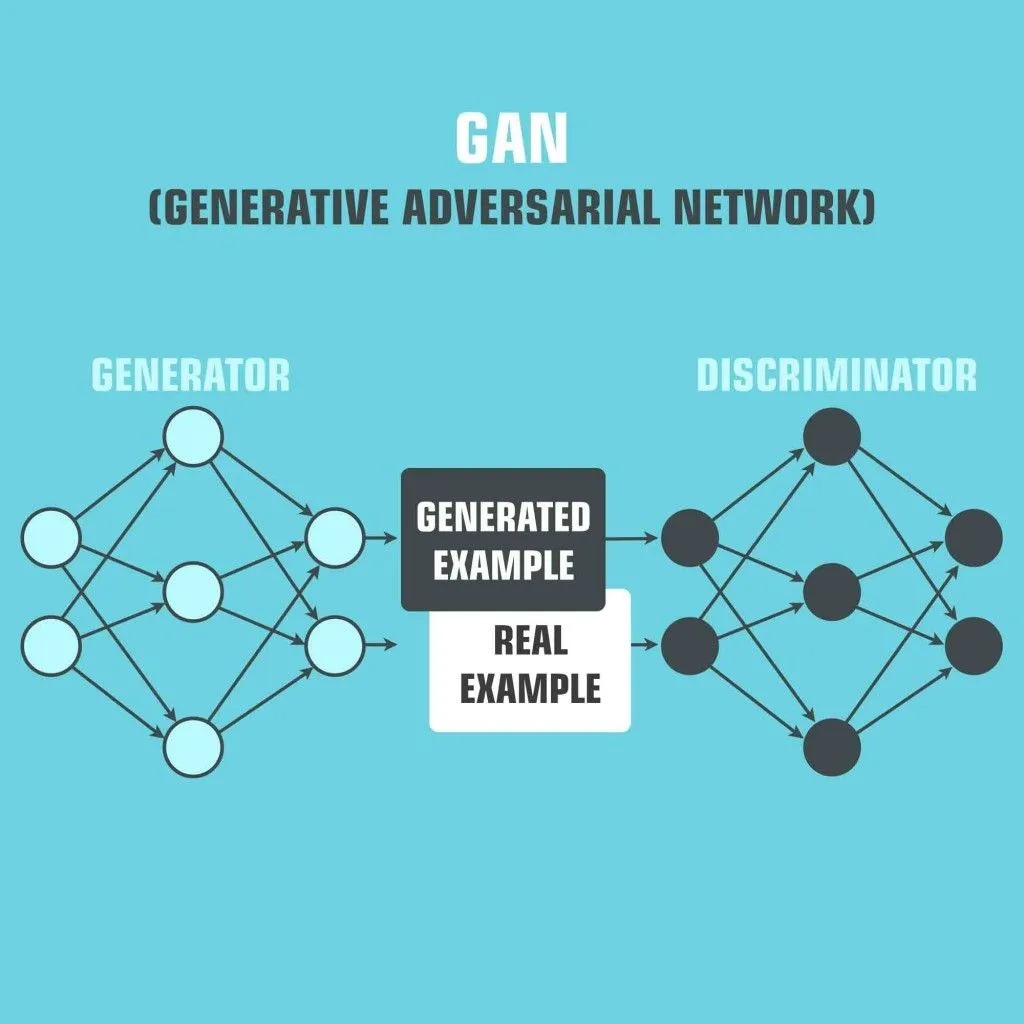
To create images with specific features, the GAN goes a step further and a condition is added. For example, to get the network to generate photos of elderly faces, it is fed training data labeled by age, which helps the GAN know the characteristics.
The generator then generates photos of various ages and the discriminator critiques them on the basis of the training data. The condition is changed for another feature (creating young faces) and the procedure is repeated. Thus, when you take a selfie and select the option to make your face look older, the app transfers the trained feature to the image from its huge training library, while maintaining the primary aspects of the person, but giving them ‘oldness’.
Does FaceApp Really Predict How You’ll Look When You’re Older?
The aging filter is the reason most people downloaded FaceApp in the first place, so it is worth asking a slightly awkward question: is that wrinkled, silver-haired version of you an actual prediction, or just a convincing guess? The honest answer is a bit of both.

Because a GAN learns from millions of labeled photographs, the aging filter applies the average patterns of how faces tend to change over time rather than a personalized forecast built from your own biology. It has simply seen enough old faces to reliably guess what usually happens to a young one, using the same family of technology that powers deepfakes.
Those average patterns turn out to be surprisingly close to real biology. David Hartman, a facial plastic surgeon in Dover, Ohio, told NewBeauty that the app “does a reasonably accurate job at morphing facial photos to predict where a face is heading.” The changes it adds (usually the equivalent of 35 to 55 extra years) mirror what genuinely happens to an aging face: the skeleton loses volume as the cheekbones, brows and jawbone slowly resorb, the soft-tissue padding in the cheeks and lips thins out, and wrinkles deepen across the forehead, mouth and throat.
What the filter cannot do is know how you, specifically, will age, because it quietly assumes a fairly static life. Hartman notes that genetics is only part of the story, and that lifestyle factors like diet, exercise, sun exposure and skin care play just as critical a role. A lifelong sunbather and a devoted sunscreen user could feed FaceApp the same selfie today and get near-identical ‘old’ photos, even though their real faces will diverge dramatically over the following decades. So enjoy the aging filter as an entertaining, science-flavored estimate, not a mirror into your seventies.
What Else Can FaceApp Do?
Aging and gender-swapping grab the headlines, but FaceApp is really a whole toolbox of face filters. In the current app they are sorted into folders, and running through them is the quickest way to see what the software is actually for.
- Age and Gender push a face younger or older, or try on a more masculine or feminine version of you. These are the viral favorites.
- Smiles adjust your expression, adding or widening a grin so a stiff photo looks more relaxed.
- Hairstyles and Hair Colors swap in long or short cuts and shades from blonde to silver, while Beards run from light stubble to a full beard.
- Makeup applies anything from a barely-there look to bold editorial styling, and Glasses drop different frames onto your face.
- Skin and Impression smooth texture, soften shadows and subtly ‘freshen’ a face, while Sizes tweak facial proportions such as jawline or width.
FaceApp reaches beyond the face too, letting you change the background of a shot or drop in lens and lighting effects. Every one of these filters runs on the same generative-AI engine described above: the app has learned what a beard, a smile or a decade of aging looks like across countless faces, and then paints that learned feature onto yours.
Controversy
Although the app showcases great image manipulation capabilities, it has been frequently surrounded by controversy. In 2017, the app was scrutinized for a ‘hot’ filter that appeared to lighten users’ skin tones. FaceApp briefly renamed it ‘spark’ and then pulled it, with founder Yaroslav Goncharov blaming bias in the training data and apologizing. Later that year the app added ethnicity filters that turned faces ‘Black’, ‘Indian’, ‘Asian’ or ‘Caucasian’; critics slammed them as racist, and they too were removed.
As the app went viral again in 2019, privacy worries took center stage. Because FaceApp is a Russian-founded company, users questioned what happened to the photos they uploaded, and US Senator Chuck Schumer asked the FBI and the Federal Trade Commission to investigate. In a November 2019 letter, the FBI said it considers any mobile app developed in Russia to be a potential counterintelligence concern, given the data such apps collect and the access Russian law can grant the government. FaceApp responded that it processes photos on Amazon Web Services and Google Cloud rather than transferring them to Russia, that most uploaded images are deleted from its servers within 48 hours, and that users can request deletion of their data.
None of this slowed the app down. FaceApp has kept its huge user base, adding features and refining its filters to stay relevant in a crowded field of photo-editing apps. It clearly touched a curious nerve, and the same generative AI that powers its aging filter now sits at the heart of a much larger wave of image-generation tools.
References (click to expand)
- Up‐Sampling Artifact & GAN Pipeline Emulator. Columbia University
- Deepfake Video Detection Using Recurrent Neural Networks - engineering.purdue.edu
- We can't get enough of FaceApp. But should we be giving .... Northeastern University
- Viral App FaceApp Now Owns Access To More Than 150 Million People's Faces And Name | UCLA IT Services - www.it.ucla.edu
- Does the Face App Accurately Depict How We Will Age? Doctors Weigh In - NewBeauty
- Face Aging by Explainable Conditional Adversarial Autoencoders - Journal of Imaging (PMC)
- Meet Your Face Filters - FaceApp