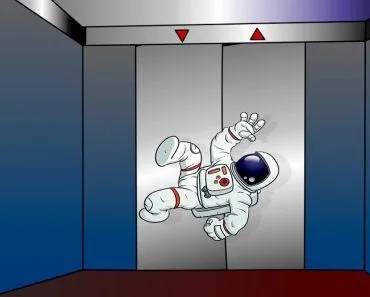
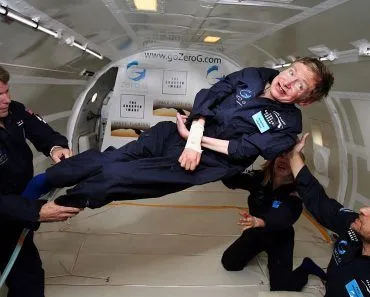
Earth’s gravity never truly reaches zero. By the inverse-square law it only weakens with distance, so there is no altitude where it switches off, not even for floating astronauts. Earth’s pull dominates space out to its Hill sphere, roughly 1.5 million km (930,000 mi); beyond that, the Sun takes over.
Amongst nature’s umpteen wonders, the Cosmos has monopolized the production of joy rattles that have lifted us to rare moments of ecstatic clapping. The sky was an inexhaustible source of wonderment for the ancients peering out from their caves, contemplating their place in the glinting stars. Or, for Galileo pointing his telescope towards the darkness, a raging testament of hope. Or, a teenager watching Star Trek for the very first time.
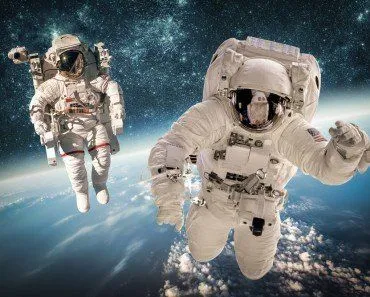
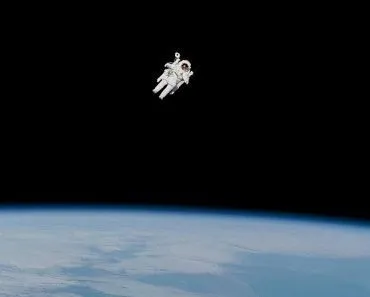
In my case, my neurons crackled with fascination when I first encountered the rings of Saturn on the cover of an old astronomy book for children (their indelible impression led me to get a tattoo on my hand). The second moment that stuck with me is the image of astronauts swimming through thin air. This was an entirely novel experience that I was missing out on, an experience somewhat reminiscent of flying.
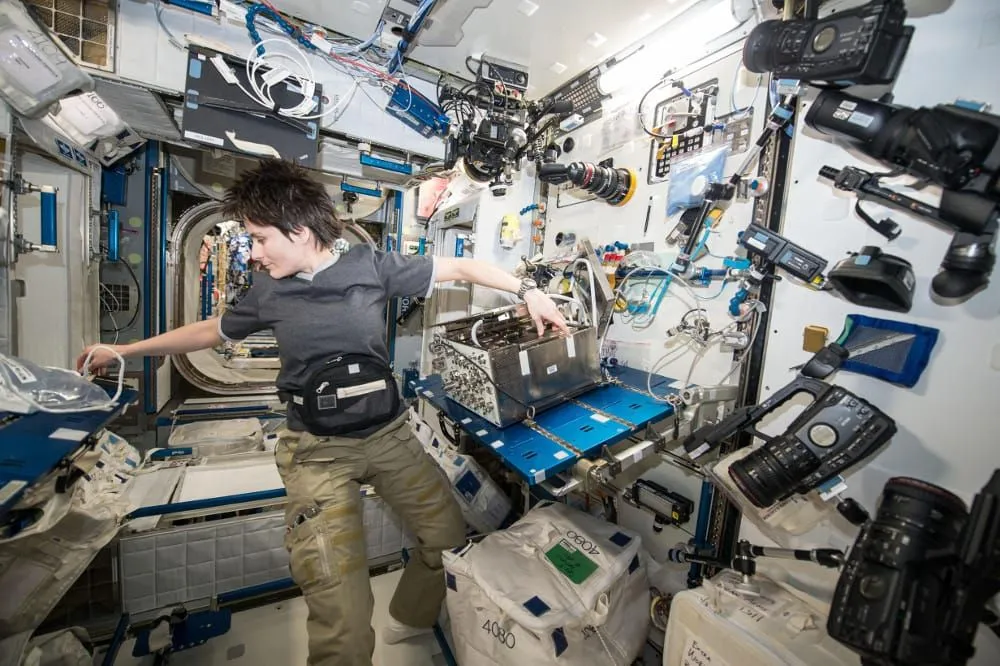
However, like every child of that age and ken, and possibly a few adults, my conception of what made them float was based on a false assumption that Earth’s pull of gravity, at some soaring altitude in space, becomes ineffective. Thus, in a state of Zero-G, the astronauts aren’t chained down by any force and can float wherever they like.
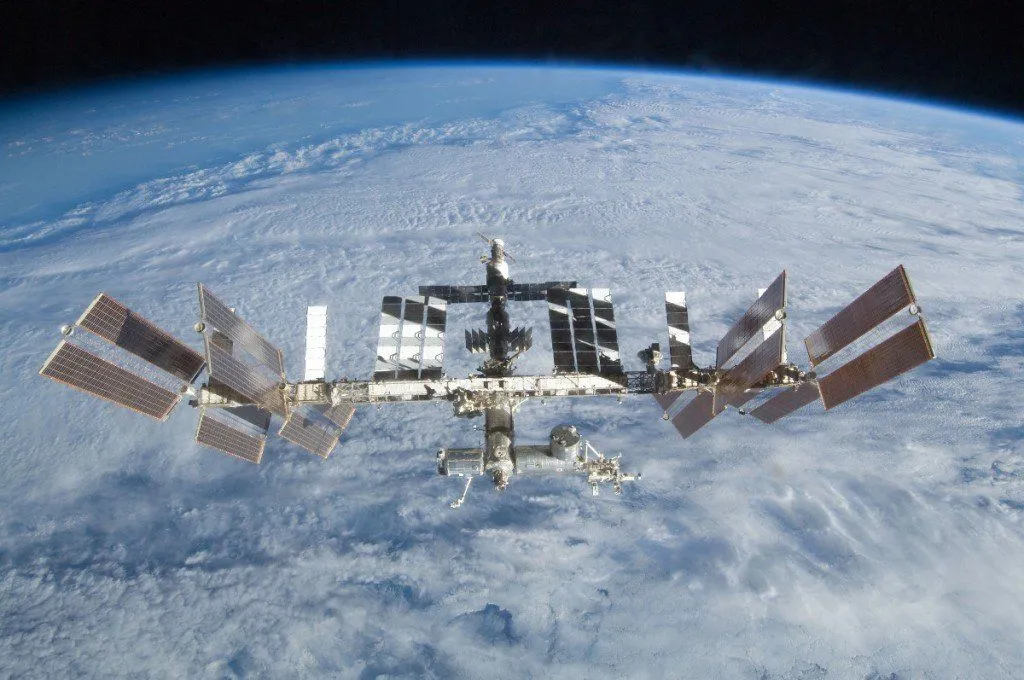
This is far from the truth. The ISS is only about 400 km (250 mi) above Earth’s surface, as compared to the moon, which resides some 384,000 km (239,000 mi) far away. If the astronauts float because they’re free from Earth’s pull, how is then the same pull driving the moon to revolve around us?
The Orbit
The problem of why the moon orbits us plagued Newton for years. His inquiry constituted two questions: why doesn’t the moon crash into the Earth and why, if Galileo postulated that objects travel in a direction unimpeded until acted upon by an external force, does the moon travel in a circle and not a straight line? An ingenious thought experiment led him to his answer.
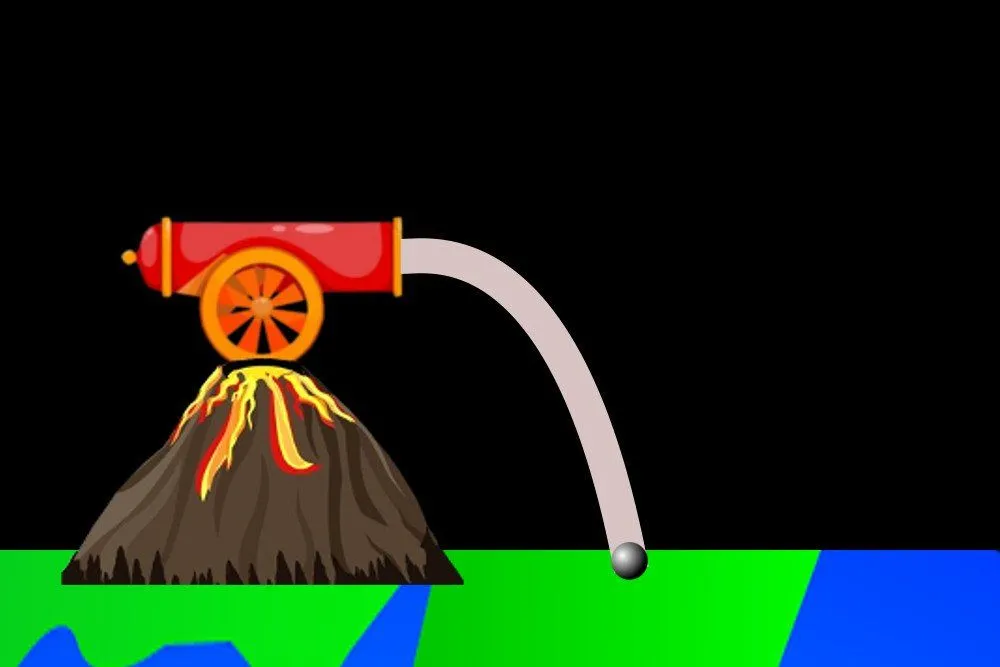
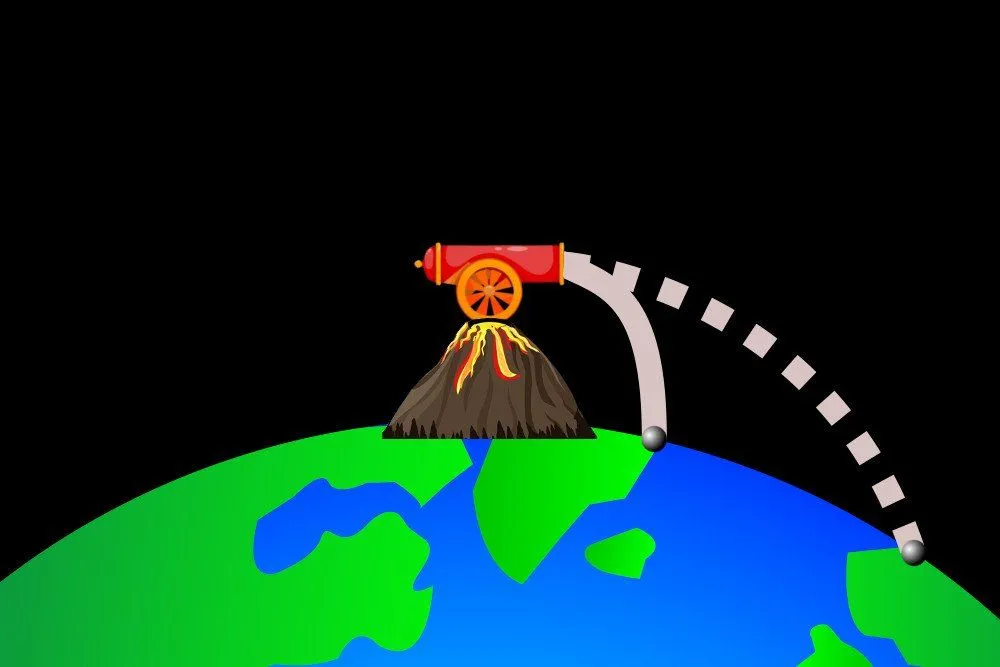
Newton imagined a tall tower mounted on the surface of Earth shooting a cannonball at different velocities. When the cannonball is shot at a very low velocity, it travels along the straight surface of Earth and falls not far from the tower, tracing the trajectory of a parabola. However, when the cannonball is shot at a higher velocity, it travels straight along Earth’s horizontal surface, as well as slightly above the curved surface.
As the velocity progressively increases, the cannonball travels greater horizontal and vertical distances. Newton realized that there must be a magic velocity at which the cannonball falls at the same rate as the Earth curves! Its inertia would perfectly cancel the pull of gravity, such that the resultant force transmutes into a centripetal force. The force of gravity then emulates the tension in a string attached to a stone swinging in circles around you.
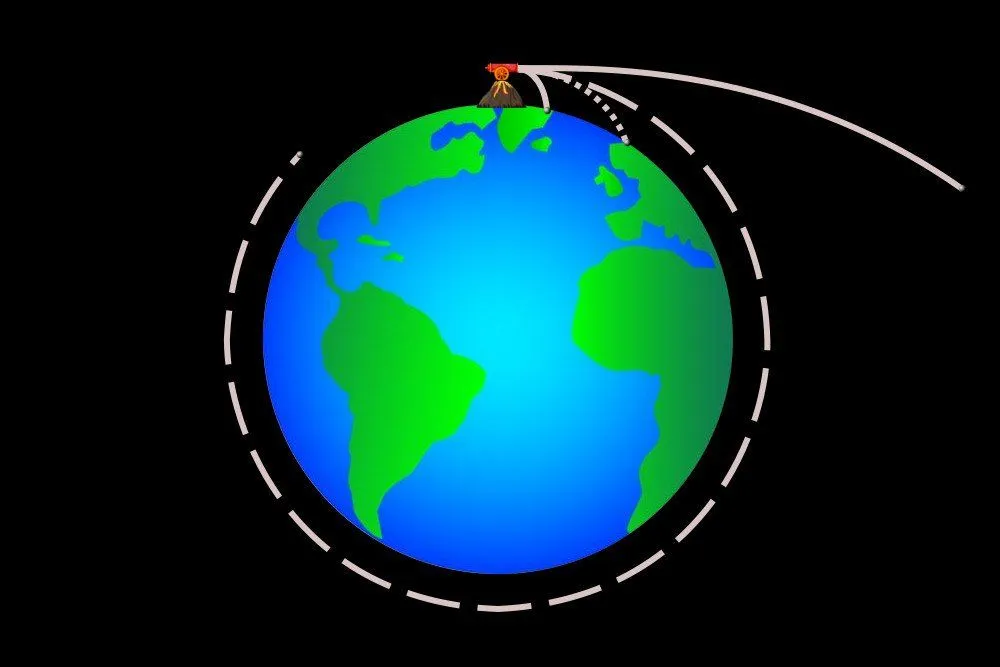
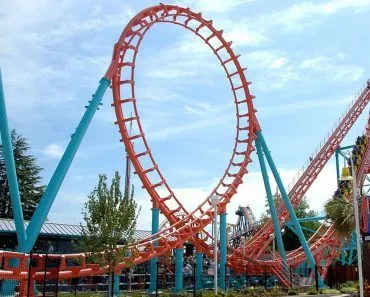
At a certain speed, the projectile falls completely around the Earth, meaning that it is in perpetual fall. Similarly, the astronauts, the ISS, and the moon are perpetually falling towards the Earth. However, the ISS and astronauts fall at the same rate, which is why they feel weightless, like falling in a lift through a 20-story building or floating at the crest of a roller coaster. So, the ISS hasn’t escaped Earth’s pull at all. In fact, it is subject to about 90% of the gravity that we are subject to on the surface.
Infinity And Beyond
While the moon takes a month to saunter around us, the ISS only takes 90 minutes. Between these two lie orbits where, at a certain velocity, satellites achieve a lap time of 24 hours, such that they can dedicatedly surveil a single area beneath them. The point is, between the moon and the Earth, there is no point where Earth’s gravity is ineffective, but what about any point beyond the moon?
Well, still no. Gravity can grow tragically weak, but not truly ineffective. It follows an inverse square law, according to which its strength diminishes with the square of the source’s distance. Crucially, that square sits in the denominator, so the pull shrinks toward zero but never actually arrives there; there is no magic altitude where Earth’s gravity simply switches off. Even though larger distances might render the force puny, its effects are still measurable. Consider LIGO’s achievement of recording the aftermath of a catastrophic collision of black holes that sent extremely tiny gravitational waves blistering at the speed of light towards us.
The pull has a domino effect. For example, let’s say that the pull on an object relaxing at some remote point in space is 0.001% of what it is at Earth’s surface. This pull will lure the object, albeit very gradually, towards Earth, such that a slight acceleration will bring the object closer towards it. Now that the distance is decreased, the pull gradually strengthens. It pulls the object more starkly until it progressively heads towards Earth, and finally, crashes into it.
So, even though a tennis ball hurled at escape velocity allows it to dart straight upwards and never come back, there isn’t any real escape from Earth’s field of gravity. The reality is slightly more complicated than that, as our explanation did not account for gravity imposed by other celestial bodies, primarily the Sun.

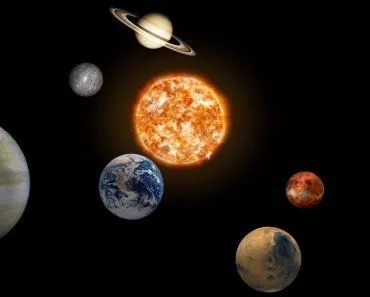
Objects hurled outside Earth are readily influenced by the Sun’s gravity because its mass amounts to 99.86% of the entire Solar System’s mass. So how far does Earth’s pull actually win out? Astronomers answer this with the Hill sphere, the bubble of space in which a body’s gravity dominates over its neighbors. Earth’s Hill sphere extends to roughly 1.5 million km (930,000 mi), comfortably enclosing the moon at 384,000 km (239,000 mi). Venture beyond that boundary and the Sun, not Earth, becomes the boss; this is why Earth and the moon together revolve around the Sun.
However, if one assumes that the Sun and every other celestial body has no say whatsoever, then the reach of Earth’s gravity is practically infinite, pulling on each and every atom that is quivering in even the most remote corners of the Universe.
How Far Does Earth’s Gravity Reach, And How Fast Does It Fade?
Since gravity never truly switches off, the more useful question is how quickly it thins out as you climb. The inverse-square law hands us a tidy recipe: the pull at a height h equals the surface pull multiplied by (R/(R + h))2, where R is Earth’s radius of about 6,371 km (3,959 mi). Feed in a few famous altitudes and the numbers turn wonderfully unintuitive.

The ISS, skimming along at roughly 400 km (250 mi), still sits inside about 88–90% of surface gravity, which is exactly why its crew weigh almost as much as you do rather than being switched off by altitude. Climb to the GPS satellites at around 20,200 km (12,550 mi) and the pull has crumbled to roughly 6% of what you feel on the ground. The geostationary belt at 35,786 km (22,236 mi), where television and weather satellites appear to hover over a single spot, feels only about 2% of surface gravity. Out at the Moon’s average distance of 384,400 km (238,855 mi), Earth’s tug has dwindled to a whisper near 0.03% of surface strength, and yet that whisper is still firmly enough to keep our companion looping around us.
So there is no “edge” in kilometers where gravity politely ends. What does have an edge is the point where Earth’s pull stops winning: its Hill sphere at roughly 1.5 million km (930,000 mi), beyond which the Sun becomes the boss.
Will Earth Ever Lose Its Gravity?
Every few years a breathless rumor insists that gravity is about to take a holiday. The latest claims that on 12 August 2026, at a suspiciously precise 14:33 UTC, Earth will suffer a “seven-second gravitational anomaly” that flings unsecured objects skyward, supposedly hushed up by a fictional NASA program called “Project Anchor.” It is pure invention. The post first surfaced on Instagram in late December 2025, and the account vanished within days; fact-checkers turned up no such project and no scientific model predicting anything of the sort.

NASA’s rebuttal is refreshingly blunt: “The Earth will not lose gravity on Aug. 12, 2026. Earth’s gravity, or total gravitational force, is determined by its mass.” The only way to weaken our planet’s pull is to spirit away a chunk of that mass, and nothing on the calendar does that. The single genuine event that day is an everyday total solar eclipse, which, as NASA points out, “has no unusual impact on Earth’s gravity.”
The hoax has deep roots. Back in 1976, astronomer Patrick Moore told radio listeners that a passing alignment of Jupiter and Pluto, the “Jovian-Plutonian Gravitational Effect,” would briefly lighten anyone who jumped at the right moment. It was an April Fools’ joke, yet callers swore they felt themselves float. The physics has never cooperated: add up every planet in the Solar System and their combined pull on your body is less than 2% of the Moon’s, and their tidal effect a piddling 0.005% of it. A car parked half a kilometer down the street tugs on you harder than Pluto ever could.
How Long Would The ISS Take To Coast To The Moon?
A favorite back-of-the-envelope puzzle asks: if the ISS somehow unhooked from its orbit and shot off in a dead-straight line toward the Moon at its usual speed, how long would the trip take? The station barrels along at about 27,600 km/h (17,150 mph), or roughly 7.7 km every second, fast enough to lap the planet once every 92 minutes. The Moon sits an average of 384,400 km (238,855 mi) away. Divide one figure by the other and you land on a little under 14 hours, about the length of a long-haul overnight flight.
It is a fun number, but reality would never let it play out. The instant the ISS “let go,” Earth’s gravity would not politely step aside; it would immediately bend the station’s path into a curve. And 7.7 km/s falls well short of the roughly 11 km/s escape velocity needed to break free of Earth, so rather than cruising to the Moon the station would simply swing back around in a long, looping orbit. The 14-hour answer is really a thought experiment about speed, the very same orbital speed that keeps the ISS perpetually falling around us instead of drifting away.
References (click to expand)
- Are astronauts really weightless? - Phys.org. Phys.org
- Newton's Cannonball and the Speed of Orbiting Objects. Bucknell University
- Is There Gravity in Space?. Space.com
- How close do you have to come to the Earth to be influenced by its gravity? (Advanced) - Curious About Astronomy? Ask an Astronomer - curious.astro.cornell.edu
- Word of the Week: Hill Sphere. OSIRIS-REx Mission (NASA)
- 13.2 Gravitation Near Earth's Surface. University Physics Volume 1, OpenStax / Lumen Learning
- NASA Debunked The Conspiracy Theory That Earth Will Lose Gravity In August. BGR
- No, a Planetary Alignment Won't Decrease Gravity. Bad Astronomy, SYFY Wire
- How fast does the Space Station travel? Cool Cosmos, Caltech/IPAC
- How Far Away Is the Moon? NASA Space Place