Table of Contents (click to expand)
Space travel affects the human body mainly through radiation and microgravity. In microgravity, weight-bearing bones lose roughly 1–1.5% of their density each month and muscles waste, fluids shift toward the head (blurring vision), and the immune system weakens. Studies on astronauts also reveal cardiovascular changes, altered cellular aging and slower cognitive performance.
The human body has evolved over time and adapted itself to be suitable for life on Earth. Our bodies are designed to endure the gravitational pull of the planet, utilize gases available in Earth’s atmosphere for respiration, and ingest and metabolize compounds available on Earth.
However, as civilization advanced, humans have leaped ahead of other life on Earth, even to travel in space and to other planets and stars. Unfortunately, this also brings with it an unprecedented challenge of adapting to unfamiliar conditions of space travel for which our bodies are not designed.
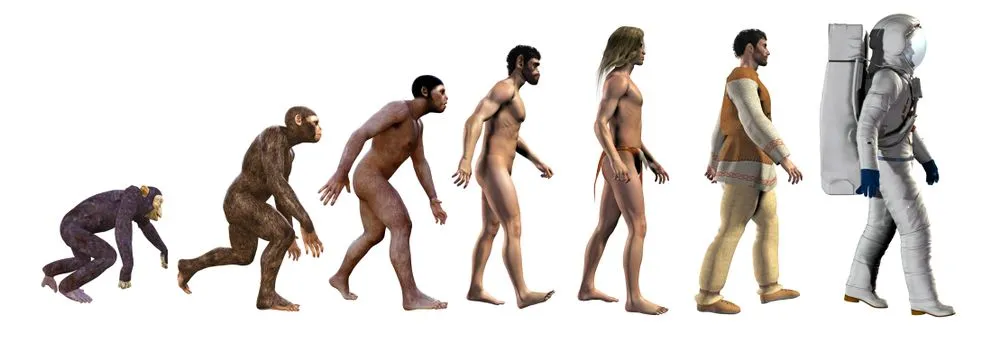
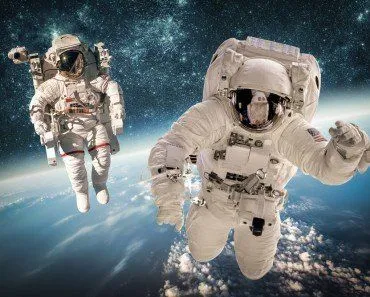
While many movies glamorize space travel, the negative effects of it are seldom talked about or widely known. What are the conditions in space that negatively impact the human body? And how do these conditions alter the human body after space travel?
Hazards In Space Travel
Studies on individuals who have undergone space travel or simulations have revealed several insights on the effects of space travel on the human body. The major hazards encountered by humans during space travel are radiation exposure and extreme gravitational conditions, such as micro/hyper-gravity.
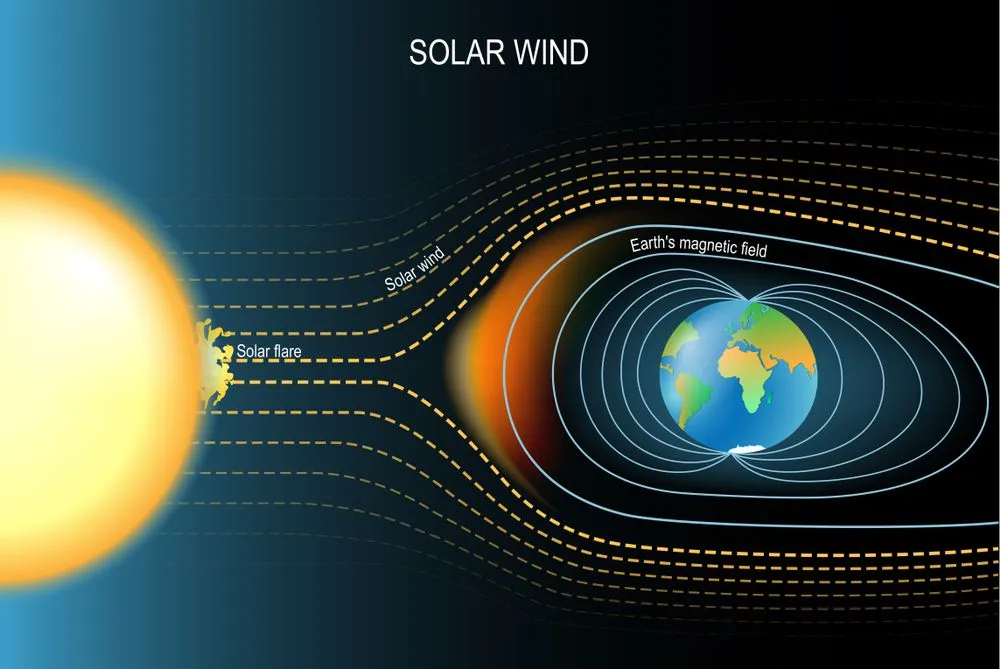
Much of the radiation in space comes as galactic cosmic rays, fast-moving charged particles (mostly protons, but also helium and heavier high-energy nuclei) that are far more penetrating than the X-rays or gamma rays familiar to us on Earth. On Earth, we are shielded from this radiation by the planet’s atmosphere and magnetic field, but during space travel, where this shield is largely absent, we are far more exposed to it.
These ionizing radiations cause irreparable damage to the DNA in our cells, macromolecules in the cells, and even ionize water molecules present in the body, causing oxidative stress.
The second major factor affecting our bodies in space travel is the extreme gravitational conditions. The human body is used to the gravitational field on Earth (1g).
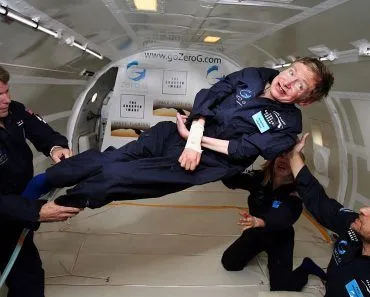
However, during space travel, the body is exposed to gravitational fields that are significantly smaller, referred to as microgravity when within the spacecraft, and zero gravity in outer space; there is also an extremely high gravitational condition called hyper-gravity (> 1g) during re-entry into the atmosphere.
These variations have several adverse physiological effects on the muscles, bones, lungs, kidneys, cardiovascular system, and senses, including vision and balance. Microgravity specifically alters kidney output, blood pressure and lung capacity, and is also known to increase the incidence of arrhythmia within the heart.
Implications After Returning To Earth
The adverse conditions during space travel often leave a lasting impact on the body, even after a person returns to Earth. Due to the prolonged absence of Earth’s gravitational force, to which our bodies are accustomed, bodily fluids are seen to shift in a head-ward fashion, and there is an adverse effect on bone and muscles.
The effect on the skeleton is striking. Without the constant load of gravity, weight-bearing bones such as the hip and spine lose roughly 1 to 1.5% of their mineral density every month, so a six-month stay can strip away a chunk of bone that would otherwise take decades to lose on Earth. Muscles, especially the postural muscles that no longer have to fight gravity, atrophy and weaken within weeks. This is why astronauts on the International Space Station exercise for around two hours a day to slow the decline.
The head-ward fluid shift has consequences of its own. With blood and other fluids pooling in the upper body, many astronauts develop Spaceflight-Associated Neuro-ocular Syndrome (SANS), in which the back of the eye flattens and the optic nerve swells, leaving some with lasting changes to their vision. Up to about 70% of astronauts on long-duration missions show some of these eye changes.
These changes in gravitational forces can lead to lasting changes in a person’s cardiovascular and musculoskeletal systems. As a result, there are reports of increased incidence of fainting and reduced exercise capacity in the post-flight period. The fainting, known as orthostatic intolerance, happens because blood volume drops in space and the heart and blood vessels decondition, so the body struggles to keep blood pressure up when a returning astronaut first stands under Earth’s gravity again.
Studies of rats taken on space missions have shown that chronic low-level radiation exposure during space travel adversely affects the reproductive system due to increased chromosomal damage and the formation of defective gametes.
Furthermore, simulation studies on animals show evidence for the disruption of proper spermatogenesis and testosterone synthesis in males, as well as premature depletion of ovarian reserve and ovarian failure in females (Source).
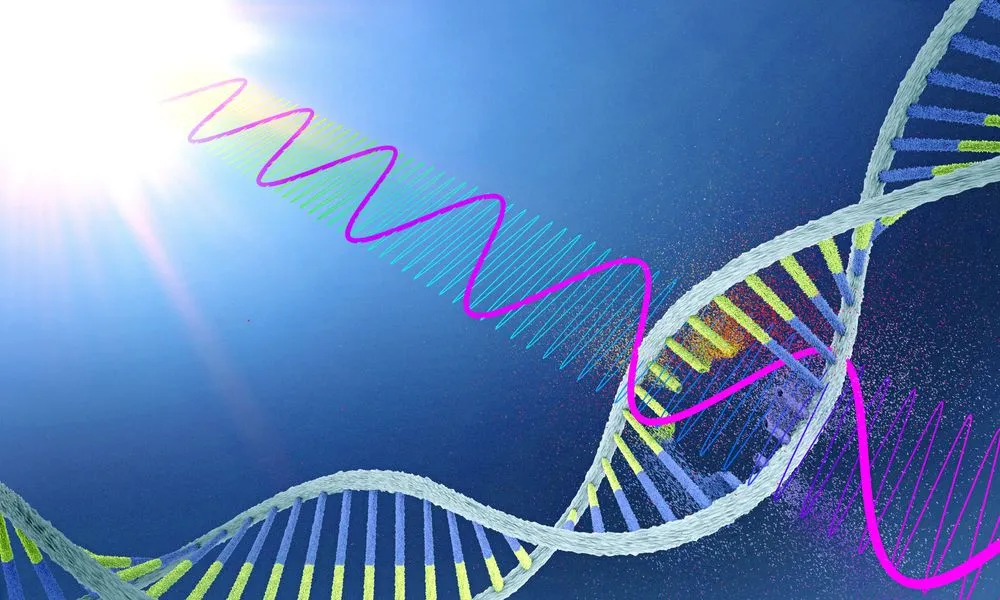
We now know that space travel has serious implications on the reproductive ability of both male and female astronauts post-flight, and increases the probability of genetic impairments in the children born to them.
Additionally, a longitudinal study on astronauts on the Mars 500 mission revealed that long-duration space travel significantly altered aging processes in the human body. Interestingly, the findings showed a transient ‘decrease’ in levels of five different aging markers in the cells measured through a 520-day period of simulation in the crew members. Thus, space travel was seen to transiently ‘decrease’ biological aging!
Insights From The NASA Twins Study
Many studies on the effect of space travel performed on astronauts were not well controlled for in regards to genetics. This meant that it was not clear whether the observed findings were a result of the astronaut’s inherent genetics or a pure effect of space travel.
The only way to separate these two effects was by sending a monozygotic twin into space, while the other twin remained on Earth, and then comparing them upon return of the space-bound twin to Earth. This was recently performed by NASA and the results were insightful, especially in understanding aging processes in the human body.
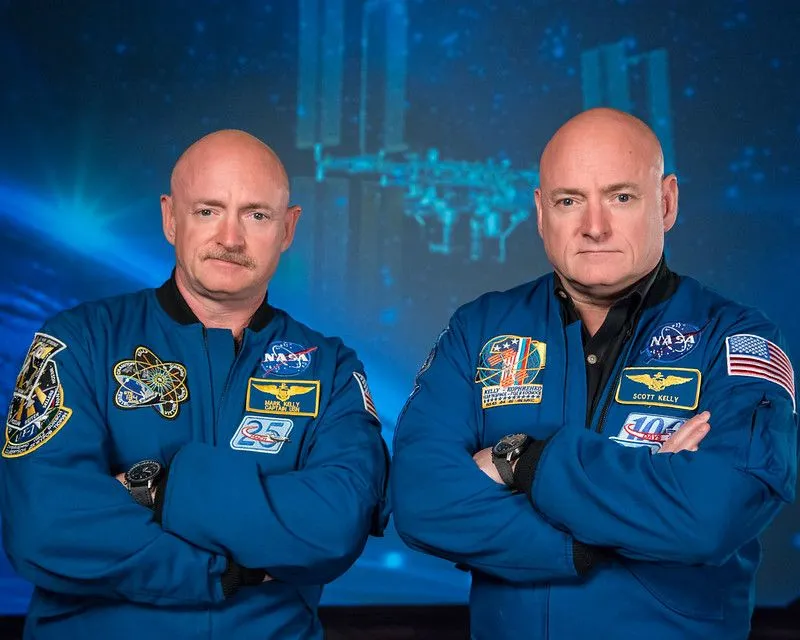
In this study, one twin (Scott Kelly) completed a 340-day space flight and was compared with his Earth-bound twin (Mark Kelly) over the course of 6 months on a large variety of physiological and biological measures. Among the most notable findings was the alteration of telomere length.
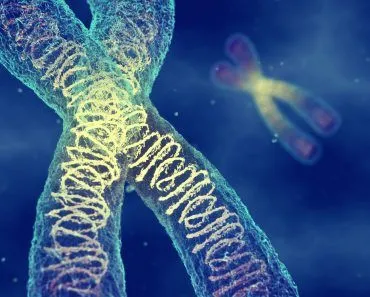
The telomere is a repetitive DNA sequence present at the end of a chromosome, which protects it from damage and degradation. It also serves as a marker of aging, since it shortens upon every round of cell division in our body.
The study found that the telomere length unexpectedly increased for the space-bound twin during space flight, but that it rapidly collapsed within days of his return to Earth, with many telomeres ending up shorter than before the mission. Space travel was also found to increase chromosomal aberrations and DNA damage, along with disrupting immune function. Other research backs this up: long-duration spaceflight reactivates dormant viruses such as the ones behind cold sores, shingles and Epstein-Barr, a telltale sign that the immune system is under strain in orbit.
Furthermore, a decline in cognitive function was observed in the space-bound twin, which persisted over a period of 6 months. This study has helped to fine-tune our understanding of how the human body is impacted by space travel and its unique stressors, while controlling for innate genetic effects.
Conclusions
Advances in science and technology have not only enabled space travel, but have also allowed us to understand how it impacts our bodies in both the long and short term. Exposure to radiation and micro/hyper-gravity are the main hazards to which humans are exposed during space travel.
Studies on astronauts and space-bound animals and simulations have revealed a wide variety of adverse physiological effects of space flight on the human body. The recent twin study by NASA has given a deeper understanding of these effects, by genetically matching the space-bound test subject with his Earth-bound twin.
The findings showed lasting effects of space travel on a variety of biological measures, including cognitive performance, immune function, and cellular aging. These findings help us understand the challenges faced by our bodies during space travel. In an age where we are looking at viable alternatives to our home planet, these findings warn us that the human body is best suited to life on Earth.
References (click to expand)
- Mishra, B., & Luderer, U. (2019, October 14). Reproductive hazards of space travel in women and men. Nature Reviews Endocrinology. Springer Science and Business Media LLC.
- Mishra, B., & Luderer, U. (2019, October 14). Reproductive hazards of space travel in women and men. Nature Reviews Endocrinology. Springer Science and Business Media LLC.
- (2003) The physical price of a ticket into space - PubMed. The United States National Library of Medicine
- Drago-Ferrante, R., et al. (2024). The effect of space travel on human reproductive health: a systematic review. npj Microgravity. Nature Portfolio.
- Mishra, B., & Luderer, U. (2019, October 14). Reproductive hazards of space travel in women and men. Nature Reviews Endocrinology. Springer Science and Business Media LLC.
- Nwanaji-Enwerem, J. C., Nwanaji-Enwerem, U., Van Der Laan, L., Galazka, J. M., Redeker, N. S., & Cardenas, A. (2020, December). A Longitudinal Epigenetic Aging and Leukocyte Analysis of Simulated Space Travel: The Mars-500 Mission. Cell Reports. Elsevier BV.
- Garrett-Bakelman, F. E., Darshi, M., Green, S. J., Gur, R. C., Lin, L., Macias, B. R., … Turek, F. W. (2019, April 12). The NASA Twins Study: A multidimensional analysis of a year-long human spaceflight. Science. American Association for the Advancement of Science (AAAS).
- Counteracting Bone and Muscle Loss in Microgravity. NASA.
- Risk of Spaceflight Associated Neuro-ocular Syndrome (SANS). NASA Human Research Program.
- Rooney, B. V., Crucian, B. E., Pierson, D. L., Laudenslager, M. L., & Mehta, S. K. (2019). Herpes Virus Reactivation in Astronauts During Spaceflight and Its Application on Earth. Frontiers in Microbiology.