Table of Contents (click to expand)
Ethylene glycol is mixed roughly 50/50 with the water in a car’s radiator to widen the coolant’s liquid range. The mix freezes near -37 °C (-34 °F) and, under a typical 15 psi radiator cap, boils near 129 °C (265 °F), so the engine neither freezes in winter nor boils over in summer. Modern formulations also include corrosion inhibitors that protect engine metals.
Many car owners just assume that if they are driving their cars in a hot region, they don’t need to add coolant or ‘antifreeze’ to their car radiators; they can get by simply adding pure water instead of the water-coolant mixture. Their reasoning is that they don’t need to add antifreeze, since their cars will never be driven in conditions below 0 °C (32 °F), the freezing temperature of water.
This thinking, while seemingly logical, doesn’t actually help. It certainly doesn’t help the car’s engine, at least.
It’s always recommended to add coolant to the car’s radiator, regardless of what conditions you drive your car in. But why is that? Let’s try and understand this a bit better…
Car Radiator
Radiators, in general, are actually heat exchangers. The term ‘heat exchanger’ is sort of self-explanatory, i.e., heat exchangers help to ‘exchange’ heat, or in more technical terms, transfer heat from one medium to another for the purpose of heating and cooling.
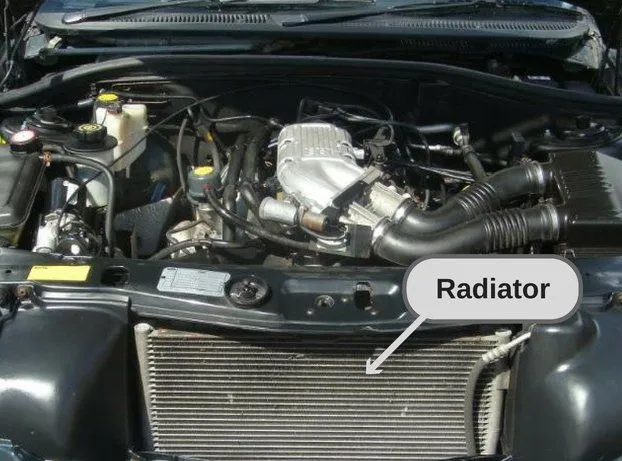
A car radiator does the same thing. It’s used for cooling internal combustion engines not only in motorcycles, cars and other automobiles, but also in railway locomotives, piston-engine aircraft and similar machinery.
It’s very important to ensure that the car engine becomes neither too cold nor too hot; if either of these things happen, it may seriously hamper the efficiency of the engine. That’s why it’s crucial to maintain an optimum temperature in and around the engine, so that it keeps exchanging heat energy with the surroundings and maintains a “healthy” temperature.

Internal combustion engines are usually cooled by passing a liquid around the engine block. This liquid is called the “engine coolant”. This is what we are going to discuss next.
Engine Coolant
Engine coolant, as the name suggests, is a liquid that helps to keep the engine cool. It is made to pass around the engine block, where it gets heated up. Subsequently, it passes through the radiator, where it loses heat to the surroundings. Cool once again, it returns to the engine block to “acquire” the engine’s heat and the cycle continues. This way, the coolant helps to keep the engine cool and help it perform efficiently.
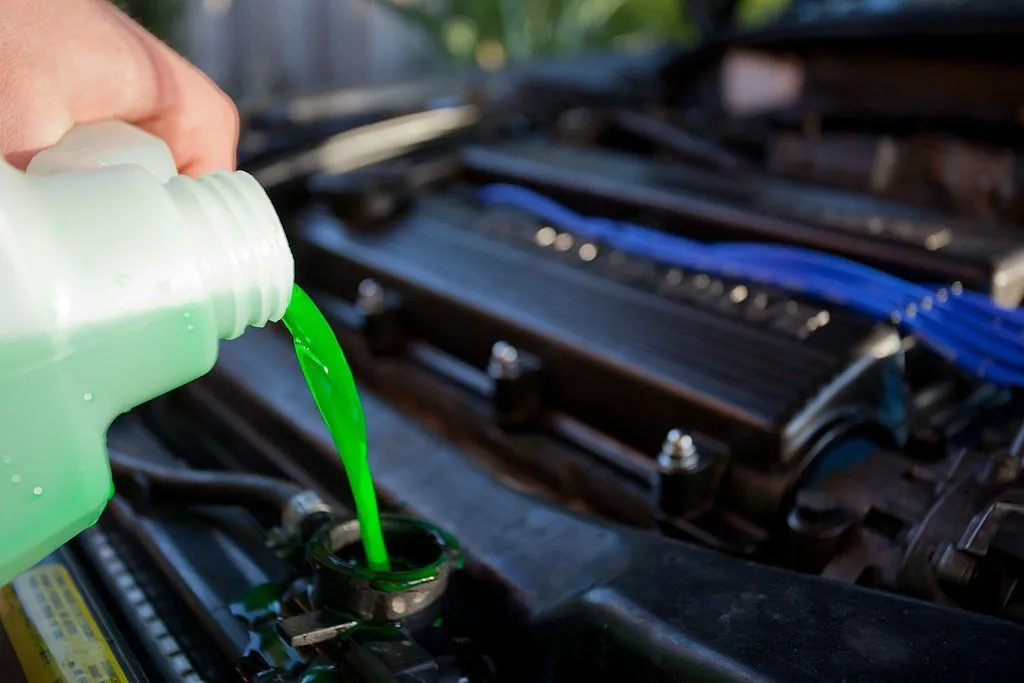
Whether you know it as a coolant or antifreeze, this thing is basically an additive that serves to broaden the range at which that water will freeze and boil.
Different Engine Coolants
In the early days of motoring, plain water was the standard engine coolant. Early antifreezes (often methanol or glycerol) were added only in winter, purely to keep the radiator from freezing, and were drained out again when the weather warmed up.
Ethylene glycol changed the game. It was first sold as an automotive antifreeze in 1926, and Prestone launched its non-flammable ethylene glycol antifreeze in 1927. Because ethylene glycol has both a lower freezing point and a much higher boiling point than water (pure ethylene glycol boils at about 197 °C, or 387 °F), drivers could now leave the same coolant in the radiator all year. That made it the first true "permanent antifreeze," and it became the standard during and after the Second World War.
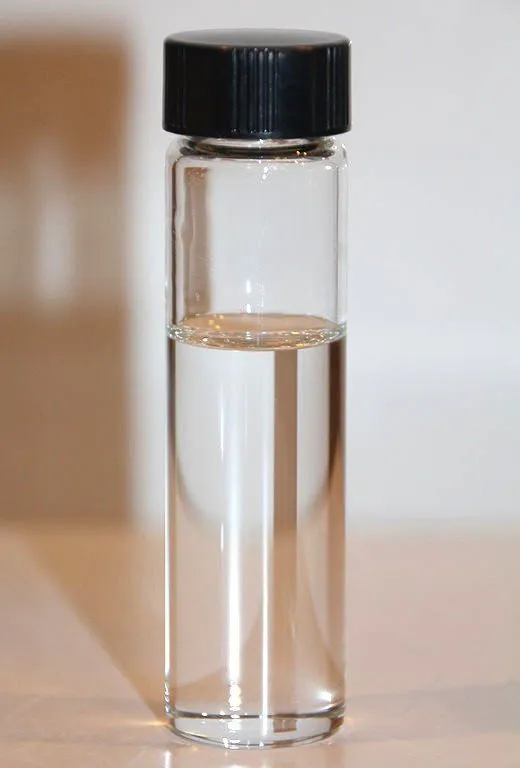
In the past, people often used plain water in summers and added antifreeze to it only during the winter. While plain water itself can act as a good coolant to your car engine, it’s not as good as a real antifreeze, such as ethylene glycol, for several reasons.
Firstly, as mentioned earlier, water freezes at 0 °C (32 °F). If you fill the radiator with only water, a cold winter night can turn it into ice, which expands and can crack the radiator or engine block. At the other extreme, water boils at 100 °C (212 °F), which is uncomfortably close to the temperatures a working engine sees, so on a hot day plain water can start to boil and stop carrying heat away.
A 50/50 ethylene glycol and water mix pushes the operating window out in both directions. The mixture freezes at around -37 °C (-34 °F), and under a typical 15 psi (~100 kPa) radiator cap it boils near 129 °C (265 °F). That is why the same coolant works for a driver in Minnesota in January and a driver in Arizona in July, and why the answer to "why is a glycol and water mixture used in car radiators in cold countries" is really the same answer as for hot ones: it widens the safe temperature range at both ends.
The second job is corrosion protection. Pure ethylene glycol is not, on its own, especially kind to engine metals; at high temperatures it can actually oxidize into acids that attack aluminum, iron and copper. Modern off-the-shelf antifreeze gets around this by including a package of corrosion inhibitors (silicates, phosphates, organic acids and so on) that coat the metal surfaces and buffer the coolant. Plain water has no such protection at all, which is the other reason topping the radiator up with tap water is a poor long-term plan.
So the rule of thumb stands: mix ethylene glycol antifreeze with water in roughly a 1:1 ratio (closer to 60/40 if you live somewhere brutally cold), and pour that into your radiator. The coolant will not freeze on a winter morning, will not boil over in a summer traffic jam, and will keep the inside of your cooling system from quietly rusting away while you drive.
References (click to expand)
- Ethylene glycol | Properties, Uses, & Structure - Britannica
- Antifreeze | Definition, Uses, Types, & Facts - Britannica
- Ethylene Glycol, CID 174 - PubChem (NIH)
- Question of the Week: Why Does an Engine Cooling System Have a Thermostat, and How Does It Relate To the Coolant Flow Rate? - Caltech
- Tonye K. Jack, Mohammed M. Ojapah - Water-Cooled Petrol Engines: A Review Of Considerations In Cooling Systems Calculations - CiteSeerX (archived)