Yes. The axolotl, a salamander from Mexico, never grows up. It keeps its larval body (feathery external gills, a finned tail, life underwater) even after it becomes a breeding adult. This trait, called neoteny or paedomorphosis, is caused by low thyroid hormone signaling.
Remember Peter Pan in Neverland, the boy who never never grew up and remained a child forever? Wouldn’t we all love to be him, forever stuck in the blossoming potential of youth!
Unfortunately, Peter Pan is merely a story and humans cannot remain frozen as children.
But one animal can and does “Peter Pan” its way through its lifespan. Meet the Axolotl, who maintains its teenage youthfulness even into adulthood.
The Axolotl Larva
Axolotls (Ambystoma mexicanum) are aquatic in nature and are members of the salamander group. In the wild, they’re found only in the water bodies of Mexico.
They have been named after the Aztec God Xolotl, the god of fire and lightning, who converted himself into an Axolotl for protection when he was being chased by other Gods (he was killed, nonetheless).
So, What Makes The Axolotl So Youthful?
Axolotls demonstrate something called neoteny. This is a process in which there is a slowing down of the development of an organism. In other words, animals that show neoteny remain in their juvenile form for much longer or never reach an adult form at all. That being said, the animal does become sexually mature, but a few traits remain from its juvenile state.
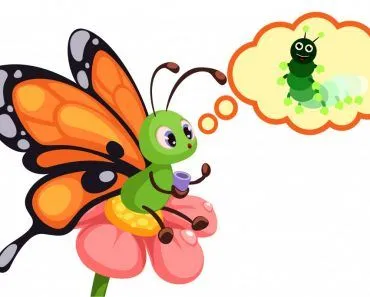
Most salamanders go through a regular metamorphosis (like how caterpillars turn into butterflies). The fertilized eggs laid underwater move into the larval stage, at which point they look like tadpoles. The larvae have gills that help them breathe in the water, a tail for swimming, as well as legs. The larvae feed and grow into juveniles first, and then later into adults. Juveniles move on to the land and develop lungs, and their legs become stronger too!

However, axolotls are obligatory neotenes, which means they never undergo a metamorphosis to complete their lifecycle.
How Does The Axolotl Remain In Larval Form?
Growth or metamorphic development happens in animals with the help of chemicals called hormones. In amphibians, like frogs and salamanders, a specific type of hormone called thyroid hormones control the process of metamorphosis.
The thyroid hormone system works like this.
The brain (the hypothalamus and pituitary) tells the thyroid gland to release a hormone called thyroxine, or T4. Out in the body, T4 is converted by enzymes called deiodinases into a more active form, T3. This active hormone is what flips the switches that reshape the animal’s body and organs, driving the change into an adult form.
In axolotls, this whole chain is turned down. The brain releases very little thyroid-stimulating signal, so the thyroid makes only a trickle of thyroxine. On top of that, axolotl tissues lack the deiodinase activity that would amplify whatever little hormone is around. With the signal weak at both ends, metamorphosis simply never gets triggered, and the animal stays in its larval body.
The flip side is telling: if you give an axolotl the missing hormone, it can grow up. Dose it with thyroxine (or iodine, which the thyroid uses to build thyroxine) and the axolotl will metamorphose into a land-dwelling adult salamander, losing its gills and developing sturdier limbs and lungs. It rarely happens in the wild, but in the lab it shows the larval form is a hormone setting, not a hard limit. (Forced metamorphosis is hard on the animal, though, and these salamanders tend to be short-lived afterward.)
On a more technical note, in nature they do reach sexual maturity and reproduce, all while retaining multiple characteristics from the juvenile stage.
A few examples of characteristics the pseudo-adult axolotl have are their tail, body fin, and external gills. They also lack moveable eyelids. This ability of an adult to keep its juvenile or larval traits is called “paedomorphosis”. (It is the opposite of the full metamorphosis seen in most other salamanders, whose fish-like larvae change into adults by developing limbs and lungs and moving onto land).
These larval traits make them look kind of cute. They’ve also taken over the internet and have even been added to the Minecraft universe. There are also rumors that the creators of the dragon “Toothless” in the popular animated movie ‘How to Train Your Dragon’ took design inspiration from axolotls.

Axolotls’ neoteny is very important to humans in our study of stem cells because they have the ability to regenerate.
Unfortunately, axolotls in the wild aren’t thriving. Conservation experts say that this animal is found both “everywhere and nowhere.” Since they are visually appealing, axolotls are very popular in the pet trade, making them available in zoos and pet stores. They are also considered to be a delicacy. However, their numbers are decreasing in the wild. This is mostly because of pollution in rivers and the very young individuals being gobbled up by fish like carp and tilapia.
Estimates put the wild population at somewhere between 50 and 1,000 individuals, which is why the IUCN lists the axolotl as ‘Critically Endangered’ on its Red List. Surveys in Xochimilco have struggled to find any wild axolotls at all in recent years. There is a glimmer of hope, though: in a 2025 study, captive-bred axolotls released into restored and artificial wetlands not only survived but put on weight, suggesting reintroduction could work. For now, these very special animals are in dire need of conservation and protection.
Is Neoteny Found Only In Axolotls?
Neoteny is not just restricted to axolotls. I’m not talking about other relatives of axolotls, I’m talking about humans!
Humans also have the ability to retain some of their juvenile characteristics in their adult state. We do not physiologically remain in our young stage, but we may possess certain facial or bodily features resembling that of a baby. Wide eyes, chubby cheeks, and less body hair are some examples. These features of neoteny are actually said to make the possessors of such traits more attractive to members of the opposite sex!
Neoteny represents youth, thereby suggesting that the person is young and fit enough to procreate. Interesting, huh?! You can read more about neoteny in humans and other animals here.
What Other Animals Look Like The Axolotl?
If the axolotl’s feathery gills and permanent baby face have won you over, you’ll be glad to know it has relatives that pull off the same trick. The animals that most resemble an axolotl are, unsurprisingly, other salamanders that also spend their whole lives in a larval body.

The closest look-alike is the olm (Proteus anguinus), a pale, eel-shaped salamander that lives only in the flooded limestone caves of southeastern Europe. Like the axolotl, it never metamorphoses and keeps a pair of branched, blood-red external gills at the back of its head for its entire life. Its skin is almost colorless from a lifetime spent in the dark, which has earned it the nickname “the human fish”. Tellingly, the olm stays larval for the same reason the axolotl does: its tissues barely respond to thyroxine, the hormone that would otherwise trigger metamorphosis.
Mudpuppies (genus Necturus) are another close match. These North American salamanders belong to the family Proteidae, the same group as the olm, and every one of them is a permanent larva, keeping large maroon gills throughout adulthood while living out its life underwater.
You don’t even have to leave the axolotl’s own genus to find more. Some populations of the tiger salamander (Ambystoma tigrinum), a close cousin, also skip the move onto land and stay gilled, water-dwelling adults. Unlike the axolotl, though, tiger salamanders usually do metamorphose and turn neotenic only in certain populations, so for them staying young is a flexible option rather than a life sentence.
What Is A Grown-Up Animal Called?
All this talk of animals that refuse to grow up raises a simpler question: what do we call one that does? A fully grown animal is called an adult, the stage at which it has reached its full size and become sexually mature (in other words, able to reproduce).
Reaching that point often means passing through named stages along the way. Many animals begin life as a larva, a young form that looks nothing like its parents and has to remake its body to become an adult. A tadpole is the larva of a frog, a caterpillar is the larva of a butterfly, and, as we have seen, a gilled, water-dwelling youngster is the larva of a salamander. In amphibians, that transformation from larva to adult is switched on by thyroid hormone. After the larval stage (or straight after hatching, in animals that never have a larva) comes the juvenile: a smaller, not-yet-mature version that already looks broadly like the adult it is growing into.
This is exactly what makes the axolotl such an oddity. It becomes a breeding adult, ticking the one box that usually defines “grown up”, and yet it never sheds its larval body. So a fully grown axolotl is, in a sense, an adult that still looks like a baby, which is the whole reason it has fascinated biologists for so long.
References (click to expand)
- Voss, S. R., & Shaffer, H. B. (1997, December 9). Adaptive evolution via a major gene effect: Paedomorphosis in the Mexican axolotl. Proceedings of the National Academy of Sciences. Proceedings of the National Academy of Sciences.
- Skulachev, V. P., Holtze, S., Vyssokikh, M. Y., Bakeeva, L. E., Skulachev, M. V., Markov, A. V., … Sadovnichii, V. A. (2017, April). Neoteny, Prolongation of Youth: From Naked Mole Rats to “Naked Apes” (Humans). Physiological Reviews. American Physiological Society.
- De Groef, B., Grommen, S. V. H., & Darras, V. M. (2018, September). Forever young: Endocrinology of paedomorphosis in the Mexican axolotl (Ambystoma mexicanum). General and Comparative Endocrinology. Elsevier BV.
- Voss, S. R., Woodcock, M. R., & Zambrano, L. (2015, November 1). A Tale of Two Axolotls. BioScience. Oxford University Press (OUP).
- Zambrano, L., Valiente, E., & Vander Zanden, M. J. (2010, February 7). Food web overlap among native axolotl (Ambystoma mexicanum) and two exotic fishes: carp (Cyprinus carpio) and tilapia (Oreochromis niloticus) in Xochimilco, Mexico City. Biological Invasions. Springer Science and Business Media LLC.
- Safi, R., Bertrand, S., Marchand, O., Duffraisse, M., de Luze, A., Vanacker, J.-M., … Laudet, V. (2004, February). The Axolotl (Ambystoma mexicanum), a Neotenic Amphibian, Expresses Functional Thyroid Hormone Receptors. Endocrinology. The Endocrine Society.
- Laursen, L. (2009, July 1). Salamander cells remember their origins in limb regeneration. Nature. Springer Science and Business Media LLC.
- Using How to Train Your Dragon to teach about endangered species, the scientific method, and popularization of science. (2021, February 23). Journal of Geek Studies.
- Ramos, A. G., Mena, H., Schneider, D., & Zambrano, L. (2025). Movement ecology of captive-bred axolotls in restored and artificial wetlands: Conservation insights for amphibian reintroductions and translocations. PLOS ONE.
- Olm (Proteus anguinus). Wikipedia.
- Necturus maculosus (Mudpuppy). Animal Diversity Web, University of Michigan Museum of Zoology.
- The neoteny goldilocks zone: The evolution of neoteny in Ambystoma. PMC, National Center for Biotechnology Information.
- Gilbert, S. F. Metamorphosis: The Hormonal Reactivation of Development. Developmental Biology (NCBI Bookshelf).