Table of Contents (click to expand)
Yes. More than 450 species of fish change sex during their lives, a process called sequential hermaphroditism. Clownfish switch from male to female (protandry), while wrasses and parrotfish switch from female to male (protogyny). The change is driven by the enzyme aromatase, which controls the balance of male and female sex hormones.
Sex change in animals? It may sound a bit strange, but not only is it completely natural, it actually happens in many species of animals. The question is… why?
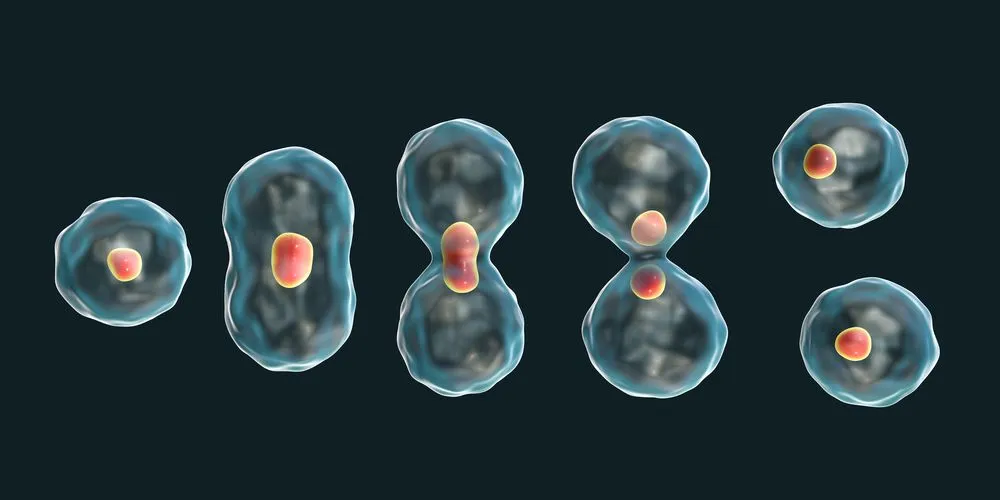
Life always seems to find a way to survive. All living things reproduce and pass on their genes from parent to child. An animal’s genes will therefore survive, even if the animal dies. Life can reproduce in two ways: asexually, wherein a single cell will divide to give two daughter cells, or sexually, which is when an egg from the female and a sperm from the male join to form new life.
To sexually reproduce, a population needs both males and females, but what happens if this process is missing a key ingredient? What if there are only males or only females? We don’t see this in humans, but it can be found in species such as the wrasse (a large family of reef fish; some of them, the cleaner wrasses, even pick parasites off the mouths of bigger fish, like this!). What do they do in such situations? They reverse their sex!
Sex Reversal
Sequential hermaphroditism (or simply sex reversal) is when a male organism becomes a female, or the other way around. This happens for a host of reasons: dwindling numbers of one sex, or that’s simply how the species’ colony works.
Before going into some of the unusual examples out there in the world, there are a few terms involved in sex reversal that we need to understand. Protandry is composed of two different words; proto (meaning first) and andry (meaning male). Protandry, therefore, means that a male transforms into a female. In the same way, protogyny (gyno means female) is the term for when a female becomes a male. There are a few other ways that sexes change, but we’ll get into that later.
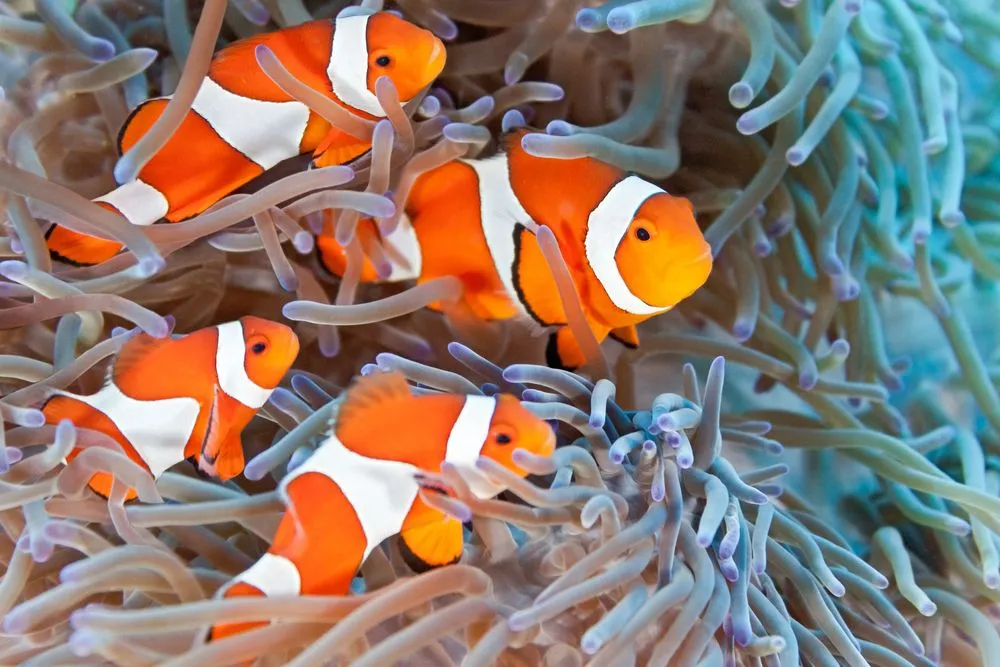
Clownfish: Marlin To Marlette?
When someone says clownfish, it’s natural for many people to think of the movie Finding Nemo. However, did you know that something was seriously wrong with this movie? If Nemo’s mother had to die, his father, Marlin, would have become his mother!
This is because clownfish are protandrous.
A clownfish group is built around a strict size-based pecking order. At the bottom are several small, non-breeding males. Above them is the single breeding male, the second-largest fish. At the very top sits the largest fish of all, the only female in the group. If the female dies, the breeding male changes sex and becomes the new female. The largest of the non-breeders then matures into the breeding male, and together they become the new mating pair.
The Harem Of The Kobudai
The Kobudai is a Japanese fish. It was featured in the BBC documentary Blue Planet II and was the original inspiration for this article.
Kobudai are also known as Asian Sheepshead wrasse, and live in groups called harems. The harem contains one large male and many females. The male tends to have a larger forehead and sharp teeth that point slightly outward. If the male happens to die, the largest female will begin courting the other females. Soon, that female will transform into the new male, even in terms of appearance!
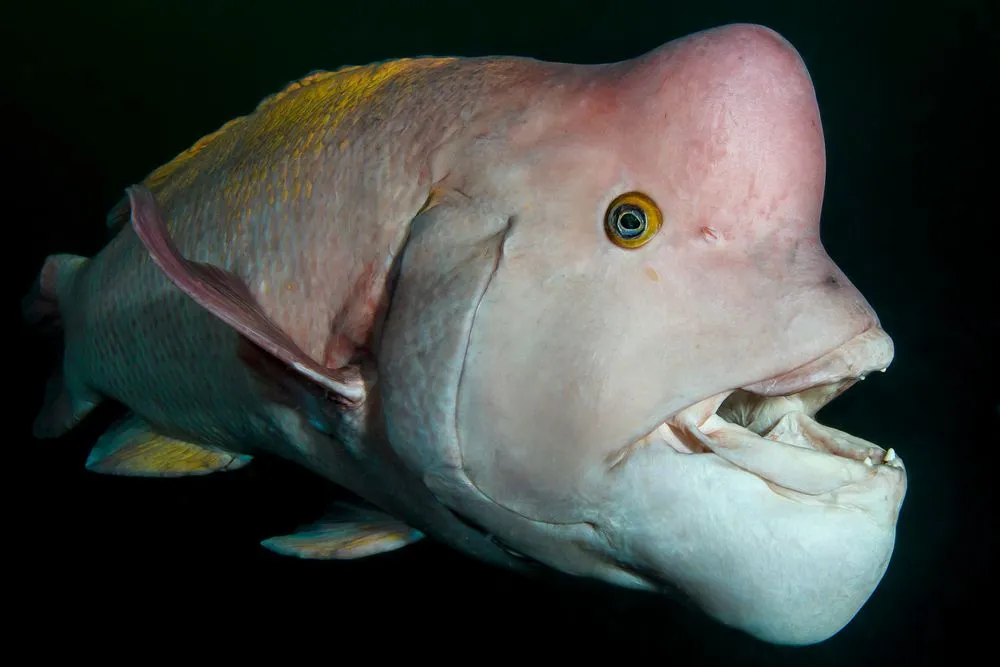
What’s even more interesting is that if a female grows large enough, she will sometimes separate herself from the rest of the harem. When she separates herself, she will transform herself into a male and then fight the other male for control of the harem.
Other species of wrasse and parrotfish demonstrate this same phenomenon.
How Do They Change Sexes?
What decides whether an animal will be male or female? Quite simply, sex hormones: testosterone and estrogen. Testosterone is a male hormone, the most characteristic one, but the full range of male hormones are called androgens. Estrogens collectively refer to all female hormones, even though estrogen is only one of them. These hormones help develop sexual organs in accordance with their sexes.
If an animal has a high amount of estrogens, it becomes a female. In the same way, if an animal has a high amount of androgens, it will become a male. So how would they go about changing sexes? With the help of a special enzyme called aromatase, which sits right at the controls of that hormone balance. Aromatase converts androgens (male hormones, like testosterone) into estrogens (female hormones), so the amount of aromatase an animal makes effectively decides which way the scales tip.
That means the enzyme works in both directions. When a clownfish turns from male to female (protandry), it ramps aromatase up, flooding its body with estrogen so its tissues reorganize into ovaries. When a wrasse or a Kobudai turns from female to male (protogyny), it does the opposite, switching aromatase down so estrogen levels crash and the male hormones take over. As the hormones shift, the sexual organs follow, and the animal physically becomes the other sex.
We still don’t know the exact reason why these species change sex. The leading theory is the size advantage hypothesis. In simple terms, it says that an animal will change sexes after it reaches a specific size. We’re still not sure how to determine the exact mechanism by which this happens. The size at which an individual changes sex could also be affected by any number of environmental factors. We still have so much to learn about this fascinating process!
Conclusion
This is only the tip of the iceberg! Sex change happens in far more ways than that. Some fish are even more flexible than the clownfish and the Kobudai. Certain coral-dwelling gobies are great examples of this, as they change sex depending on environmental and social factors. They also change sexes in both directions! They can switch from male to female and back again, and research is still being done on their remarkably flexible lifestyles.
And sex isn’t always decided the way it is in us. In birds, mammals, and all amphibians, sex is fixed by chromosomes from the start. But in many reptiles, including all crocodilians, most turtles, and the tuatara, it’s the temperature of the egg during incubation that decides whether a hatchling becomes male or female (and, fittingly, temperature does this partly by tuning that same aromatase enzyme). Believe it or not, more than 450 species of fish change sex during their lives, as described above. Pretty wild, huh?
References (click to expand)
- (Jr.) C. P. H. (2019). Integrated Principles of Zoology. McGraw-Hill Education
- Avise, J. C., & Mank, J. E. (2009). Evolutionary Perspectives on Hermaphroditism in Fishes. Sexual Development. S. Karger AG.
- MUNDAY, P., BUSTON, P., & WARNER, R. (2006, February). Diversity and flexibility of sex-change strategies in animals. Trends in Ecology & Evolution. Elsevier BV.
- Erisman, B. E., Petersen, C. W., Hastings, P. A., & Warner, R. R. (2013, July 1). Phylogenetic Perspectives on the Evolution of Functional Hermaphroditism in Teleost Fishes. Integrative and Comparative Biology. Oxford University Press (OUP).
- Gender-bending fish - Understanding Evolution. The University of California, Berkeley
- Baroiller, J.-F., & D'Cotta, H. (2016). The Reversible Sex of Gonochoristic Fish: Insights and Consequences. Sexual Development. S. Karger AG.
- STELKENS, R. B., & WEDEKIND, C. (2010, January 18). Environmental sex reversal, Trojan sex genes, and sex ratio adjustment: conditions and population consequences. Molecular Ecology. Wiley.
- Guiguen, Y., Fostier, A., Piferrer, F., & Chang, C.-F. (2010, February). Ovarian aromatase and estrogens: A pivotal role for gonadal sex differentiation and sex change in fish. General and Comparative Endocrinology. Elsevier BV.
- Hodge, J. R., Santini, F., & Wainwright, P. C. (2020, July). Correlated Evolution of Sex Allocation and Mating System in Wrasses and Parrotfishes. The American Naturalist. University of Chicago Press.