Table of Contents (click to expand)
The nose rings you see on cattle, often the bulls, help the farmers control the animals and to wean young calves off their mother’s milk. Research suggests that using a nose ring might actually be more ethical than other methods employed to control cattle.
When cows or bulls wear nose rings, it is not a social or fashion statement. Farmers use this piercing to control or handle their cattle and sometimes prevent suckling by younger herd members.
For a bull calf between 9 and 12 months old, the ring makes it easier to handle them. A professional vet will carry out the cow’s nose piercing. The ring, usually made of durable and non-reactive materials, such as stainless steel, copper, or aluminum, is pierced through the nasal septum. Once they grow into adult bulls or cows, they have grown accustomed to being controlled and adapt well to their piercing after it completely heals.
Before we consider whether the practice is necessary, let’s take a look at why it is done.
Calf-weaning Rings
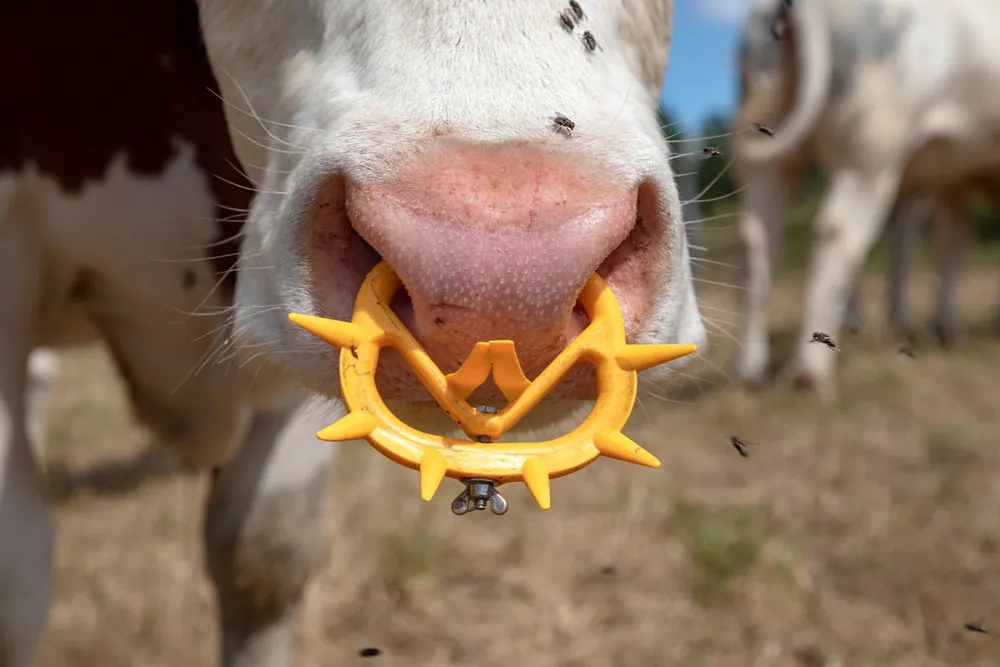
Calf-weaning or anti-suckling nose rings are clip-on nose rings made of bright plastic material. The plastic ring has spikes around it, which prevents the calf from suckling.
When a calf wearing such a ring presses against the udders of the mother cow, the mother actively rejects it, and the calf gets separated naturally. Farmers need the milk that cows produce to sell dairy products. The longer the calf suckles, the less milk the farmers will have to sell.
The anti-suckling nose ring is one way farmers use to wean young calves off their mother’s milk.
Adult Cattle Rings
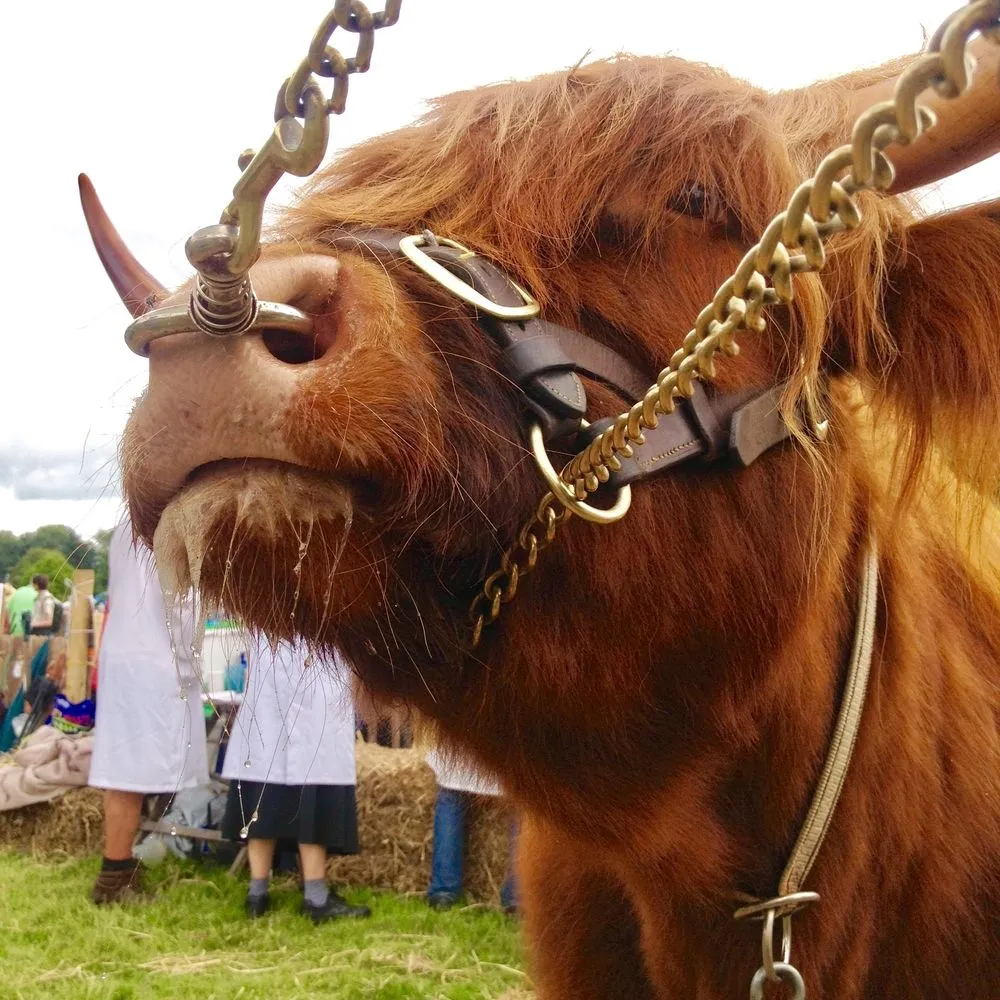
The nose is one of the most sensitive parts of any animal. In some cases, farmers prefer pulling and guiding the animal using the nose ring, rather than by hand or with a rope and tong. Farmers also use extra ropes to tie the ring and the horns together for additional control.
A bull staff or bull pole is a long pole attached to the nose ring. It could be made of wood, for bulls younger than 10 months, and a metal pole with a hook is used for older bulls. This pole allows farmers and breeders to maintain a safe distance from a bull as they guide the bull.
A show bull can get its piercing when it’s as young as 9 months old.
Not every bull needs to have a ring, but it is recommended for the safety of both the animal and the handler. In some cases, a nose tong is used to temporarily control the animal. Nose tongs are clip-ons that pinch the nose septum. Vets might use these while they treat the animal, whereas a tong might be used on cows at agricultural shows.
Other Animals With Nose Rings
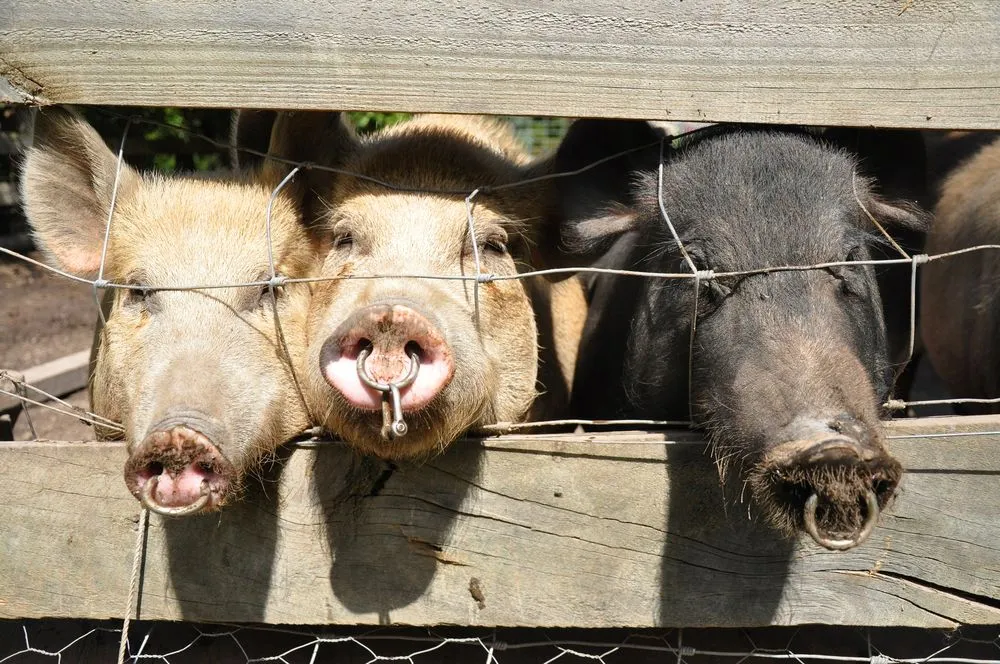
Pigs are sometimes fitted with nose rings to prevent rooting, a natural behavior where they dig up pastures with their snouts. The rings make digging uncomfortable, discouraging pigs from damaging fields, though a ringed pig can still forage freely through leaf litter and surface vegetation. Not every farm pig needs a nose ring.
Sheep and goats are some other examples whose young ones wear nose rings. Goatherds and shepherds have much more to worry about than separating all the lambs from their mothers. To assist in weaning, they put on nose rings or nose flaps. It’s exactly like a slip-on temporary nose ring, but it clamps the septum, rather than piercing it.
Why Do Cows, and Not Just Bulls, Wear Nose Rings?
If you have ever searched for why cows have nose rings, you have probably noticed something odd: the question is almost always asked about bulls, yet plenty of the ringed animals in photos are clearly not bulls. So what is going on?
The short answer is that a nose ring is a cattle-handling tool, not a bull-only one. The same metal ring that searchers sometimes call a "septum piercing" can be fitted to cows, bullocks (castrated males), oxen and show animals of either sex. New Zealand's animal-welfare regulator defines the purpose of nose ringing as helping "handlers manage cattle safely for breeding or exhibiting purposes," with no mention of the animal's sex. In other words, any large bovine that has to be led, restrained for the vet, or paraded in a show ring is a candidate for one.

So why do bulls dominate the conversation? Mostly because of muscle. An adult bull can top 500 kg (over 1,100 lbs), and a frightened or aggressive one is dangerous to be near. The ring gives a handler leverage over a sensitive spot, so even a slight tug can steer a huge animal. A dairy cow or a steer is usually calmer and easier to lead by halter alone, so many of them are never ringed at all. The piercing is the same; it is simply applied far more often to the animals that are hardest to control.
It is also worth remembering that a bull's reputation for being difficult has nothing to do with the color red, despite the bullfighting cliche. We have covered whether bulls really hate red elsewhere, but the nose ring is about size and strength, not temperament toward a particular color.
Is It Necessary?
It is, and in some cases, it is the more ethical course of action.
A 2005 study found that the clip-on nose ring was a gentler way to wean calves away from their mother’s milk. Calves that were forcibly separated conventionally bawled 20 times more than the group that wore clip-on suckling devices prior to separation from their dams. In the conventional method, calves are abruptly separated from their mothers using a fence line. The method which uses the nose clips is more gradual, which gives both the cows and the calves time to adjust.
In some circumstances, when a bull is involved, nose piercings are necessary for the farmer’s safety. A bull can weigh over 500 kg (or over 1,100 lbs). Even with a nose ring, bulls cannot be trusted without a bull staff or nose pull. Imagine the cattle’s caretaker handling a bull and risking his life every single day!
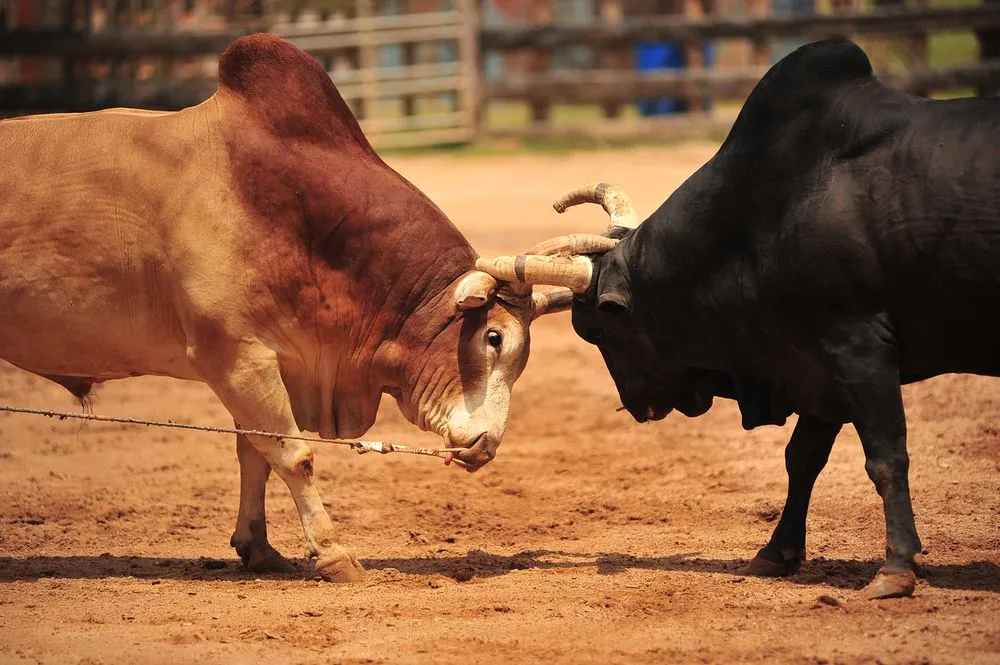
Bulls are unpredictable. When these animals are irritated or annoyed, using a nose ring to tackle and subdue the bull from its defensive position is the only option some caretakers can employ.
Some experienced farmers might suggest not using nose rings, due to their individual preference and skill (often citing animal cruelty as a reason). It ultimately depends on the owner and whether they would like extra assistance in controlling their cows, bulls and other cattle.
Does a Nose Ring Hurt the Animal?
This is the question most readers really want answered, and it deserves a straight reply: yes, fitting a metal nose ring hurts. The nasal septum, the strip of cartilage and tissue between the nostrils, is rich in nerve endings, which is exactly why a ring there gives a handler so much control. New Zealand's Ministry for Primary Industries does not hedge on the point in its welfare regulations, stating plainly that "nose ringing is painful."

Because of that pain, the procedure is regulated. Under the New Zealand rules, a permanent nose ring may only be fitted for genuine animal-management reasons, must be done by a competent person using suitable equipment (plain wire is banned), and pain relief is required. Inserting a ring for any other purpose can bring a criminal conviction and a fine of up to NZ$3,000 for an individual, or NZ$15,000 for a business. The healing wound then closes around the ring, and once it has settled, a well-fitted ring sits comfortably; the animal feels the pull only when pressure is deliberately applied to it.
The temporary clip-on devices are not automatically gentler. A 2022 case report in the journal Animals followed beef calves wearing plastic anti-suckling nose flaps and found that every one of the 41 calves had developed open wounds on the nasal septum within five days, nearly half lost body weight, and one suffered a perforated septum. The authors argued the method should not be marketed as automatically "low-stress." Set against that, the behavioral case for two-stage weaning is real: a 2005 study in the Journal of Animal Science found calves weaned in two stages bawled about 97% less and walked far less frantically after separation (5.2 km versus 16.7 km on the first day) than calves separated abruptly. The honest summary is that nose rings and nose flaps are a trade-off, reducing one kind of distress while imposing a cost of their own, which is why welfare codes increasingly insist on pain relief, correct technique and a real management reason before one goes in.
References (click to expand)
- Nose Ring (Animal). Encyclopedia.pub
- Nose Ring (Animal). Wikipedia
- Using Anti-suckling Devices to Wean Beef Calves. New Mexico State University
- Beef Cattle Parading. Agricultural Shows Australia
- Guide to the Animal Welfare (Care and Procedures) Regulations. New Zealand Ministry for Primary Industries
- Nose-Flap Devices Used for Two-Stage Weaning Produce Wounds in the Nostrils of Beef Calves. Animals (Basel), 2022. NCBI PMC
- The Effects of Weaning Beef Calves in Two Stages on Their Behavior and Growth Rate. Journal of Animal Science, 2005