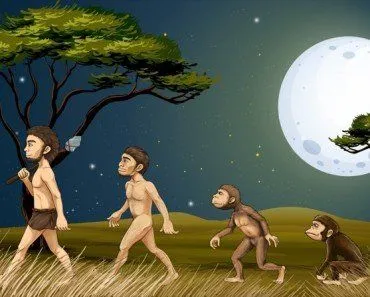
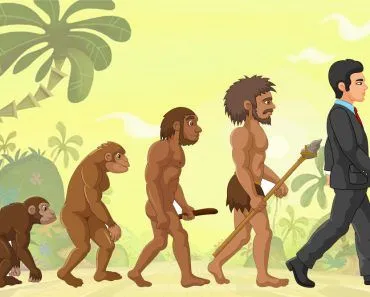
Humans did not evolve from modern apes. Humans and apes such as chimpanzees share a common ancestor that lived roughly 6 to 8 million years ago. Evolution branches like a tree rather than replacing one species with another, so when one population split off to become human, the other branch kept evolving into today's apes. That is why apes still exist.
If I descended from my grandfather, why are my cousins still alive? This claim sounds illogical, ridiculous, in fact.
It is a fairly common piece of pop-science folklore that humans evolved from monkeys. We share only about 93% of our DNA with, say, a rhesus monkey, but that is not because one descended from the other. The more precise truth is that humans and chimpanzees, with whom we share roughly 99% of our DNA, both descended from a common ancestor; we did not evolve from chimps any more than you evolved from your cousin. Other than the homogeneity of DNA, scientists also have a wealth of evidence illustrating that chimpanzees and humans exhibit eerily similar physical and psychological behaviors.
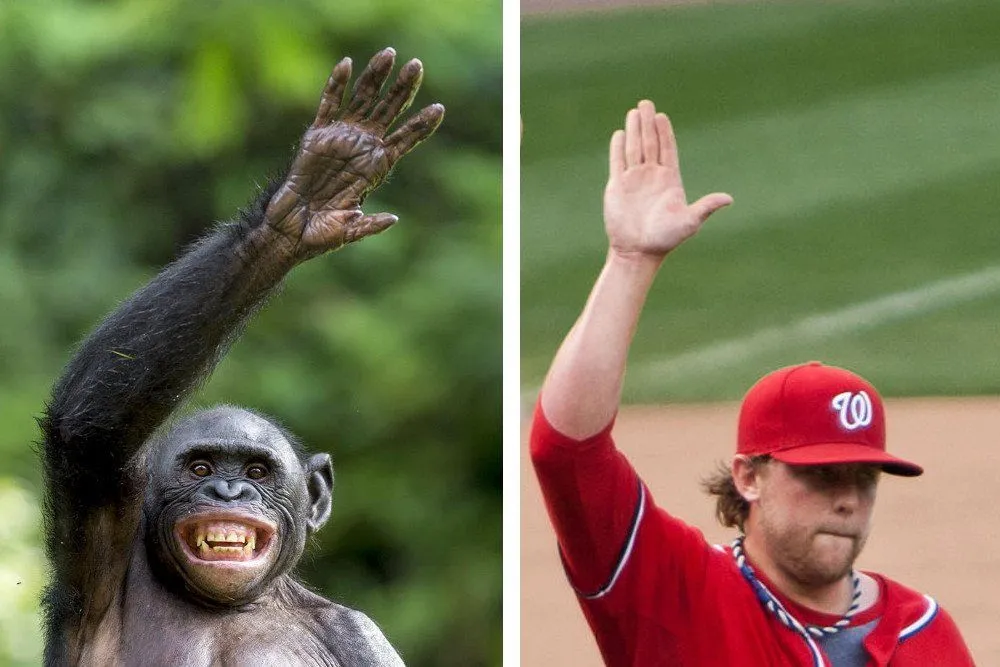
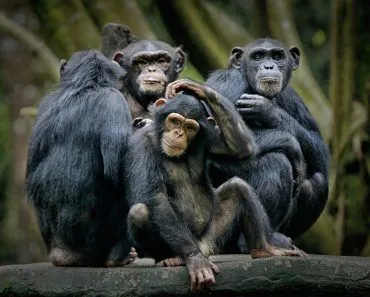
Humans and chimpanzees are not just members of the order Primates; both belong to the family of great apes, Hominidae. In other words, humans are apes too. Physically, both species are large, highly dexterous and tailless, and both can walk upright (humans habitually, chimps and bonobos only in short bursts). Neurobiologically, both possess a large brain that, most importantly, shelters an exceedingly dense cortex, the part of the brain widely linked to intelligence. Psychologically, both species show a propensity to form complex social groups.
A creationist or an evolution denier would find this argument repugnant. Their go-to argument for repudiating evolution is to ask – why do chimpanzees still exist if we evolved from them? This argument can, in fact, be extended to a plethora of different creatures.
One may ask – why do lizards exist when snakes evolved from them? Or why do wolves exist when we domesticated them into dogs? Does this argument imply that evolution is a fallacy?
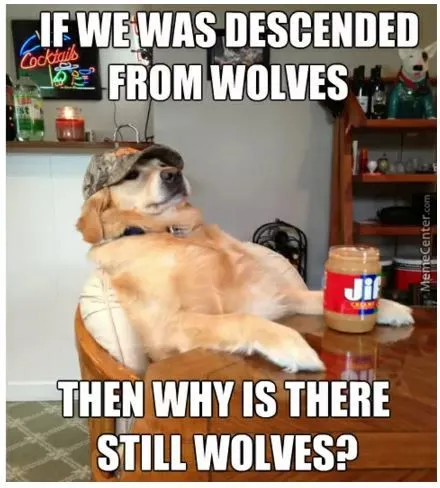
Well, no. Not even close. It only illustrates our misapprehension of the fundamental principles of evolution.
Our Perception Of Evolution Is Incorrect
First of all, we must revise our initial belief that humans “evolved” from chimpanzees. We did not. The various stages of evolution do not form the rungs of a tall ladder, and the process is not linear. The stages instead resemble the branches of a huge tree. Lineages descend from a shared branch and then grow in their own separate ways.
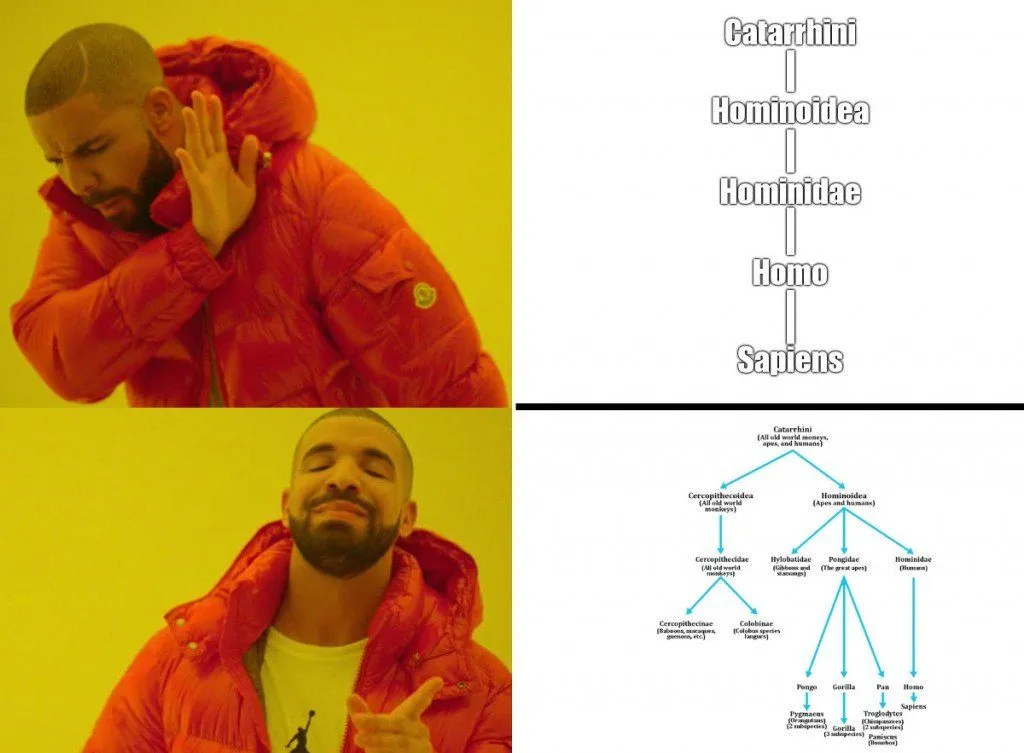
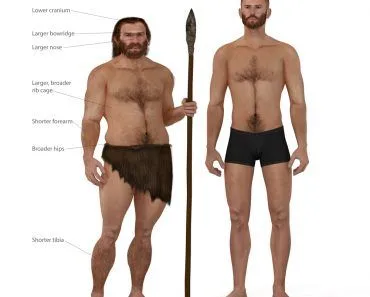
This picture is strengthened when you recall the many fossils, from Sahelanthropus and Australopithecus to early Homo, documenting the increasingly human-like species along our lineage after it branched away from the line leading to chimps. In fact, humans and chimps are mere twigs, split at the end of a thick branch representing the evolution of primates.
The Evolution Of Primates
The order Primates first divided into the Strepsirrhini, the wet-nosed primates that include all lemurs, lorises and galagos, and the Haplorhini, the dry-nosed primates. The Haplorhini in turn branched into tarsiers and the Anthropoidea (the simians), and the Anthropoidea split into Platyrrhini and Catarrhini.
Platyrrhini are what biologists call the New World monkeys, a group that includes howlers, spider monkeys, tamarins, owl monkeys and the like. The Catarrhini, on the other hand, are the Old World group, and they split into two branches of their own: the Old World monkeys (such as macaques), and the apes, the superfamily Hominoidea. The apes then diverged into Hylobatidae, the lesser apes or gibbons, and Hominidae, the great apes. Modern Hominidae includes orangutans, gorillas, chimpanzees, bonobos and us, Homo sapiens. (The old label Pongidae for the non-human great apes has been retired, because chimps turned out to be closer kin to humans than to the other apes, which made the grouping incoherent.)
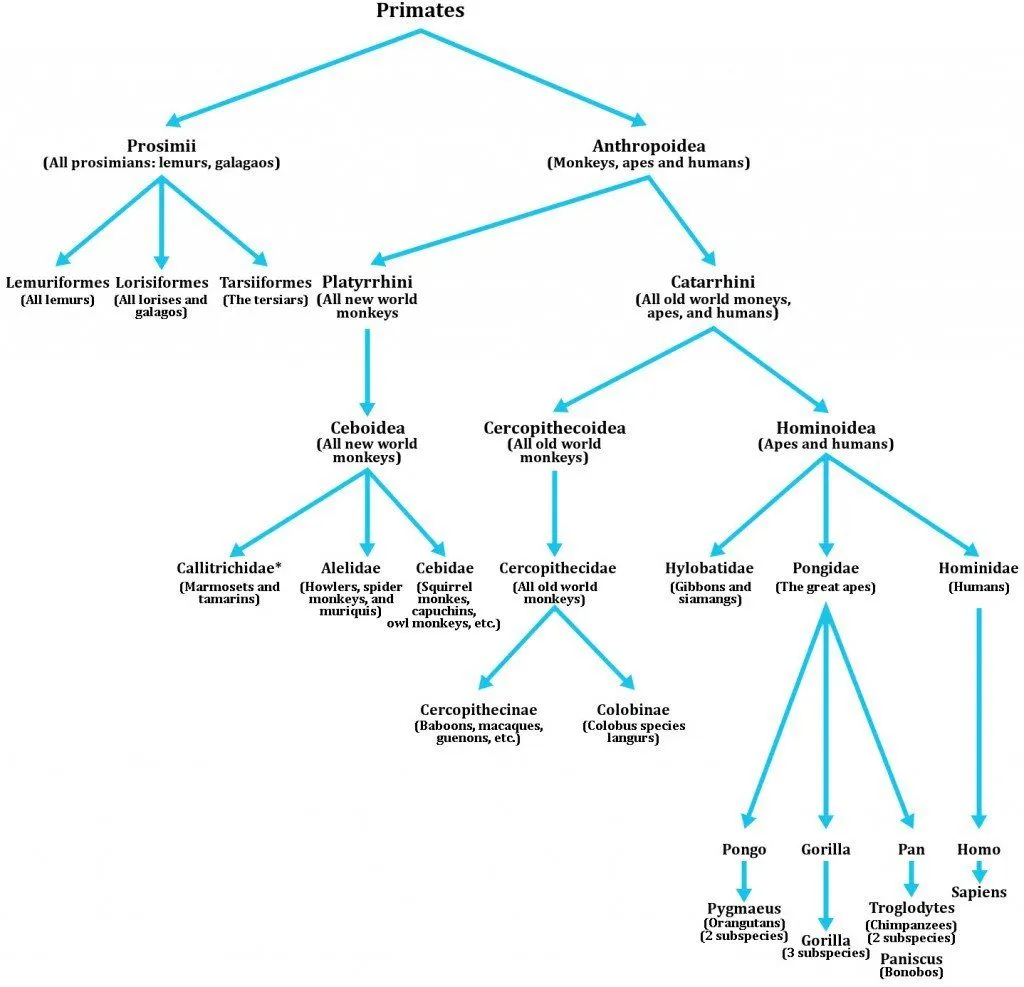
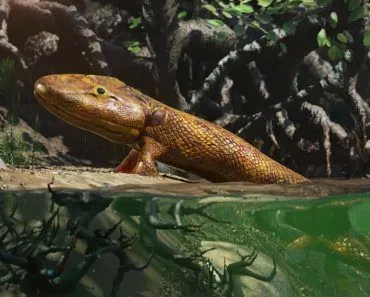
However, if all creatures ultimately descend from one single ancestor, where exactly do reptiles end and primates begin? Strictly speaking, chimps are apes, not monkeys (this is a common slip, and one the Smithsonian is forever correcting). But trace any two catarrhines back far enough and apes and Old World monkeys meet at a shared ancestor, so the deep boundary between them is genuinely fuzzy.
The labels we use, then, are partly artificial. Names such as “chimp”, “monkey” or “human” help us neatly categorize and identify species at a given point on the tree. But if we didn’t draw those lines, the differences between closely related creatures would blur into one another.
Evolution Is Not Synonymous With Replacement
Think about it like this… When my grandfather conceived my mother, because half of his chromosomes split to conjoin with half of the chromosomes lent by my grandmother, my mother is half-related to each of her parents. Similarly, I am half-related to each of my parents. In this way, I am one-fourth related to my paternal grandparent (half with my mother multiplied by half that my mother shares with her father).
Now, let’s say that my paternal grandfather had another child, my uncle, who later conceived a son, establishing the two of us as first cousins. By the same chromosome bookkeeping, I am roughly one-eighth related to this cousin. This manner of branching also explains why we share 93% of our DNA with a rhesus monkey.
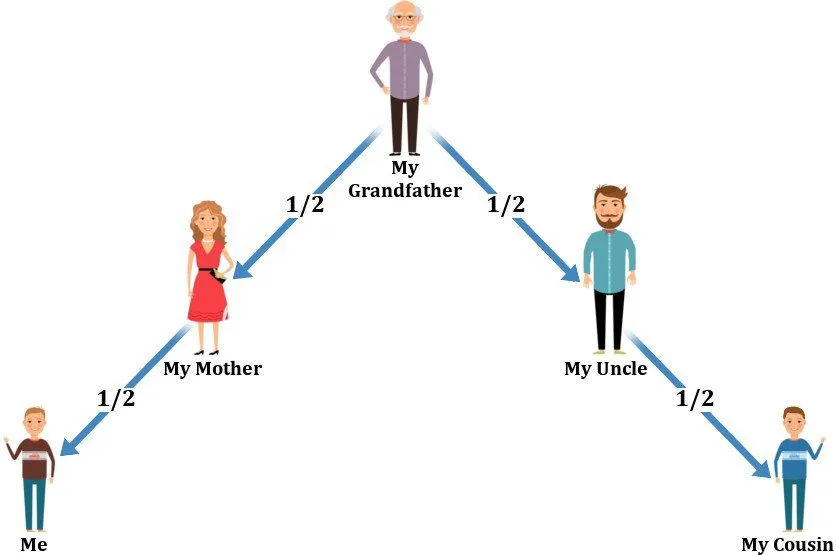
The point I’m asserting here is that if my paternal grandfather were to pass away now, or become extinct, does this mean that I’m no longer related to my cousin? Or to put it this way, if I descended from my grandfather, why are my cousins still alive? This claim sounds illogical, ridiculous, in fact.
So, when a statistic reveals that humans share 99% of their DNA with chimps and bonobos, it does not imply that the imposition of environmental factors coerced humans to replace chimps and drive them to extinction. It rather delineates that we share a common ancestor, a point on the branch where it further split.
Still, a deniers’ dubiousness is quite reasonable. Even though chimpanzees share 99% of their DNA with us, they appear radically different. A denier’s delirium exacerbates when he recalls that evolution insists that every species on the planet diverged from a single organism far in the past. From the vantage point of today, this is appalling… If this is true, what accounts for the astonishing diversity that the animal kingdom displays?
Genetic Variation And Speciation
What these deniers don’t realize is that infinitesimal genetic variations can lead to polar discrepancies. These variations are imposed by selective environmental pressures when descendants isolate themselves from the rest of their species.
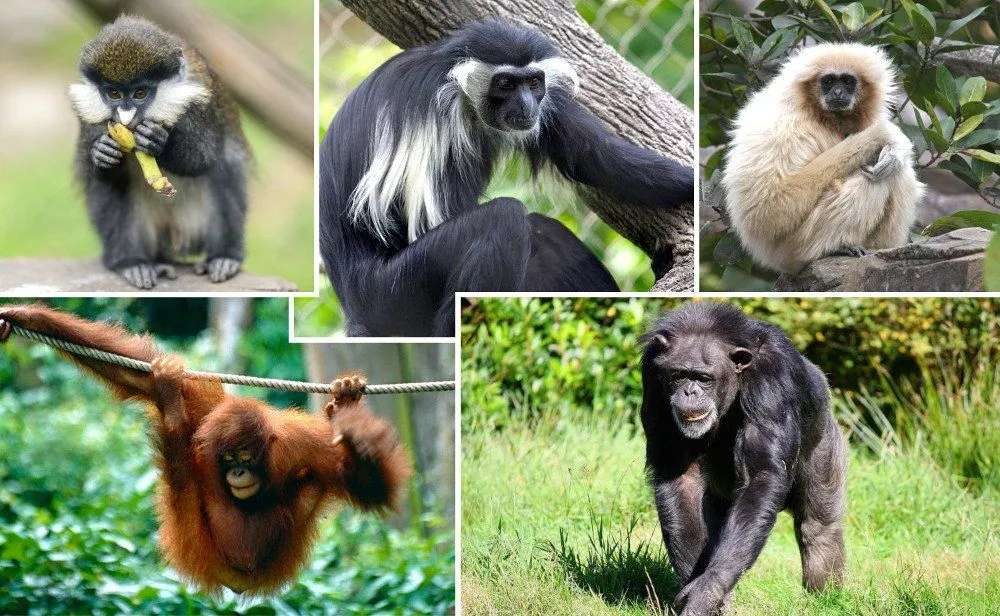
Moreover, even if the environmental pressures are similar, genetic variations are bound to be introduced if species are isolated from each other. A random mutation in two different populations will force them to drift further apart over their subsequent generations. Isolation leads to variation, which leads to speciation.
So, humans did not evolve from chimps. Rather, the two lineages share a common ancestor, a now-extinct ape that lived in Africa roughly 6 to 8 million years ago. And the branching did not stop there. The branch leading to us threw off several human species of its own, including members of Australopithecus and Homo. Most of them went extinct, and of the whole bushy lot only one twig is left standing today: Homo sapiens, modern human beings.
One consequential question remains: what did that last common ancestor of chimps and humans actually look like? It was neither a modern chimp nor a monkey, but an ape all its own, and paleontologists are still piecing it together from the fossil record (the famous, and somewhat outdated, idea of a single “missing link”).
What Did Humans Actually Evolve From?
So if we did not spring from chimpanzees, what did we actually descend from? The honest answer is that our family tree is a bushy thicket rather than a tidy row of ancestors, but paleontologists have recovered enough of it to sketch the broad outline.
The trail begins with Sahelanthropus tchadensis, a species that lived in what is now Chad sometime between 7 and 6 million years ago, close to the point where our lineage parted ways with the ancestors of chimpanzees. Millions of years later came Australopithecus afarensis, the group that includes the celebrated 3.2-million-year-old skeleton nicknamed Lucy, unearthed in Ethiopia. These were small-brained creatures that nonetheless already walked upright.

Our own genus, Homo, enters with Homo habilis (roughly 2.4 to 1.4 million years ago), followed by the long-lived Homo erectus, which persisted from about 1.89 million years ago until as recently as 110,000 years ago. Finally, during a stretch of dramatic climate change, Homo sapiens evolved in Africa around 300,000 years ago. None of these species handed off to the next like runners in a relay. Many overlapped in time, and most of the branches simply died out, leaving us as the last twig on a once-crowded bush.
Why Haven’t Chimpanzees Turned Into Humans?
If chimpanzees are our cousins, a denier will press, why are they not slowly turning into people right now? The question smuggles in an assumption: that evolution is a staircase every animal is climbing, with humanity waiting at the top. It is nothing of the sort. Evolution has no goal, no foresight and no built-in direction. It simply tracks whatever helps a population survive and reproduce in its particular surroundings.

There was never a universal pressure nudging every primate toward big brains and bare skin. Chimpanzees have spent the same 6 to 8 million years since our split adapting to their own world, the forests of equatorial Africa, and by the only yardstick evolution recognizes, fit to a niche, they are a resounding success. Biologists therefore reject the notion that any living species is “more evolved” than another. Every organism alive today, from a chimpanzee to a mushroom, carries exactly the same length of evolutionary history behind it. Chimps are not failed humans; they are accomplished chimps, and no hidden current is quietly carrying them toward becoming us.
Apes Vs Monkeys: What’s The Actual Difference?
A good deal of the confusion in this debate comes from muddling apes with monkeys, a slip the Smithsonian is forever patiently correcting. Humans did not evolve from monkeys either, and we are not monkeys ourselves. We are apes.
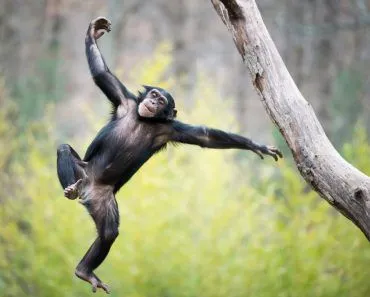
The quickest way to tell the two apart is to look for a tail. Almost all monkeys have one; apes have none, a difference biologists have traced to an ancient change in a gene called TBXT that arose in the ape lineage around 20 million years ago (the same quirk that explains why humans lost their tails). Beyond the missing tail, apes tend to be larger, with broad chests, flat backs and unusually mobile shoulder joints that let them swing hand over hand through the canopy, a form of movement called brachiation. They are also generally regarded as more intelligent, with larger, more complex brains than monkeys.

Apes come in two groups: the lesser apes, meaning the gibbons of Southeast Asia, and the great apes, the family Hominidae, which contains orangutans, gorillas, chimpanzees, bonobos and, yes, us. So the next time someone asks why we still see monkeys, the tidiest reply is that we never were one.
References (click to expand)
- Frequently Asked Questions. Smithsonian’s Human Origins Program, The Smithsonian Institution
- Genetics. Smithsonian’s Human Origins Program, The Smithsonian Institution
- Hominidae: Definition, Characteristics, & Family Tree. Encyclopaedia Britannica
- Rhesus monkey genome reveals DNA similarities with chimps and humans. Washington University in St. Louis
- Early Primate Evolution: The First Primates. Palomar College
- Sahelanthropus tchadensis. Smithsonian’s Human Origins Program, The Smithsonian Institution
- Australopithecus afarensis. Smithsonian’s Human Origins Program, The Smithsonian Institution
- Homo habilis. Smithsonian’s Human Origins Program, The Smithsonian Institution
- Homo erectus. Smithsonian’s Human Origins Program, The Smithsonian Institution
- Homo sapiens. Smithsonian’s Human Origins Program, The Smithsonian Institution
- Misconceptions about Evolution. Understanding Evolution, University of California Museum of Paleontology
- Why Don’t Humans Have Tails? An Old Genetic Mutation Could Explain Why Monkeys, but Not Apes, Have the Extra Appendage. Smithsonian Magazine
- Ape. Wikipedia, The Free Encyclopedia