Table of Contents (click to expand)
Yes, overfishing is making fish smaller. Catch rules force fishermen to keep the big fish and release the small ones, so mostly small individuals survive to breed. Because size is inherited, this selection pressure shifts whole populations toward smaller, faster-maturing fish over just a few generations.
Everybody wants to catch the big fish, literally and figuratively. However, as it turns out, catching too many big fish is bad for the environment. We’re finding that fish are generally becoming smaller in size. Why is this happening?
Fisheries Have To Release Small Sized Fish Catch
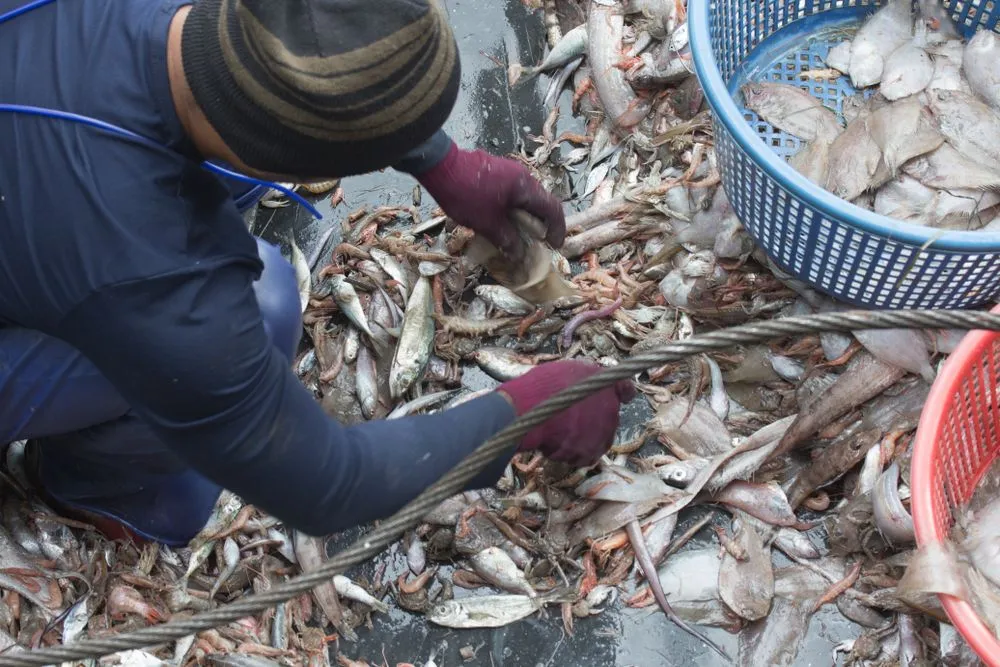
In 1376, English fishermen petitioned the Parliament of Edward III to ban a primitive bottom trawler nicknamed the “wondyrechaun”, one of the earliest recorded objections to trawling. A trawl is a mechanism that pulls a fishing net by one or more boats through the water. Pulling this kind of trawl does not allow any fish, irrespective of size, to escape. The petitioners complained that the device swept up so many tiny fish that they were often fed to pigs because there was nothing else to do with them. From worries like these emerged the idea of “letting the small fish go”.
The logic was that smaller fish are usually juveniles. When returned back to the seas, they would live to see another day, mature, mate and produce more fish, which could then be fished in the future for more food. The idea of sparing the small fish soon caught on, and over the centuries other countries began to implement similar policies.
Countries now have a minimum length for fish that you can catch; anything smaller than that must be returned to the water.
This logic appears sound until one takes a closer look at how this affects the fish.
Why Is Removing Big Fish Bad?
Big fish disproportionately invest more in their offspring. In the fish world, such an “investment” means that they spend more energy on their eggs compared to smaller fish. Scientists from Monash University and Smithsonian Tropical Research Institute surveyed 342 marine species for how much they invest in their eggs.
They found that bigger females invest more in terms of the size and number of their eggs than female fish half their size. Larger eggs have more energy stored in them and a higher number of eggs improves the chances of survival for the overall fish species. What this means is that removing one big fish does not square with the number of eggs that two smaller fish produce. In fact, the researchers calculated that it would take about 37 cod weighing 2 kg (4.4 lb) each to match the reproductive output of a single 30 kg (66 lb) female. This leads to a faster decline in the number of fish.
The Pressure To Survive
Big fish are more likely to produce big fish, and small fish are more likely to produce small fish. The size phenotype (or the physically observable character) is genetically controlled. The strategy of removing large fish and letting the smaller juveniles go is changing the size dynamics of the sea.
We are taught in school that evolution occurs over the span of millennia. It took 4 billion years for life to look the way it does today, but evolution can also be rapid if the pressure on the organism is high. What this means is that the organism is essentially forced to evolve.
Removing big fish causes a selection pressure favoring smaller fish. Selection pressure is a pressure (not the pressure you study in physics) that weeds out all the organisms that cannot survive under the current environmental conditions.
To understand selection pressure better, consider a school physics class that has a 50% as the passing mark in Year 1. Out of a class of 10, about 2 students are brilliant at the subject and are effortlessly promoted to the next year. 5 students are average and will pass.
The remaining 3 students fail to make it to 50% and are weeded out of the class. In Year 2, 7 students are in the class and the grade required to pass is now 60%. In this year, another student fails to pass on to the next year. If this continues to happen every year, by the end, only those who are truly great at physics will remain.
The case is similar with overfishing. The smaller fish are better at escaping the net or thrown back into the sea. Considering this, big fish are less able to survive in the current environment of overfishing.
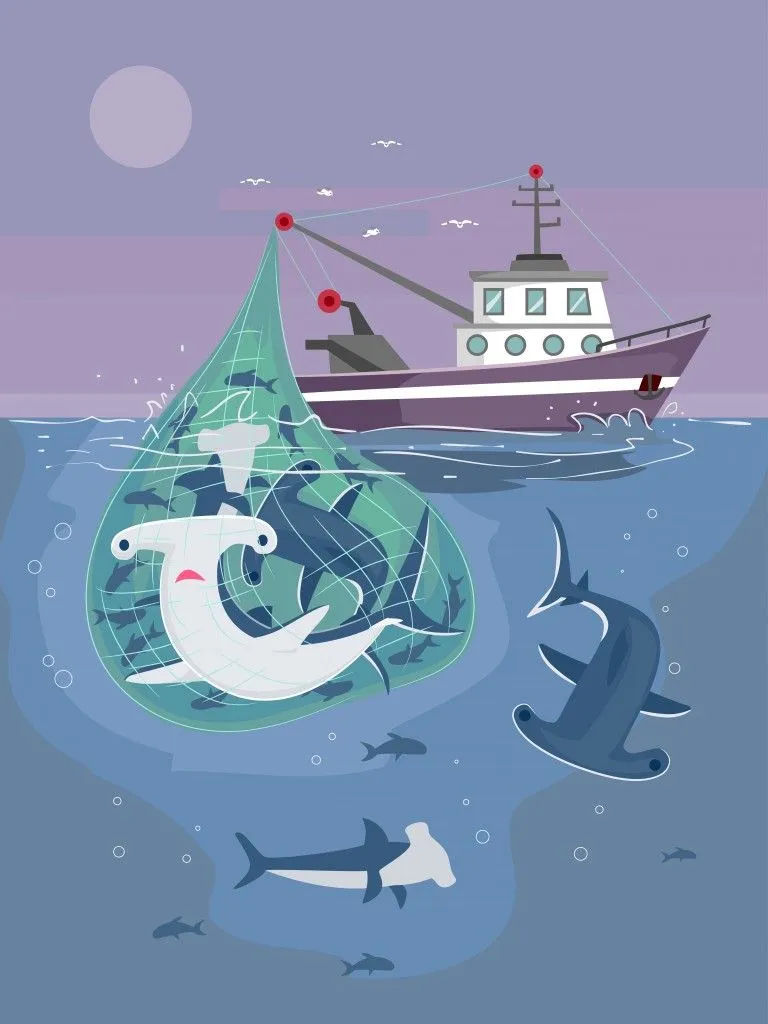
With a larger number of smaller fish surviving, the genes that make them small also survive and are passed on to the next generation. With the passing of each generation, there are fewer big fish in the sea and the size of new fish seems to be growing smaller. The mean length of a female Baltic cod at maturity fell from 49.6 cm (19.5 in) in the late 1980s to 36.8 cm (14.5 in) by 1997 (Source).
Research published in Science tracked how size-selective harvesting reshapes Atlantic silversides. In the experiment, tanks where the largest fish were repeatedly removed evolved an almost two-fold difference in adult size compared with tanks where the smallest fish were removed, and this happened in just four generations. That is rapid evolution driven by the pressure of fishing out the big individuals.
The Solution?
Perhaps we should stop removing only the big fish? One suggested alternative to size-selective fishing is to practice balanced harvesting. This practice does not select for size or age, allowing fishermen to catch smaller fish as well as larger ones (although to a smaller extent for the latter). This is supposed to maintain diversity in the water and increase catches for fishermen, but this isn’t a surefire management strategy either. Smaller fish tend to bring lower prices and could turn out to be unsustainable for fishermen in the long term.
Aquaculture
Aquaculture or fish farming is also being explored with certain fish species. It is a fast-growing industry positioned as a more sustainable alternative to catching wild fish. Farmed Arctic char, which has a taste and texture similar to salmon, is often raised in land-based recirculating tanks and is rated a more sustainable alternative to farmed salmon by seafood guides such as Seafood Watch. If similar trends are seen with other fish, it could ease the pressure from wild fisheries, although this shift is still up for debate.
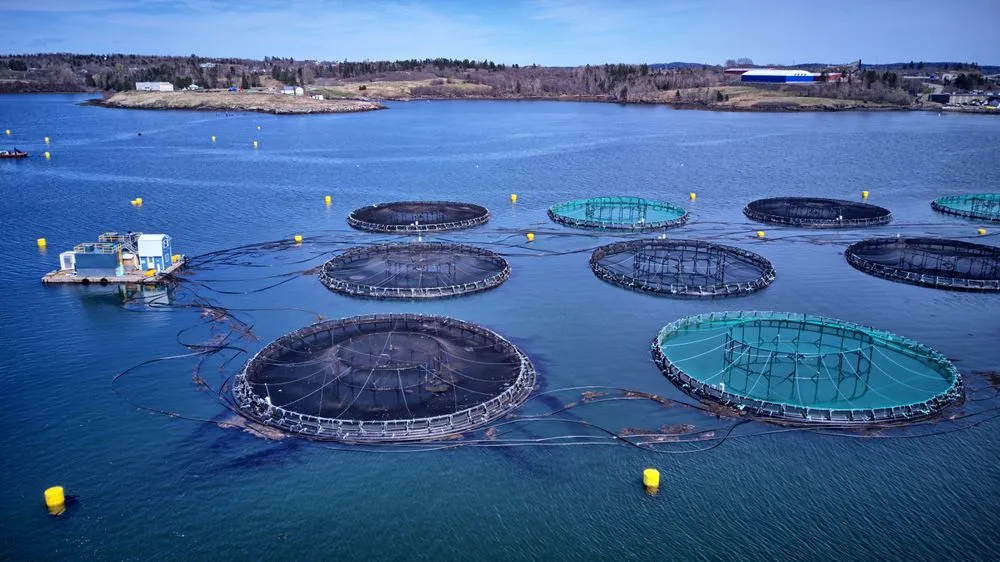
Aquacultures are similar to rearing any other kind of farm animal. The fish require the right type of feed, external conditions to grow, and they’re often given antibiotics to prevent disease. All of this generates waste and might be causing antibiotic resistance to develop in this fish, but fortunately, alternatives are being explored.
These solutions are only one aspect of the problem. Without a change in conservation practices and policy, little progress can be made to save fish populations. The demand for fish is only projected to increase over the years as populations rise, along with standards of living.
Solutions to a problem as complex as the effects of overfishing on the evolution of fish tend to be complicated to develop. Often, one doesn’t know what would actually happen when a given solution is implemented. However, becoming a bit more conscious of our consumption habits is a small first step that most of us can take to better protect our waters.
References (click to expand)
- Audzijonyte, A., Kuparinen, A., Gorton, R., & Fulton, E. A. (2013, April 23). Ecological consequences of body size decline in harvested fish species: positive feedback loops in trophic interactions amplify human impact. Biology Letters. The Royal Society.
- Therkildsen, N. O., Wilder, A. P., Conover, D. O., Munch, S. B., Baumann, H., & Palumbi, S. R. (2019, August 2). Contrasting genomic shifts underlie parallel phenotypic evolution in response to fishing. Science. American Association for the Advancement of Science (AAAS).
- Barneche, D. R., Robertson, D. R., White, C. R., & Marshall, D. J. (2018, May 11). Fish reproductive-energy output increases disproportionately with body size. Science. American Association for the Advancement of Science (AAAS).
- Jacobsen, N. S., Gislason, H., & Andersen, K. H. (2014, January 22). The consequences of balanced harvesting of fish communities. Proceedings of the Royal Society B: Biological Sciences. The Royal Society.
- Quaas, M. F., Reusch, T. B. H., Schmidt, J. O., Tahvonen, O., & Voss, R. (2015, September 8). It is the economy, stupid! Projecting the fate of fish populations using ecological-economic modeling. Global Change Biology. Wiley.
- Cardinale, M., & Modin, J. (1999, July). Changes in size-at-maturity of Baltic cod (Gadus morhua) during a period of large variations in stock size and environmental conditions. Fisheries Research. Elsevier BV.
- History of Trawling and Ecological Impact (the 1376 “wondyrechaun” petition to Edward III). Springer Nature.
- Arctic Char, Recirculating Aquaculture Systems (Best Choice rating). Monterey Bay Aquarium Seafood Watch.