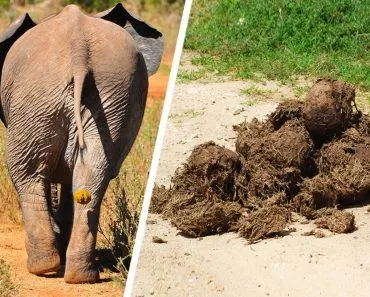
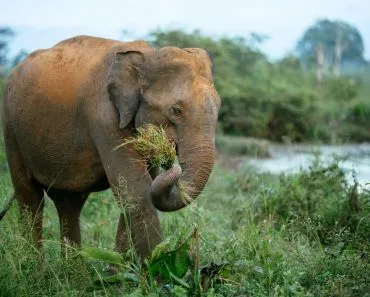
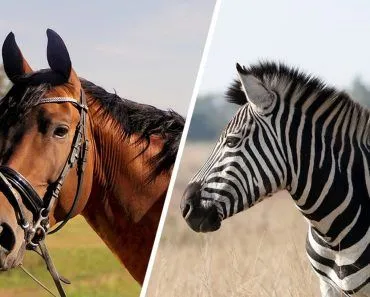
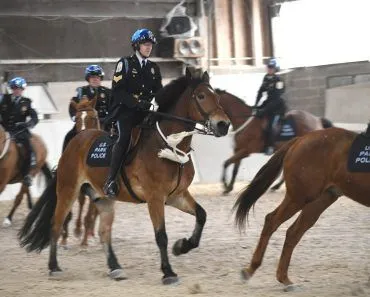
An elephant's spine is not designed to carry weight on its back. Unlike a horse, its vertebrae have sharp, upward-pointing bony protrusions, so weight from above presses on them painfully. Welfare guidelines cap riding loads at about 10% of body mass (roughly 350 kg, or 770 lb), yet tourist elephants often carry far more after being tamed through cruel methods.
Close your eyes and picture an elephant. Perhaps your first thought is of an elephant carrying something on its back.
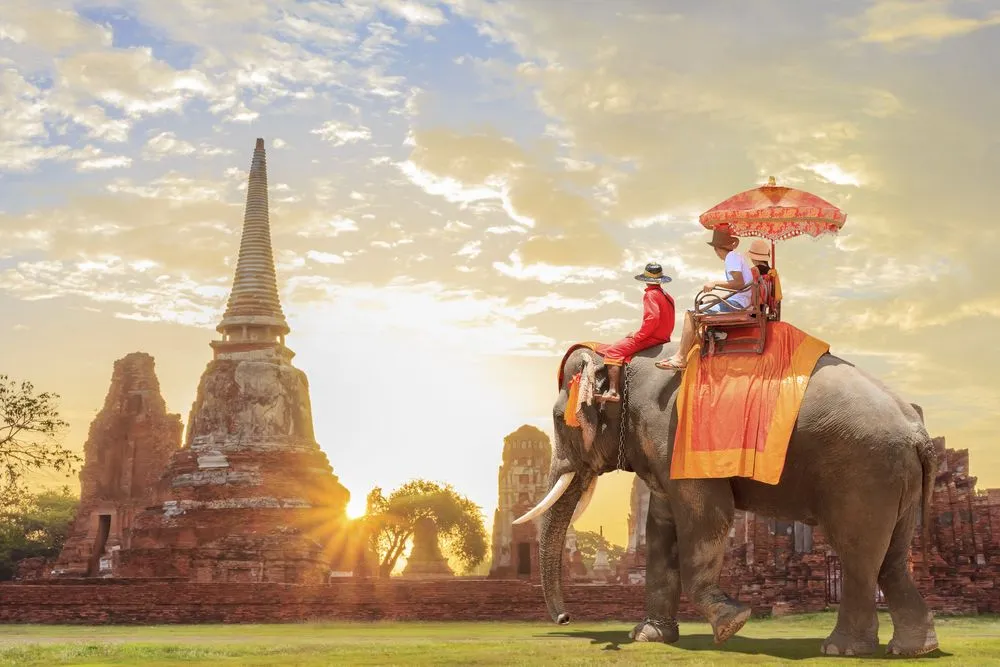
For more than 4,000 years, this is how many people have thought of elephants. Cultures have tamed these large and majestic animals to do work for which they are not built, both mentally and physically.
The History Of Elephants And People
There is an air of romance around riding an elephant, especially because elephants are a symbol of royalty in many Asian countries.
Historical accounts describe vast numbers of elephants kept in captivity by South Asian rulers, with some estimates running to roughly tens of thousands in a single kingdom's war stables.
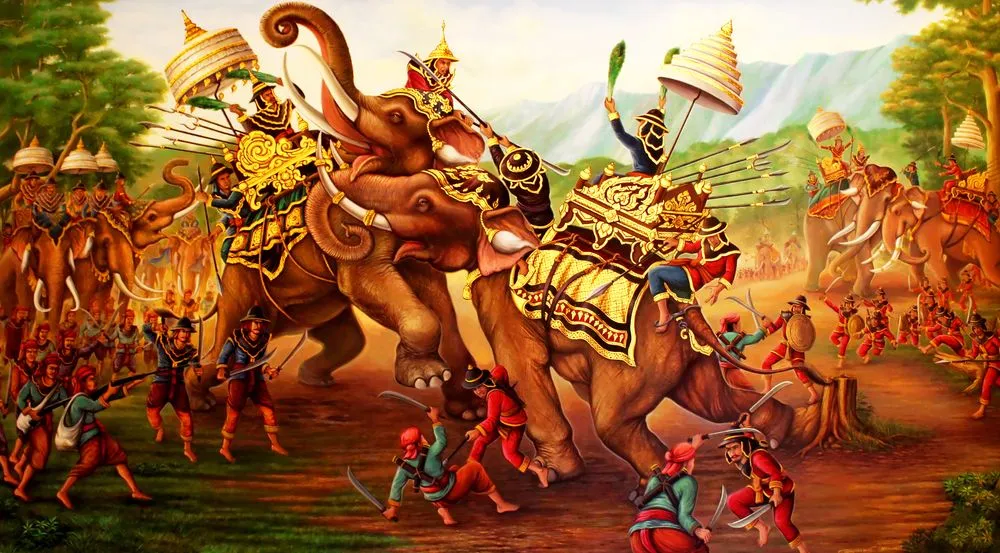
Ancient Asian rulers used elephants like modern tanks, charging atop them into battle at up to about 30 km/h (19 mph) and trampling down enemy troops. In India and Sri Lanka, special weapons and armor were made for battle elephants. Iron chains with heavy steel balls at the end were tied to the trunks of war elephants, who were then trained to swirl them menacingly and with great skill.
Off the battlefield, elephants were used to transport heavy goods, such as weapons and building materials. Even today, the timber industry in Asia uses elephants to haul and pull down trees. With the brute force of this giant mammal, trees are uprooted and the wood is pulled either by their trunks or by pulling a bunch of them to parked trucks.
Kings also used elephants when on the hunt, especially for tiger hunting.
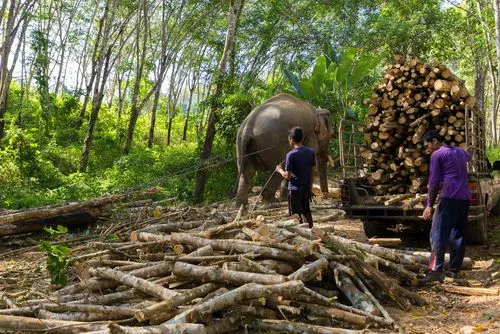
Today, instead of weapons, elephants carry tourists on their backs. Elephant trekking is a popular tourist activity in countries like Thailand. Every year, thousands of tourists flock to Southeast Asian countries to scratch this activity off their bucket list.
However, what they do not realize is that in 2014, a World Animal Protection initiative highlighted the cruel conditions in which these elephants were kept. Leading organizations, such as the Humane Society of the USA and the Association of Zoos and Aquariums, also object to elephant riding due to the abuse to which the animals are subjected during training and captivity.
The Mental Toll Of Captivity On Elephants
The first thing you should know about an elephant is that there is no way for you to climb on the back of a wild elephant and actually survive. All elephants used for such riding activities must be tamed. Elephant taming is also called elephant crushing or phajaan, a long-standing practice rooted in parts of Southeast Asia.
Young calves are separated from their mothers and shackled in a small room, then tortured with hooks and other sharp tools. To further crush their spirit, they are starved and deprived of sleep. This horrific, inhumane process is being carried out to turn this majestic wild animal into a submissive servant. Even adult elephants are tortured daily to keep them submissive.
In order to keep up with trekking, the Mahout or guide will often nudge the elephant with a hook to keep it moving. Elephants remember the hook from the “taming process” and fear immediately surges within them. Sometimes, this fear can lead to a reaction that endangers not only the elephant, but also the riders.
The Physical Impact Of Labor On Elephants
Now, the spine of an elephant is anatomically not built to carry weight on its back. The combined weight of the mahout, the carriage/seat and the passengers is simply too much for the elephant’s back. Carol Buckley, who specializes in trauma recovery and ongoing physical care of captive elephants, says that elephants have evolved to carry enormous amounts of weight suspended below their spine.
Unlike the smooth, round spinal disks of other mammals, elephants have sharp bony protrusions that extend from the spine in an upwards direction. These bony protrusions and the tissue that protects them are vulnerable to weight and pressure from above. Thus, when passengers sit on the back of an elephant, they put pressure on these spiny bone structures, which feel like needles stabbing their skin from the inside.
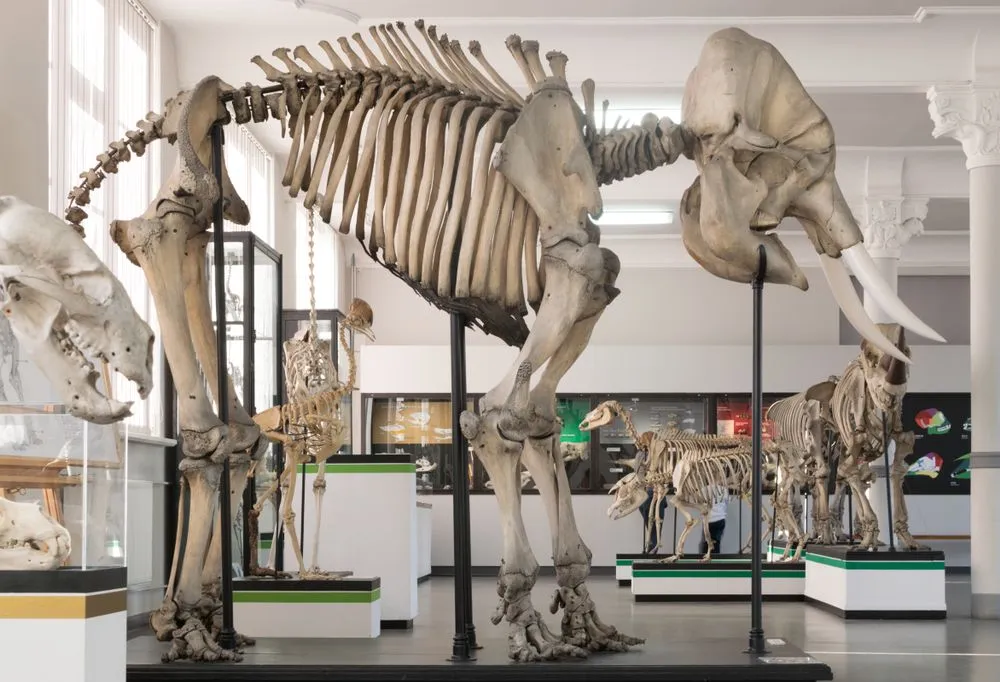
So how much weight can an elephant safely carry on its back? Welfare guidelines used in Thailand suggest that riding loads should not exceed about 10% of the animal’s body mass, or roughly 350 kg (770 lb). A 2021 study in the journal Animals found no significant change in the gait of Asian elephants carrying loads up to 15% of body mass on flat ground, though the authors cautioned that longer rides and uneven terrain were not tested. In practice, a working elephant is often forced to carry around 450 kg (990 lb) once you add up the combined weights of a mahout and up to four adult tourists, well beyond what these guidelines recommend. To make matters worse, the carriages remain on the elephant’s back, even when resting.
Prolonged bruising of these back tissues can lead to severe damage to the spine of an elephant. Elephants with permanent spinal damage are removed from the workforce and often abandoned.
Elephant Spine Vs. Horse Spine: Why We Can Ride One But Not The Other
If elephants are so much stronger than horses, why is it fine to ride a horse but not an elephant? The answer has little to do with raw strength and everything to do with the shape of the backbone and thousands of years of selective breeding.

A horse’s spine runs in a long, fairly straight line between its shoulders and hips, supported at both ends by its legs, a bit like the deck of a bridge resting on two piers. Thick bands of muscle run along the top of that spine and help spread a rider’s weight across the back rather than dumping it onto a single point. On top of this natural architecture, humans have bred horses as mounts for thousands of years, favoring animals suited to carrying a person.
Even so, a horse’s back is not limitless. In a 2008 study in the Journal of Equine Veterinary Science, Debra Powell and colleagues at Ohio State University had horses carry loads of 15 to 30% of their body weight. The animals coped comfortably up to about 20%, but at 25% and above they showed markedly faster breathing, higher heart rates and sore, tight back muscles the next day. That is why many veterinarians now suggest that a rider plus tack should not exceed roughly 20% of a horse’s body weight, or about 100 kg (220 lb) for a typical 500 kg (1,100 lb) horse.
An elephant’s back is built along the opposite lines. As we saw above, its vertebrae carry tall, sharp bony spikes that point upward, and the thin tissue covering them is not padded to take a load pressing down from the top. The elephant evolved to carry its massive head, tusks and gut slung around and below a rigid spine, not on top of it. So the paradox sorts itself out: an elephant can drag or haul a colossal weight, yet its skeleton was never shaped, nor bred, to be sat upon.
How Much Does An Elephant Weigh?
Because the whole riding debate hinges on that “10% of body weight” rule, it helps to know just how much an elephant actually weighs.

The African bush (savanna) elephant is the largest land animal alive today. Adult bulls average around 6 tonnes (6,000 kg, or 13,200 lb), with most falling between roughly 5.2 and 6.9 tonnes, while cows are smaller at about 3 tonnes (3,000 kg). The heaviest reliably measured bull, shot in Angola in 1974, is estimated to have weighed a staggering 10.4 tonnes (10,400 kg). The African forest elephant is the smallest of the three living species, with fully grown males averaging only about 2 tonnes.
The Asian elephant, which is the species almost always used for riding and logging, is lighter than its African bush cousin. Bulls average roughly 4 tonnes (4,000 kg) and females about 2.7 tonnes (2,700 kg). Even a newborn calf is hefty, tipping the scales at around 120 kg (265 lb) at birth.
Line those figures up against the welfare guideline and the numbers become sobering. Ten percent of a 2.7-to-4-tonne working Asian elephant is only about 270 to 400 kg (600 to 880 lb), yet a mahout, a heavy wooden howdah and up to four adult tourists can sail well past that limit. In other words, even the planet’s mightiest land animal has a surprisingly modest safe load to carry on its back.
A Final Word
It is evident that the elephants we meet on our exotic holidays are unfortunately no longer elephants in their truest form. They have been beaten and abused for so long that they have lost their sense of being.
However, like humans, elephants are very social animals, but they are deliberately kept away from other elephants and not allowed to interact.
Many travelers report seeing elephants rocking, pacing and bobbing their heads at trekking camps, all of which are signs of serious psychological stress. In the end, these beautiful creatures have been reduced to empty pods, lugging around tourists until the day their backs give way.
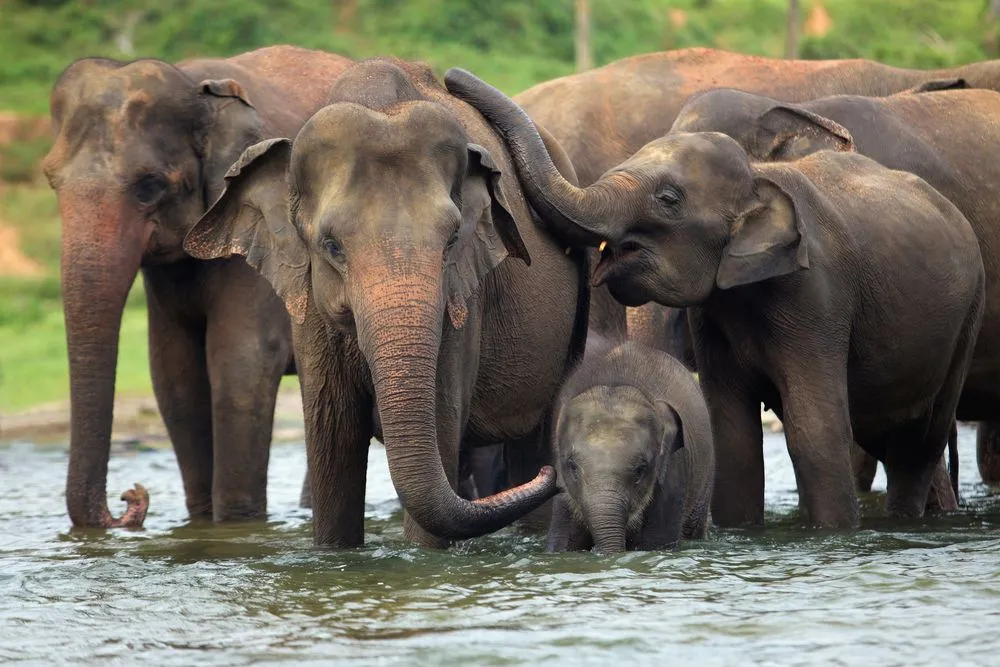
The silver lining is that many travelers have become aware of these cruel methods and are now looking for other humane ways to interact with these peaceful giants.
Starting in 2020, excursions led by the Intrepid Foundation to Laos will include an experience where travelers can see elephants roaming and swimming in their natural habitat in MandaLao, the country’s first non-riding elephant sanctuary. Many tourists traveling to Thailand also opt to visit the ChangChill Elephant Sanctuary in Chiang Mai, where they can observe elephants grazing and socializing from a safe distance.
Basically, if you want to interact with an elephant (and it truly is an unforgettable experience), make sure it’s done in a humane and respectful way!
References (click to expand)
- (1996) The osteology of the African elephant (Loxodonta africana). The United States National Library of Medicine
- Singh, S. D. (1963, April). The Elephant and the Aryans. Journal of the Royal Asiatic Society. Cambridge University Press (CUP).
- Carr, N.,& Young, J. (2018). Wild Animals and Leisure: Rights and Wellbeing (Routledge Research in the Ethics of Tourism Series). Routledge
- Elephants and Kings: An Environmental History, Trautmann. The University of Chicago Press
- Impact of Weight Carriage on Joint Kinematics in Asian Elephants Used for Riding. Animals (2021). NCBI PMC
- Powell, D. M., et al. (2008). Evaluation of Indicators of Weight-Carrying Ability of Light Riding Horses. Journal of Equine Veterinary Science. ScienceDirect
- Our top 10 facts about elephants. WWF (World Wide Fund for Nature)
- African bush elephant (Loxodonta africana). Wikipedia
- Asian elephant (Elephas maximus). Wikipedia