Weasels are small, slender carnivores in the family Mustelidae. They are not generally dangerous to humans, but they are aggressive hunters that can prey on small pets like rabbits, birds, and rodents. True weasels are wild animals and are illegal to keep as pets in most US states, the UK, Canada, and Australia. The animal often kept as a "pet weasel" is actually its domesticated cousin, the ferret (Mustela furo).
A weasel is a carnivorous animal with a slender body and particularly small legs. It eats rodents and other small mammals, and is sometimes considered a pest or a ‘nuisance animal’.
We have a tendency to get attached to things (at least, to some extent) just by looking at them; if something looks pretty/cute, we assume that it’s a harmless and lovable creature. This axiom holds good not only when we look at our fellow humans, but practically everything that we come across in our lives.
For instance, weasels look quite cuddly and adorable, but these tiny furballs are actually quite ferocious when it comes to locating and hunting their prey.
Weasel: The Animal
A weasel is a small carnivorous mammal native to North America, much of South America, Eurasia, and parts of North Africa. They are absent from sub-Saharan Africa, Australia, Antarctica, and most oceanic islands, though the least weasel has been introduced to New Zealand and a few Mediterranean islands. It is a highly active predator, and typically moves over surfaces with a series of quick, short jumps.
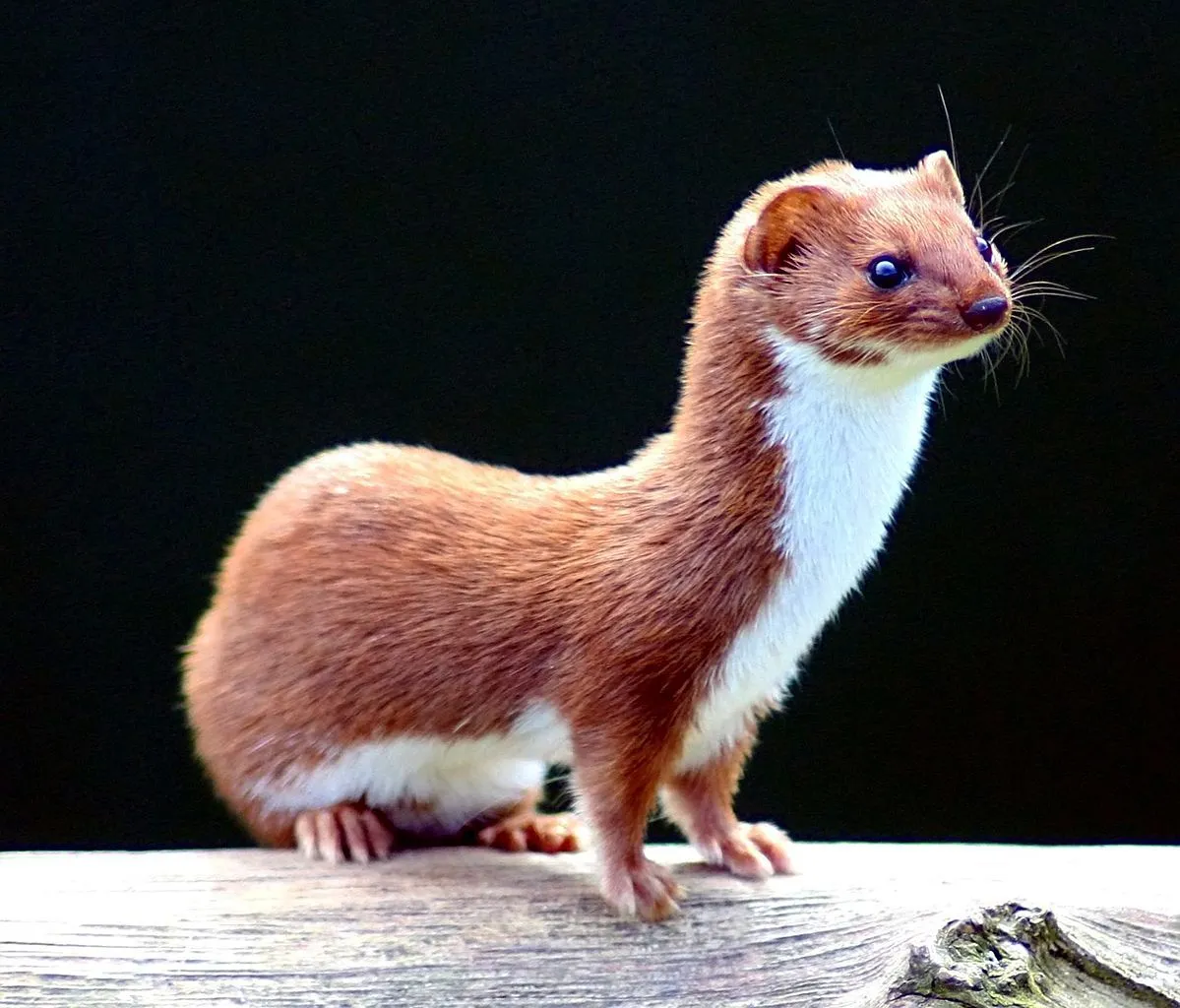
It is also known to be a fairly skilled climber, and therefore poses a serious threat to birds and their eggs in nests atop tree branches. Since a weasel eats quite frequently, it’s almost always looking for and hunting its prey, which usually consist of rats, voles and shrews.
Size Of The Weasel
Size varies dramatically by species. The least weasel (Mustela nivalis), the smallest living carnivore, has a body of about 6.8 to 8.5 inches (17 to 22 cm) and a 1.3 to 2 inch (3 to 5 cm) tail. The long-tailed weasel is much larger, reaching 11 to 16 inches (28 to 42 cm) in body length with a tail of 4 to 12 inches (11 to 29 cm). Across the genus, males are slightly bigger than females. Their long, slender body frame lets them follow prey into the tightest burrows.
Weasels generally have brown or red upper coats and white bellies; however, in northern populations of the least weasel, stoat (which is then called the ermine), and long-tailed weasel, a seasonal autumn molt replaces the brown summer fur with a new pure-white winter coat for snow camouflage, driven by shortening daylength.
Weasels are often confused with stoats (a close relative of weasels). The most distinguishing feature about weasels is that they are significantly smaller than stoats and never have a black tip on their tails.

Scientific Classification Of The Weasel
The weasel belongs to the Mustelidae family. Most of the classic weasels sit in the genus Mustela, alongside the stoat (ermine), the European mink, polecats, and the domestic ferret. In 2021, the long-tailed weasel, Amazon weasel, Colombian weasel, and American mink were reclassified into a new genus, Neogale. The wider family Mustelidae also includes more distant cousins such as badgers, martens, fishers, otters, tayras, and wolverines, but those animals are not in the same genus as weasels.

Mustelids are the largest and most diverse family in the order Carnivora. Animals of the weasel family are typically small, but they are very active predators and meat eaters.
Where Do Weasels Live? (Habitat Of The Weasel)
Weasels generally live in nests and burrows in hollow logs, rock piles and under barns. They also tend to attack their prey, perform a ‘hostile takeover’ of their nest and then live there. Weasels are commonly found in crop fields, woodlots, grasslands and brush piles. In fact, weasels can be found anywhere that their primary prey (i.e., other rodents) are found.
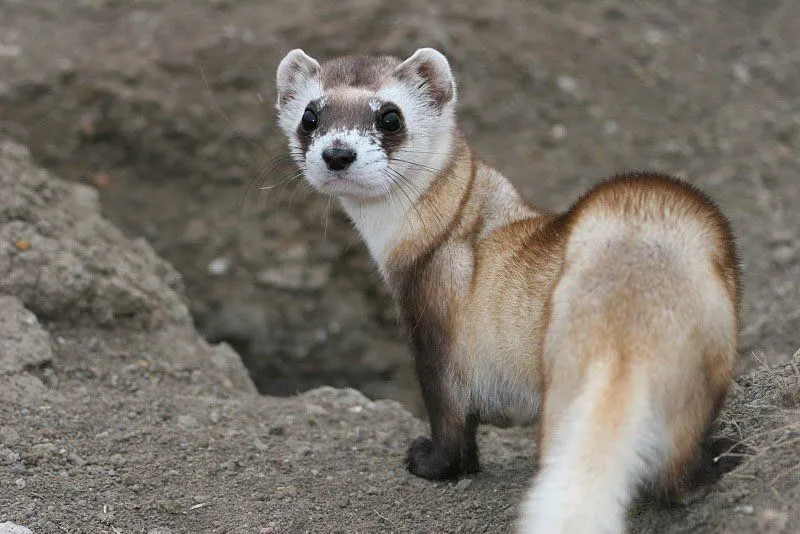
From a broader perspective, weasels are found practically all around the world, barring Australia, Antarctica and nearby islands.
Habits And Behavior Of The Weasel
Although weasels mostly feed on small rodents, they are also known to feed on small birds, their eggs and young rabbits. While male weasels pursue and attack larger animals, like cottontail rabbits, female weasels, with their smaller bodies, are deft at entering the tiny burrows of rodents and attacking them there. Their long, slender bodies are particularly helpful for attacking prey inside the latter’s own burrows.
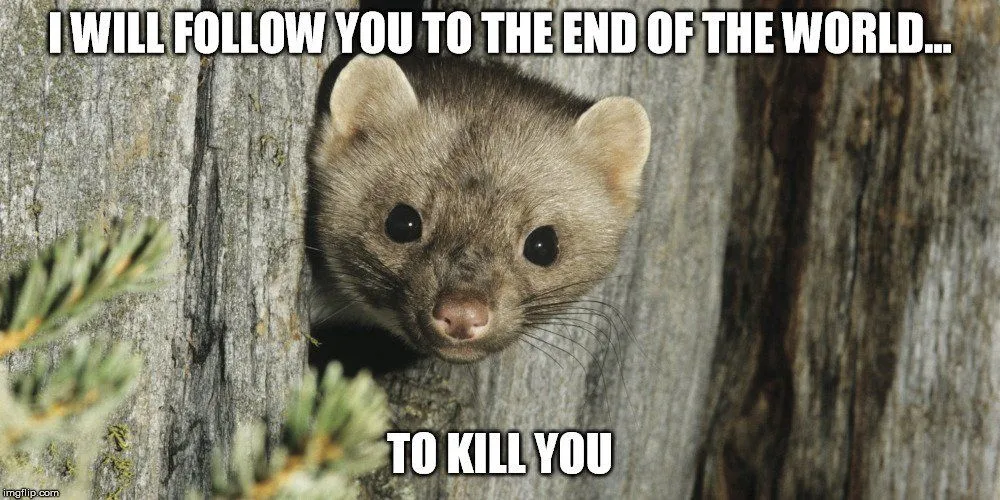
Don’t let the cute faces of weasels influence your opinion about their demeanor; weasels are murderous creatures! Since they constantly lose a lot of body heat, they have to eat very frequently to keep up their energy. Due to this, they kill and eat about half their body weight on a daily basis!
Weasels will attack a moving creature if they determine that it’s prey, regardless of how hungry they feel. Biologists call this surplus killing: the kill reflex is triggered by prey movement, so in an enclosed space with multiple darting animals (like a henhouse), a weasel may keep killing well past its appetite. The excess is usually cached and eaten later, an adaptation to their extreme metabolism and unpredictable winters.
Weasels usually move across surfaces in a series of short, quick jumps, and they often stop and stand upright to do a swift situational analysis.

When cornered, a weasel can discharge a thick, foul-smelling, yellowish fluid from its anal scent glands. The chemistry is related to skunk musk (sulfur compounds like thietane), but unlike a skunk, a weasel cannot aim a directed jet. The smear is enough to distract a predator and give the weasel a window to make a run for it.
Are Weasels Dangerous? (To Humans, Cats And Dogs)
For a creature that hunts so relentlessly, a weasel is surprisingly little threat to you. Weasels are shy of people and almost always run rather than fight. They are not aggressive toward humans, and unprovoked attacks are essentially unheard of. The catch is the word "unprovoked": if you corner one, try to pick it up, or reach into a space it is hiding in, a weasel will defend itself with a fast, sharp bite from a set of needle-like teeth.

A bite from any wild mammal should be taken seriously. Wash the wound thoroughly with soap and water and see a doctor, because mustelids, like other wild carnivores, can carry rabies, and in the United States exposure to a wild mammal is treated as a potential rabies risk unless the animal can be tested. Weasels and their droppings can also harbor zoonotic infections; the bacteria that cause leptospirosis, for example, spread through the urine of infected animals and can reach people via contaminated water or soil, or by direct contact with body fluids, according to the U.S. Centers for Disease Control and Prevention.
The real danger a weasel poses is to other animals in your home. A weasel that weighs only a quarter to half a pound (roughly 100 to 250 g) is still a hyper-efficient predator that kills mice, voles, rats, young rabbits, and birds, and routinely tackles prey several times its own size. To a weasel, a pet rabbit, a hamster, a guinea pig, a caged bird, or a clutch of chicks reads as food. Cats and dogs are usually too large to be prey, but a weasel cornered by a curious kitten or a small dog will bite and scratch to escape, and a scuffle can leave the pet with wounds that need a vet. The sensible rule is simple: weasels and small pets do not mix.
Can You Legally Keep A Weasel As A Pet?
This is the question most people actually arrive with, and the honest answer is: usually no. A true weasel is a wild animal that has never been domesticated. Unlike the dog or the cat, it has no thousands-of-years history of selective breeding for tameness, so even a hand-raised weasel keeps its wild instincts, its restless energy, and its musk.

In the United States, the law is decided state by state rather than nationally, so there is no single answer. Several states ban keeping native wildlife such as weasels as pets outright, while others allow it only under a captive-wildlife or "wildlife hobby" permit. Those permits typically require proof of suitable housing and knowledge of the animal's care, and they are rarely granted simply because someone wants a novel pet. Always check your own state's wildlife agency before assuming anything. In the United Kingdom and Canada, weasels are similarly treated as wild animals that you cannot simply take from the wild and keep, and in Australia, where no weasel species is native, keeping one is prohibited.
If what you really want is a weasel-shaped companion, the legal and practical choice across the US, UK, Canada, and Australia is the domestic ferret (Mustela furo). The ferret is the domesticated form of the European polecat, a close mustelid relative that humans have bred and kept for thousands of years. It is social, playful, litter-trainable, and legal to own in most places (with a few local exceptions, so it is still worth checking). For nearly everyone, the ferret is the answer to "can I have a pet weasel?"
Weasels As Pets
Putting it all together: a true weasel is a wild, undomesticated predator that is restless, hungry around the clock, prone to musking when stressed, dangerous to small household animals, and in most places illegal to keep without a permit that is rarely granted. None of those traits soften with hand-rearing. Add the fact that a weasel is small enough to be stepped on or grabbed by a toddler (and may bite in self-defense if it is), and the case against keeping one as a family pet is hard to argue with.
So while the cute, cuddly face is genuinely tempting, the practical and legal companion for almost everyone is the domestic ferret. True weasels are best admired in the wild, where their ferocious little lives play out exactly as evolution designed them.
References (click to expand)
- Long-tailed weasel - Suny-esf. The State University of New York College of Environmental Science and Forestry
- Long-tailed Weasel - www3.northern.edu
- Mammals of Minnesota: Weasel: Minnesota DNR - www.dnr.minnesota.gov
- Long-tailed Weasel - New York State Department of Environmental Conservation (NYSDEC)
- About Leptospirosis - U.S. Centers for Disease Control and Prevention (CDC)
- Rabies Prevention and Control - U.S. Centers for Disease Control and Prevention (CDC)
- Apply for a licence to keep a wild animal - GOV.UK