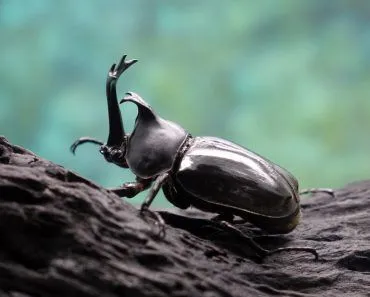
With more than 400,000 described species, beetles eat almost everything. Most are herbivores feeding on leaves, roots, seeds, nectar, fruit, and crops, but other species specialize in wood, fungi, decaying matter and dung, other insects, or even small aquatic prey like tadpoles and small fish. Lady beetles eat aphids; dung beetles eat dung; carrion beetles eat carcasses; predaceous diving beetles eat tadpoles. So the honest answer to "are beetles herbivores, carnivores, or omnivores?" is: it depends on the species.
Beetles are quintessential insects, with a head, abdomen, thorax and multiple legs. Their outer bodies are tough and solid. Their jaws are strong and solid, with chewing mouthparts that are well adapted to eat a wide variety of food. Interestingly, many beetles have wings, or more specifically, modified wings. The first pair of wings, called elytra, are hardened, shield-like covers that protect the soft abdomen and the delicate membranous hindwings folded beneath them. It’s the second, membranous pair that actually allows most beetles to fly. Many beetles catch our attraction with their brightly colored outer shells.
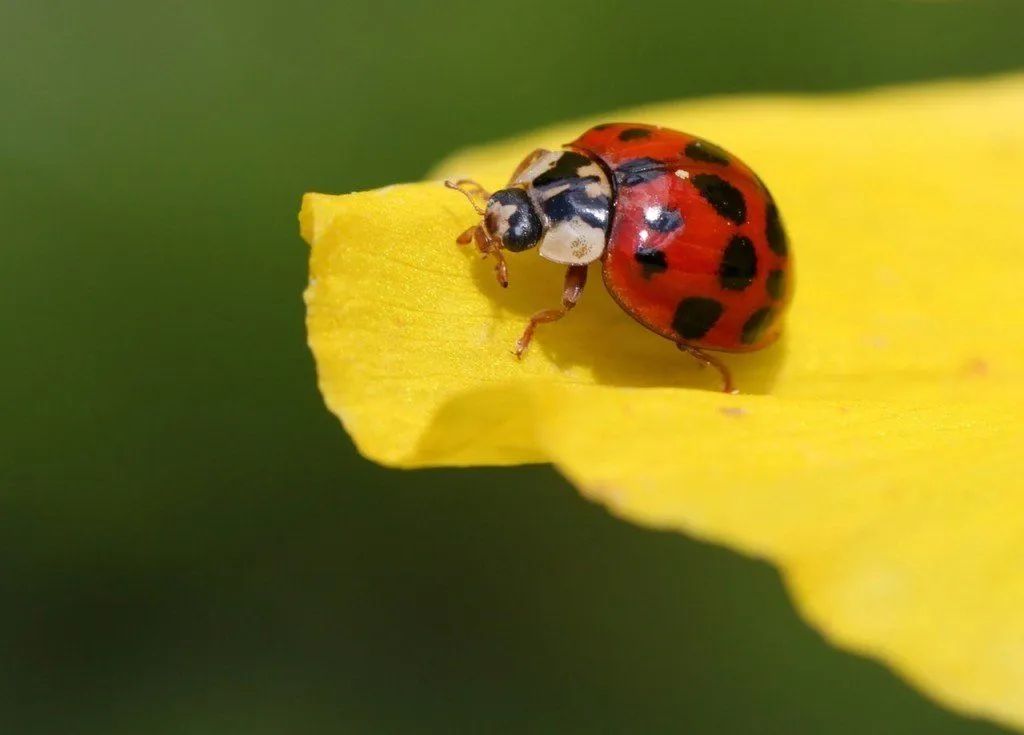
Beetles belong to an insect class called Coleoptera, which is a Greek word that means “sheath-wing”. Coleoptera happens to be the largest order of the class of insects. Coleoptera is the largest order of insects, with roughly 400,000 described species and an estimated 1.5 million still undescribed. About one in every four animal species on Earth is a beetle.
Because there are so many species of beetles, their diet can vary greatly. From decaying leftovers to aquatic creatures, they have manifested remarkable feeding abilities. Diving into that a bit deeper let’s take a look at typical food that different varieties of beetles eat.
Are Beetles Carnivores, Herbivores, Or Omnivores?
This is one of the most-asked questions about beetles, and the honest answer is: all three, depending on the species. Beetles are dietary generalists at the group level, but each species fills a specific niche. The majority of described beetles are herbivores (leaf beetles, weevils, longhorns, scarabs feeding on plant material). A smaller but conspicuous group are carnivores (ground beetles, tiger beetles, predaceous diving beetles, and most lady beetles, which hunt other invertebrates or small aquatic prey). A handful are true omnivores, like some ground beetles that switch between insect prey and plant material depending on what is available. There are even detritivores (carrion and dung beetles), fungivores (mildew beetles), and xylophages (wood-eaters). The sections below break the beetle pantry down by food type.
Plants And Crops
Most beetles are herbivores, meaning they feed exclusively on plants. This includes roots, leaves, seeds, nectar, crops, and fruits. Beetle breeds like the cottonwood leaf beetle and elm leaf beetle consume leaves. This leaves holes in the leaves, which finally results in leaf discoloration and eventual death!
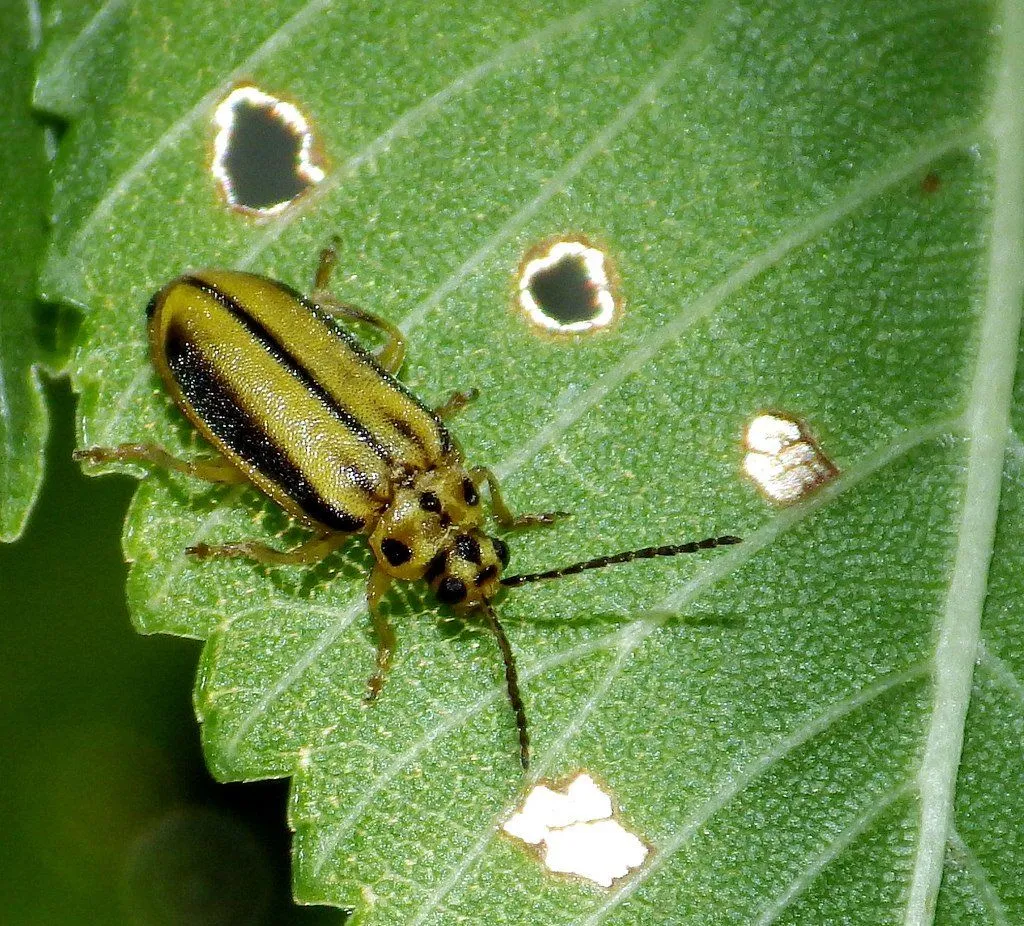
Beetle varieties like rice weevils and primitive weevils feed on crops like rice and grains. They are abhorred by farmers for their crop-eating addiction. Driedfruit beetles and figeater beetles devour fruits and figs, as their names imply. Their diet typically includes soft fruit, persimmons, fallen citrus and figs.
Wood And Furniture
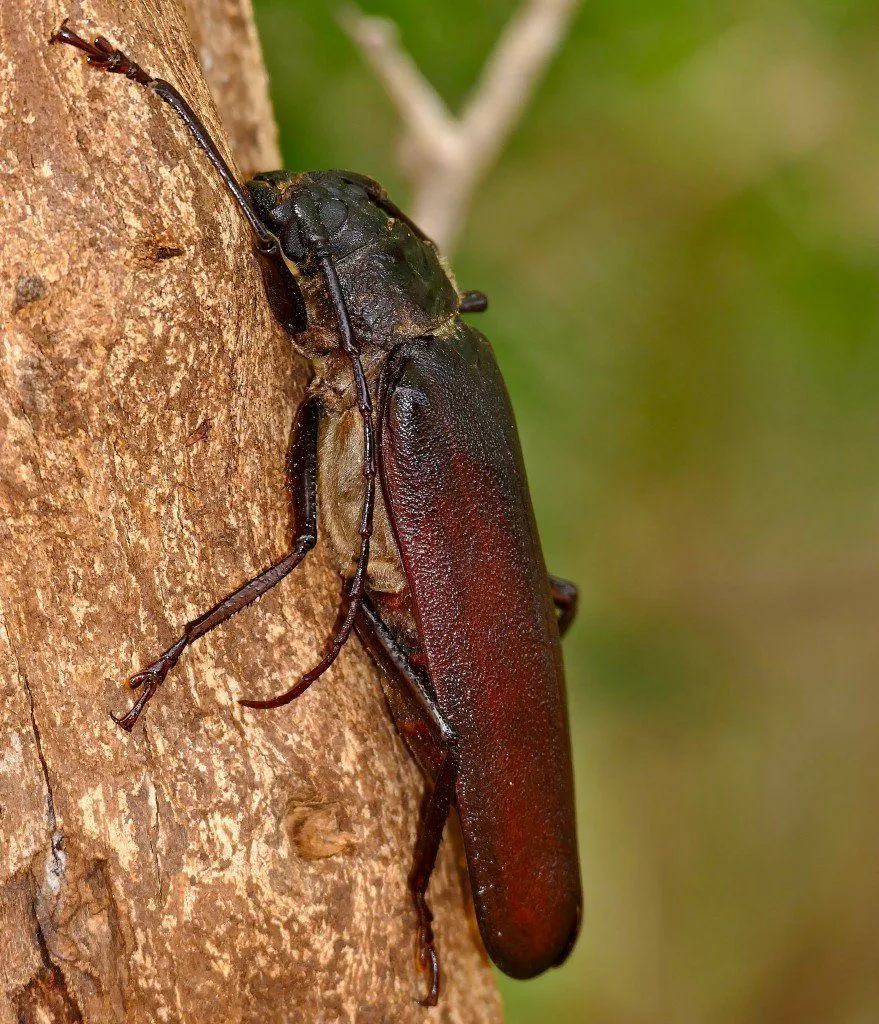
Many beetle varieties are similar to termites, in that they feed on wood. Beetles like the longhorn beetle and powder post beetle can cause extensive damage to a living tree. They are nefarious for gorging on untreated lumber, wooden artifacts, and wooden furniture.
Decaying Matter
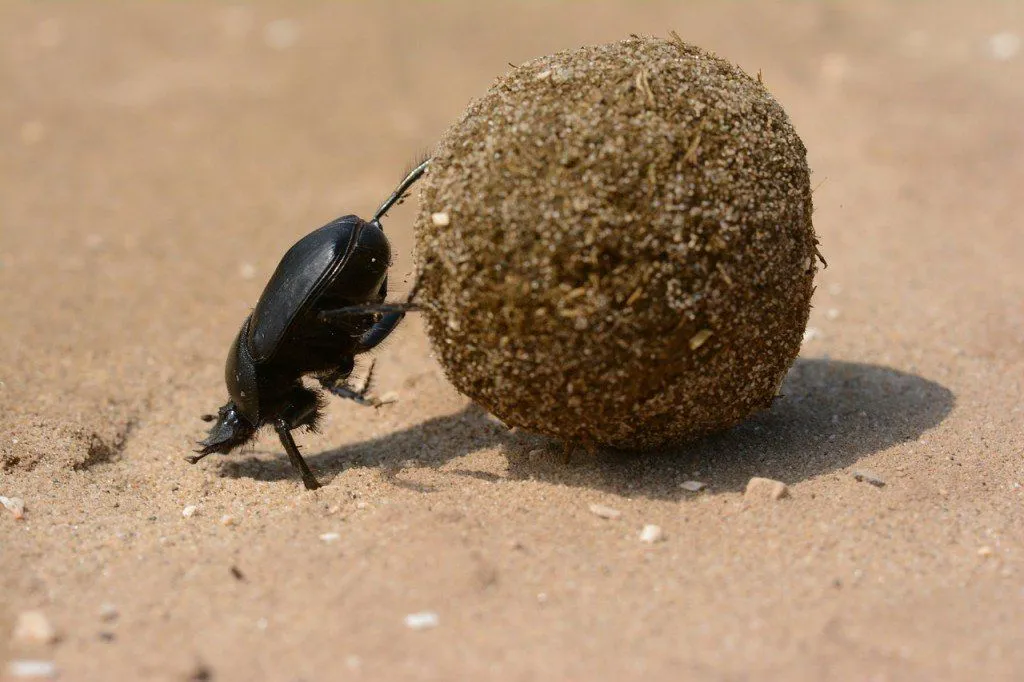
Many beetle breeds are scavengers. They consume decaying organic matter to survive. Carrion beetles, clown beetles, and scarab beetles survive by feeding on decayed plant leaves, fallen wood pieces, animal dung, and even dead animal cadavers.
Mildew beetles feed on fungus in damp and moist areas. As fungi are their main source of food, mildew beetle are sometimes found in bathrooms, as these are areas with high humidity levels. High humidity permits the growth and development of both the beetle and their food.
Insects And Larvae
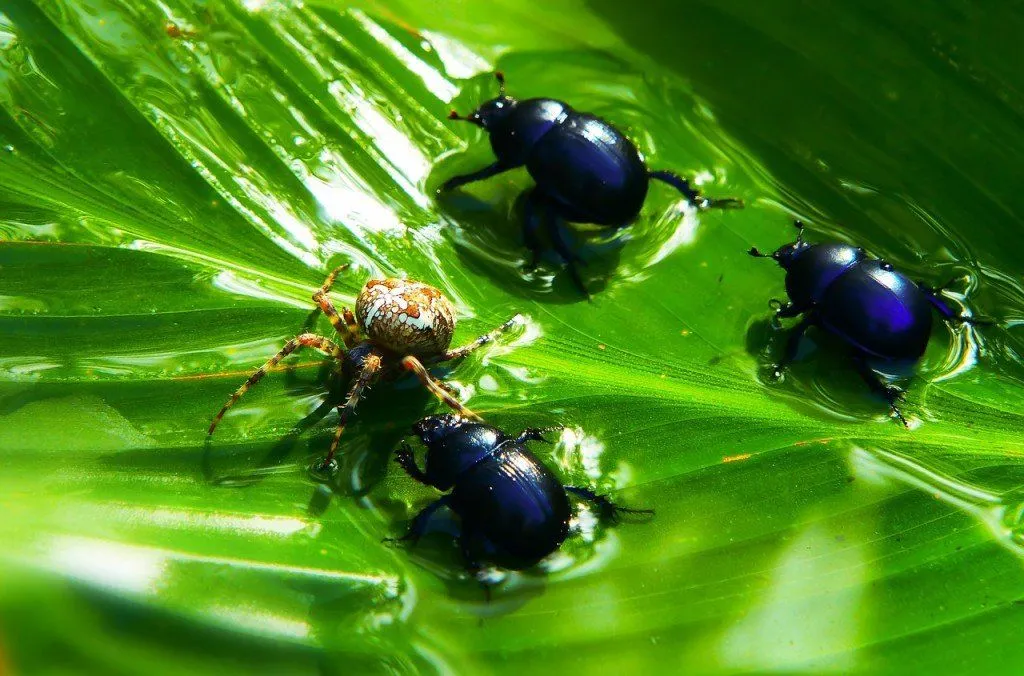
Besides being herbivores and scavengers, some beetles also demonstrate carnivorous habits! Oftentimes, they dine on the larvae of other beetles and insects. Some varieties of ground beetles are infamous for eating larvae. Lady beetles (the friendly red-and-black bugs of garden lore) are dedicated pest hunters. Most species feed on aphids, scale insects, whiteflies, mealybugs and mites, with some also taking small caterpillars, making them prized natural allies of farmers and gardeners.
Aquatic Creatures
This is most surprising diet of certain beetles. Yes, they eat certain aquatic creatures and amphibians.
Amphibians are larger than beetles and can easily swallow them, but beetles like predaceous diving beetles are able to not only circumvent their predators, but also feast on them! They entice amphibians like frogs and toads to attack them, but when they do so, the beetles whip around and sink in their huge jaws slowly draining the life out of the unsuspecting amphibian. The larvae of these diving beetles, nicknamed “water tigers,” use hollow sickle-shaped mandibles to inject digestive enzymes into prey and then suck out the liquefied tissue. Large diving beetles have been documented attacking small fish, salamander larvae, and even small frogs.
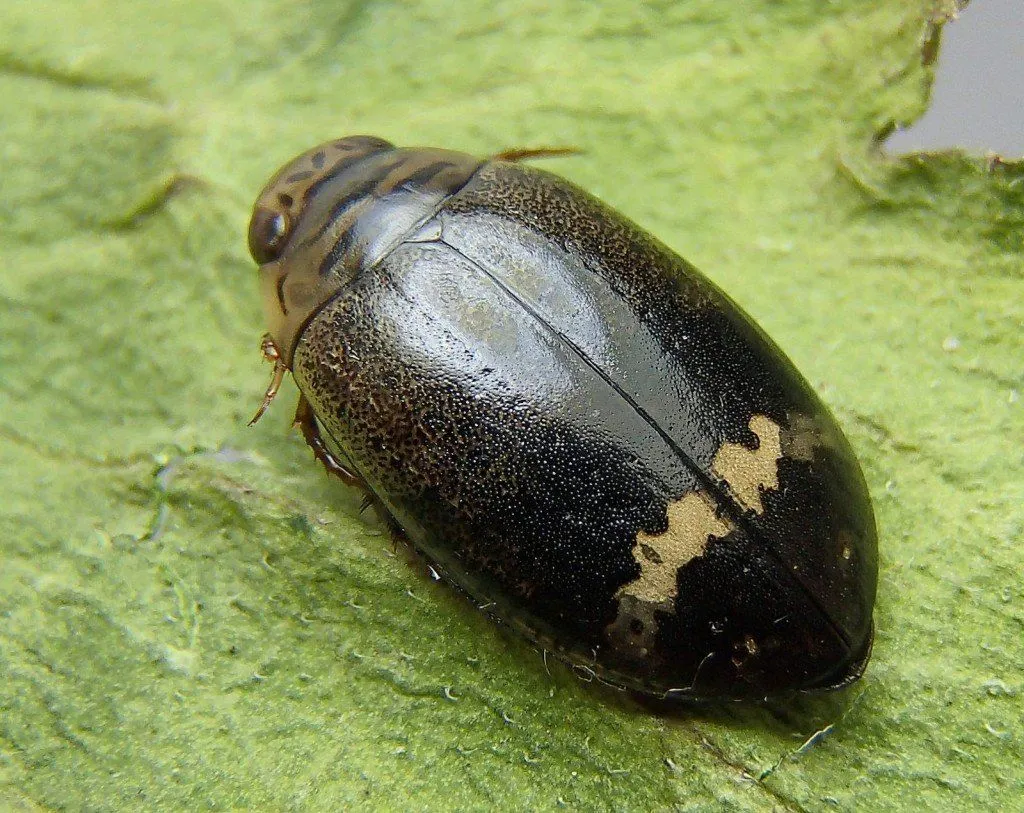
Whirligig beetles are known to feed on aquatic insects and crustaceans. Similarly, water beetles are widely known to feed on tadpoles.
Is The Beetle Diet ‘Evolutionary’?
Initially, I said that there are more than 400,000 species of beetles. Harvard entomologist Brian Farrell’s landmark 1998 Science paper, titled "‘Inordinate Fondness’ Explained: Why Are There So Many Beetles?", tied this directly to diet. Beetle lineages that switched to feeding on flowering plants (angiosperms) diversified far faster than their relatives. When a beetle population latches onto a particular host plant, a sub-group can drift to a related plant; over millions of years, that drift compounds into new species. That host-plant treadmill explains a huge chunk of the order’s diversity.
References (click to expand)
- Insect Pests of Home-Stored Foods - 5.501. CSU Extension. Colorado State University
- Finding and removing variegated carpet beetles. Oregon State University
- Farrell, B. D. (1998). “Inordinate Fondness” Explained: Why Are There So Many Beetles? Science.
- Stork, N. E., et al. (2015). New approaches narrow global species estimates for beetles, insects, and terrestrial arthropods. PNAS.
- Beetles (Coleoptera). Smithsonian National Museum of Natural History