Women don't usually grow beards because dense facial hair is driven by androgens such as testosterone, which the testes produce in far larger amounts than the ovaries. With higher estrogen and lower testosterone, most women grow only fine, sparse facial hair. Some women with elevated androgens (often from PCOS) can grow coarse facial hair, a condition called hirsutism.
Take a second to think about how human hair grows. Then compare it with any other mammal. You’ll be hard pressed to find any other animal (keeping marine mammals like whales and dolphins out of the picture) that grows long luscious hair on selective parts of their body (head and, for men, chin and cheeks), and sparse growth in others (like the arms, legs, abdomen). And by extension, why do humans, especially females, practice hair removal?
The Role Of Hormones In Hair Growth
Although we understand how and why young women in the modern age are so reluctant to voluntarily nurture their facial hair, it’s true that facial hair growth in women is much less prolific than in men. Now, let’s try to understand the scientific reasons behind this difference.
Scientists working in the domain of neurosciences state that men have thick facial hair in the form of mustaches and beards for a very specific reason. The inception of facial hair for both men and women starts in the hypothalamus, a section located at the base of the brain. The hypothalamus sends signals to a gland called the pituitary gland. The pituitary gland then sends signals that trigger the ovaries in girls and the testes in boys. You might have learnt in school that the ovaries help to produce a hormone called estrogen in girls. On the other hand, the testes help to produce a hormone called testosterone in boys. The rigorous activity of these two hormones help to push our bodies into puberty.
Boys become more “masculine” with an increase in testosterone levels, while the elevated estrogen levels make girls more “feminine”. Many studies have shown that the large amounts of testosterone in the body stimulate the fast and rapid growth of facial hair. As girls have more estrogen than testosterone, their facial hair growth is not as prolific. Thus, women who grow noticeably coarse facial hair are often found to have higher levels of androgens (such as testosterone) than usual, frequently because of polycystic ovary syndrome (PCOS). This pattern of coarse, male-type hair growth in women is called hirsutism. So, while higher estrogen and lower testosterone help most women keep facial hair growth in check, a permanently and completely hairless face is unrealistic for anyone!
Do Women Grow Facial Hair At All?
Here is a fact that surprises most people: women do grow facial hair. Almost every part of your face already has hair on it. The catch is that in women, and in children too, that hair usually stays as vellus hair, the short, fine, pale “peach fuzz” that covers most of the human body. It is so thin and lightly coloured that you rarely notice it unless the light catches it at the right angle.

The thick, dark, unmistakable hair we picture when we think of a beard is called terminal hair. It is longer, coarser and usually darker than vellus hair, and it is what grows on your scalp and, after puberty, on a man’s cheeks, chin and upper lip. The difference between a smooth-cheeked woman and a bearded man is not that one has facial hair follicles and the other does not. Both have them. What differs is which kind of hair those follicles are told to grow.
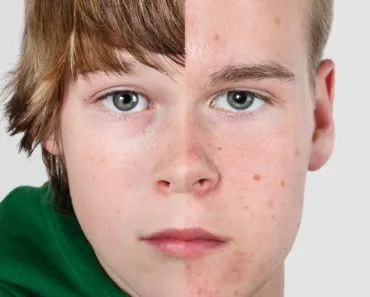
That decision is made by androgens. During puberty, rising testosterone signals some vellus follicles on the face and neck to switch over and start producing terminal hair. In men, a large share of these follicles respond, and a beard fills in. Women carry the very same follicles, but with far less testosterone reaching them, most stay in the fine vellus state, which is why women keep only a faint fuzz on the upper lip and chin rather than a full beard.
This also explains why some women grow darker, coarser facial hair while others grow almost none. When a woman’s androgen levels run high, or her follicles are unusually sensitive to them, more of those facial follicles flip to terminal hair. When that produces thick, male-pattern growth on the lip, chin or jaw, doctors call it hirsutism, and it is most often linked to polycystic ovary syndrome (PCOS). So the honest answer to “why don’t women have facial hair?” is that they do; it just usually stays too fine to see.
Evolutionary Tales
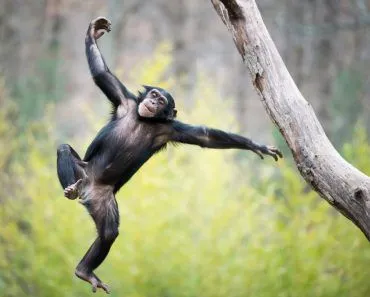
The unusual hairlessness of humans compared to our closest living relatives, the chimpanzees, continues to baffle researchers studying human history. Why did we lose all this hair? So far they’ve come up with a host of theories that try to answer the question.
The discussion, as any good discussion on evolution, starts with Darwin. In 1871, Darwin wrote a book called ‘The Descent of Man, and Selection in Relation to Sex’. In the book Darwin looks at humans through the evolutionary lens, talking about one aspect of evolution called sexual selection.
Darwin defined sexual selection as “the advantage which certain individuals have over others of the same sex and species, solely in respect of reproduction”. What this means is that certain traits are sexier than others. This would be a lioness preferring to mate with a lion with a bigger mane. Or a male deer with bigger antlers getting the female deer. All these flashy accessories aren’t crucial to the animal’s survival. Rather, these accessories indicate the quality of the DNA. A bigger mane on a lion tells the lioness, “This lion is strong and his DNA will make my future kids strong too”. If you’ve seen a National Geographic animal documentary, you know what I’m talking about.
Darwin proposed that prehistoric men preferred women with lesser hair. He came to this conclusion based on the fact that women were naturally less hairy than men. The men also got less hairy because of inevitable genetic mixing. Over generations, this was proposed to have led to humans having the weird nakedness of today. These proposals had ramifications on how Victorian men and women thought about their body hair.
In addition to being sexist, the theory fails to identify what triggered hair loss in the first place. What caused women to start becoming less hairy? Why would less hair be more attractive? There are several theories vying for the trophy of being ‘the answer’, but none of them tells the full story.
The most popular theory today is the thermoregulation (or ‘savanna’) hypothesis. Developed in the 1980s by British physiologist Peter Wheeler, it argues that less hair was an advantage for hominins who had begun walking upright and foraging across the hot, open savannas of Africa.
Fur is an insulator. It traps heat, keeping animals warm, which is a liability when outside temperatures are too hot. In the direct heat of the savanna, somewhere no chimp or ape lives, early hominins needed a way to cool off. The best way to do this would be to lose hair and develop sweat glands. Humans sweat much more than any other animal. Only the horse has a comparable sweating capacity.
Looking at genes supports the theory. A 2001 study found that the human hair keratin pseudogene ϕhHaA has functional versions (orthologs) in chimps, which help make them hairy. The study offers evidence that this gene became inactivated in our lineage around the time early humans diverged from chimpanzees.
Another study conducted in 2004 found that a variant of the MC1R gene, which is thought to be important for the darker skin color of humans, was already present 1.2 million years ago. Skin darkening wouldn’t have occurred if humans weren’t already losing hair.
Other theories are less popular and have several loopholes. One theory suggests that humans became less hairy because it helped them shed ectoparasites like lice and ticks. Another theory, suggested by James Giles, proposes that less hair increased skin-to-skin contact between mother and child. This made the mother more nurturing towards her offspring, leading to selection for less hair. Males got less hairy along the way because of genetic mixing. None of these have any genetic evidence backing them up.
Why Do Men Grow Beards If Women Don't?
We have spent a lot of time on why humans, and women in particular, ended up so hairless. But that leaves a flip side to the question. If losing hair was the winning strategy, why did men hang on to a beard, and even grow more of it once puberty hits? A beard is a classic secondary sexual characteristic. Like a lion’s mane or a stag’s antlers, it appears at puberty, is driven by sex hormones, and shows up in one sex far more than the other. That is a strong hint that sexual selection is at work here too, this time pushing in the opposite direction.

Biologists split sexual selection into two flavours. One is intersexual selection, where a trait spreads because the opposite sex finds it attractive. The other is intrasexual selection, where a trait spreads because it helps in competition against the same sex. For beards, the evidence leans heavily toward the second.
In a widely cited 2012 study, researchers Barnaby Dixson and Paul Vasey found that full beards made men look older, higher in social status and more aggressive, but not more attractive to women (Source). Across several follow-up studies, women often rated stubble as the most attractive length, with clean-shaven and heavily bearded faces scoring lower. In other words, a beard does not appear to have evolved mainly to win over mates.
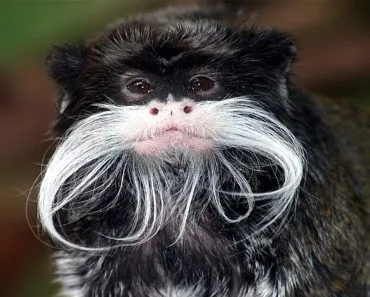
What it does well is send a signal to other men. A thick beard advertises age, maturity and rank, much like the conspicuous manes and ornaments that male monkeys and apes use to communicate social status (Source). Grown at exactly the stage of life when young men begin competing for standing in a group, a beard works as a badge of dominance. Women carry the same facial follicles, but without the high testosterone levels needed to turn them into terminal hair, they do not grow this particular badge, which keeps it a reliably male signal.
In The Pursuit Of Smooth Skin
Though humans are naturally hairless, history shows us that we artificially began to get rid of even more hair. The Egyptians, the ancient pioneers of beauty regimens, would shave the hair off their heads and bodies. The Romans, too, associated a lack of body hair with higher social and class status. They used razors made from flint, tweezers made from seashells, pumice stones, waxes such as beeswax and other sugar waxes (Cleopatra was thought to have used some sugar based wax to remove her hair).
By the time the Middle Ages came around, hair removal and makeup trends had gotten even more bizarre. Elizabeth I was what we would call a fashion icon of her time. She is thought to have popularized plucking the eyebrows and hair from the forehead to create a longer, larger looking brow.
As mentioned earlier, Darwin’s theory of evolution and sexual selection really caught the Victorian public’s imagination. It was after Darwin’s work that hair removal moved away from hygiene matters and class dynamics to an idea that defined the difference between masculinity and femininity. Gender and sexuality professor Rebecca Herzig points to Darwin’s 1871 book ‘The Descent of Man’, which incited women to turn against their facial hair, as I mentioned earlier.
Darwin’s book not only introduced the idea of sexual selection, it also justified much of human sentiment on hair through an evolutionary lens. He argues that a hairy body becomes a breeding ground for parasites and lice. Thus, a face without hair implies more hygiene and attractiveness, making a clean-faced woman a preferred choice for mating.
Darwin’s work in Descent of Man had its roots in traditions of comparative racial anatomy, and his evolutionary theory attested hair’s associations with ‘primitive’ ancestry and hairiness in females being implicitly linked to ‘less developed’ forms of living beings. Herzig opines that after the publication of Darwin’s work, hairiness became an issue of fitness.
Anthropologists, following the work of Darwin, professed that hairiness was one of the external factors for clearly distinguishing masculinity from femininity. Less hair in women indicated “higher anthropological development”, so hairiness in women became an anomaly. Women themselves associate removing facial and body hair with feeling feminine (Source)
One research study from the 1890s on insanity in women claimed that 271 cases were linked with excessive facial hair, and that those supposedly ‘insane’ women had thicker and stiffer hair. Havelock Ellis, a renowned scholar of human sexuality, claimed that heavy hair growth in women was often linked to criminal violence, strong sexual instincts and unforgiving animal vigor.
But many of these attitudes were a product of a culture’s prevailing zeitgeist. Afsaneh Najmabadi, a gender and sexuality professor from Harvard, echoed Herzig’s point. During her research, Najmabadi has found that the literature of the 18th century depicted Iranian women with heavy brows and faint mustaches on many occasions. In fact, these features were considered so attractive that they were sometimes painted on by renowned artists or augmented with mascara. She discovered that, until the early 19th century, the gender distinction in portraits of lovers was very vague and it sometimes became difficult to discern males and females!
By the early 1900s, facial hair was an important source of discomfort for women in the US. Their desire for smooth, sanitized skin was insatiable. They wanted to feel feminine, and having a hairless face was treated as a quintessential marker of femininity. In her book Plucked, Herzig explained how in a very short time period, facial hair became despicable to middle-class American women, and its removal seemed a necessity to separate themselves from the cruder atavistic human community.
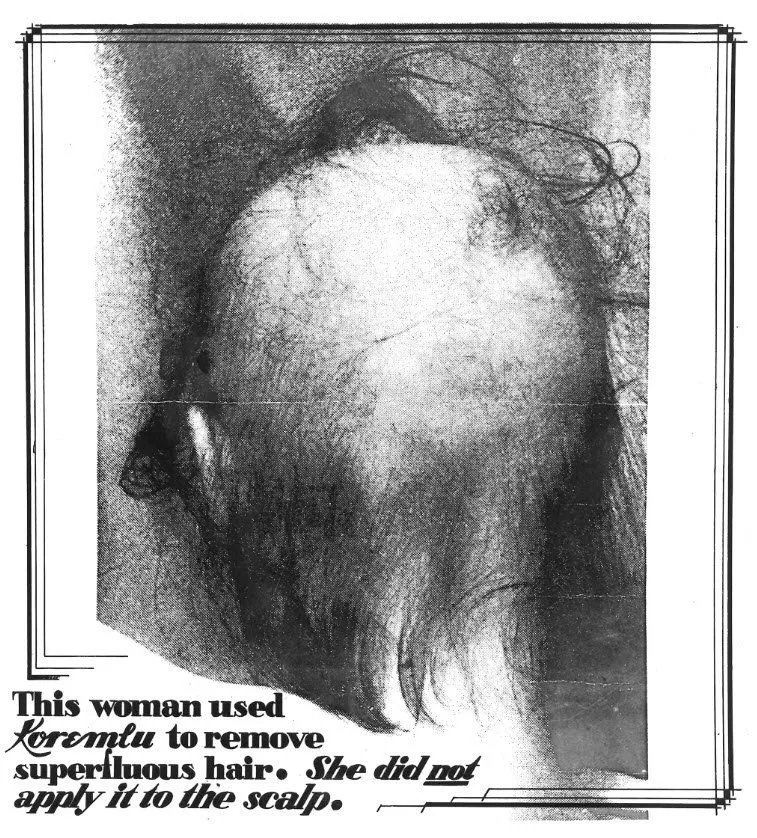
Women started using pumice stones or sandpaper in the 1930s and 1940s to remove their facial and body hair, but this often caused irritation and scabbing. Koremlu, a cream made from thallium acetate, was making the rounds among the cosmetic kits of young women in the 1930s. Although Koremlu advertised itself as a safe and permanent hair-removing cream, it was made from thallium acetate, which is actually rat poison! Thousands of unsuspecting women faced severe health issues and the blighted cream cost the lives of several women. Koremlu was successful in eliminating hair, but it resulted in serious health implications that included blindness, limb damage, and, at the very worst, death.
Cost Of Hair Removal
The removal of facial and body hair is ubiquitous in the modern female population. According to one study, more than 99% of American women voluntarily rid themselves of their facial or body hair. Mind you, hair removal is pretty darn expensive!
Other studies have pointed out that American woman typically spend more than $10,000 over the course of their lives to shave off their hair. This cost can balloon up to a whopping $23,000 for women from wealthier backgrounds who use waxing for hair removal, rather than shaving. These habits of getting rid of hair, especially facial hair, are not restricted to the US; women across different races, ethnicities, and nationalities would agree that it’s almost “mandatory” for them to have a smooth, clear and hairless face.
But more women are reclaiming their hair. Recent trends such as the glitter armpits or dying your armpit hair a vibrant colour are ways that many women are rebelling against the standards 100s of years of history has placed on them. Body positive activists are urging women to love themselves in any shape or form, whether that’s with hair or not. Though, the majority of women still shave, wax, thread, pluck and scrub their hair off, there is a change about demanding more acceptance.
References (click to expand)
- Women with Mustaches and Men without Beards: Gender .... The University of California Press
- (1932, March). On Understanding Women. Mary R. Beard. Social Service Review. University of Chicago Press.
- Darwin C. (2011). The Descent of Man. CreateSpace Independent Publishing Platform
- Hirsutism. StatPearls. NCBI Bookshelf. National Library of Medicine.
- Vellus Hair (Peach Fuzz): What It Is, Function & Removal. Cleveland Clinic.
- Dixson, B. J., & Vasey, P. L. (2012). Beards augment perceptions of men’s age, social status, and aggressiveness, but not attractiveness. Behavioral Ecology. Oxford University Press.
- A multivariate analysis of women’s mating strategies and sexual selection on men’s facial morphology. PMC. National Library of Medicine.