Table of Contents (click to expand)
We pick our nose to clear out boogers (dried mucus) that block airflow, and because the habit can soothe boredom or anxiety. It is almost universal: one survey found 91% of adults do it. But it is not safe. Nose picking spreads germs and can cut, infect, and damage the nose.
We all have some habits that started when we were young and never went away, whether it is nail-biting, poking fingers into our ears, or even nose picking!
But why do we like picking our nose? Is it a grooming behavior or something more? And why does it feel so satisfying?
The habit is common enough to have its own tongue-twisting name. Doctors call the act of nose picking rhinotillexis, and eating what you find (yes, plenty of people do) mucophagy. Let's dig into the science behind both.
What Are Boogers?
Our body has many techniques to protect us from germs and other external agents. One of these tools is mucus.
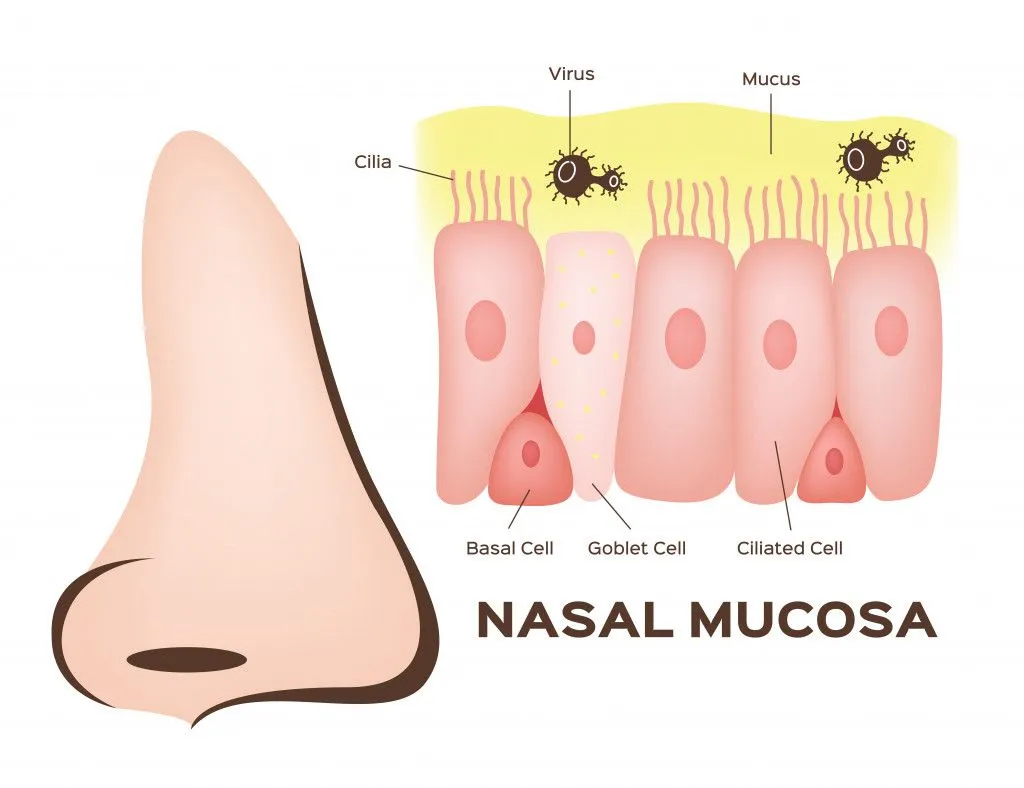
Mucus is a slimy substance produced by specialized cells that line parts of the body, such as the lungs, nose, mouth, and gut. Mucus traps germs it comes in contact with and biological chemicals then destroy the germs. Mucus also lubricates these cavities.
Along with a composition of different gases, we breathe in microbes, dirt, dust, and pollen. Our mucus helps filter out these particles, preventing them from entering our lungs.
The mucus, once it dries up, forms tiny clumps (“boogers”) inside our nose, which we often try to remove by “going digging”.
Why Do We Pick Our Nose?
Boogers Obstruct Airflow
When our nasal cavities get filled by boogers, it can cause mild discomfort and make breathing quite difficult, so we try to get rid of it. When blowing your nose doesn’t dislodge the booger, your fingers certainly will. When this booger-obstruction is removed, breathing becomes easier. This is the simplest reason behind this behavior.
Grooming Behavior
Nose picking could also be a grooming behavior that we simply never shook. Our prehistoric relatives were constantly vigilant against ticks and fleas, poking and prodding to get rid of them. Our need to pick our nose may be a result of that behavior, as might other behaviors, such as picking at scabs.
Nose Picking Can Be A Nervous Habit
People often pick their nose when they’re bored. For some, it is also a nervous habit, like chewing gum or nail biting. The habit does help relieve anxiety in some people.
Daniel Glaser, a neuroscientist associated with King’s College London has a hypothesis regarding this, which he proposed in an article for The Guardian.
Our brain has different areas, each of which correspond to different body parts. The part that “controls” the hand is adjacent to the one connected to our face. When we pick our nose, our hand gets close to our face, which can feel somewhat satisfying.
Rhinotillexomania
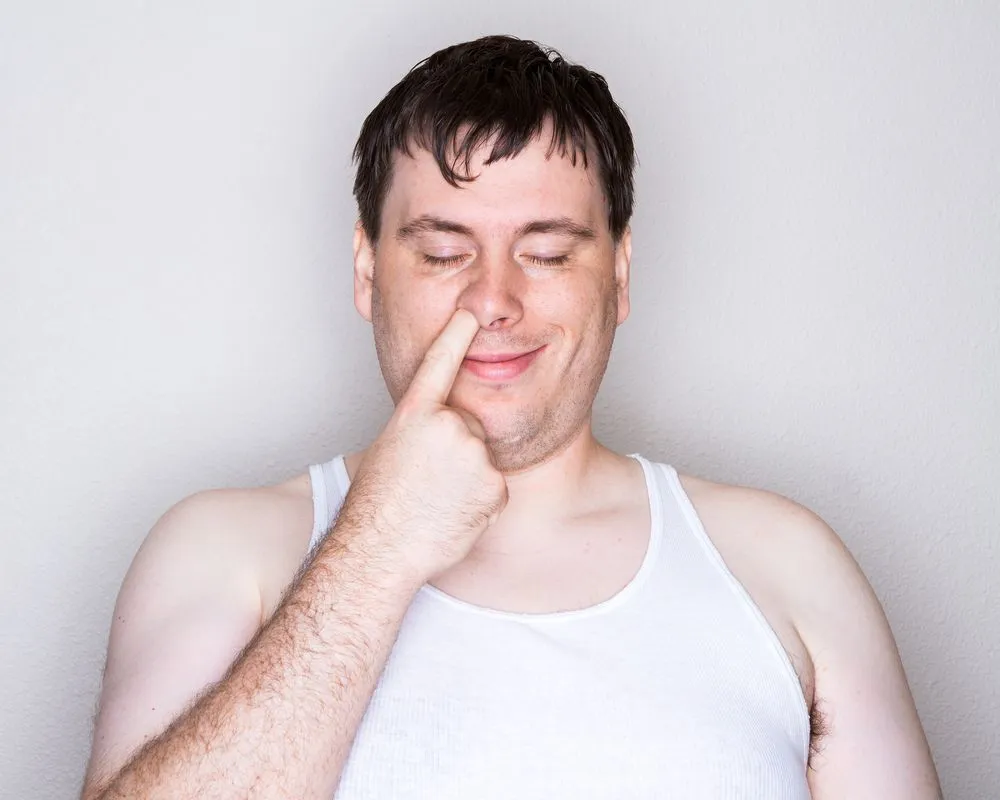
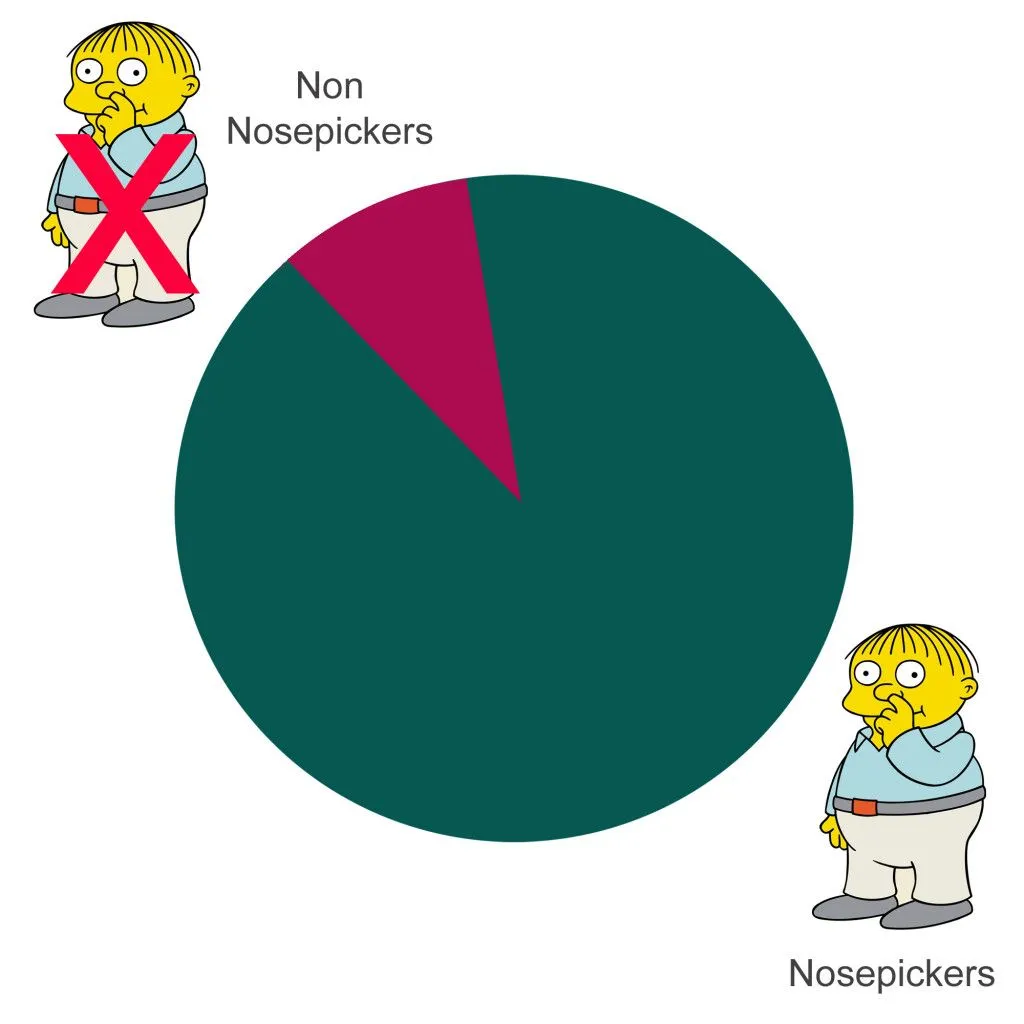
The habit of nose picking can become pathological enough to elevate the behavior to extremes, at times. The first study on this condition was performed in 1995 by US researchers Jefferson and Thompson, who mailed a questionnaire to 1,000 adults in Wisconsin. Of the 254 who replied, 91% admitted that they pick their noses, though only about a quarter believed everyone else does it too.
When the habit becomes compulsive, it is called “rhinotillexomania,” and the constant poking can cause real harm: repeated nosebleeds (epistaxis), thickened or scratched tissue inside the nostril, and, in extreme cases, a hole worn through the septum, the wall that separates your nostrils. This condition is often connected to other psychiatric issues, including anxiety disorders.
Is It Alright To Pick Your Nose?
Our hands come in contact with countless surfaces every day and carry millions of germs on them. When we pick our nose, we are unknowingly transferring these germs to our nose and vice versa. If you don’t clean your hands after touching boogers, you are spreading those germs around.
Studies show that mucus carries bacteria like Staphylococcus aureus and Streptococcus, which can cause a range of conditions, from skin infections and acne breakouts to pneumonia. In fact, one Dutch study found that people who picked their noses were significantly more likely to carry S. aureus in their nostrils than those who didn't.
The germs travel the other way too. During the COVID-19 pandemic, a 2023 study of hospital staff found that healthcare workers who picked their noses were roughly three to four times more likely to catch SARS-CoV-2 than those who left their noses alone, a neat illustration of how fingers ferry viruses straight to the nostrils.
The tissue inside the nose is delicate. When we poke and prod, our nails might damage the tissue, causing cuts, which could become infected if those bacteria managed to infiltrate our body’s immune defenses.
And most importantly, even though it’s a natural habit, picking your nose is not considered a “polite” gesture in society.
Could It Affect Your Brain?
Here is a more speculative worry, and one worth flagging carefully. In 2022, researchers at Griffith University in Australia showed in mice that a common bacterium, Chlamydia pneumoniae, could travel up the olfactory nerve (the nerve linking the nasal cavity to the brain) and trigger changes that resemble early Alzheimer’s disease, including a buildup of amyloid-beta protein. Damaging the lining of the nose seemed to make the journey easier, which led the team to suggest that picking your nose might, in theory, give such microbes a shortcut to the brain.
It is an intriguing idea, but it is just that for now. The study was done in mice, not people, and shows a possible pathway rather than proof that nose picking causes Alzheimer’s in humans. No one should panic over a habit nearly everyone shares. Still, it is one more reason to keep your fingers (and their germs) out of your nose.
A Final Word
Nose picking may be unacceptable in some corners of polite society, but it doesn’t stop us from being fascinated with the boogers we pick. Kids are the most common offenders; they often closely inspect their boogers, like valuable gemstones. A random search on the internet can even give you the nutritional quality of boogers! However, regardless of the nutritional qualities of boogers, it’s definitely a good idea to keep them off your dinner plate, given their payload of bacteria.
Boogers may be a gross part of your immune system’s mechanism to protect the body, but digging them out isn’t a cool (or sanitary) thing to do, no matter how satisfying it may feel. So… maybe just leave those boogers alone?
References (click to expand)
- Why is nose picking so appealing? | Life and style. The Guardian
- Connor, V., German, E., Pojar, S., Mitsi, E., Hales, C., Nikolaou, E., … Ferreira, D. M. (2018, October). Hands are vehicles for transmission of Streptococcus pneumoniae in novel controlled human infection study. European Respiratory Journal. European Respiratory Society (ERS).
- Wertheim, H. F. L., Kleef, M. van ., Vos, M. C., Ott, A., Verbrugh, H. A., & Fokkens, W. (2006, August). Nose Picking and Nasal Carriage of Staphylococcus aureus. Infection Control & Hospital Epidemiology. Cambridge University Press (CUP).
- Mesa-Marrero, M., de Frias-Berzosa, B., Hernández-Montero, E., Alvarez-Roger, A., & Cruz-Toro, P. (2021, November). Rhinotillexomania: A Manifestation of Psychiatric Illness. Acta Otorrinolaringologica (English Edition). Elsevier BV.
- Gupta, A., & Dhingra, A. (2018, August 21). Chronic Rhinotillexomania Leading to Unilateral External Nare Stenosis. Cureus. Cureus, Inc.
- Rather, Y. H., Sheikh, A. A., Sufi, A. R., Qureshi, A. A., Wani, Z. A., & Shaukat, T. S. (2011, April 24). ADHD presenting as recurrent epistaxis: a case report. Child and Adolescent Psychiatry and Mental Health. Springer Science and Business Media LLC.
- (1995) Rhinotillexomania: psychiatric disorder or habit? - PubMed. The United States National Library of Medicine
- Seltzer, A. P. (1963). Nose Picking. Journal of the National Medical Association. NCBI / National Library of Medicine.
- Chacko, A., et al. (2022). Chlamydia pneumoniae can infect the central nervous system via the olfactory and trigeminal nerves and contributes to Alzheimer’s disease risk. Scientific Reports. Nature Portfolio.
- Lavell, A. H. A., et al. (2023). Why not to pick your nose: Association between nose picking and SARS-CoV-2 incidence, a cohort study in hospital health care workers. PLOS ONE.