Table of Contents (click to expand)
Green potatoes can be harmful. When tubers are exposed to light, they turn green by producing chlorophyll, and they often build up bitter, toxic compounds called glycoalkaloids (mainly α-solanine and α-chaconine) at the same time. Small amounts cause headache, nausea and diarrhea; doses of 3 to 6 mg per kg of body weight can be lethal. The safest move is to discard heavily greened potatoes.
We eat a lot of potatoes. They are the third most important food crop in the world after rice and wheat, and roughly 383 million metric tons of potatoes were produced worldwide in 2023. According to data from the USDA, the potatoes Americans eat at home are most often chips (about 28% of home consumption), while away from home, in restaurants and fast-food places, fries account for 59% of the potatoes they eat.
On some of those potatoes, chips or fries, you may have noticed a slight greenish tinge. There are even some rumors on social media that greenish potato chips are harmful, but that one green chip that you ate the other day didn’t really make you ill, so is there any truth to the rumor?
Why Do Potatoes Turn Green?
Potatoes (Solanum tuberosum) belong to the Solanaceae family, along with popular vegetables like tomatoes and eggplant.
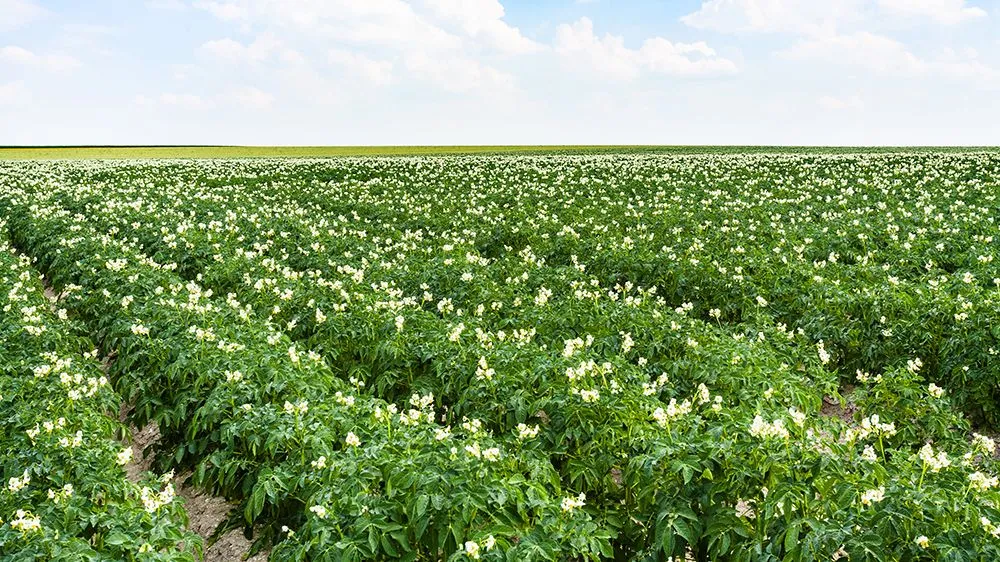
We eat the starchy modified stem, called the tuber, of the plant. Although few of us have seen what a potato plant actually looks like (potatoes primarily grow underground), the plant bears flowers and berries that can contain 100-400 seeds. However, potato is usually vegetatively propagated through portions of the tuber.
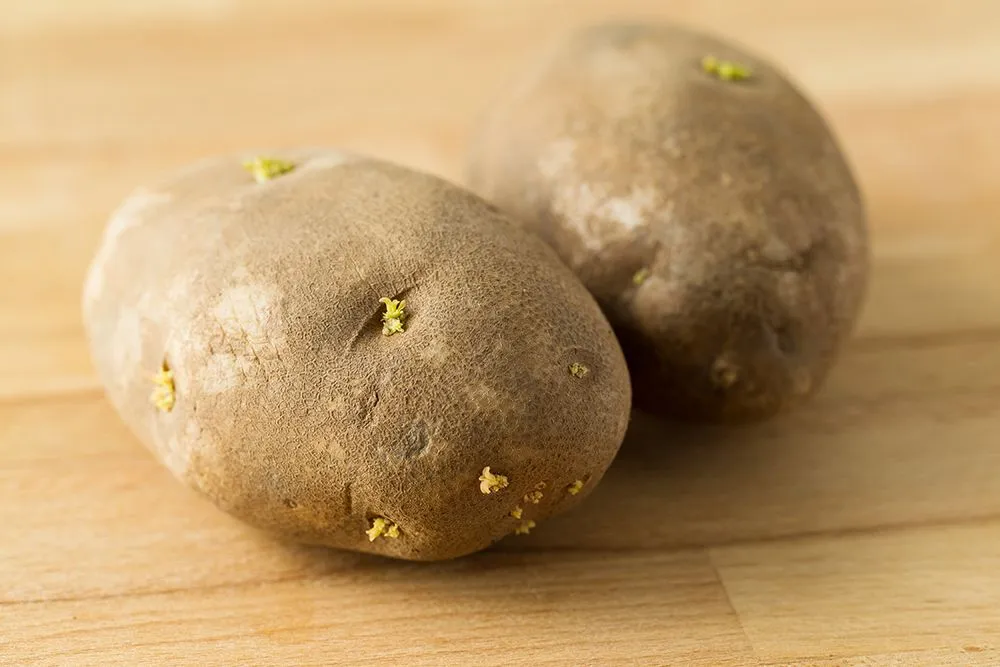
The potato tubers turn green when exposed to light. This can happen either when the tubers are growing (attached to the plant) or during storage after harvest, and warm storage makes it worse while cold storage slows it down. How much the potato greens depends on genetics; some varieties are more sensitive to light exposure than others.
Greening is not a desirable trait for potatoes. It happens because the cell organelle that stores starch (amyloplast) converts into a chloroplast, which produces chlorophyll. Greening is usually associated with the production of certain biochemicals called glycoalkaloids (GA).
Potato Tubers Contain Glycoalkaloids
Glycoalkaloids (GA) present in green potato tubers are toxic. The chemical is also present in other vegetables, such as eggplant and tomato. The plants produce glycoalkaloids to protect themselves from pests and pathogens. This production is a defense mechanism.
There is no single worldwide legal limit, but a common guideline (used in countries such as Sweden and Finland) caps the total glycoalkaloids in one kilogram of potatoes (fresh weight) at 200 mg, and when varieties with higher levels are identified, they are removed from the market.
Many glycoalkaloid molecules are found in potatoes, but two of them, α-chaconine and α-solanine, account for 95% of the glycoalkaloids.
α-chaconine and α-solanine, along with other GAs, are present in all parts of the potato plant. The highest concentrations are present in the green parts, such as leaves, and in flowers and fruits. The white parts (tubers) contain a small amount of GA. Exposing the tubers to light, bruising them, or letting them sprout drives up their GA content, and so does storing them somewhere warm.
GA Is Toxic
Glycoalkaloids work by affecting the nervous system of an organism. They are neurotoxins, and in humans they usually cause only mild symptoms, such as headache, nausea and diarrhea. However, in the varieties of potatoes that contain high levels of these chemicals, they can lead to more severe effects.
How much is too much? The European Food Safety Authority puts the lowest dose linked to symptoms at about 1 mg of total glycoalkaloids per kilogram of body weight, with stomach upset typically setting in around 2 to 5 mg per kg. Severe cases of GA toxicity can result in paralysis, respiratory problems, cardiac failure, coma, and death, and doses in the range of 3 to 6 mg GA per kg of body weight are considered potentially lethal.
As for the long game, no health problems have been linked to repeated or long-term intake of glycoalkaloids from potatoes, though there is too little data to rule it out entirely.
When Green Potatoes Led To Poisoning
If we search through historical reports, we can find multiple incidences of green potato poisoning. Most notable among them is the report from 1979, when 78 schoolboys at a South London boarding school fell ill after eating potatoes that had been left in storage over the summer. The boys had gastrointestinal, circulatory, neurological and dermatological symptoms; 17 were hospitalized, though all of them recovered. When the leftover potatoes were tested, the amount of solanine was found to be excessive.
In another incident reported in 1925, a family of seven fell ill after eating green potatoes and two of them died. The symptoms included vomiting, diarrhea, exhaustion, and restlessness.
Modern potato varieties are screened for their GA content and varieties with genetically high GA are withdrawn from the market. Therefore, the only way to come across high GA in potatoes is when the tubers have developed a greenish color.
Should you worry about the greenish potato chips that you ate accidentally? While the green color certainly indicates the presence of chlorophyll and GA, the GA content is so low that eating one random chip will certainly not make you sick.
Conclusion
α-chaconine and α-solanine are glycoalkaloids that are present in all parts of the potato plant. However, the levels are lower in the edible tubers. When the tubers are stressed or exposed to light, they turn green, and at the same time they tend to produce increased levels of GA.
Thus, it is important to store potatoes away from light. According to the USDA, it is best to discard green potatoes, but if you must eat them, you should remove all the green parts, as well as the skin and any developing shoots.
References (click to expand)
- Nahar, N., Westerberg, E., Arif, U., Huchelmann, A., Olarte Guasca, A., Beste, L., … Sitbon, F. (2017, March 3). Transcript profiling of two potato cultivars during glycoalkaloid-inducing treatments shows differential expression of genes in sterol and glycoalkaloid metabolism. Scientific Reports. Springer Science and Business Media LLC.
- Dhalsamant, K., Singh, C. B., & Lankapalli, R. (2022, October 19). A Review on Greening and Glycoalkaloids in Potato Tubers: Potential Solutions. Journal of Agricultural and Food Chemistry. American Chemical Society (ACS).
- Chain, E., Schrenk, D., Bignami, M., Bodin, L., Chipman, J. K., del Mazo, J., … Grasl‐Kraupp, B. (2020). Risk assessment of glycoalkaloids in feed and food, in particular in potatoes and potato‐derived products [JB]. EFSA Journal, 18(8).
- Green Potatoes & Potato Sprouts - missouripoisoncenter.org
- Are green potatoes dangerous?.