Table of Contents (click to expand)
No. A canyon is a deep, steep-walled landform carved as a river cuts down through rock. To do that, the river needs extra cutting power, which usually comes from tectonic uplift or a drop in base level (sea level) steepening its course. Without that boost, most rivers carve broad valleys, not deep canyons.
At some time in your life, you have seen canyons, ravines or gorges, even if it was just through beautiful pictures in magazines. To jog your memory a bit, take a look at the image below of the magnificent Grand Canyon.
As its name suggests, it is a magnificent geological structure found in the USA in arid northern Arizona. Its beautiful shape and strikingly colorful horizontal layers called strata are some of the most unique features of the Grand Canyon. Can you believe that the oldest rocks exposed in those walls are around 1.8 billion years old, far older than the dinosaurs? The canyon itself, though, is much younger than the rocks it cuts through. The Colorado River has only been carving it for the last 5 to 6 million years.
However, the most intriguing question relates to how it was formed. When I first saw a picture of the Grand Canyon, I couldn’t stop wondering about the hundreds of defined strata. I felt like they resembled something… and then I realized that, yes, I had seen similar markings on the sides of a dry riverbed!
As it turns out, this magnificent canyon, stretching about 446 km (277 mi) long, up to 29 km (18 mi) wide, and more than 1.6 km (a mile) deep, with rims sitting 2,100-2,700 m (7,000-8,800 ft) above sea level, is the work of a river!
I suddenly found myself questioning if all rivers could make such humongous canyons, or if it could only be done by special ones. That is precisely what we will explore today.
The Power Of Rivers
Rivers, as we know, are streams of flowing water. Some have water all through the year, while others only fill up during certain seasons. The most important fact here is that they are very powerful water bodies. They carry a substantially large amount of water and are flowing at rapid speeds, and if you know Physics, you understand that large mass and speed combined makes for quite a powerful and dangerous package!
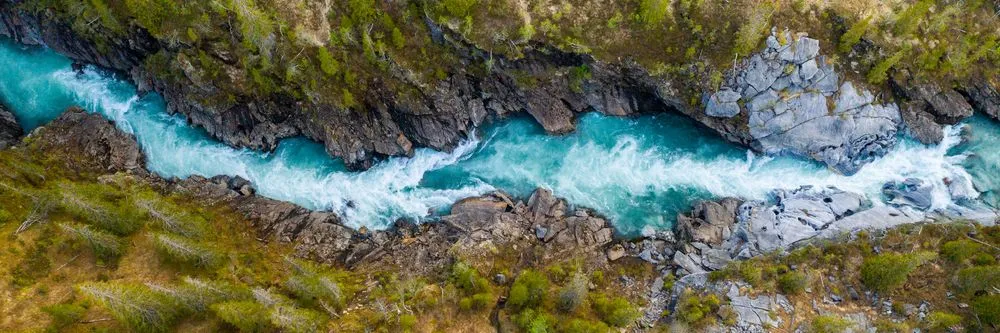
Rivers are insistent, so wherever they go, they literally carve out a path for themselves to flow. Even when they dry up, the deep path they carved is still very much present. And it’s not just their flow paths they are carving; they also form various beautiful water bodies, such as lakes and waterfalls.
Now, imagine these rivers that are shaping and carving landscapes have an extra assist from gravity. Can you imagine the added force? This is what happens in canyon formation.
How Are Canyons Formed?
Let’s get some features of canyons straight in our minds. They are steep, while the valley below is narrow. They tend to be very deep and have strata on both sides of its walls. Now, let’s concentrate on how it formed.
Canyons are the result of erosion over a very long period of time, and most deep ones owe their start to some kind of tectonic activity. Simply put, “tectonic”, in terms of geology, relates to the Earth’s outer layer. So, tectonic activity includes the different processes that move and shape the Earth’s crust, such as earthquakes and the slow uplift of plateaus and mountains. For a deep canyon to form, the land has to rise (or the river’s base level, ultimately sea level, has to drop) so the river ends up flowing down a steeper slope.
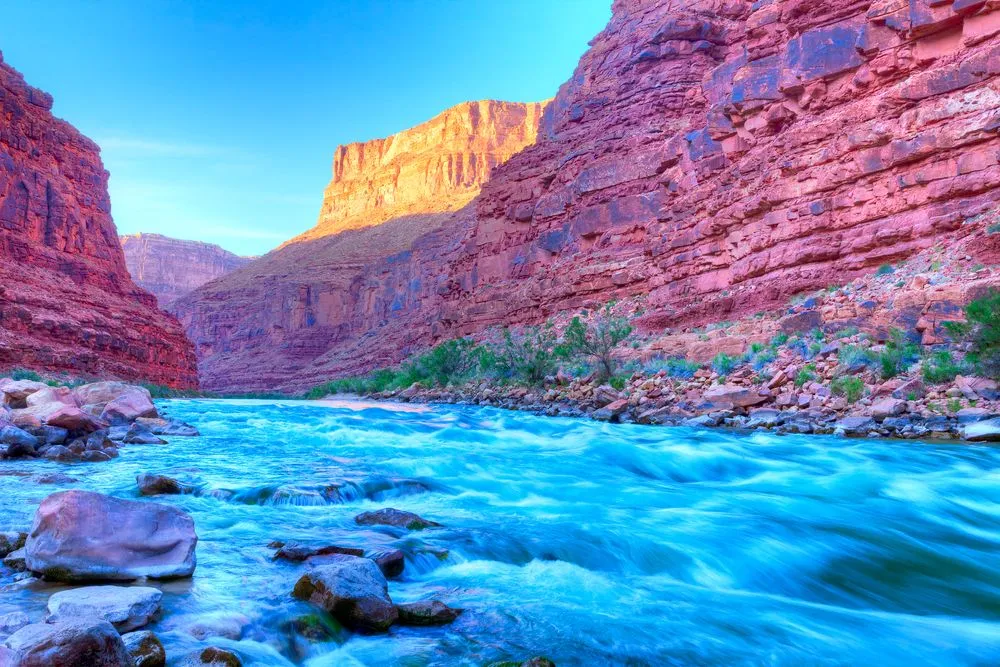
This is where a normally powerful river flowing in a region becomes even more powerful. The difference in elevation now gives the river an added boost, and the force is enough for it to start carving deeper into the earth. If you have ever noticed the walls of canyons and their vivid layers, they are steep because the river cuts downward into the rock faster than the canyon walls can erode back and crumble. In dry, arid regions like Arizona, there is little rain to wear the sides down and widen the gap, so the river keeps slicing a deep, narrow channel rather than a broad, gently sloping valley. That is why the walls stay so steep as the canyon forms.
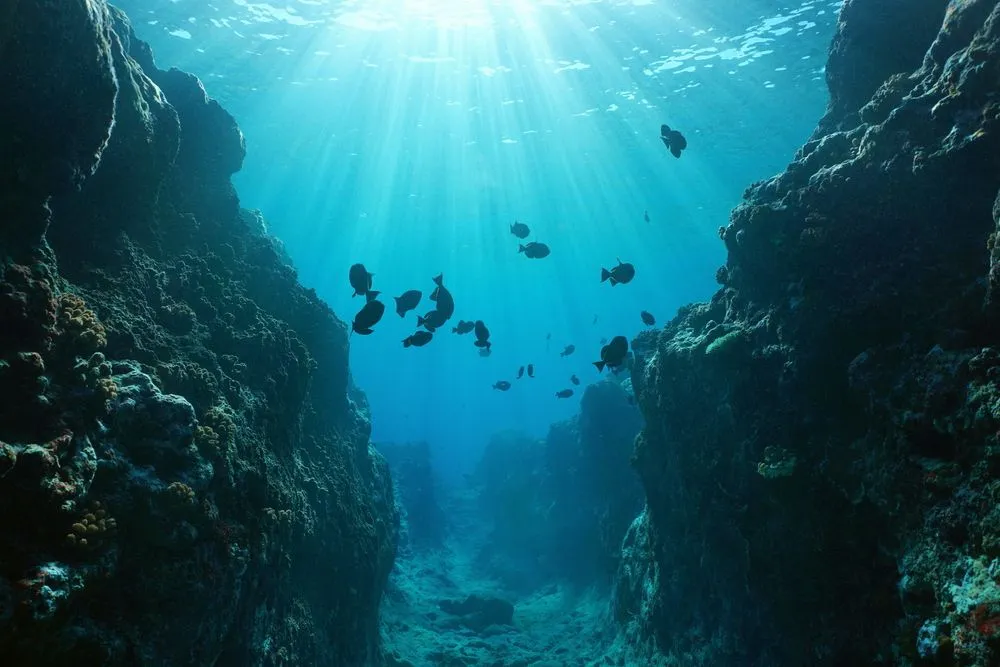
There are so many of these canyons on Earth. We have already mentioned the Grand Canyon, but there is also the Tibetan Yarlung Tsangpo Grand Canyon, the deepest canyon on land, with its floor plunging to about 6,000 m (nearly 19,700 ft) below the surrounding peaks! You might be surprised to learn this, but there are also many canyons underwater that were carved by fast-moving rivers back when sea levels were far lower than they are today.
Let’s go back to our first example of a canyon: The Grand Canyon. The fact that the canyon is in an arid region helped speed up the erosion of its nearby soil. The tectonic activity that gave its river more power was an added bonus that helped create this huge geological structure.
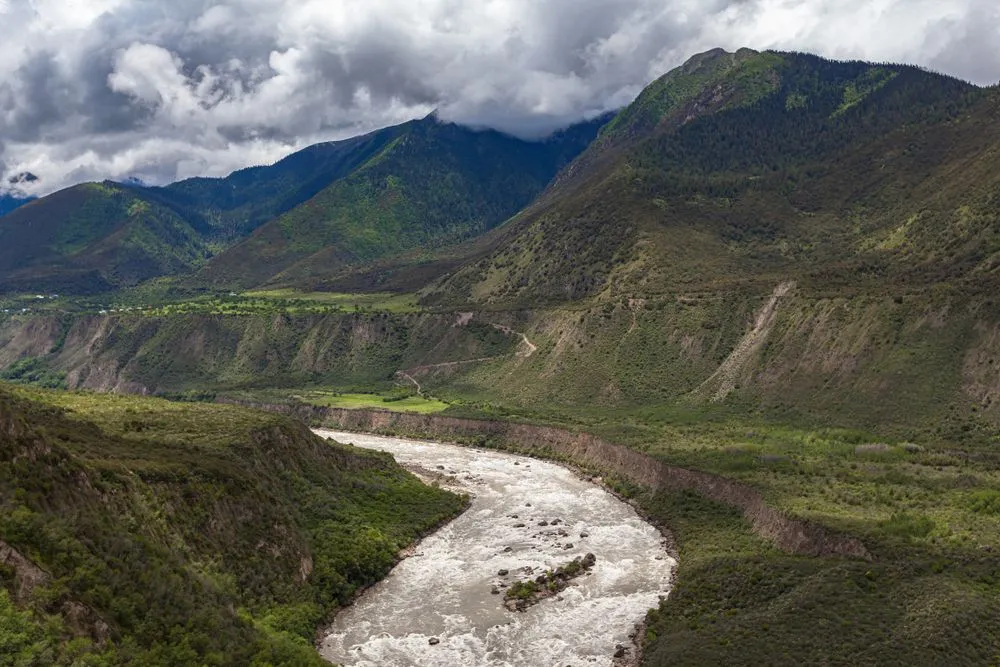
Similarly, for the Tibetan Yarlung Tsangpo Grand Canyon, it was tectonic activity, the dramatic uplift of the eastern Himalayas, that gave the river the steep gradient and power to carve Earth’s deepest canyon. How interesting that the river still managed to cut deeper than the Colorado did at the Grand Canyon, helped along by some of the fastest-rising terrain on the planet!
However, if you think canyons are done forming, you’re wrong. The rivers haven’t stopped flowing and the tectonic activity hasn’t reversed. The rivers will keep on digging deeper into the earth, exposing fresh strata on the canyon walls and deepening the valleys. This is slow work, though. The Colorado River lowers the floor of the Grand Canyon by only a fraction of a millimeter a year, so it takes many thousands of years to make a difference you could see. On the scale of a human lifetime the view barely changes, but over millions of years, these canyons grow ever deeper.
So, can all rivers form a Grand Canyon? Not quite. Almost any river can carve a canyon, but only when conditions cooperate: tectonic uplift or a falling base level has to boost the river’s cutting power, and resistant rock in a dry climate helps keep the walls steep. Without that combination, most rivers simply wear out wide, shallow valleys. The rest, as ever, is in the hands of time!