Table of Contents (click to expand)
Yes, but not in the way it does on land. The “snow” you see drifting underwater is marine snow: a constant shower of organic particles (dead and decomposing tissue, the poop of various animals, and bits of phytoplankton) sinking from the sunlit surface toward the deep ocean. Nothing freezes, and it falls all year round.
Imagine a Magic School Bus scenario where you’ve become a fish living in the open ocean. There you are, minding your own business, swimming along, when all of a sudden you see that it’s snowing around you. Wait… snow? Underwater? How is that even possible? Doesn’t water have to freeze for it to become snow? Well, that’s because this “snow” isn’t really snow at all!
Marine snow is an interesting phenomenon seen in the ocean all year round. It is called marine snow because it looks a lot like snowfall on land. How this marine snow actually forms may surprise you, or disgust you!
Decomposing Animals
In an odd way, our journey starts at the end of another. Most marine snow comes from the tiniest life in the sea, but the most dramatic example involves the largest. When a whale dies, its body fills up with gas and floats to the surface, where sharks and seabirds start to feed on the carcass. Once enough of that gas escapes, the carcass sinks.
As the whale sinks, scavengers tear at it and its decaying body breaks apart into small fragments, a slow rain of debris that scientists call a whale fall.
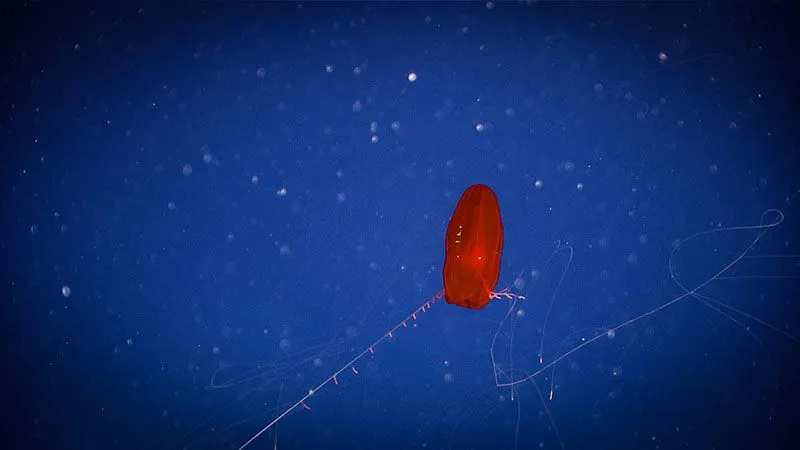
These fragments don’t just come from whales. In fact, whale falls are rare; the steady, everyday snowfall comes from much smaller stuff.
All sorts of marine life that dies and decomposes helps create marine snow, but the bulk of it is microscopic: dead phytoplankton, tiny zooplankton, and their fecal pellets. The snow also picks up other bits along the way, like sediment, dust, and detritus (yes, more animal poop!). However, the journey of marine snow does not end here; it still has a long way to go.
Clumping Together
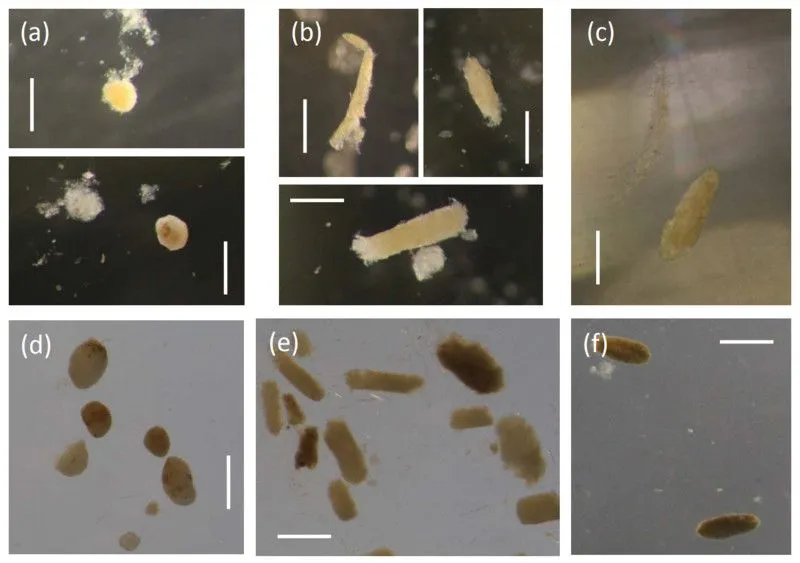
If you took a look at the video linked in the introduction, you will notice that not all marine “snowflakes” are the same size. They actually seem to clump together, which happens when they collide with each other and aggregate.
But what makes them stick to each other? When phytoplankton (microscopic algae that drift in sunlit water) make food through photosynthesis, not all of the organic carbon they produce stays inside the cells. Some of it leaks out as sugary, gel-like molecules that ooze into the surrounding water. These sticky strands, which scientists call transparent exopolymer particles, act like glue, forming bridges between particles whenever they collide.
These colliding particles grow in size, and as they hit other marine snow particles, they attach to them too. This is just one of the many ways in which marine snow forms… but why does all this matter?
The Importance Of Marine Snow
Marine snow is quite a cool phenomenon, but it actually serves multiple purposes. It is an important part of marine ecosystems in many ways.
Food For Grazing Fish
Most fish eat plankton, but plankton is found near the surface of the ocean, while most fish live deeper under the surface.
This sunlit zone close to the surface is called the photic zone, the layer that light can reach (roughly the top 200 meters, or about 660 feet, in clear water). Below it, there isn’t enough light for phytoplankton to grow, so they don’t live there. What, then, do the fish living in the depths of the ocean eat? Some may just eat other fish, but what do the smallest of them eat?
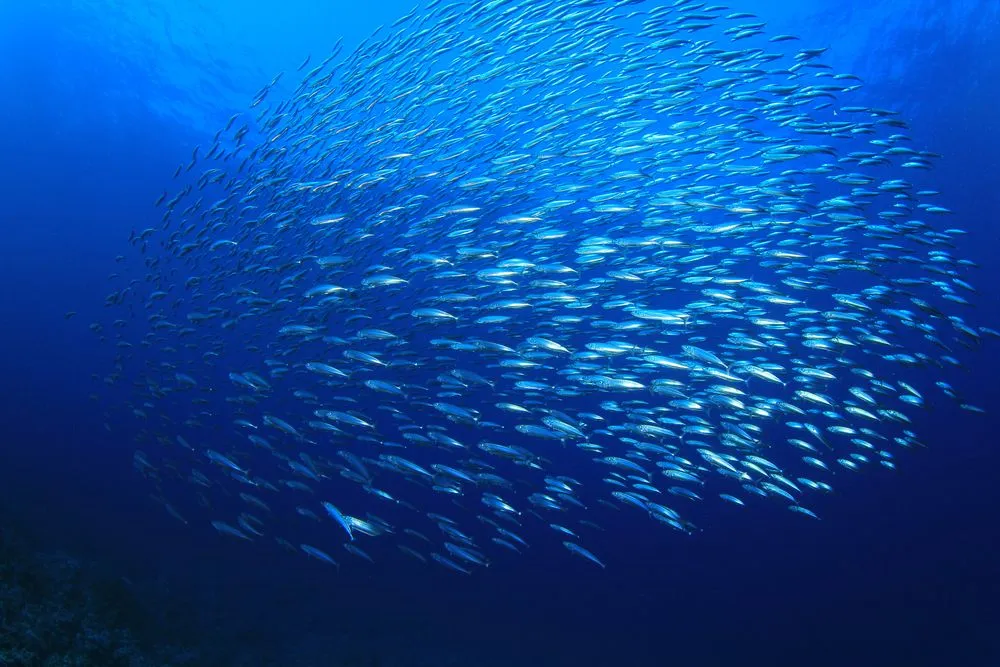
If you haven’t already guessed, they eat marine snow. Despite sounding icky and gross, marine snow is actually extremely nutritious. It is high in organic matter, containing lots of carbon and nitrogen. It essentially forms the base of the food pyramid for certain marine ecosystems.
The small amount that does not get eaten while it’s sinking reaches the ocean floor and forms an ooze, which covers the ocean floor like a blanket. This helps feed many scavengers in the deepest parts of the ocean.
Microenvironments
What are microenvironments? Breaking down the word (“micro” and “environment”) makes the meaning pretty self-evident. Microenvironments are tiny habitats with their own working ecosystems!
So how is marine snow important to microenvironments? Well, because they ARE microenvironments.
As marine snow forms, it traps tiny microbes along with lots of organic matter. This creates the right conditions to form a microenvironment. What’s interesting about these microenvironments is that there are entire communities of microbes that perform different functions. Everything from photosynthesis and decomposition to nutrient cycling happens within the marine snow.
These microenvironments also play a bigger part in marine ecosystems by making organic matter more soluble in water, which helps for easier transport inside living organisms. They also break down organic compounds to release minerals that are used by various microbes.
Bioluminescence
Many different forms of marine life get trapped in marine snow, and dinoflagellates (a group of single-celled plankton) are among them.
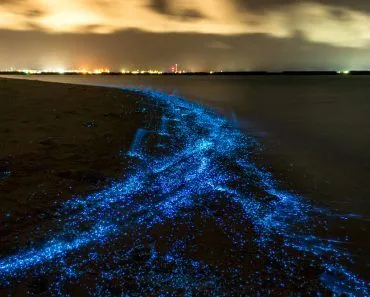
The interesting thing about dinoflagellates is that they glow a bright blue when disturbed. You might have seen this on bioluminescent beaches. The same effect is produced in marine snow when it falls to the darker depths of the ocean.
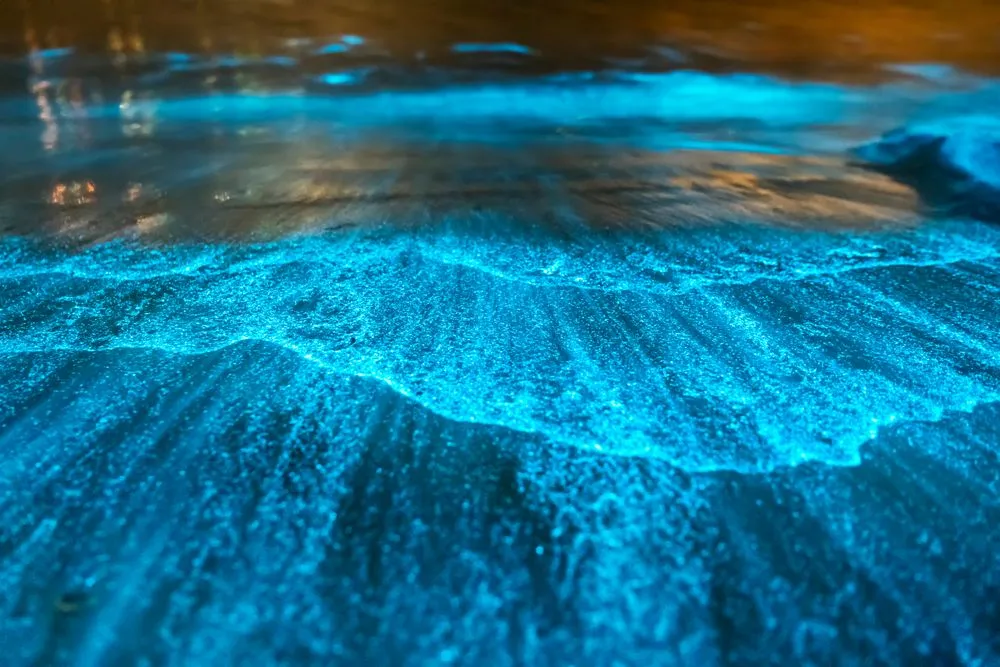
Scientists think this “glow-in-the-dark” trick may actually protect the snow. One leading idea, the so-called burglar alarm hypothesis, is that when grazing plankton bump into it, the sudden flash startles them into swimming away, or even draws the attention of bigger predators that hunt those grazers. Either way, fewer mouths nibbling the snow means more of it survives the long fall, carrying nutrients to the deep.
Conclusion
Marine snow has immense importance to ocean ecosystems, but its biggest job may be one we rarely see. Every aggregate that sinks carries carbon out of the sunlit surface and locks it away in the deep, a process scientists call the biological pump. Because deep water can stay cut off from the air for hundreds to over a thousand years, this gentle, never-ending snowfall is one of the planet’s main natural ways of pulling carbon dioxide out of the atmosphere and storing it. So the next time you imagine that quiet flurry drifting through the dark, remember: it isn’t really snow at all, and yet, in its own slow way, it helps keep our whole planet livable.
References (click to expand)
- What is marine snow? NOAA's National Ocean Service.
- Alldredge, A. L., & Silver, M. W. (1988). Characteristics, dynamics and significance of marine snow. Progress in Oceanography. Elsevier BV.
- Kiørboe, T. (2001). Formation and fate of marine snow: small-scale processes with large-scale implications. Scientia Marina. Editorial CSIC.
- The Biological Pump. Woods Hole Oceanographic Institution.
- What is a whale fall? NOAA's National Ocean Service.