Soil pH affects flower color in Hydrangea macrophylla (and its close cousin H. serrata) by controlling how much aluminum the plant can absorb. Acidic soil (pH below about 5.5) makes aluminum available; aluminum then binds the pigment delphinidin-3-glucoside in the sepals and the blooms turn blue. Alkaline soil (pH above 6) locks aluminum up, and the same blooms read as pink.
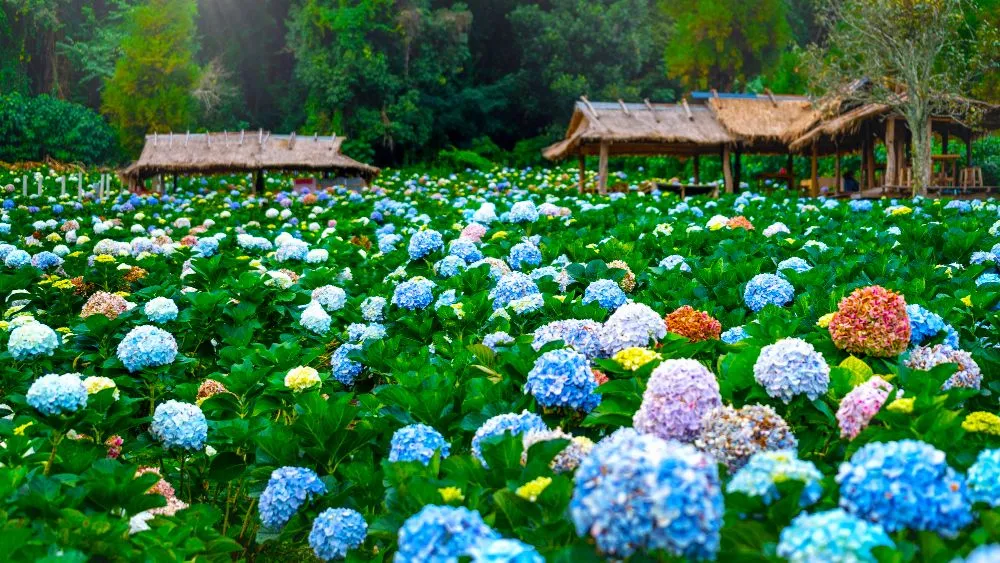
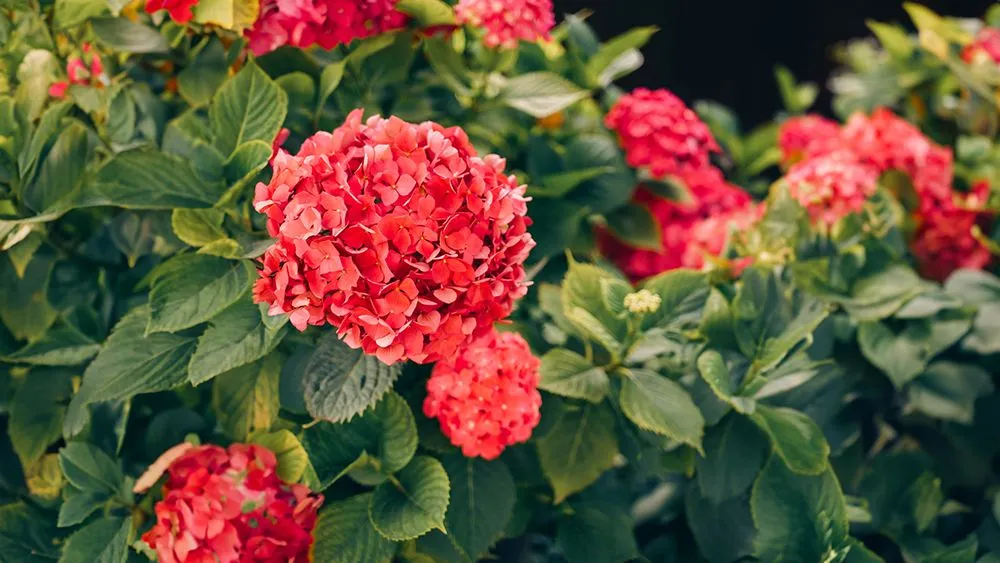
Hydrangeas normally come with pink (sometimes deep pink/red) or blue blooms, and can be found in all the shades in between. The large and showy spherical blooms have a striking property: they can read and react to the soil pH.
This pH-driven color change is mainly seen in Hydrangea macrophylla and its close relative H. serrata (mountain hydrangea), which share the same aluminum-anthocyanin chemistry. Other popular species, such as H. paniculata and H. arborescens, do not shift with soil pH.
Gardeners and landscapers use this knowledge to add chemicals, and even some homemade recipes, to the soil in order to change the color based on their preference.
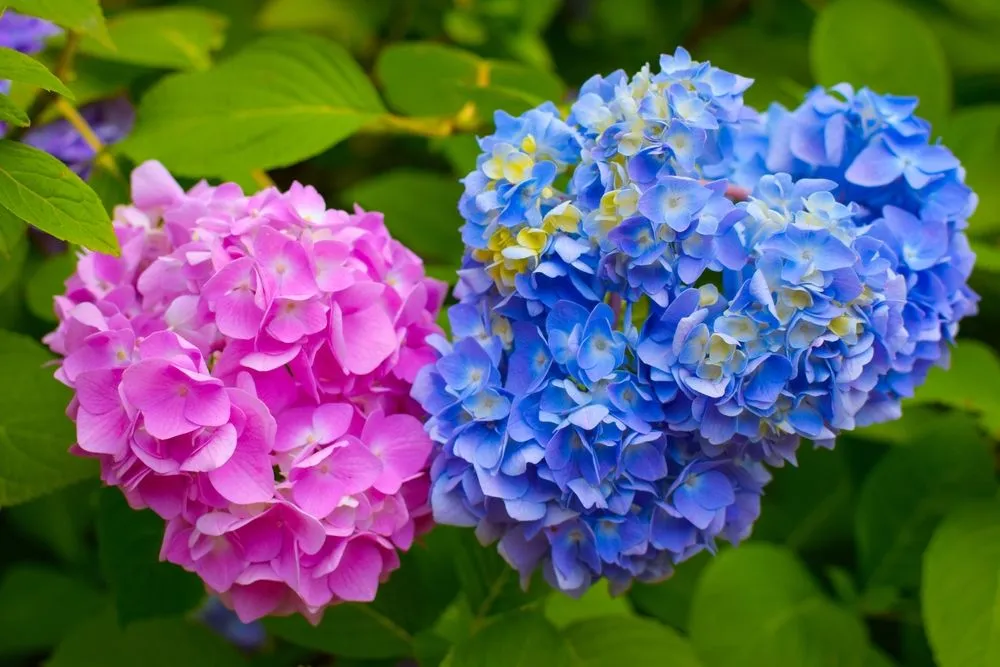
Hydrangea macrophylla (family Hydrangeaceae) is a flowering shrub native to Japan, where it grows in coastal woodlands. These plants are extensively used for landscaping and in home gardens. Although hydrangeas are known for their large colorful blooms, these are not the real flowers. They are actually colorful modified leaves called sepals, whereas the true flowers are small and inconspicuous.
What Causes This Color Change?
Hydrangea sepals behave a bit like litmus paper in reverse: blue in acidic soil and pink in alkaline soil. The actual thresholds are not at neutral pH, though. They sit lower down the scale.
When the soil pH is below about 5.5, the blooms turn blue. When the pH rises above roughly 6.0–6.5, the blooms turn pink (sometimes a deep, almost-red pink). pH values in between produce the famous purples and lavenders that hydrangea gardens are loved for.
The key ingredient here is aluminum ions. The soil pH helps the aluminum ions move throughout the soil, and it is these ions that are responsible for the change in bloom color.
Even the same plant can have different color flowers if the roots are spread out across soil with varying pH.
The Key Ingredient Here Is Aluminum Ions
Aluminum forms about 8% of the Earth’s crust and is a major component of inorganic soil particles. However, simply having aluminum in the soil is not enough. The soil must also be acidic enough for the plant to be able to absorb the aluminum ions.
Soil can be naturally acidic due to leaching of the top soil, along with rain water, the presence of decaying organic matter, or due to the nitrification of ammonium from excess fertilizer.
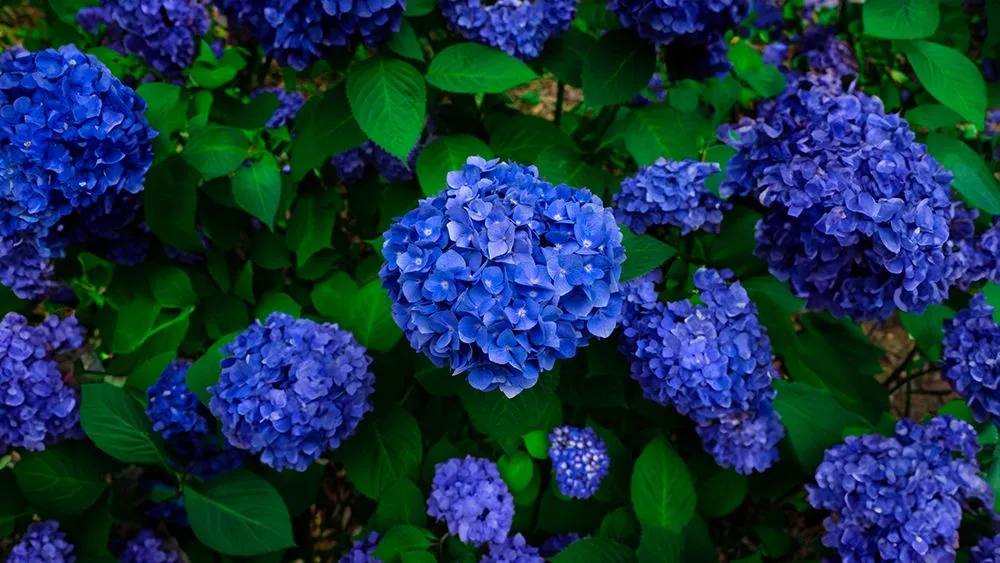
When aluminum ions are present in acidic soil, they can move around more freely. Notably, hydrangea roots also exude citric acid. The aluminum ions move toward the roots and form a complex with citrate ions that is then absorbed into the plant. This citrate-aluminum complex is carried up through the xylem and eventually reaches the sepals, where the aluminum binds to the pigment and shifts its color to blue.
Thus, in order for the flowers to be blue, we need to have aluminum ions in the soil and we need the soil to be acidic. The soil pH facilitates movement of the aluminum ions, but it is these ions that actually bring about the color change.
If the soil is not acidic, or if enough aluminum is not present, adding aluminum sulphate to the soil can turn the flowers blue because it adds aluminum ions and turns the soil more acidic. Unlike most plants, Hydrangea macrophylla is an aluminum hyperaccumulator and tolerates remarkably high levels in its tissues, but very large doses of aluminum sulphate can still scorch roots, so gardeners apply it in measured amounts.
When these same aluminum ions are present in neutral to basic soil (soil may be alkaline due to the presence of certain minerals, such as calcium and magnesium), they combine with hydroxide ions to form insoluble aluminum hydroxide, which cannot move around or be taken up by the roots. With no aluminum reaching the sepals, the pigment stays in its un-complexed form and the blooms read as pink.
To push hydrangeas in the pink direction, gardeners raise soil pH by working in garden lime (calcium carbonate) or dolomitic lime, which both add hydroxide as they react with soil water and precipitate aluminum out of solution. Faster-acting hydrated lime (calcium hydroxide) is sometimes used too, but it is caustic and easy to overdo.
This color change effect, however, is not instant. It typically takes 1–3 growing seasons in the ground to see a full shift (container-grown plants in fresh soil can turn around in a few weeks).
Gardeners add chemicals to the soil to manipulate the pH. For example, home gardeners use various homemade recipes to manipulate the pH, including “pouring vinegar or lemon juice on the soil; mulching the plant with coffee grounds, citrus fruit rinds, or pine tree needles; or burying rusty nails, old tin cans, or copper pennies next to the bush”.
Spraying the blooms with a solution of aluminum ions in buffered citrate can also change their color.
What’s Behind This Color Change?
The plant pigment that gives hydrangea blooms their pink color is an anthocyanin called delphinidin-3-glucoside. In the blue form, the actual chromophore is a ternary complex of delphinidin-3-glucoside, an aluminum ion, and a co-pigment (a caffeoylquinic or coumaroylquinic acid). Without aluminum, the same anthocyanin reads as pink. The exact biochemical details of how the complex assembles in the vacuole are still an active area of research.
Higher amounts of delphinidin-3-glucoside in the sepals, along with higher amounts of aluminum ions, results in a more intense blue color. Sepals can have up to 700 micrograms of delphinidin-3- glucoside per gram of fresh sepal. There are also other co-pigments present in the sepals that result in a range of colors, from blue to purple to red.
Do Other Flowers Change Color With Soil pH?
It is tempting to assume that lots of garden flowers read the soil the way hydrangeas do, but the honest answer is that the bigleaf hydrangea is very much the headline act. The trick is rare because it depends on the plant pulling aluminum out of acidic soil, and for almost every other plant that aluminum is a poison rather than a paint.

Aluminum toxicity is one of the biggest limits on plant growth in acidic soils worldwide, affecting roughly half of the planet’s arable land. Most plants actively defend themselves against it: aluminum-tolerant crops such as wheat, corn and soybean exude organic acids like citrate and malate from their root tips, which lock the aluminum into harmless complexes before it can enter and damage the roots. Hydrangea macrophylla does the opposite. As an aluminum hyperaccumulator, it welcomes the metal in, which is exactly why its sepals can build the blue aluminum-anthocyanin complex.
Plenty of other flowers do change color, just not in response to the soil. The classic example is the morning glory Ipomoea tricolor ‘Heavenly Blue’. Its petals shift from reddish-purple to a vivid sky-blue, but the cause sits inside the flower, not under it. As the bloom opens, the pH inside the petal cells climbs from about 6.6 to 7.7, driven by the plant’s own ion pumps, and the same anthocyanin pigment reads blue at the higher pH. The soil never enters the equation.
The deeper reason is that anthocyanins are natural pH indicators, leaning red in acid and blue toward alkaline, much like red cabbage juice or litmus paper. In most flowers, though, the plant keeps the pH around its pigments on a tight internal leash, so whatever is happening in the ground never reaches them. Hydrangeas are unusual precisely because they let an outside signal, aluminum availability set by soil pH, travel all the way to the pigment.
Conclusion
Hydrangea blooms are like nature’s litmus paper, in reverse. They change color in response to soil pH, but the pH only matters because of what it does to aluminum availability. Acidic soil + aluminum = blue; alkaline soil that locks aluminum away = pink. Gardeners use this knowledge to dial in the color of their hydrangea blooms based on their preference, or the demands of the local flower markets!
References (click to expand)
- Schreiber, H. (2014). Curious Chemistry Guides Hydrangea Colors. American Scientist. Sigma Xi.
- YOSHIDA, K., OYAMA, K.-. ichi ., & KONDO, T. (2021, February 10). Insight into chemical mechanisms of sepal color development and variation in hydrangea. Proceedings of the Japan Academy, Series B. Japan Academy.
- Schreiber, H. D., Jones, A. H., Lariviere, C. M., Mayhew, K. M., & Cain, J. B. (2011, May 17). Role of aluminum in red-to-blue color changes in Hydrangea macrophylla sepals. BioMetals. Springer Science and Business Media LLC.
- Blue, pink or lavender? Hydrangea color depends on soil pH. UGA College of Agricultural and Environmental Sciences.
- Yoshida, K., et al. (2009). Synchrony between flower opening and petal-color change from red to blue in morning glory, Ipomoea tricolor cv. Heavenly Blue. Proceedings of the Japan Academy, Series B. NCBI/PMC.
- Panda, S. K., Baluška, F., & Matsumoto, H. (2009). Aluminum stress signaling in plants. Plant Signaling & Behavior. NCBI/PMC.