Synchronization in nature is the tendency of independent oscillators (fireflies, heart cells, neurons, even pendulum clocks) to settle into a shared rhythm when they influence one another. No conductor is needed: each unit nudges its neighbors until a common beat emerges, turning apparent chaos into order. Mathematicians capture this with the Kuramoto model.
Have you ever wondered why fireflies light up together in the night, or how your heart maintains its steady rhythm? These intriguing phenomena are rooted in synchronization, a captivating concept that we’ll explore in simple and relatable ways.
The term “synchronization” comes from the ancient Greek words “syn” (meaning “together”) and “chronos” (meaning “time”). In common terms, it means things working together in perfect time, like a well-coordinated dance.
Let’s learn more about the hidden rhythm that transforms chaos into the beautifully coordinated symphony of life around us.
The Marvel Of Synchronization
Imagine synchronization as a way for things to move together in perfect harmony, almost like they’re dancing to the same tune. It’s like everyone following the same steps in a dance routine. Think of it as a well-coordinated team working towards a common goal, guided by the rhythm of tiny oscillators.
But why do things sync up at all? Synchronization happens when different parts or entities influence each other, making them move in unison. It’s as if they all recognize a hidden rhythm created by these oscillators that guides their actions, turning what might seem like a random and chaotic activity into a synchronized performance with a clear, shared beat.
Nature’s Spectacular Synchronizations
Nature provides some of the most enchanting examples of synchronization in our lives, a few of which are explained below:
Fireflies
Imagine a warm summer evening with fireflies lighting up the night. These tiny insects create a magical display, each one following an internal rhythm and watching others closely to stay in sync.
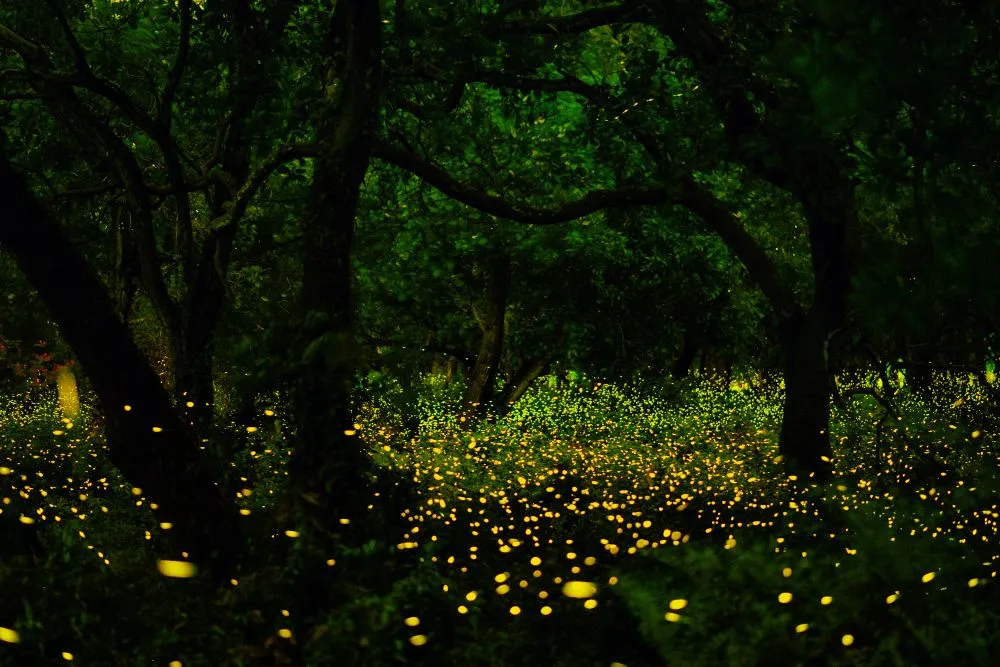
It’s as though they’re all reading from the same script, creating a mesmerizing phenomenon in perfect harmony. For a long time, scientists assumed each firefly carried a finely tuned internal timer. But research published in 2022 on the famous synchronous species Photinus carolinus turned that idea on its head: when kept alone, these fireflies flash with no fixed rhythm at all. The shared beat only appears once a swarm gathers, with each insect resetting its timing in response to the flashes of its neighbors. In other words, the rhythm isn’t built into any single firefly; it emerges from the crowd. (Some other species, such as the Southeast Asian Pteroptyx malaccae, do appear to carry their own oscillators and sync by nudging those frequencies together.)
Moon’s Spin And Orbit
Look up at the night sky, and you’ll notice that the same side of the moon always faces Earth. This is called tidal locking, by which the moon has learned to move gracefully with our planet, showcasing celestial synchronization.
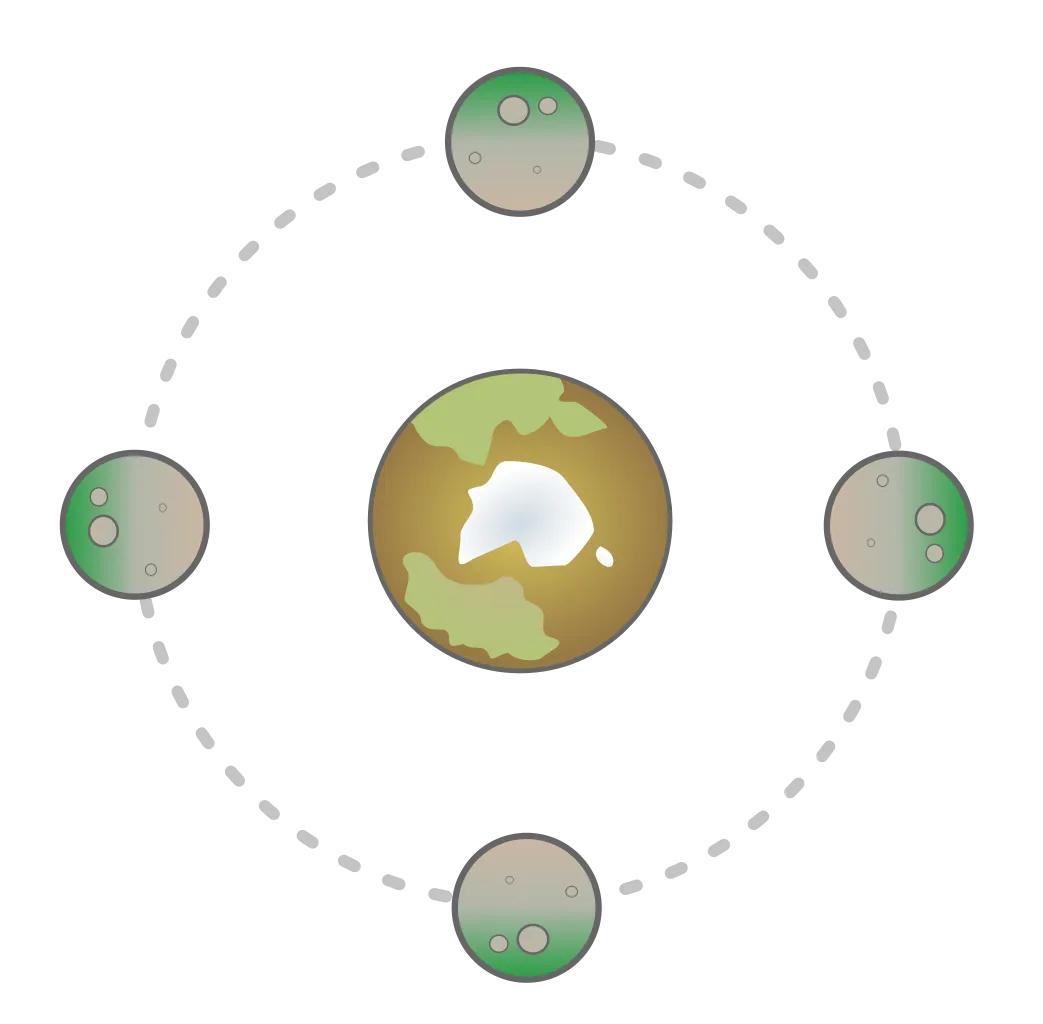
Most big moons in our solar system are tidally locked with their planets, a phenomenon that, for large moons, settles in early in their history within a few hundred thousand orbits.
Synchronization In Our Body
Inside your body, synchronization is at the heart of maintaining health and balance. Your internal workings are a symphony of activities orchestrated by your biological clock and tiny oscillators:
Brain Waves
Inside your brain, neurons communicate by taking turns sending signals guided by neural oscillators. Think of it as a group of friends working together to solve a puzzle. When neurons sync up, your brain operates efficiently. This synchronization is crucial for thinking, remembering and learning, transforming a jumble of thoughts into organized patterns that can be acted upon.
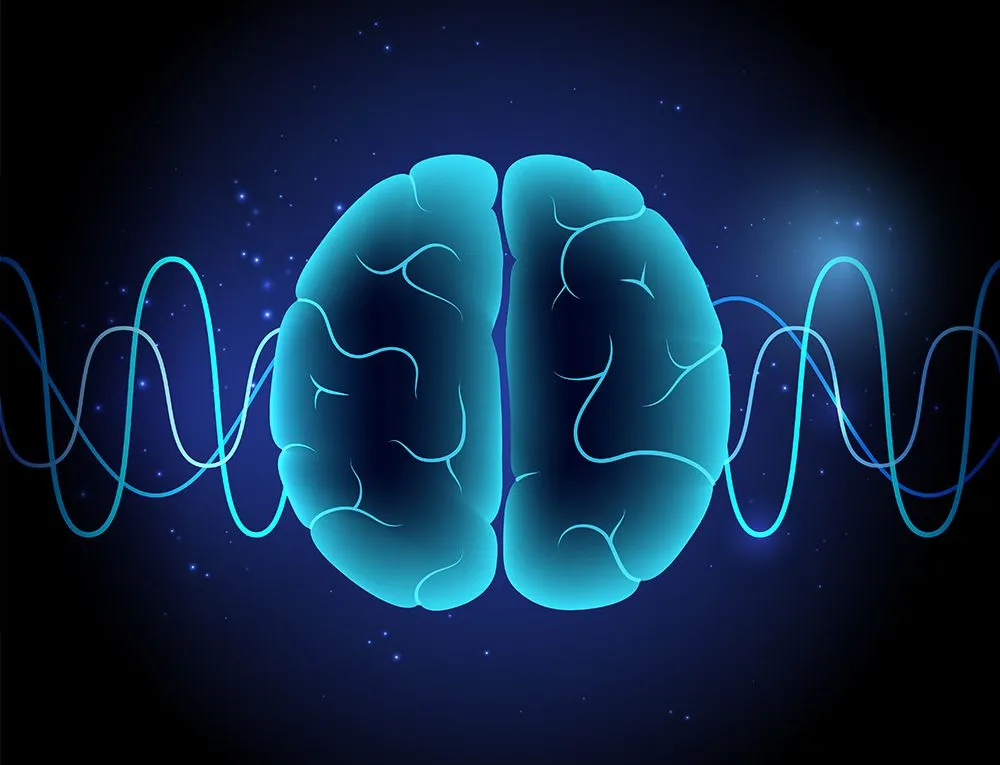
It’s worth noting that certain medical conditions, like epilepsy, may be linked to an excessive level of synchronization in brain activity, highlighting that synchronization doesn’t always have positive effects.
Heart Rhythm
Your heart’s specialized cells, known as pacemaker cells, send signals that create a steady beat, similar to a well-timed drumbeat in music. When these cells work together, your heart functions smoothly, ensuring proper blood circulation. However, if they lose their rhythm, it’s like a band playing out of sync, which is not good for your heart’s health. This synchronization is vital, turning a potentially chaotic pumping action into a reliable and organized heartbeat.
Synchronization In Everyday Life
Think about your daily routine, from waking up to going to bed, and you’ll realize that synchronization is all around you. It’s like the invisible conductor of a symphony, ensuring that different elements work together seamlessly. Here are some everyday examples:
Pendulum Clocks
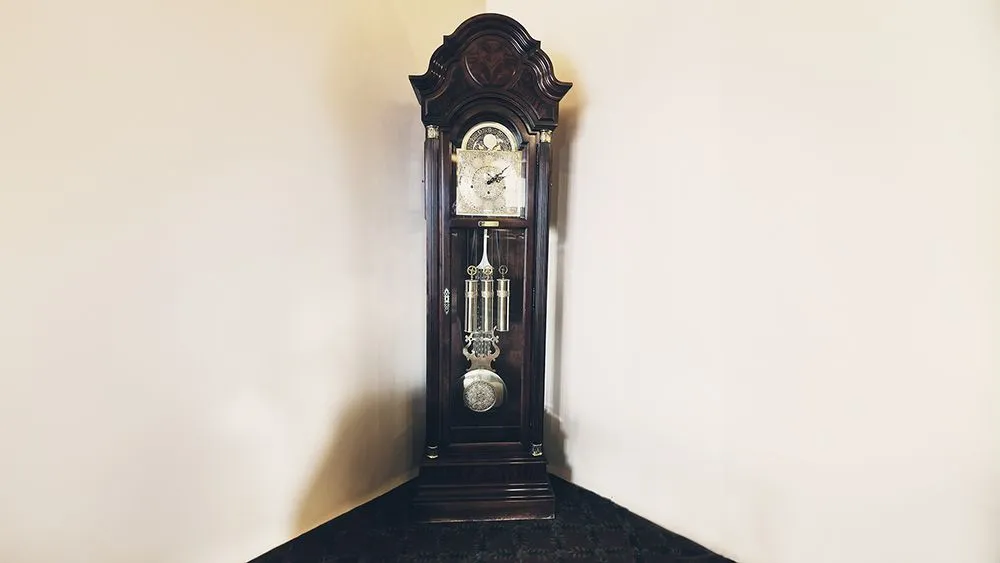
Pendulum clocks are a classic example of synchronization, and one of the oldest on record. Back in 1665, the Dutch scientist Christiaan Huygens noticed that two of his pendulum clocks, hung from the same wooden beam, gradually fell into step and swung in opposite directions in perfect time. He traced this “odd sympathy” to tiny vibrations passing through the shared beam, a mechanical coupling that let the swinging pendulums influence each other until their rhythms locked together.
Music And Movement
Have you ever noticed how you naturally tap your foot to the beat when listening to your favorite song? That’s synchronization in action. The music sets the rhythm, and you almost unconsciously follow along. It’s like moving your body to a familiar tune, turning random steps into a coordinated dance.
Electric Devices
Your gadgets, like smartphones and computers, are full of tiny components working together, much like a team collaborating on a project. They sync up to perform tasks like sending messages or playing games smoothly.
Pedestrians On A Bridge
Imagine crossing a busy bridge with other people. It might feel like everyone is dancing to the same rhythm as you all move together, but avoid bumping into each other. This unspoken coordination is synchronization at work.
Applause At Concerts
When you attend a concert and clap your hands, you may notice that your claps start to align with those around you. It’s like a communal cheer that naturally falls into harmony, creating a unified sound.

Synchronization, guided by oscillators, is an essential concept that brings order to our world. It shows how seemingly unrelated elements can harmonize when influenced by shared rhythms and oscillatory systems in our everyday experiences.
The Science Behind Synchronization: Oscillators And Couplings
Now, let’s step outside of nature and into our daily lives to see how synchronization is all around us, often guided by oscillators.
Oscillators are the key players in synchronization. They are elements that repeat themselves, such as a swinging pendulum, a neuron firing, or even the flashing of fireflies. Each oscillator has its natural rhythm or frequency.

Couplings, on the other hand, represent the interactions between these oscillators. Couplings are how oscillators influence each other. For instance, pendulums on a shared surface or neurons connected in a network.
The magic happens when oscillators interact through couplings. This interaction can be precisely described using mathematical models, such as the Kuramoto Model.
The Kuramoto Model: Unlocking The Secrets Of Synchronization
In the realm of mathematics, the Kuramoto Model, developed by Yoshiki Kuramoto in the 1970s, stands as a foundational framework for understanding synchronization. This model considers two critical factors: the strength of coupling between oscillators and the diversity of their innate frequencies.
Here’s the intriguing part: when oscillators have varying innate frequencies, they require strong couplings to synchronize. Basically, they need to pay close attention to each other. However, if the oscillators have frequencies close to each other, even weak couplings can lead to synchronization.
The Kuramoto Model also reveals a fascinating phase transition phenomenon. As the coupling strength between oscillators increases, they transition suddenly from chaotic and unsynchronized behavior to harmonious synchronization. It’s like someone has flipped a switch from disorder to order, guided by the principles of oscillators and couplings.
Metronomes falling into synchronization
Synchronization, guided by oscillators and couplings, isn’t just a scientific curiosity; it has profound implications. Researchers are now using this knowledge to explore the theory of semantic information, an effort to understand how living systems extract meaningful information from their surroundings, with synchronization as one of the rhythms that knit those systems together.
So, you’ve now explored the captivating world of synchronization, where tiny oscillators orchestrate the hidden beat that transforms chaos into a beautifully choreographed dance of order. Whether it’s fireflies lighting up the night, neurons in your brain working together, or the oscillators in your favorite song, synchronization, guided by these remarkable oscillatory systems, is an essential concept that brings order to our seemingly chaotic world.
You’ve taken one step into the intriguing world of hidden rhythms, but if you feel synced up with this topic, there is much more to learn about the secrets of synchronization!