Table of Contents (click to expand)
Scientists recreate outer space on Earth with a few key methods: large water tanks called neutral buoyancy pools simulate weightlessness for spacewalk training, aircraft flying a parabolic arc (the "Vomit Comet") produce about 22 seconds of free-fall microgravity, and thermal vacuum chambers reproduce the airless, frigid conditions of space to test spacecraft and instruments.
Since the early 1960s, humans have been venturing into space, with cosmonaut Yuri Gagarin being the first person to break the boundary to the stars. To this day, astronauts and cosmonauts have been involved in various space missions, ranging from going to the Moon to staying in space stations for several months at a time.
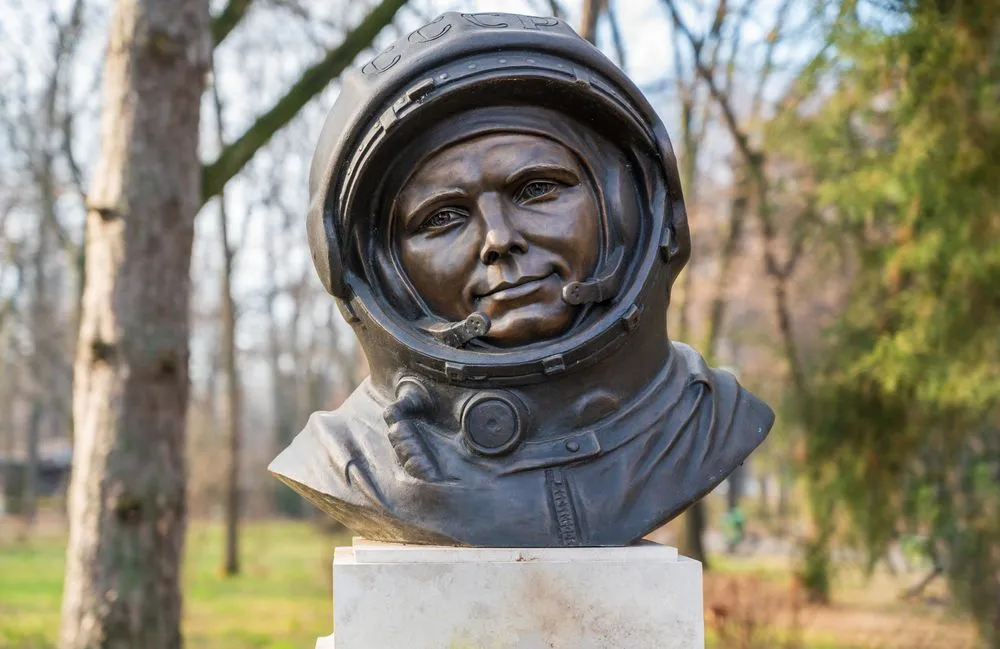
As you likely know, outer space is a harsh place. Most life forms have zero chance of survival there.
Obviously, this makes it difficult for those going to such locations, so it is necessary to replicate environments of outer space in the laboratory. We use this to train astronauts and test the functionality of components being used in space satellites and telescopes.
Facilities At NASA
One of the most prominent centers when it comes to recreating space environments for human space activities is the Johnson Space Center and the Sonny Carter Training Facility, operated by NASA.
One of the essential functions of this center is astronaut training, especially for space missions. Astronauts in the Apollo missions used it as a part of their training, and it is currently used for astronauts going to the International Space Station.
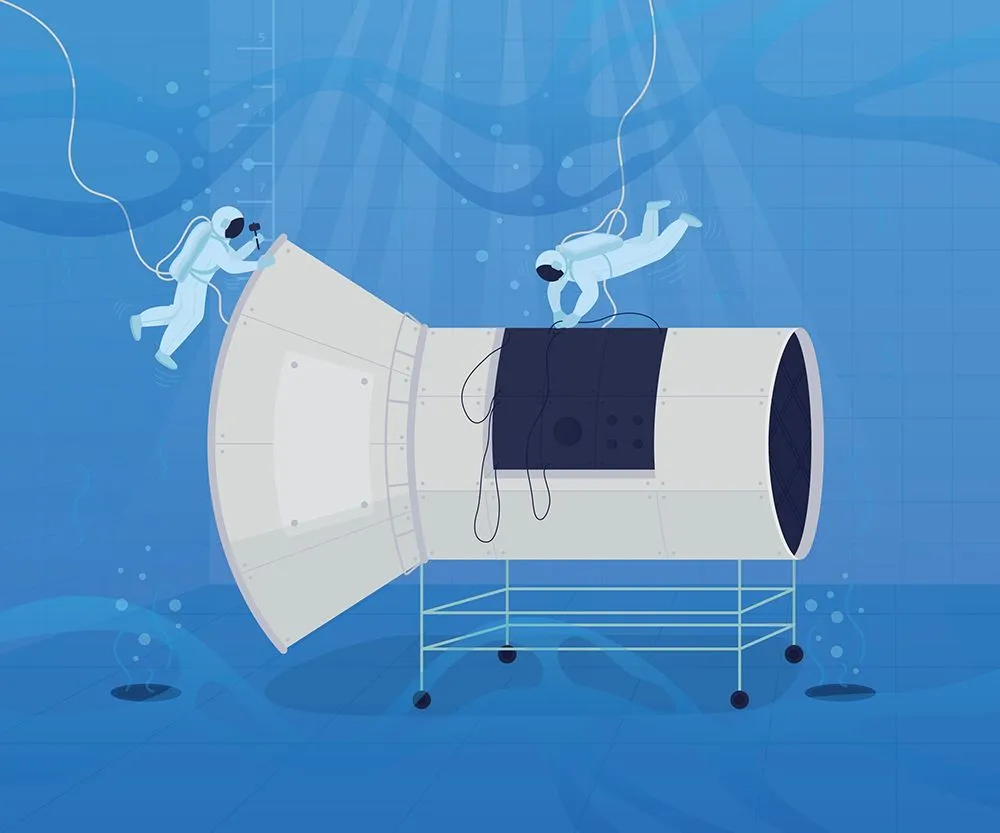
One of the most significant space environment simulations at the Sonny Carter Training Facility is the Neutral Buoyancy Laboratory (NBL).
Here, the facility simulates the microgravity of outer space by achieving neutral buoyancy: the tendency to equally balance sinking and floating.
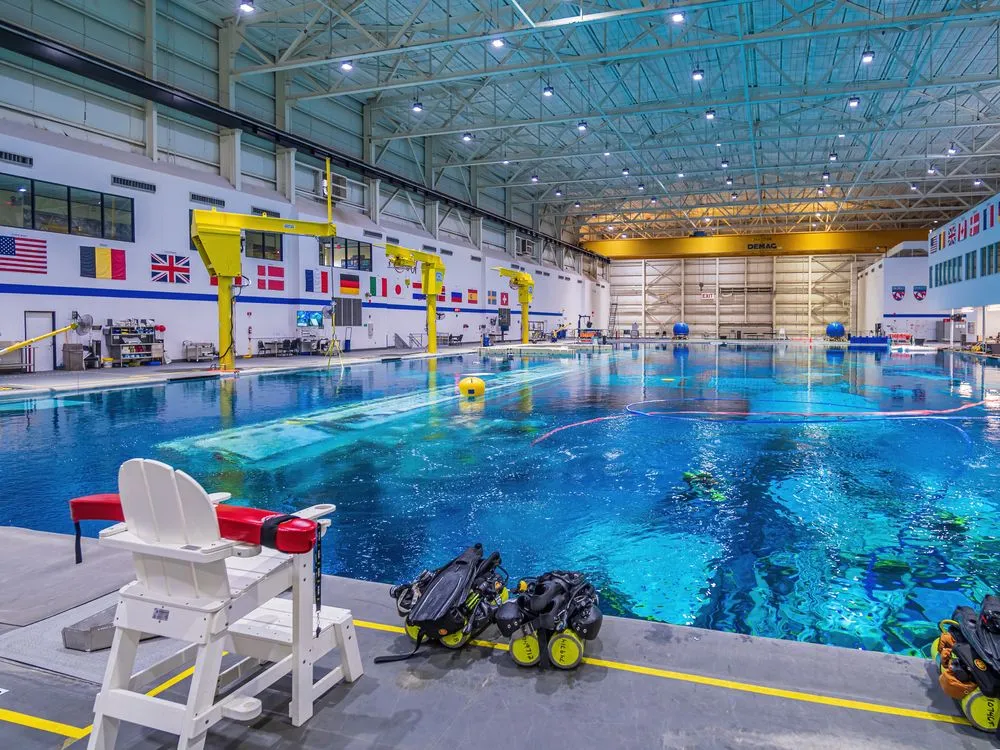
The laboratory itself consists of a giant pool of water. Here, astronauts prepare for spacewalks using appropriate weights or flotation devices to hover inside the pool to simulate zero gravity. The NBL is the successor of the Weightless Environment Training Facility (WETF), which was previously used for neutral buoyancy training.
However, this setup does not perfectly simulate outer space gravity. Trainees can still feel the weight of the suits, not to mention the effect of drag while moving through water.
Despite these issues, neutral buoyancy is the most reliable method available for spacewalk training.
NASA also has other space environment facilities in its cohort. These facilities are for testing parts of various spacecraft, instrumentation, and their performance in extreme space environments. Some of these facilities include the various Thermal Vacuum Chambers, X-Ray and Cryogenic Facility (XRCF), Space Environments Complex (SEC), Space Environment Simulator, etc.
The Thermal Vacuum Chambers provide low pressure and the frigid environment of outer space for testing spacecraft and electronic parts. One of its chambers, called Chamber B, also hosts testing for crewed operations by creating a low-gravity simulation using overhead monorails in a vacuum encasement.
Trainees in their spacesuits use these monorails to essentially eliminate their weight and allow them to move in two horizontal directions.
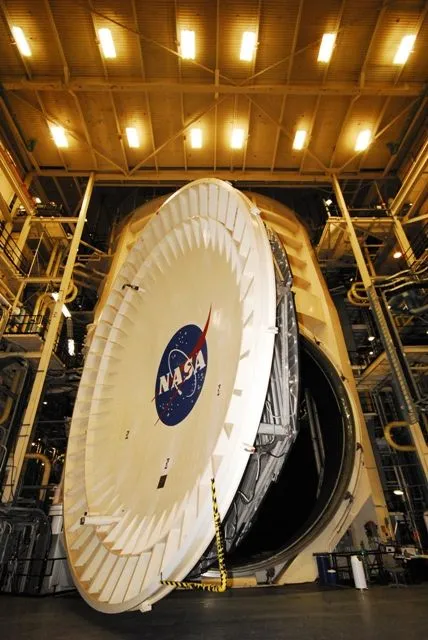
The SEC, located at NASA's Neil A. Armstrong Test Facility (formerly Plum Brook Station) in Sandusky, Ohio, a remote test site of the Glenn Research Center, is used to test several scenarios involving stress and vibrations from sound, the impacts of electromagnetic radiation (potentially from stars) and issues arising from long-term exposure to vacuum conditions. It also contains a vacuum chamber that simulates space conditions, particularly in terms of temperature.
The SEC chamber starts its pump-down using roughing pumps. Roughing pumps are mechanical vacuum pumps that handle the first, coarse stage of removing air. They do this using rotary-lobe blowers, made of rotating lobes that control the flow of air out of the chamber, along with backing mechanical pumps.
Turbomolecular pumps and cryopumps then take over from these blowers to reach almost space-like vacuum conditions. The chamber reaches its target temperatures using a cryoshroud, which is heated and cooled by circulating liquid and gaseous nitrogen.
Tests on the effects of electromagnetic radiation are carried out in the SEC's huge vacuum chamber, housed in the Space Power Facility (SPF), the world's largest vacuum chamber. Here, engineers run electromagnetic (EM) interference and electromagnetic compatibility tests on instruments. This makes sure that radiation from stars and other sources does not negatively affect the objects sent into space.
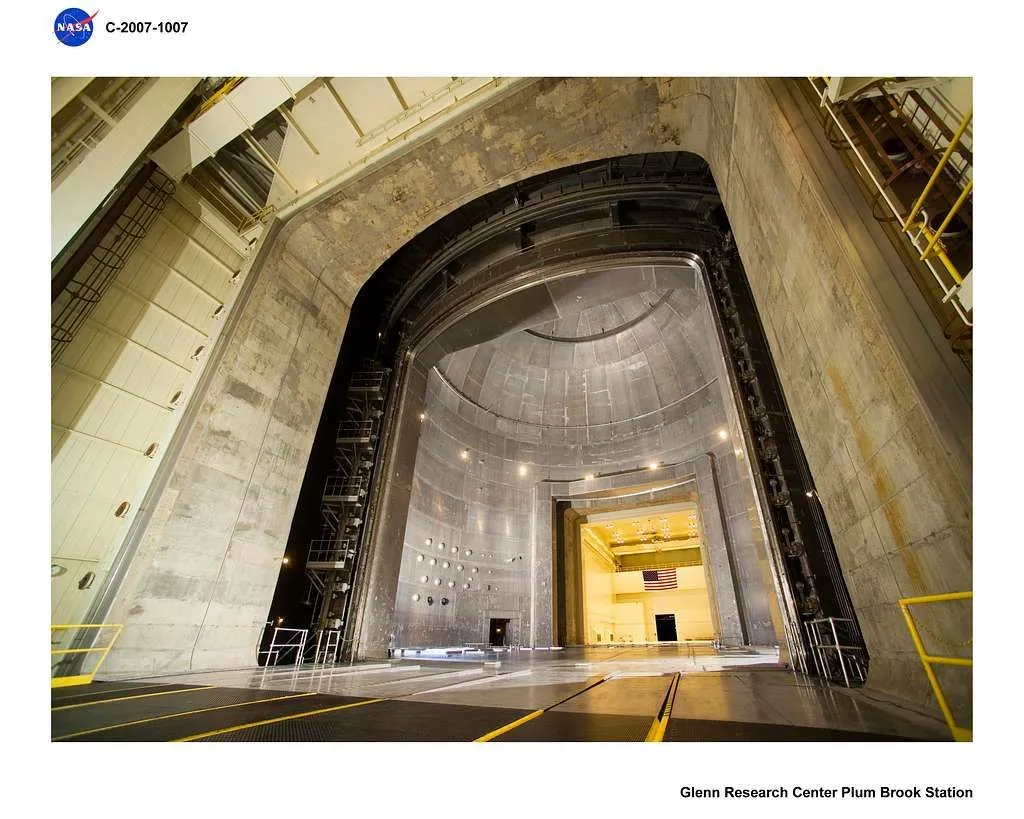
The SPF conducts its EM testing in a vacuum chamber with an interior aluminum covering. It allows EM waves to get reflected and remain within that chamber, making it useful for a wide range of EM experimentation.
The Space Environment Simulator (SES) has similar functionalities to the Thermal Vacuum Chambers discussed earlier. It is used for testing much larger articles. The Goddard Space Flight Center houses this simulator.
The vacuum and temperature conditions are obtained inside by the SES using piston mechanical pumps and cryopumps and cylindrical shrouds using liquid and gaseous nitrogen, respectively (like the SEC). The SES also has instruments to detect residual gas and molecules of other compounds inside the chamber.
The European Space Agency And Parabolic Flights
The European Space Agency (ESA) also has some impressive space environment setups to train their astronauts.
The European Astronaut Center (EAC) in Germany has a Neutral Buoyancy Center similar to the one at NASA. This 10-meter-deep pool also trains astronauts for spacewalks and helps astronaut trainees use tools in zero gravity. The EAC also possesses outer space simulations where astronauts can train.
The ESA has engaged in undertaking parabolic flights to understand the effects of microgravity on humans and conduct experiments in such environments. While microgravity experiments do occur in space stations, parabolic flights are comparatively cheaper and more convenient to carry out.
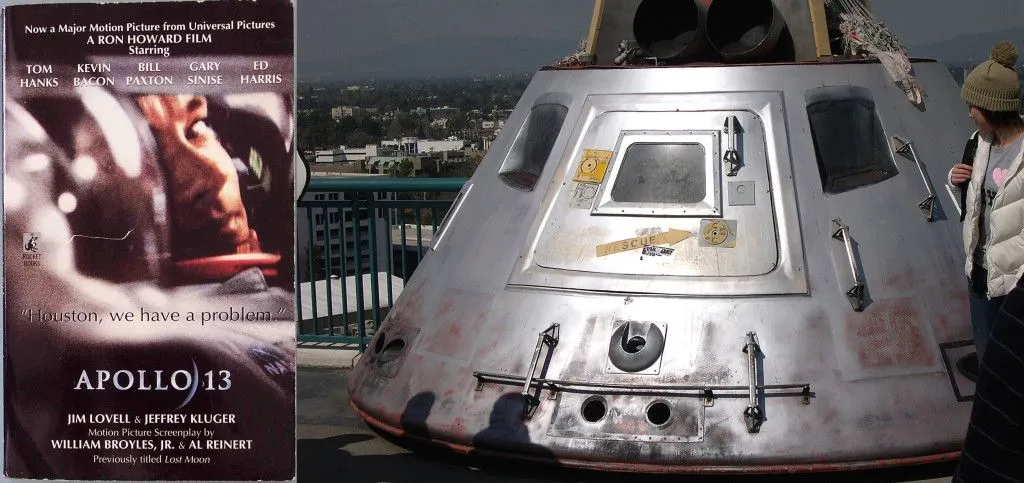
Private companies like Air Zero G and Zero-G Corporation also run parabolic flights that generate a microgravity experience, even for the general public. Movies like Apollo 13 and The Mummy had similar procedures during their production, with the former having done around 612 parabola flights to obtain four hours of micro-gravity environment in which to film.
These flight paths are also called ‘parabolic’ flight paths, since the overall trajectory of these flights appears parabolic. The portion that matters (the trajectory between the maneuver time of roughly 20 seconds and 40 seconds in the diagram below) is the arc over the top, where the aircraft is simply falling under gravity with its engines throttled back to cancel out only air drag.
This is the same parabola that any thrown ball traces: once you let go, gravity alone shapes the path. The trick is that the pilots make the entire aircraft follow that free-fall arc, so the plane and everything inside it fall together at the same rate.
The plane stays on this free-fall arc for only about 20-22 seconds. Hold the dive too long and the aircraft picks up dangerous speed and altitude loss, so the pilots have to pull out and climb again. While the plane is on this arc, though, everything inside it is in complete free fall.
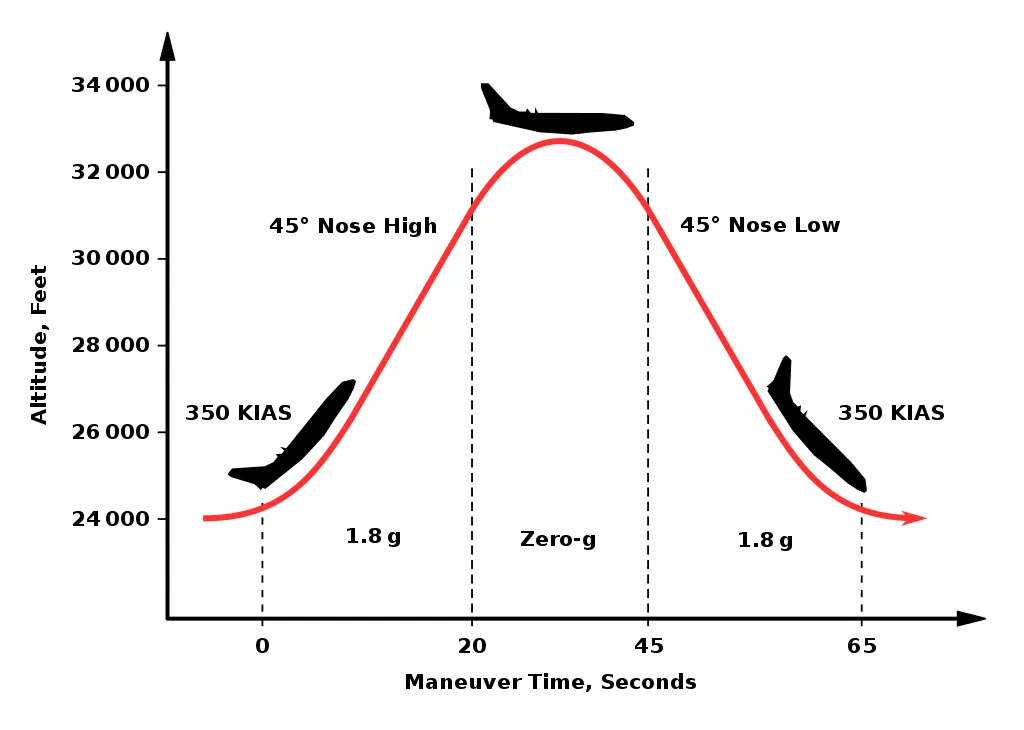
To set up the arc, the plane must first accelerate and pitch steeply upwards (pushing the people aboard into their seats at about 1.8 times their normal weight). Once it reaches a nose-up angle of roughly 45 to 50 degrees, the pilots throttle back and the plane noses over into free fall for approximately 22 seconds.
During that time, everything inside the plane is nearly weightless, creating a microgravity environment. We only say ‘nearly’ because air drag on the aircraft prevents it from reaching absolute weightlessness. Once the plane is lifted and out of its free fall, the people inside the plane no longer feel their weightlessness.
The microgravity experiments happen during these 22 seconds. Once those 22 seconds have passed, the pilots pitch the plane upwards again. Pilots can perform several similar parabolic trajectories in a single flight.
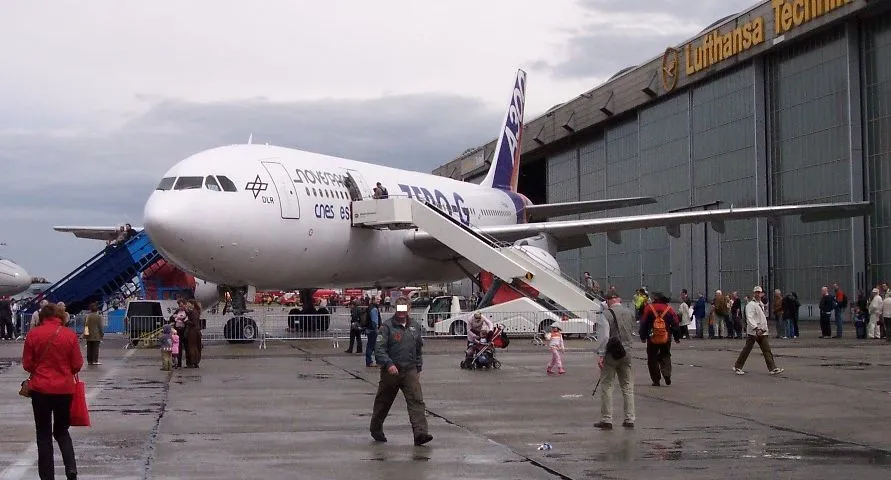
Scientists use parabolic flights to recreate actual low-gravity environments without using water and floatation devices, as in the neutral buoyancy pools. These flights allow for these experiments to be conducted in conditions as close as possible to those in space stations, like the ISS.
Simulating Exoplanet Environments
However, it doesn’t end there. Scientists at the University of Colorado Boulder are attempting to replicate the atmospheres and climates of exoplanets in order to conduct experiments and determine if life could exist in such conditions.
The instrument used for imitating exoplanet environments weighs around 2000 lb. (a little more than 900 kilograms) and consists of thick steel walls. Unlike the frigid cold and vacuum conditions of space replicated in the above facilities, this instrument can reach high temperatures (up to 1000 Kelvin) and high pressure (a hundred times the atmospheric pressure at sea level).
Once this instrument obtains the high temperature and pressure conditions of some exoplanet, scientists then beam frequency comb lasers inside that instrument. They record the interactions of these beams with the gases inside the chamber.
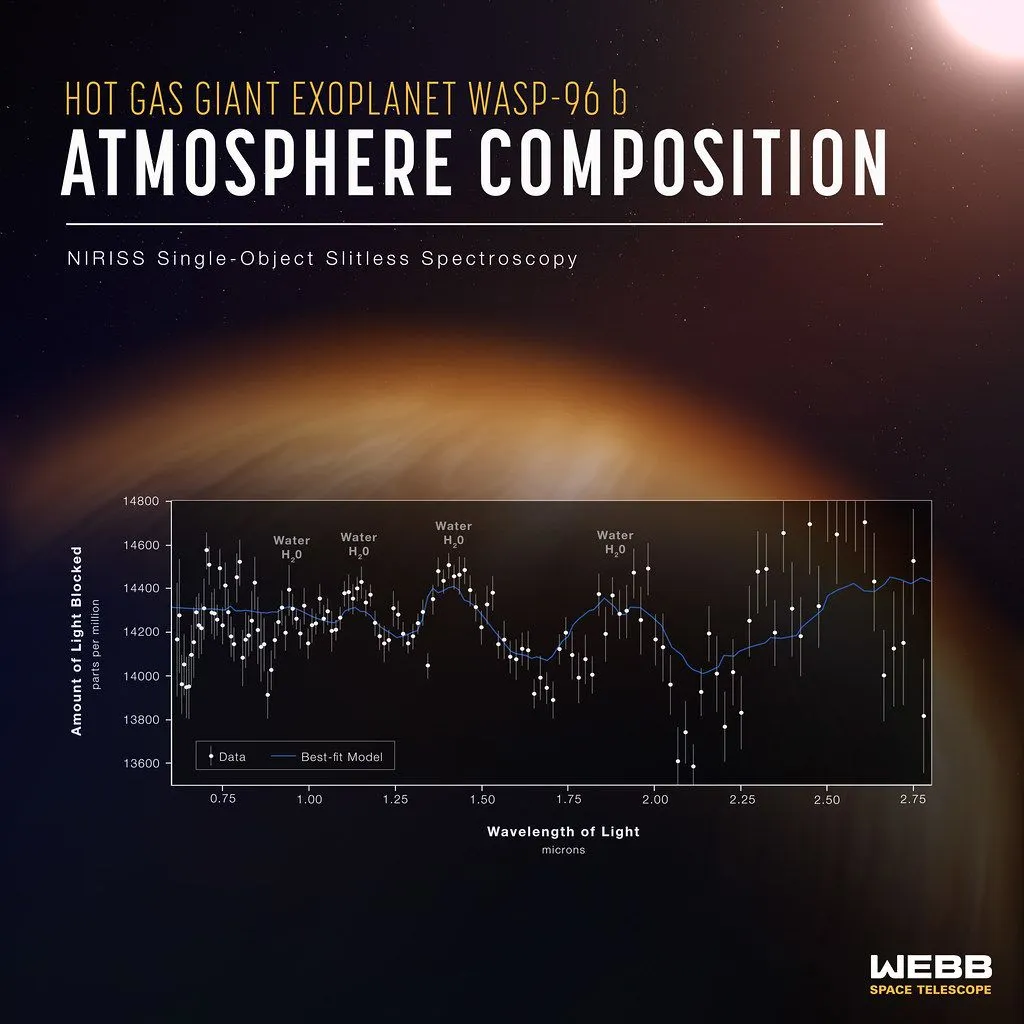
Scientists compare these interactions with the spectral data of exoplanet atmospheres obtained from telescopes. We can then get a better idea of the nature of the atmospheric conditions and the climate patterns of these planets, which may help us find planets outside our solar system that could harbor life.
A Final Word
Simulating outer space conditions, including low vacuum, zero gravity and even the atmospheres of exoplanets, can be extremely useful. Apart from being able to experiment with how these surroundings impact humans and life (especially microgravity), we use it to train people to go into outer space. It is crucial for those astronauts who will be living and working in space stations like the ISS for extended periods.
This simulation equipment also provides training for astronauts who will partake in future spaceflight missions to the Moon and Mars. Also, all the mechanical and electronic components of satellites and space telescopes are tested to ensure their durability and take whatever measures are necessary to protect them from damage in outer space.
As long as human space exploration is in full swing, the development and recreation of environments beyond the Earth’s atmosphere will be essential in laboratories.
References (click to expand)
- Space exploration. Encyclopaedia Britannica.
- Johnson Space Center Home.
- Neutral Buoyancy Facilities for Spacewalk Train.
- Thermal Vacuum Chamber B.
- Space Environment Simulator.
- Space Environments Complex | Glenn Research Center | NASA.
- ESA - EAC facilities.
- ESA - Parabolic flights.
- Take a gravity-free flight on board the Airbus A310 Zero G.
- Researchers replicate the climates of exoplanets to help ....
- From Astronauts to Actors: Simulating Zero-Gravity in Film.