Table of Contents (click to expand)
Truly gluten-free wheat does not exist yet, because gluten is made by large, scattered gene families that conventional breeding cannot fully switch off. However, modern tools such as RNA interference (RNAi) and gene editing (CRISPR) have already produced low-gluten wheat lines with up to 97% fewer immune-triggering gliadins, though none are commercially available yet.
Bread, pasta, naan and cookies have one thing in common: wheat.
Wheat is a staple crop in most parts of the world and is an important source of starch, protein, vitamins and dietary fiber.
Despite its essential nature in our diet, about 1-2% of the population is intolerant to wheat, more specifically to gluten. Gluten is the name given to a group of proteins found in wheat. Fragments of the gluten protein are recognized by the immune system of gluten-intolerant individuals, leading to an inflammatory reaction in their small intestine.
One quick point of confusion worth clearing up: gluten is not unique to wheat. Closely related proteins are also found in barley, rye and the wheat relative spelt, which is why “gluten-free” and “wheat-free” are not the same thing. A product can be wheat-free (made with rye or barley, say) and still be loaded with gluten. Anything labeled gluten-free, on the other hand, has to leave out wheat as well, since wheat is the single biggest source of the stuff. Oats are naturally gluten-free, but they are so often grown and milled alongside wheat that they pick up gluten by cross-contamination, which is why people with celiac disease are advised to buy certified gluten-free oats.
With increasing awareness about celiac disease and other forms of gluten intolerance, there is an increased demand for gluten-free food. Scientists are investigating whether it is possible to develop a wheat variety in which the immune-triggering peptides are disabled, but the dough-making properties are retained.
Can modern breeding technologies, such as gene editing, be used to develop ‘gluten-free’ wheat?
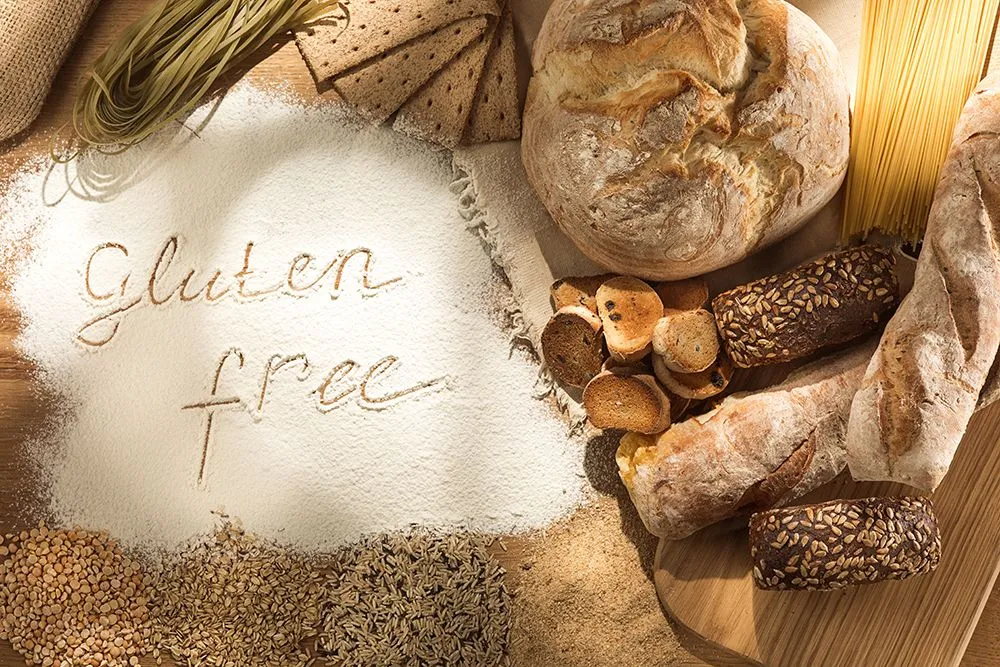
What Is Gluten?
If you take the wheat grain apart, you’ll find that it consists of an outer layer called bran, the embryo (also called germ) and the endosperm tissue, which contains starch and proteins. The endosperm takes up roughly 90% of the grain and is composed of 8-15% storage proteins, of which 80% is gluten.
Glutens are water-insoluble proteins present in the endosperm. They can absorb 2x times their dry weight in water and become a viscous mass. It is this property of gluten that makes it so popular in the food industry.
Gluten is omnipresent in food. Not only is it present in all food products made from wheat, such as breads and noodles, it is also used in diverse processed food products that are not typically associated with wheat. For example, gluten is added to some plant-based meat products (to give them a ‘chewy texture’), fruit filling in nutritious bars, synthetic cheese, soft candy, salad dressings, edible films that protect food, and even soy sauce.
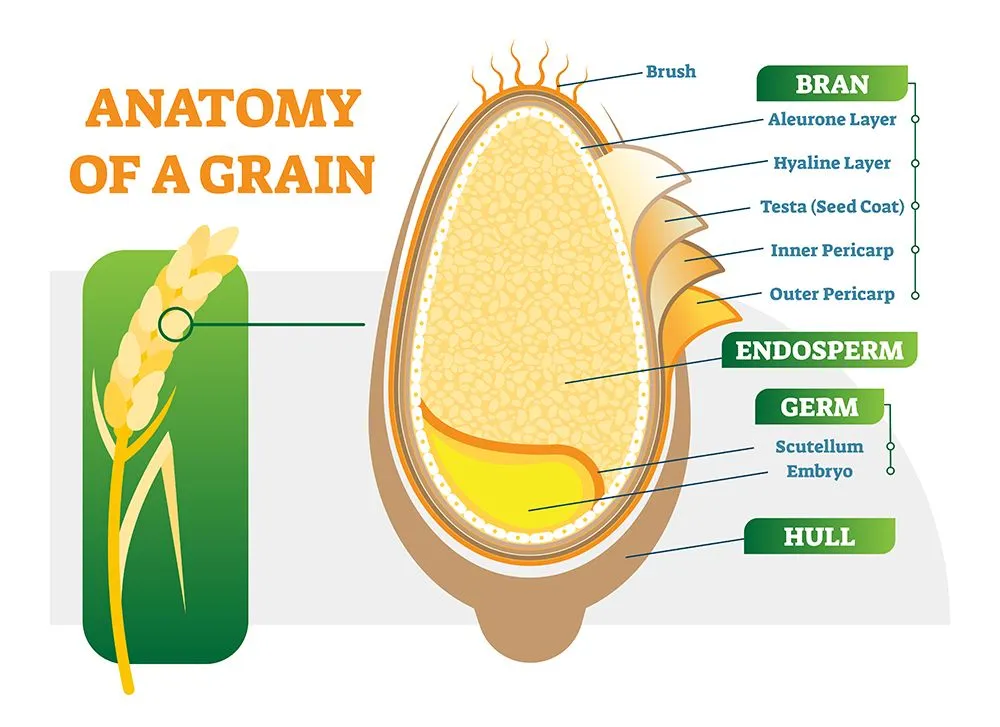
Gluten consists of two types of proteins: glutenin and gliadin. Glutenin makes the dough elastic and gliadin makes it viscous. This is why, as you knead flour in water, it starts to get all stretchy and gloopy, sticking to everything.
Of the two proteins, gliadin triggers the immune reaction; α gliadins lead to the strongest immune responses.
Wheat is not one homogenous entity. There are several species of wheat and they differ in their gluten content.
For example, spelt wheat has a higher content of gliadin and a lower content of glutenin (gliadin/glutenin ratio 3.5) than common bread wheat (gliadin/glutenin ratio 2).
Breeding For Low Gluten
There is a common misconception that wheat breeders, over the years, have developed wheat varieties with more gluten. There is plenty of evidence that contradicts this claim.
A study compared 195 wheat and 240 spelt accessions, including landraces, breeding material, and varieties that were grown at the same location (to reduce environmental variability), and found no significant difference between older and newer wheat types. In another study, when old and new wheat varieties were compared, the older varieties actually had more immunogenic peptides. When 50 German wheat varieties developed between 1891 and 2010 were compared, the scientists noted that gliadin content had decreased over the years.
Now that we know that modern wheat was not bred to contain more gluten, the question arises… can wheat be bred to contain less gluten? Can we have wheat varieties without the immunogenic peptides?

To answer this question, we need to understand the complexity of gluten proteins.
The genetic composition of modern bread wheat (Triticum aestivum) includes three sub-genomes from three ancestral wheat types that combined and formed modern wheat. There are a large number of ‘gluten genes’ in this complex genome, making it difficult, and perhaps impossible, to develop a gluten-free wheat variety using conventional breeding.
A single wheat genome can contain > 100 different gluten genes and 60% of these may be expressed in the form of proteins. How many gluten genes are expressed varies with the wheat variety, the stage of growth, and environmental conditions. To add to this complexity, gluten proteins are encoded by large gene families in different parts of the wheat genome. Therefore, traditional breeding has not been successful.
Interestingly, specific fragments of the glutenin and gliadin proteins containing a core sequence of 9 amino acids (called the epitope) are responsible for the immune reaction in gluten-intolerant individuals. Although these epitopes are present in both glutenin and gliadin, the gliadins contain more of such epitopes.
A wheat variety that is compatible with a gluten-intolerant individual would need to have fewer gluten genes, low expression of gluten genes (especially gliadin genes), and/or it would need to have the epitopes disabled. At the same time, it would need to retain its other traits, such as good yield, good bread-making quality, disease resistance and so on.

Modern Breeding Tools: RNA Interference And Gene Editing
Modern breeding technologies, such as RNA interference (RNAi) and gene editing, have shown some promise in delivering gluten-free wheat.
In fact, RNAi blocks the synthesis of gluten in the cell.
It works like this. Short sequences of RNA are designed to bind to specific regions of the gluten RNA transcript and block their conversion to proteins. Since the epitopes have a common sequence of 9 amino acids, the transcripts can be designed to bind to multiple epitopes.
RNAi technology was used to develop wheat lines with up to a 97% reduction of the gliadins, and a 10-100 fold reduction of epitopes, thus leading to lower toxicity in gluten-intolerant individuals. Some of these wheat lines had their baking quality intact. However, RNAi-carrying plants are considered transgenic, and getting regulatory approvals for such transgenic wheat varieties may be challenging.
Gene editing technologies such as CRISPR/Cas9, on the other hand, use an enzyme called endonuclease led by a ‘guide RNA’ to break the DNA strands at specific locations. When this broken strand repairs itself, it can result in ‘mistakes’ or mutations that will disable the epitope or the gene.
Gene editing technologies are very specific and can be designed to target specific genes or groups of genes. An added advantage is that the gene-edited plants are not considered transgenic, and are not subjected to complex regulatory approval barriers.
There are multiple reports of research groups developing low-gluten wheat using gene editing. In a landmark 2018 study, a Spanish team used CRISPR/Cas9 to knock out as many as 35 of the 45 α-gliadin genes in a single wheat line, cutting its gluten immunoreactivity by around 85%.
The progress has not stopped there. By combining RNAi and CRISPR, researchers have since pushed total gluten down by more than 97% in some experimental lines, and a 2025 study reported wheat in which the most reactive part of the α-gliadin protein (the notorious 33-mer peptide) was deleted in three out of four copies, all while preserving the dough-strengthening glutenins that good bread depends on. Encouragingly, bread baked from one of the earlier low-gliadin lines did not provoke a reaction in celiac patients in a small clinical test.
So, can wheat be made gluten-free? Not completely, at least not yet. These gene-edited lines are dramatically lower in gluten rather than entirely free of it, and they are still confined to research plots and trial fields. None has reached farmers for commercial production, so for now a strict gluten-free diet still means avoiding wheat altogether.
Conclusion
Gluten intolerance, along with a personal preference for a gluten-free diet, has led to growing demand for gluten-free wheat. Traditional breeding has not been able to deliver it, because of the complex genetics of gluten production. Modern technologies such as gene editing hold real promise, and scientists have already produced experimental wheat that is far lower in immune-triggering gluten while still making decent bread. For now, though, none of these low-gluten varieties is commercially available, so wheat that is genuinely safe for celiac sufferers remains a work in progress rather than something on the supermarket shelf.
References (click to expand)
- Gilissen, L. J. W. J., & Smulders, M. J. M. (2021). Low Gluten and Coeliac-Safe Wheat Through Gene Editing. Plant Biotechnology. Springer International Publishing.
- Jouanin, A., Schaart, J. G., Boyd, L. A., Cockram, J., Leigh, F. J., Bates, R., … Smulders, M. J. M. (2019, August 1). Outlook for coeliac disease patients: towards bread wheat with hypoimmunogenic gluten by gene editing of α- and γ-gliadin gene families. BMC Plant Biology. Springer Science and Business Media LLC.
- Day, L., Augustin, M. A., Batey, I. L., & Wrigley, C. W. (2006, February). Wheat-gluten uses and industry needs. Trends in Food Science & Technology. Elsevier BV.
- (2022, January 21). The Structure and Composition of the Wheat Grain. Wheat. Wiley.
- Zeibig, F., Kilian, B., & Frei, M. (2021, December 17). The grain quality of wheat wild relatives in the evolutionary context. Theoretical and Applied Genetics. Springer Science and Business Media LLC.
- Ribeiro, M., Rodriguez-Quijano, M., Nunes, F. M., Carrillo, J. M., Branlard, G., & Igrejas, G. (2016, December). New insights into wheat toxicity: Breeding did not seem to contribute to a prevalence of potential celiac disease’s immunostimulatory epitopes. Food Chemistry. Elsevier BV.
- Verma, A. K., Mandal, S., Tiwari, A., Monachesi, C., Catassi, G. N., Srivastava, A., … Catassi, C. (2021, October 2). Current Status and Perspectives on the Application of CRISPR/Cas9 Gene-Editing System to Develop a Low-Gluten, Non-Transgenic Wheat Variety. Foods. MDPI AG.
- Gil-Humanes, J., Piston, F., Tollefsen, S., Sollid, L. M., & Barro, F. (2010). Effective shutdown in the expression of celiac disease-related wheat gliadin T-cell epitopes by RNA interference. Proceedings of the National Academy of Sciences (PNAS).
- Sanchez-Leon, S., Gil-Humanes, J., Ozuna, C. V., Gimenez, M. J., Sousa, C., Voytas, D. F., & Barro, F. (2018). Low-gluten, nontransgenic wheat engineered with CRISPR/Cas9. Plant Biotechnology Journal.