Table of Contents (click to expand)
Most black holes form when a massive star runs out of fuel and its core collapses. But not all of them need a star. Primordial black holes could have formed straight from the dense, hot soup of the early Universe, before the first stars ever switched on.
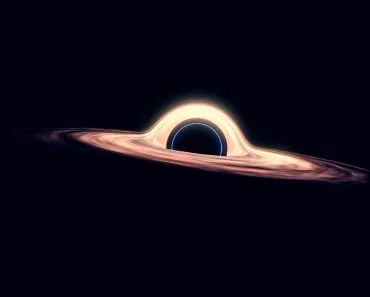
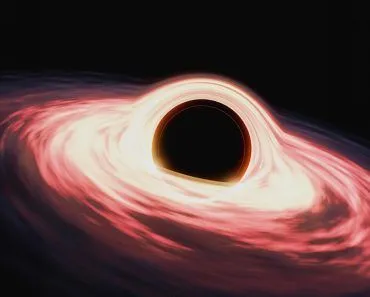
Black holes are some of the most extreme and exotic objects in the Universe. They exert so much gravity that even light cannot escape, but most of these entities are also shockingly small and compact. Scientists study their gravitational effects on surrounding objects like stars and gas.
The formation of a black hole occurs when the core of a massive star collapses due to gravitational instability. This results in the explosion of a star in the form of a supernova. The end product is a type of black hole called a stellar-mass black hole.
There is another class of black holes called supermassive black holes. While their formation is not as clearly understood, they mostly sit at the center of galaxies. Astronomers and researchers think they might have formed during the same time frame as their respective galaxy’s lifespan.
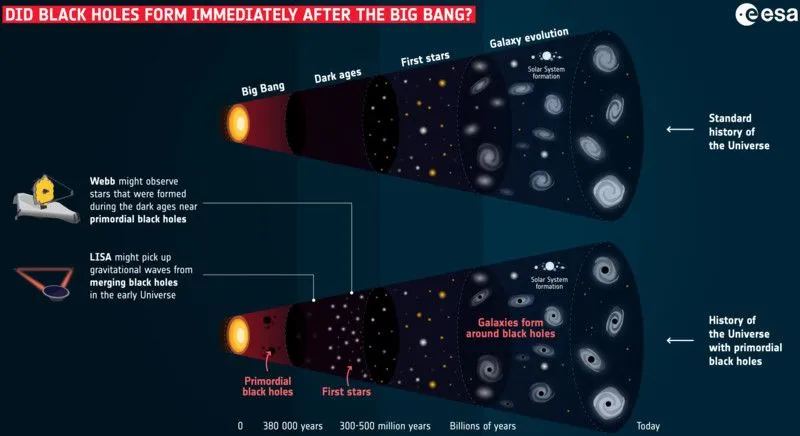
So, while the consensus is that the death of stars results in a black hole, scientists think that black holes need not always form this way. Theory tells us that there is more than one way to create a black hole. This is evidenced by a class of black holes called primordial black holes (PBHs), which refers to the black holes formed at some point during the early Universe, before the creation of the first stars.
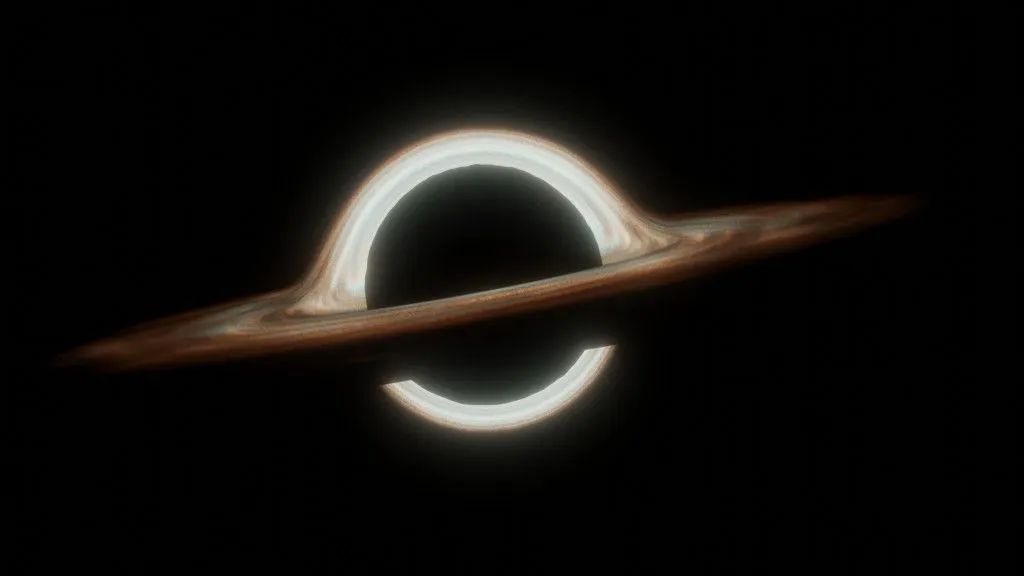
In this article, we will learn more about what these primordial black holes are, their formation mechanisms, and the possible ways to observe them.
Formation And Properties Of PBHs
As mentioned, stellar-mass black holes form from the collapsed cores of dying stars. The essential factor for their creation is the mass of the collapsing star. When the core collapses, more and more mass gets packed into a smaller area. If the leftover core is heavier than a definite limit (called the Tolman-Oppenheimer-Volkoff limit, roughly 2.2 to 3 solar masses), nothing can hold it up and the collapse does not stop. The result is the formation of a black hole.
Put simply, to create black holes, a mass above a particular value is needed inside a definite volume of space. While the centers of collapsing stellar cores are one place where this condition is satisfied, scientists have been researching other scenarios where this is possible.
These other scenarios are intriguing, albeit from a theoretical standpoint. During the very early stages of the Universe (from as little as 10-43 seconds after the Big Bang), conditions were so extreme that they could plausibly have squeezed pockets of matter directly into black holes, creating PBHs. Many prominent physicists, including Stephen Hawking and Maxim Khlopov, have searched for the possible formation mechanisms of PBHs. Some of them are called density inhomogeneities, the collapse of cosmic strings, and the development of gravitational instabilities.
All PBHs will eventually die out due to Hawking radiation. This ‘evaporation’ process is slow, and takes place over long periods of time.
Studies have shown that PBHs born with masses below roughly 5 x 10¹⁴ g (about the mass of a large asteroid) would have finished evaporating by this point in cosmic history. However, these black holes would have left some marks in the Universe, like background gamma rays in and around galaxies, antimatter inside cosmic rays, and sudden short gamma-ray bursts.
Heavier PBHs, above that threshold, would also emit Hawking radiation, but at such a slow rate that they would still exist today. One leading idea is that these survivors could have been the seeds of the supermassive black holes we find at the center of galaxies. They may also have played a role in the growth of galaxy clusters and other large structures in the Universe.
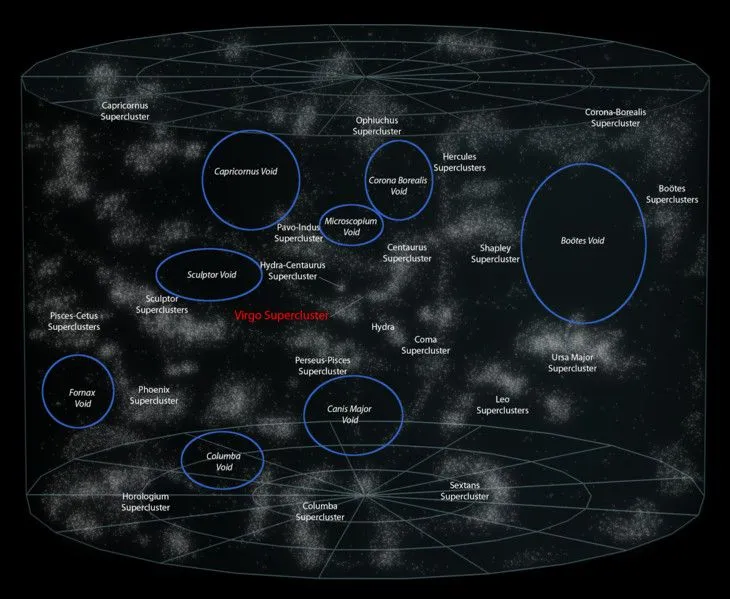
However, one of the most prominent research studies on PBHs is to find if they constitute the dark matter content of the Universe. This is because the formation of PBHs occurred during a period of the Universe when radiation energy was dominant. Thus, they would not really be considered “ordinary matter”, since ordinary matter came about later on. However, we have no observational evidence indicating that PBHs could constitute dark matter (as is true of all dark matter candidates).
Now, just having the theoretical framework is not enough. To confirm the existence of PBHs, one must be able to observe these objects. Since these objects are black holes, direct observation is not feasible. Therefore, astronomers have attempted to develop clever techniques that might enable us to see them.
Possible Methods Of Detection
One way is to observe Hawking radiation and the gamma-rays that black holes emit during its end evaporation stages. As mentioned, PBHs that initially had masses of a few times 1014 g would be dying out right about now, in the form of bursts of highly energetic gamma radiation. As the evaporation of black holes is a tediously slow process, only PBHs would exhibit this, as their formation took place so long ago. Black holes formed from the collapse of star cores are too young to showcase this phenomenon.
One challenge about observing the gamma rays emitted from the evaporation of a black hole is their random and short-term nature. It is, therefore, not easy to catch them, which makes it difficult to make other kinds of observations of these events.
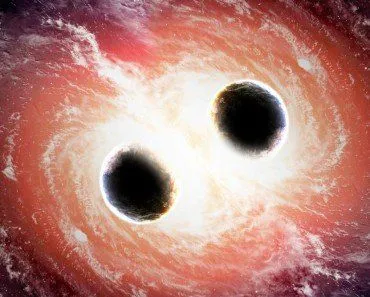
Another way is to detect the gravitational waves produced either from a black hole’s formation or during the merger of binary PBHs. The gravitational wave created during its formation would, however, become weakened by the expansion of the Universe. Using models of the primordial universe and other astrophysical processes, it is possible to determine the number of PBHs out there.
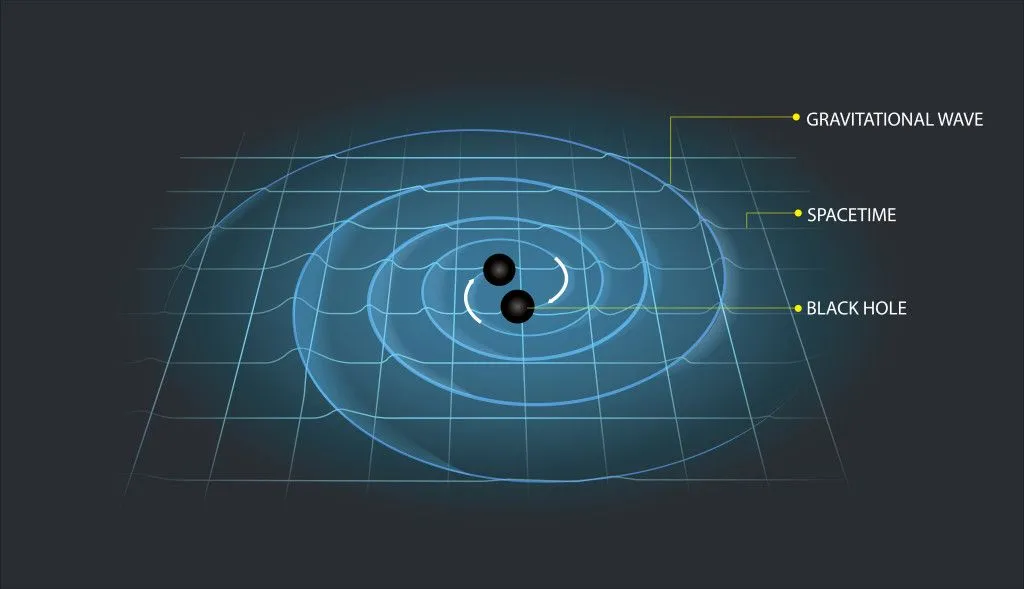
However, much work is still needed to confirm the detection of PBHs using gravitational waves. One is from the development of next-generation gravitational wave observatories. Better constraints on the models used to determine the population of PBHs are also needed.
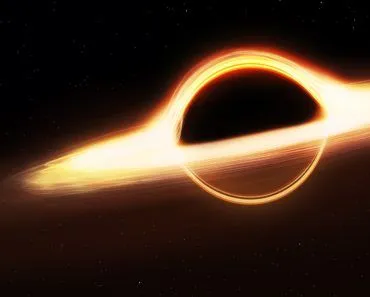
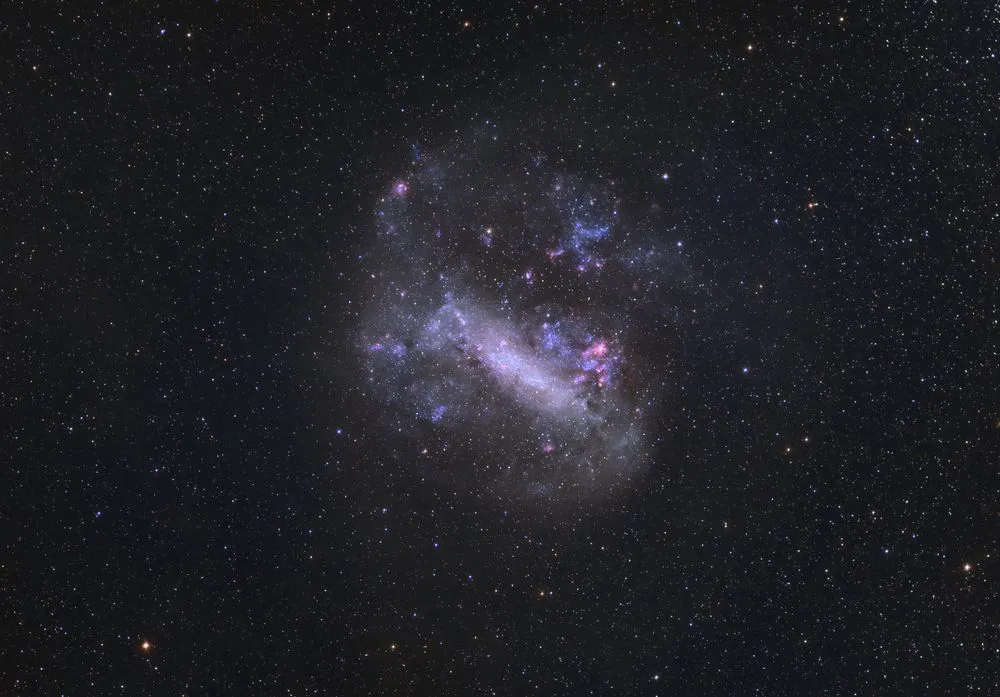
The third way of detecting them is using micro-lensing techniques. In this, a PBH passes between a distant star and an observer on Earth, who would see variations in the observed luminosity of the stars “behind”. While researchers developed this technique to detect dark matter, they believe it also is possible to observe PBHs with masses between 1019 and 1024 grams with this method. Several surveys, like MACHO and EROS, have searched for micro-lensing events toward the Large Magellanic Cloud, a small companion galaxy of the Milky Way. Meanwhile, the Subaru Hyper Suprime-Cam (Subaru/HSC) ran the same kind of micro-lensing survey toward the Andromeda Galaxy.
Conclusion
Indeed, detecting these primordial objects would greatly interest astronomers and physicists researching fields like Cosmology. PBHs could provide vital information about the physical processes that took place during the early moments and eras of the Universe. It would give essential clues on the evolution of the Universe and how it ended up the way it is today. Scientists expect that PBHs will provide vital information on cosmological inflation (the period of rapid expansion of the Universe).
The question has also gained fresh urgency from the James Webb Space Telescope (JWST). Since 2023, JWST has spotted surprisingly massive black holes in the first few hundred million years of cosmic history, including the faint, ruddy objects nicknamed "little red dots" and several galaxies whose central black holes look far too heavy for their age. These objects are hard to explain if every black hole had to grow slowly from a dead star. To account for them, astronomers increasingly invoke heavy "seed" black holes that started big, either from the direct collapse of giant gas clouds or, more speculatively, from primordial black holes left over from the Big Bang itself.
So, while PBHs are still only “theoretically possible”, the idea that some black holes predate the first stars is taken more seriously than ever. If it holds up, it means the very first black holes were already in place before starlight had ever shone in the cosmos. It is only a matter of time before we gather the observational evidence to settle the question for good.
References (click to expand)
- Khlopov, M. Y. (2010, May 25). Primordial black holes. Research in Astronomy and Astrophysics. IOP Publishing.
- Carr, B., & Kühnel, F. (2020, October 19). Primordial Black Holes as Dark Matter: Recent Developments. Annual Review of Nuclear and Particle Science. Annual Reviews.
- Death by Primordial Black Hole. Scientific American
- What Is a Black Hole? NASA Space Place.
- Neutron Stars and Black Holes. University of Northern Iowa
- López-Coto, R., Doro, M., de Angelis, A., Mariotti, M., & Harding, J. P. (2021, August 1). Prospects for the observation of Primordial Black Hole evaporation with the Southern Wide field of view Gamma-ray Observatory. Journal of Cosmology and Astroparticle Physics. IOP Publishing.
- Franciolini, G., Baibhav, V., De Luca, V., Ng, K. K. Y., Wong, K. W. K., Berti, E., … Vitale, S. (2022, April 26). Searching for a subpopulation of primordial black holes in LIGO-Virgo gravitational-wave data. Physical Review D. American Physical Society (APS).
- Niikura, H., Takada, M., Yasuda, N., Lupton, R. H., Sumi, T., More, S., … Chiba, M. (2019, April 1). Microlensing constraints on primordial black holes with Subaru/HSC Andromeda observations. Nature Astronomy. Springer Science and Business Media LLC.
- BJ Carr. Primordial Black Holes - Recent Developments. SLAC National Accelerator Laboratory
- A Escrivà. (2022) [2211.05767] Primordial Black Holes. arXiv
- NASA Telescopes Discover Record-Breaking Black Hole. NASA.
- Bogdán, Á., et al. (2024). Evidence for heavy-seed origin of early supermassive black holes from a z≈10 X-ray quasar. The Astrophysical Journal Letters.