Scientists determine the age of a star mainly through its place in a cluster (the main-sequence turnoff), its spin rate (gyrochronology, since stars slow down as they age), and its oscillations (asteroseismology). Our Sun, dated from meteorites, is about 4.6 billion years old, but ages of isolated stars often carry uncertainties of 10-20%.
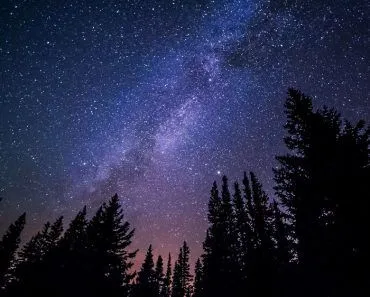
When we look up into the dark sky on a clear night, it’s easy to be overwhelmed by the beauty of the stars far above. We connect the dots, find patterns, and even pick our favorite clusters. As amateur star-gazers, one thing we can’t do is determine the age of those stars. Are they a billion years old? 10 billion?

Fortunately, scientists have developed a number of ways to derive the age of a star, giving us a clearer picture of the history of the universe, and even helping us in the search for intelligent life out in the cosmos!
The Secrets Of Star Clusters
There are a few different obstacles to estimating the age of a star, but the general estimation is much easier when a star is in a cluster. These star clusters typically form at around the same time, but don’t necessarily all have the same properties. Therefore, if you can determine the size and luminosity of a range of stars in one cluster, knowing that they all were formed at approximately the same time, it can be easier to determine their overall age.
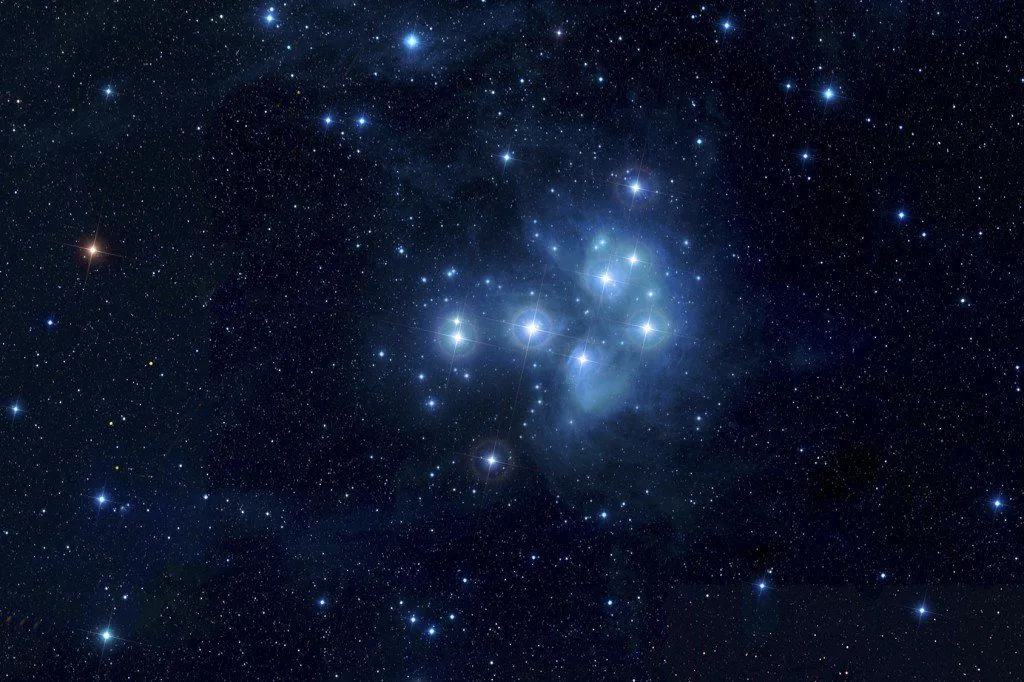
Most stars spend about 90% of their lives in the “main sequence” phase, where they are continuously pumping out energy and radiation due to the nuclear furnace inside of them. The most massive stars are “blue-hot” and extremely bright, whereas the least massive stars are “red-hot” and quite faint. Once a star has formed, the qualities of the star (brightness and temperature) don’t change much during the main sequence phase.
The length of this main sequence phase is directly correlated to the mass of the star, because once the internal fuel in the star’s core is used up, it enters a much less stable period, where it can expand, collapse, form a black hole, or even go supernova…
This connection between mass, brightness, and age means that star clusters can tell many tales. For example, you can look at the hottest, bluest, and most massive star in the cluster that hasn’t yet left the “main sequence”, and calculate precisely how hot and bright it is. That borderline star marks what astronomers call the main-sequence turnoff, and its position pins down the cluster’s age. The mass of the star tells us how much fuel it had, while the brightness tells us how fast it is burning that fuel. By matching the whole cluster against the model tracks called isochrones, it is possible to calculate the age of that star, and subsequently, the age of the other stars around it. The method is good but not exact: cluster ages typically carry a margin of error of roughly 10-20%.
But What About Lone Stars?
While star clusters are easy to spot and somewhat easy to “age”, things are a bit more difficult for lone stars, as there is no reference context for how long they’ve been shining. Their “spin”, however, can prove very useful in this context, particularly since the Kepler Space Telescope began peering deep into the recesses of space to find answers. This approach is called gyrochronology, a term coined by astronomer Sydney Barnes in 2003. Before Kepler, this clock was only calibrated against younger clusters, no older than roughly half a billion years, so nobody was sure it kept good time for middle-aged stars. Then, in 2011, a team led by Soren Meibom used Kepler to clock the spins of stars in a one-billion-year-old cluster (NGC 6811), nearly doubling the age range over which the method had been tested. Kepler watches distant stars steadily enough to detect “starspots”, which are dark patches on the surface, much like the sunspots on our own star.
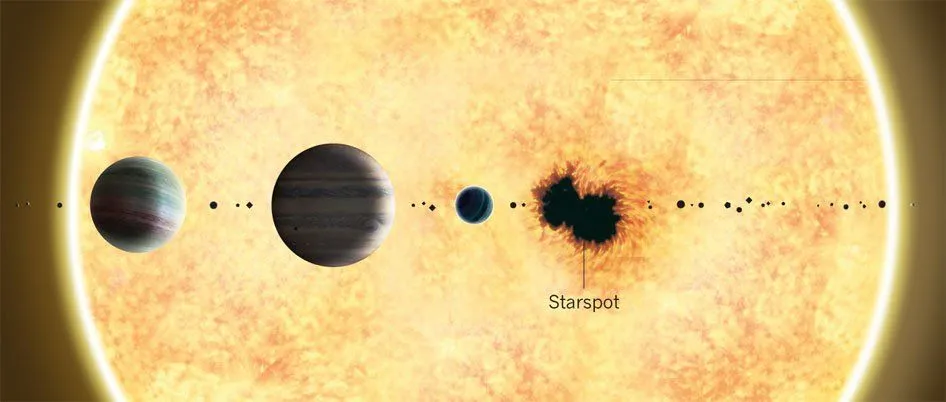
There is a direct connection between the mass, spin rate and age of a star, so if you know the mass and spin rate, then it’s possible to determine the age. The speed with which these starspots reappear on the surface of the star, noted by the Kepler telescope, can tell how fast the star is spinning. The dip in brightness that these star spots create is very difficult to spot, as it often accounts for only about a 1-2% reduction in the total light output from the star, but Kepler can handle the task.
Stars do tend to slow down as they age, dragged on by their own magnetic fields in a process called magnetic braking, but researchers still aren’t sure exactly how much. For a sense of scale, the Sun turns once every 25 days or so, while the younger stars Kepler studied in NGC 6811 spin around in just 1 to 11 days. In fact, the situational challenge of lone star age measurement is much the same as stars in clusters. Without a set reference – a “spin clock”, so to speak – it can be difficult, but measuring the spin rates of stars with a known age (using the techniques in the previous section) can help to establish a baseline. First, a researcher can measure the spin of a star in a star cluster, and then compare that measurement to the spin rate of a similarly-sized lone star. Voila – we can make a stellar birthday cake with the right number of candles.

Listening To A Star’s Starquakes
Spin is not the only clock ticking inside a star. Stars also ring like bells. Sound waves bouncing around inside them make their surfaces swell and shrink ever so slightly, which shows up as tiny, rhythmic changes in brightness. Reading those pulses to work out what a star is like on the inside is called asteroseismology, and it is essentially the stellar version of how geologists use earthquakes to map the inside of the Earth.
This field exploded once Kepler started staring at the same patch of sky for years on end. The mission picked up these “starquakes” in more than 500 Sun-like stars, and the rhythm of the oscillations depends on a star’s mass, size, and how much of its hydrogen fuel it has already burned through. For a star much like the Sun, that lets astronomers pin down its age to roughly 10%, which is about as sharp as stellar ages get. NASA’s TESS telescope, launched in 2018, now does the same trick across almost the whole sky, often on brighter, closer stars.
A few other clocks fill in the gaps. The European Space Agency’s Gaia mission has measured precise distances to nearly two billion stars, which fixes their true brightness and lets astronomers place them accurately on the brightness-versus-temperature chart known as the Hertzsprung-Russell diagram, then read off an age by comparing them to stellar models. For very young stars, astronomers track how much of the fragile element lithium survives in a star’s atmosphere (it gets destroyed steadily over time), a method called the lithium depletion boundary. And for the oldest stars in the galaxy, scientists can even use radioactive decay directly: by measuring how much uranium or thorium is left, much like carbon dating a fossil, they have dated ancient stars to more than 12 billion years.
How Do We Know How Old The Sun Is?
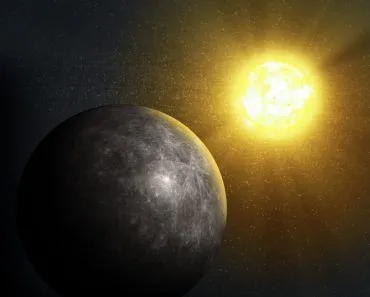
The one star we can date with real confidence is our own. The Sun is about 4.6 billion years old, and oddly enough, we did not work that out by studying sunlight at all. We worked it out from rocks.
Because the Sun and the planets condensed out of the same cloud of gas and dust at roughly the same time, the oldest solid leftovers from that event carry the birth date of the whole solar system. Those leftovers are meteorites, and the most ancient bits inside them have been measured by radiometric dating, which counts the slow, clock-like decay of radioactive elements locked in the rock. Those measurements consistently land between about 4.53 and 4.58 billion years, which is why we say the Sun, like its planets, is roughly 4.6 billion years old. As a yellow, middling star, it is only about halfway through its main-sequence life, with several billion years of steady shining still ahead of it.
Why Does Any Of This Matter?
In the grand scheme of things, for most people, the particular age of a star doesn’t make much difference; chances are, when you look up into the sky, you’ll only see a few thousand stars anyway, not the hundred billion or more packed into our own galaxy, let alone the countless others scattered across the universe. However, for those whose gaze stretches deep into the cosmos, determining the age of stars may be the key to finding other habitable worlds – or even extraterrestrial life.
By finding other stars that are similar to ours (steady, middle-of-the-road stars like our G-type Sun), and also of a comparable age, there is a much better chance of finding Earth-like planets. In fact, many of the most promising “other Earths” have been found near stars that closely resemble ours. It stands to reason that out of the hundreds of billions of stars in our galaxy alone, and the many rocky, Earth-sized planets waiting to be explored, some would have had enough time to develop life, intelligent or otherwise.
By accurately determining the age of stars, and narrowing our search of the galaxy to those resembling our own solar system, we have a much better chance of finding future destinations for space travel or colonization, or even making contact with other interstellar travelers.
References (click to expand)
- Stellar age estimation. Wikipedia
- How to Learn a Star's True Age. Center for Astrophysics, Harvard & Smithsonian.
- Meibom, S., et al. The Kepler Cluster Study: Stellar Rotation in NGC 6811. The Astrophysical Journal Letters (2011).
- Gyrochronology. Wikipedia
- Kepler and K2 Mission. NASA Science.
- Transiting Exoplanet Survey Satellite (TESS). NASA Science.
- Gaia. European Space Agency (ESA).
- Reading a Basic Cosmic Chronometer with UVES and the VLT (uranium dating of CS 31082-001). European Southern Observatory (ESO).
- Age of the Earth (and Solar System) from radiometric dating. U.S. Geological Survey (USGS).
- Scientists Can Tell How Old a Star Is by Observing How Fast It Spins. Smithsonian Magazine.
- WMAP: Age of the Universe. NASA.