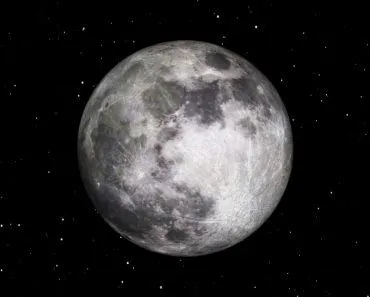
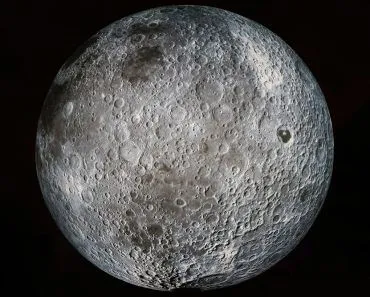
Yes, the moon is mostly gray, because its surface is covered in dull gray rock and dust. It isn’t a uniform gray, though: darker volcanic plains (lunar maria) and brighter highlands give it a mottled look, and up close it carries faint browns and tans. From Earth, the moon can also appear white, yellow, or orange depending on how low it sits and how much dust and pollution its light passes through.
When walking outside on a cloudless night, no one can resist finding the moon in the sky. It gleams and shines down from among the stars, inspiring songs and lovers all over the globe. Although we know that we’re all looking at the same moon, if you were to ask people around the world what color the moon is, you might get a range of answers.
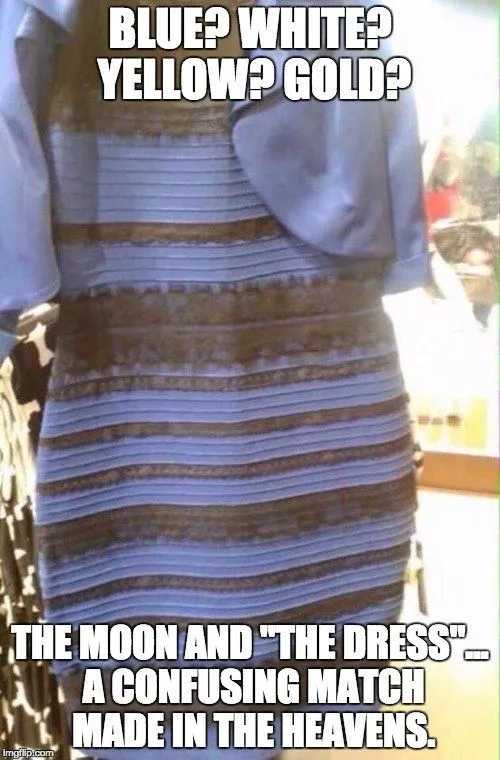
Short answer? The truth is, all of those color answers are correct (for the moon), depending on your perspective, what time of night it is, where you are in the world, and how clean the air is. But perhaps we should explain this a bit further…
The Moon In Living Color
Although the moon does appear to be many different colors at different times of year or night, the most accurate pictures of the moon’s color come from… you guessed it… the moon. When we look at photographs taken during the Apollo moon missions (1969-1972), the landscape is pretty darn bleak. Unlike Earth, which is colored in countless, diverse ways along the entire range of the visible spectrum, there is no atmosphere, water or life on the moon. In other words, there isn’t much going on, and the makeup of our orbiting nightlight is quite simple.
The moon’s crust is built from common rock-forming minerals such as plagioclase feldspar, pyroxene and olivine, made of elements like oxygen, silicon, iron, magnesium, calcium and aluminum. What all of these minerals have in common is that, ground into dust, they are basically a dull gray color. When you look at the photos, it is hard to believe that they weren’t taken in black and white, but when you see the colorful flash of a flag on an astronaut’s suit, or the copper gleam of the Apollo spacecraft, the reality sets in. The moon is gray… and great for off-roading.
On the surface of the moon, it all looks rather uniform, but down here on Earth, we see plenty of dark spots and apparent “terrain” on the moon, so what’s that all about? Well, the moon was once characterized by huge amounts of volcanic activity. Long ago, lava welled up and flooded vast basins, cooling into the dark basaltic plains we call lunar maria (Latin for “seas”). Because that basalt is rich in iron and titanium, it is far less reflective than the older, paler highlands, which are made of feldspar-rich anorthosite. The bright highlands bounce back roughly 11–18% of the sunlight that hits them, while the dark maria reflect only about 7–10%, and it is that contrast that gives the moon its mottled, “colorful” diversity. Look closely at the Apollo samples and you’ll even spot faint browns and tans mixed into the gray.
Is The Moon Actually Gray Or White?
So which is it, gray or white? Ask someone to describe the moon and they will almost always reach for “white” or “silvery,” yet the astronauts who visited it came home talking about gray dust and gray rock. Both camps are right, but only one of them is describing the actual surface.

The moon is genuinely dark. Its surface reflects only about a tenth of the sunlight that lands on it, which makes it roughly as dark as a worn asphalt road. If you could somehow drop a slab of the lunar surface onto your driveway on a sunny afternoon, it would look distinctly dingy and gray, not gleaming white at all.
Why, then, does it blaze white in the night sky? Two reasons work together. First, a full moon is being struck by the full, unfiltered force of the sun, and it sits close enough (about 384,000 kilometers away) that even a tenth of that light is a great deal. Second, it hangs against a pitch-black sky, and our eyes judge brightness by comparison. The brightest object in an otherwise dark scene simply reads as “white” to the brain, the same way a gray shirt can look white next to a black one. So the honest answer is that the moon is a gray rock wearing a white disguise, and that disguise is stitched together from raw sunlight and contrast.
Why Does The Moon Look Colorful In Photos?
If the moon is really just gray, why do those jaw-dropping “mineral moon” photos all over the internet show it splashed with blues, oranges and rusty reds? It is a fair question, and the surprising answer is that those colors are real. They are simply far too faint for your eyes to pick out, so photographers push the color saturation until the differences leap off the screen.

Those hues are essentially a map of what the ground is made of. Where the moon turns blue in these images, the soil is rich in titanium, locked into the dark volcanic basalt of the lunar maria. Where it shades toward orange, red and brown, the rock carries more iron and less titanium. Back in 1992, NASA’s Galileo spacecraft made the effect famous by stitching together 15 images taken through three color filters as it flew past, producing a false-color mosaic in which the titanium-heavy Mare Tranquillitatis glows deep blue while the neighboring, lower-titanium Mare Serenitatis turns orange. The paler lunar highlands, meanwhile, show up in reddish tones.
The Artemis II crew handed astrophotographers fresh material in 2026. Processing the crew’s far-side flyby shots, imagers teased out the same hidden palette, with blues marking titanium-rich basalt and reddish patches most likely tracing iron oxide. So the moon really does carry color woven into its rock. It is just so subtle that, to the naked eye, our nearest neighbor stays stubbornly gray.
Why Doesn’t It Look Grey All The Time?
Every color that we see down here on the planet is due to that material’s reflectivity of light. Outside, color is provided by sunlight, which not only strikes and reflects off everything down here, but is also affected by the atmosphere. The diverse range of particles in the air can refract and scatter various wavelengths of light, thus changing the color of the light we see.
As you might guess, the same thing happens to the light from the moon. Sunlight is reflected off the surface of our nearest neighbor, and then beamed down to Earth, but that is far from a direct transmission.
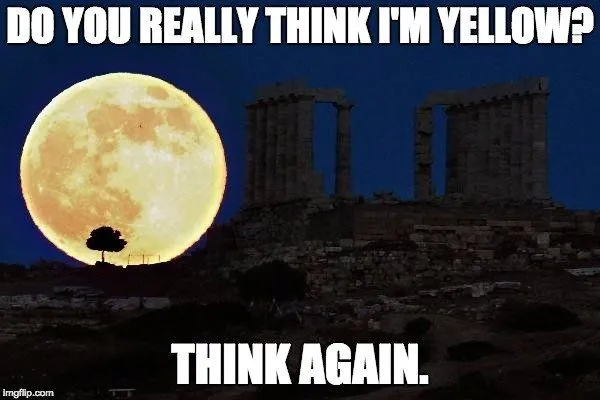
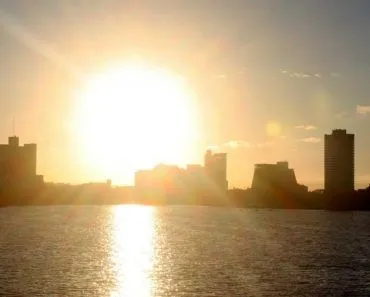
For example, when the moon is very low in the sky, near the horizon, its light is passing through far more of the atmosphere than if it were directly overhead. The more atmosphere it passes through, the more of the light on the blue and purple side of the spectrum gets scattered. Therefore, we see a more reddish or orange moon. By the time the moon is overhead, the light is less affected by the atmosphere, so it appears to be yellow, or closer to white/grey.
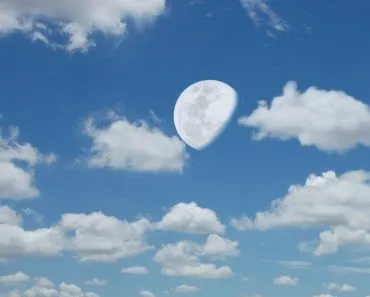
However, during the daytime, the moon is also in the sky for long stretches in certain seasons. In these instances, the moon is a faint white color, definitely not yellow. The reason is that during the day, the moonlight must compete with sunlight, and it is no match for the power of our star. The bright daytime sky, lit up by sunlight scattering off particles in our atmosphere, simply washes out the moon’s comparatively dim glow, leaving it looking like a pale, almost ghostly disc.
What About Harvest Moons?
Many people will immediately point to harvest moons and supermoons as examples of the moon acting “bizarre”, and it’s true… the color of the moon can often be shocking. However, there is always an explanation, even for blood moons and blue moons. Depending on the composition of the atmosphere in a given place, different spectrums of light can be scattered, thus changing the color of the moon in your eyes. If you are in a city with high pollution year-round, it will be rare that the moon isn’t a different color at night.
The name “harvest moon”, the typically orange color of this phenomenon, and its association with autumn evenings make some people believe the moon itself is putting on a costume change. The real reason is more down to earth. A harvest moon is simply the full moon closest to the September (autumn) equinox, and at that time of year it rises soon after sunset and hangs low near the horizon for hours. Just like a low-hanging moon on any night, its light is forced through a thick wedge of atmosphere that scatters away the blues and leaves the warm orange glow. Smoke, dust, or pollution in the air can deepen that color further, but you don’t need a dusty harvest field to get it.
So, the answer to this intriguing question is actually quite simple. The moon looks gray in pictures because it largely is gray, but we will probably never look up into the sky and see a perfectly gray moon. As long as our atmosphere is in place, and until humans figure out a way to eliminate pollutants and dust from the air, our closest celestial neighbor will keep changing colors for us. And the moon has a few surprises left even at close range: during the Artemis II crewed flyby in April 2026, the astronauts photographed the far side up close and monitored the subtle color, brightness and texture differences across the terrain, capturing detail that the cameras of half a century ago never quite matched. Remember that color, like so many other things in life, is all about perspective!
References (click to expand)
- The Moon Is Not Black And White, It Just Looks That Way. Scientific American
- Rackham, T. W. (1967, January). Color on the moon. Icarus. Elsevier BV.
- Horvath, H. (1993, February). Atmospheric light absorption—A review. Atmospheric Environment. Part A. General Topics. Elsevier BV.
- NASA’s Artemis II Crew Beams Official Moon Flyby Photos to Earth. NASA.
- Moonlight. NASA Science.
- Moon – False Color Mosaic. NASA Jet Propulsion Laboratory (JPL).
- Far Side Moon Photos Reveal Hidden Lunar Minerals in Brilliant Color. Scientific American.