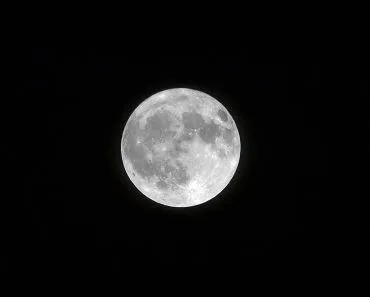
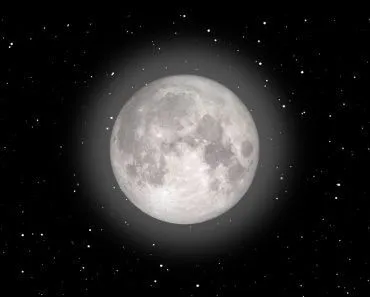
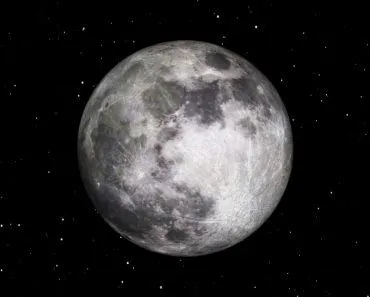
The big dark spots you see on the Moon with the naked eye are not craters themselves but lunar maria (Latin for “seas”, singular mare) — vast, smooth plains of dark basaltic lava that erupted around 3–4 billion years ago and flooded huge ancient impact basins. The brighter, cratered terrain around them is the lunar highlands. Because the Moon has almost no atmosphere, no erosion and no plate tectonics, both the maria and the smaller craters are essentially preserved as they were billions of years ago.
The large, smooth dark patches you can see on the lunar surface with the naked eye are called lunar maria (Latin for "seas", singular mare). They were originally giant impact basins gouged out by collisions with comets, meteorites and asteroids early in the Moon’s history, but the dark colour you see today comes from the dark, iron-rich basaltic lava that later welled up from inside the Moon and flooded those basins about 3–4 billion years ago. The surrounding lighter, more heavily cratered terrain is called the lunar highlands.
At some point in your life, you’ve observed that our old, reliable moon is packed with a number of dark spots on its surface. If you haven’t ever paid attention to this, make sure that you do the next time you’re out stargazing, preferably when the full moon is out.
Are The Dark Spots On The Moon Actually Craters?
It is a fair thing to assume, but no: the big, smooth, dark blotches you can pick out with the naked eye are not craters at all. They are the lunar maria we mentioned earlier, broad plains of dark volcanic basalt that hardened after lava flooded a set of enormous, ancient impact basins. Together the maria blanket roughly 16% of the Moon’s surface, and almost all of that dark ground sits on the side that faces us.

Why do they look so much darker than everything around them? The basalt that fills the maria is loaded with iron and the iron-titanium mineral ilmenite, which soaks up light rather than bouncing it back. The maria reflect only around a tenth of the sunlight that lands on them, while the surrounding lunar highlands, made of pale, calcium-and-aluminium-rich anorthosite rock, are far brighter. That contrast is exactly what your eye reads as the familiar pattern of light and dark patches.
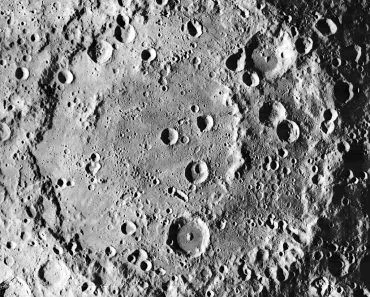
The real craters are the smaller, circular, bowl-shaped pockmarks scattered across both the bright highlands and the dark maria. The most eye-catching are the bright “ray craters” such as Tycho (about 85 km across) and Copernicus (about 93 km across), young impacts whose pale streaks of blasted-out debris fan out for hundreds of kilometres across the surface. So the dark spots and the craters are really two different stories: one written by volcanoes, the other by collisions.
Why Are Almost All The Dark Spots On The Side Facing Earth?
Here is the genuinely strange part. Nearly every one of those dark maria sits on the near side, the hemisphere permanently turned towards Earth. When spacecraft finally photographed the far side in detail, they found a rugged, brilliantly bright landscape smothered in craters, with barely any dark plains at all. So why did lava flood one face of the Moon and almost skip the other?

The answer lies in the Moon’s lopsided crust. The far-side crust is far thicker than the near-side crust, roughly 50 to 60 km against 20 to 30 km. When giant impacts punched into the thinner near side early in the Moon’s history, they cracked deep enough for molten basalt from the interior to well up and drown the basins, forming the maria. On the far side, the same size of impact usually could not break through the much thicker crust, so little magma reached the surface and those basins stayed as bright, cratered highlands.
What made the crust so uneven in the first place is still debated. One leading idea traces it back to the Moon’s early, tidally locked infancy, when the near side faced a young and blisteringly hot Earth while the far side cooled faster, letting crust-building minerals pile up and thicken that hemisphere. Whatever the exact cause, the result is the two-faced Moon we know today: a smooth, spotted near side and a battered, almost spotless far side.
The Early Days Of The Solar System
Both our planet and the moon formed around 4.6 billion years ago, when the solar system was quite a chaotic place, with meteors, asteroids and other big rocks flying all over the place. They were also crashing into stuff much more frequently than they do today (thank god for that!). Naturally, therefore, both Earth and the moon experienced many of these crashes and impact events during that period.
In fact, our moon owes its very existence to an impact event that occurred about 4.5 billion years ago. According to the leading “giant impact hypothesis”, a Mars-sized body astronomers have nicknamed Theia slammed into the young Earth and ejected an enormous spray of molten debris into orbit.
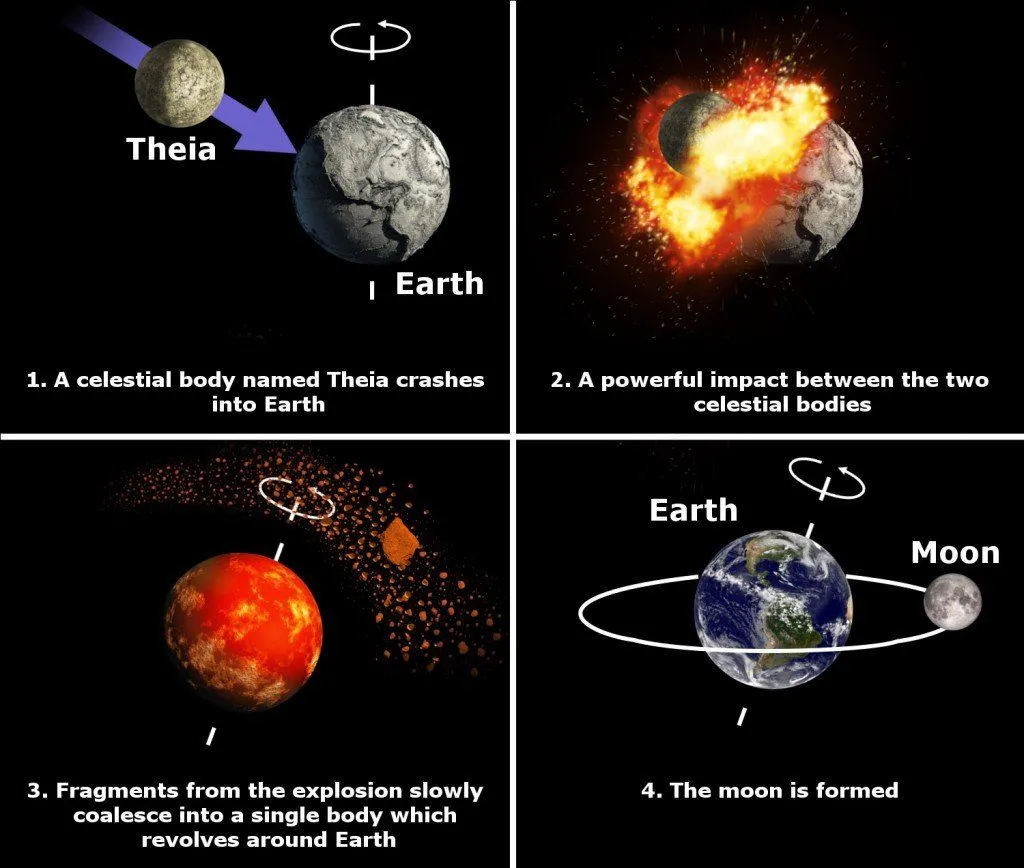
As this chunk was ejected, it got caught up in Earth’s gravitational field and started revolving around it. That ejected chunk has been doing the same dance for a couple billion years now. We like to call that chunk ‘the moon’.
How Many Craters Does The Moon Have?
Once you start counting, the number climbs almost without end. Using images from NASA’s Lunar Reconnaissance Orbiter, scientists have mapped around 5,000 craters wider than 20 km, plus another 20,000 or so measuring between 5 and 20 km across. Push the threshold lower and the tally explodes: one global catalogue built from the same mission logged roughly 1.3 million craters at least 1 to 2 km wide, and that still leaves out the countless smaller pits scattered down to just a few centimetres across.
Why does such a small world hold so many scars? The Moon has no atmosphere to burn up incoming rocks, so nearly everything that heads for it lands. It also has no flowing water, no wind and no plate tectonics to wear the craters down or bury them, which is why an impact from billions of years ago can still look fresh today. The same recipe explains why Mercury, another airless and geologically quiet world, is every bit as heavily cratered as the Moon.
If The Moon Has So Many Craters, Why Aren’t There Any Craters On Earth?
That’s quite a valid question. The moon is riddled with craters, whereas its immediate neighboring body, Earth, which is significantly bigger and thus presents an easier target for crashing meteorites, looks as though it got away completely unscathed during the era of constant bombardment in the early days of the solar system. Why is that so?
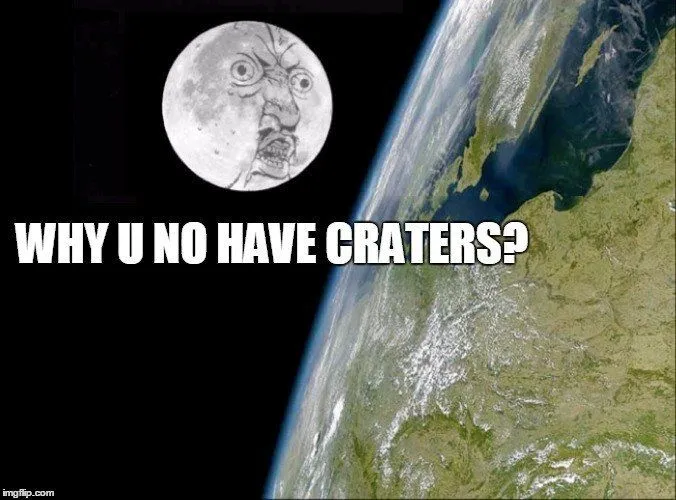
There are two main reasons behind it:
Earth Has A Dense Atmosphere
We have a dense, protective layer of gases enveloping our entire planet, which acts as a guardian angel when it comes to shielding Earth from ‘meteor attacks’. You might know of this protective layer as ‘the atmosphere’.
It’s not that meteorites don’t hurtle towards Earth just like they head for the moon, it’s just that our atmosphere is so dense and strong that not only meteors and asteroids, but most things heading for the planet burn up before ever reaching the surface.
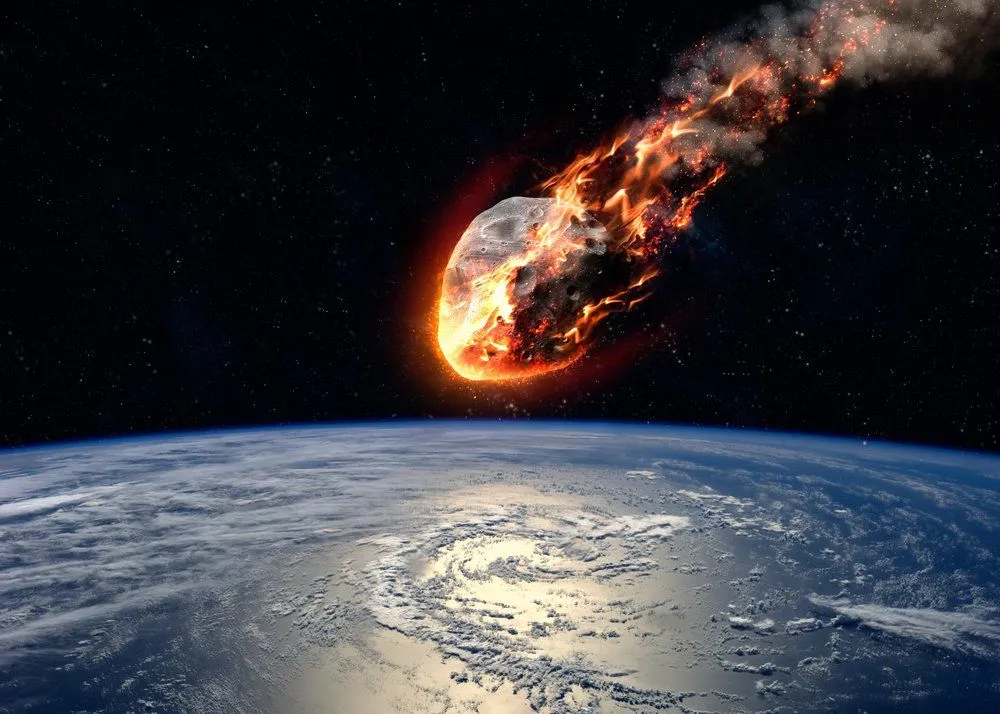
The falling star (also known as ‘the shooting star’) that you see in the night sky is sometimes actually the visible path of a meteoroid as it burns up in the Earth’s atmosphere while trying to reach the surface.
All of this is to say that, despite the fact that both the moon and the Earth are bombarded by almost the same number of meteorites, in Earth’s case, most of them do not reach the surface in the first place.
Erosion, Plate Tectonics And Volcanism Erase The Craters From Earth’s Surface
The other reason that Earth doesn’t have as many craters as the moon is that, unlike the latter, our planet is very good at taking care of its cosmetic needs through various processes. Earth handily removes visual evidence of all its past impacts through three main processes: erosion, plate tectonics and volcanism.
Due to the presence of our atmosphere (thanks again!), water and plants, our planet’s surface continues to ‘wear down’ (or, in scientific terms, erode) all the time. Over a period of millions of years, even the biggest dents on the surface are swept clean from the face of Earth (pun intended).
The moon, on the contrary, has practically no atmosphere, no erosion (by water or wind) takes place over there. Put a pencil mark on its surface, and it would basically stay there for all eternity.
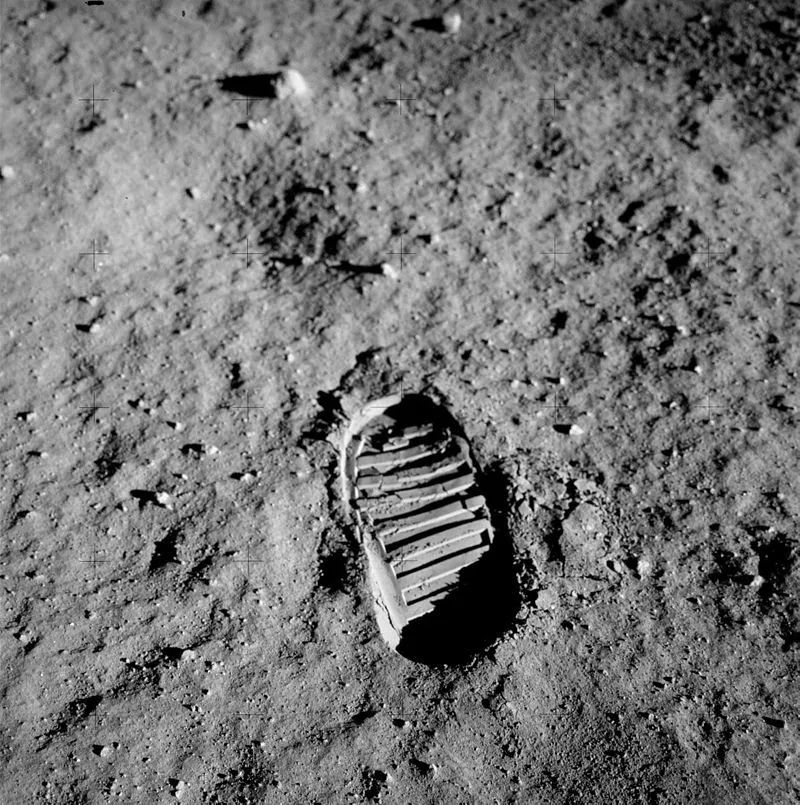
Furthermore, the surface of our planet is recycled many times over a period of hundreds of thousands of years, thanks to plate tectonics, another factor that is non-existent in the moon’s case. Lastly, volcanic flows on Earth’s surface act as janitors that clean and cover up impact craters, which makes these craters invisible from the outside.
Despite all of this, a few signs of the impact craters that were formed on Earth’s surface many years ago can still be seen. As of now, the Earth Impact Database lists about 200 confirmed craters on the surface of our planet. You can check the list here.
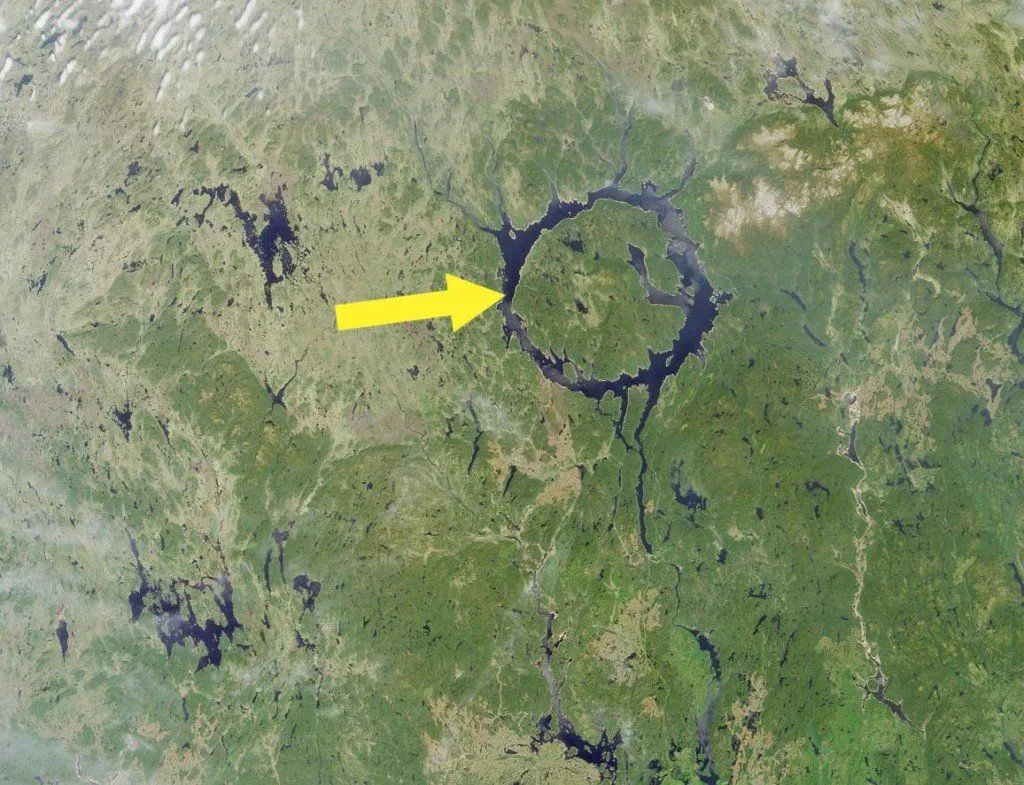
The next time you look up at the moon and notice its dark spots, remember that we could have ended up with the same fate as the moon if it weren’t for a handful geological processes and one heck of a protective shield!
References (click to expand)
- Why Does the Moon Have Craters? | NASA Space Place. The National Aeronautics and Space Administration
- The Moon Has No Atmosphere. The University of Tennessee
- List of impact craters on Earth - Wikipedia. Wikipedia
- Lunar mare - Wikipedia. Wikipedia
- Moon Composition - NASA Science. The National Aeronautics and Space Administration
- Far side of the moon mystery solved - EarthSky. EarthSky
- Every Crater on the Moon (Larger than 5 km) - Lunar Reconnaissance Orbiter Camera. Arizona State University
- Moon Crater Database v1 (Robbins) - USGS Astrogeology. United States Geological Survey