Most planets in our solar system have elliptical orbits rather than circular orbits. This is because their orbits are affected by the gravitational interactions of other planets and stars. An elliptical orbit is more likely to be disturbed than a circular orbit. However, a planet’s orbit can become more circular after a collision with another planet or astronomical object.
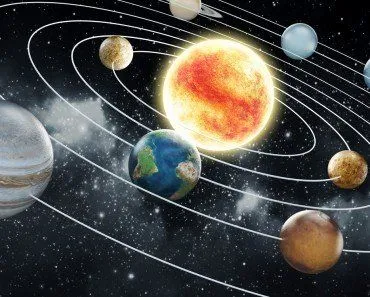
For many children, a popular science project consists of making dioramas of the solar system, with painted styrofoam balls for planets and orbital paths made of wire. To this day, when most adults think of the solar system, they imagine a group of concentric rings, with the furthest planets on the largest circular ring and the Sun smack-dab in the center.
While that makes for a neat and tidy project, it isn’t exactly correct in reality. The orbits of the planets in our solar system (and the vast majority of planetary objects in space) are not perfectly circular. Planets have orbital eccentricity, which makes the orbit a little more stretched out — a shape technically called an ellipse. So the question is: how stretched are these elliptical orbits, and why are they elliptical in the first place?
Orbital Eccentricity
An ellipse is a symmetrically shaped closed oval. It has two points called foci around which it is constructed. These foci act as a combined center for the ellipse.
When it comes to planetary motion, orbital eccentricity can give a lot of clues about the nature of the motion or spin. The orbital eccentricity of a planetary body is a parameter that tells how much its orbit deviates from a perfectly circular orbit. In other words, orbital eccentricity tells how flat or round the path of orbit could be. The value of eccentricity varies between zero and one; with zero representing circle and one transforming into a parabola.
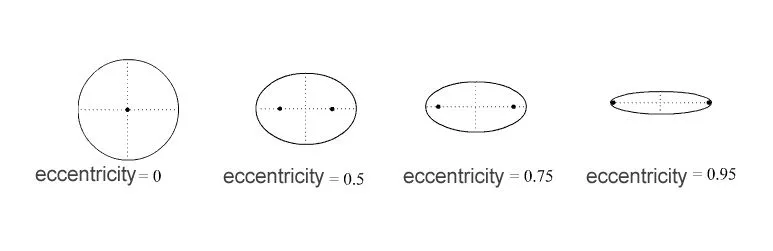
The circle is a special case of ellipse wherein the two foci are exactly at the same point. So, the eccentricity of the circle is zero. As the foci start to separate, the more elliptical or ovular the path of revolution becomes.
More circular orbits have a value closer to zero while highly elliptical ones have a value approaching close to one. The orbital eccentricity of different planets in our solar systems is given in the table below:
| Planet | Orbital eccentricity |
| Mercury | 0.206 |
| Venus | 0.007 |
| Earth | 0.017 |
| Mars | 0.093 |
| Jupiter | 0.048 |
| Saturn | 0.056 |
| Uranus | 0.047 |
| Neptune | 0.009 |
As seen from the table, it is pretty evident that most of the planets are very close to a circular path. Although Mercury's orbit is the most elliptical of the eight, its eccentricity of 0.206 is still much closer to 0 than to 1 — closer to a circle than to an extreme ellipse. Earth's eccentricity of 0.017 is nearly circular: to the naked eye, the slight elliptical stretch wouldn't be noticeable. Venus, Earth's twin, has an orbit that's even more circular still, with an eccentricity as low as 0.007.
Which Planet Has The Most Elliptical Orbit?
If you run your eye down that table, one planet jumps out. Mercury, the innermost world, has comfortably the most elliptical orbit of the eight, with an eccentricity of about 0.206. That stretch is large enough to matter: over a single Mercurian year, the planet's distance from the Sun swings from roughly 47 million km (29 million mi) at its closest to about 70 million km (43 million mi) at its farthest. Mars is a distant runner-up at 0.093.

At the opposite end sits Venus, whose orbit is the most circular in the solar system, at an eccentricity of just 0.007. Neptune (0.009) and Earth (0.017) are nearly as round, so all three trace paths that are almost impossible to tell apart from a perfect circle by eye. So if a quiz ever asks which planet's orbit looks the least like a circle, the answer is Mercury; the planet that travels around the Sun in the most circular orbit is Venus.
One footnote for the trivia lovers: if you let dwarf planets into the contest, Pluto out-stretches every full-sized planet, with an eccentricity of roughly 0.244. Its elongated, tilted orbit is so lopsided that between 1979 and 1999 it actually carried Pluto inside Neptune's path, briefly making Pluto closer to the Sun than Neptune. Comets are more extreme still, often riding orbits with eccentricities above 0.9 that sling them from the inner solar system out past the outer planets and back.
So Why Aren’t They Perfectly Circular?
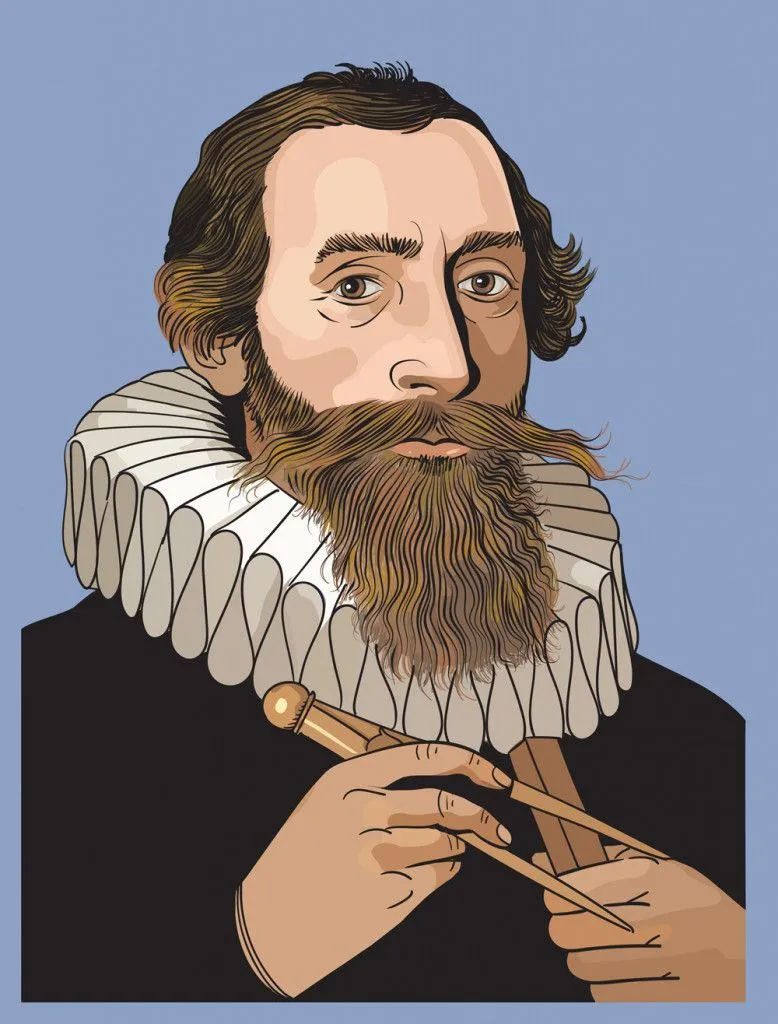
It was long thought that all orbits were perfectly circular because the circle was considered the ideal shape — until Kepler came along, in 1609, and showed that orbits are actually elliptical. Well, in an “ideal” Universe, all orbits would have been “circular”. In fact, some orbits are perfectly circular but those instances are very few and far between. Because for a perfectly circular orbit, the orbiting planet would need to have mass, velocity, and distance from the star which precisely matches the gravitational influence of that star. Even if these ideal initial conditions are met for a nice perfectly circular orbit, it’s unlikely to last very long.
If the mass of a star or planet changes, or if another celestial body whizzes past, it disturbs the delicate balance of mass, velocity, and distance that keeps a planet on a circular path — and the orbit drifts into an elliptical one. A small tweak in this status quo conditions or any interplanetary interactions would change the path from a perfect circle.
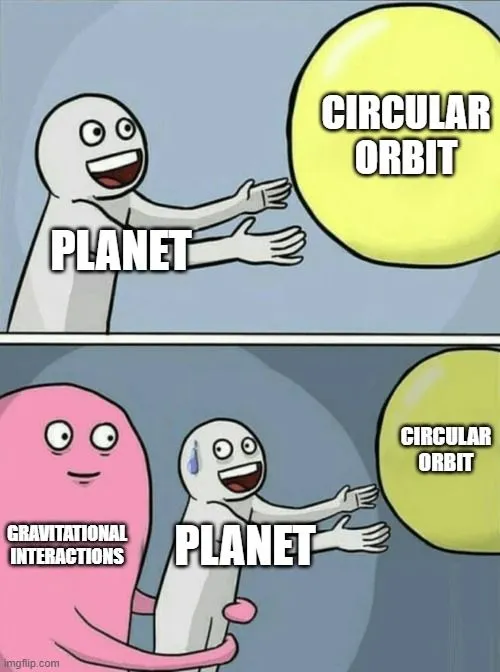
So, you see a change in planetary or star composition or even the influence of celestial bodies in the vicinity prevents the planet from revolving in a nice circular orbit. But despite fretting about orbits being not perfectly circular, it is worth understanding these orbits are still close to circular than being highly elliptical.
What Sits At The Focus, And What Keeps The Planets Moving?
Here is the part that trips up most people: the Sun does not sit at the center of a planet's orbit. It sits at one of the two foci of the ellipse. That is exactly what Kepler set down in 1609 as his first law of planetary motion, which states that each planet moves along an ellipse with the Sun parked at one focus. The other focus is just an empty point in space. For a nearly circular orbit like Earth's, the two foci huddle very close together, which is why the Sun looks roughly central, even though it never quite is. So when someone asks what object in the solar system always sits at a focus, the answer is the Sun.

Kepler added two more rules. His second law says a planet sweeps out equal areas in equal times, which is a neat way of saying it speeds up as it swings close to the Sun and slows down when it is far away. His third law ties a planet's orbital period to the size of its orbit. What Kepler could never explain was why any of this happened. He had no concept of gravity.
That answer arrived decades later with Isaac Newton. His law of universal gravitation revealed that the Sun's gravity is the invisible tether tugging on every planet, and that a body coasting through that gravitational field naturally traces one of the conic sections, with the ellipse being the bound, repeating case. So nothing actively pushes the planets around their loops. They simply coast through space, carrying the orbital velocity they were born with, while the Sun's gravity endlessly bends their otherwise straight-line path into a closed orbit.
What If Planets Had Much More Elliptical Orbits?
Planets on highly elliptical orbits are likely to run into more trouble than their circular-orbit counterparts. Revolving in highly elliptical orbits makes planets more susceptible to gravitational interactions and nasty impacts. You may wonder why? Well, think about it, the planetary model you grew up with at school — those neatly concentric circular paths — stacks the orbits one above the other without their paths ever crossing. But in the case when planets have an elliptical path with different eccentricities, orbits are likely to cross paths with each other.
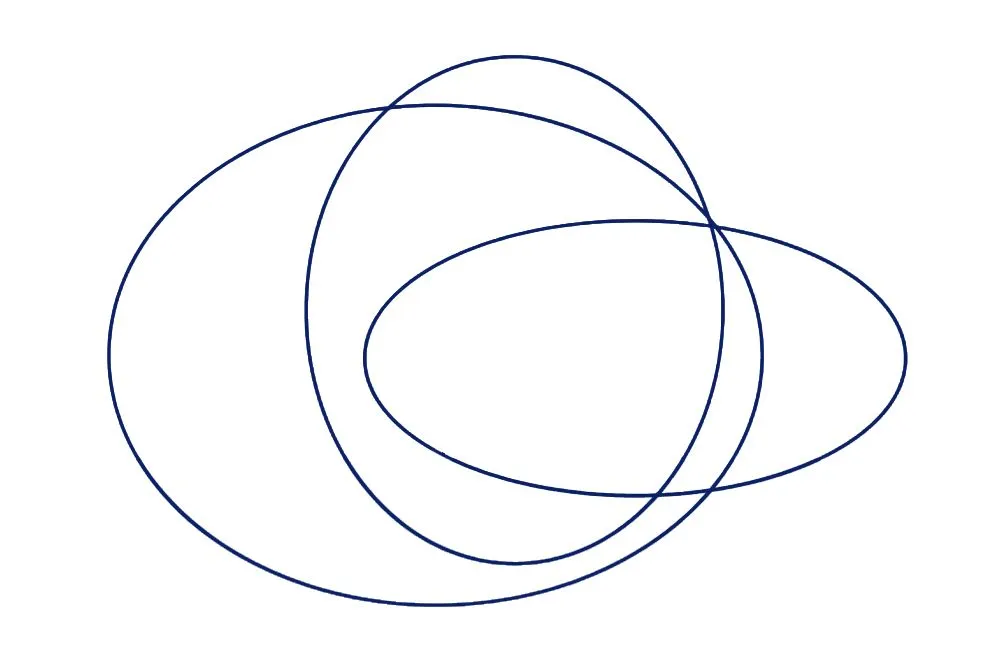
This makes planetary bodies more susceptible to collision and impacts. In the aftermath of an impact, a couple of things could happen. Either both colliding objects shatter and disperse into pieces, or they merge into a single, larger body. Many astronomers reckon this sort of activity has been happening in our solar system for billions of years. Planets that exist today in our solar system aren’t the only ones that came into being since the inception of our Sun. But they are probably the only ones that have endured or escaped these impacts. The nearly circular orbit with which these planets revolve has certainly helped them in their survival.
Saturn As Reference
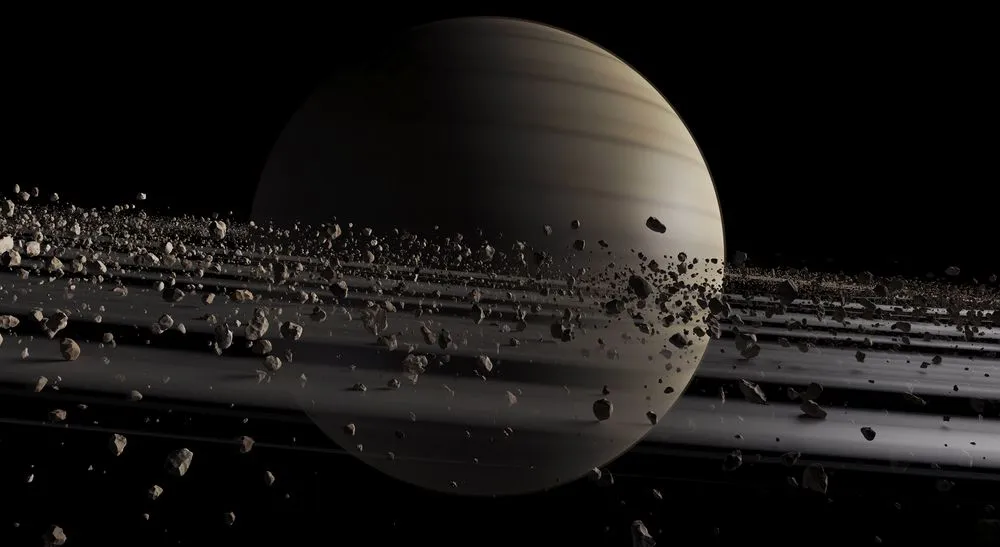
We just saw that bodies on highly elliptical orbits are more likely to encounter collisions with nearby planets or other astronomical objects. Interestingly, many astronomers note that after a collision the surviving orbit tends to become more circular. The clearest example is Saturn's rings: the countless particles in them have repeatedly collided with one another over billions of years, gradually circularising their orbits — and now they bump into each other far less often.
A Final Word
To sum up: mass, velocity and gravitational interaction have to combine almost perfectly for an orbit to be truly circular. A slight tweak in any of them will pull the planet off that perfect circle and into an ellipse. How elongated the resulting ellipse becomes is a function of how large that perturbation was. Now, when it comes to our solar system, we learn that though no planet has a perfectly circular orbit, most of them are very close to being circular and perhaps that’s the secret of their survival for so long.
References (click to expand)
- What Is an Orbit?. The National Aeronautics and Space Administration
- Why do planets have elliptical orbits? (Beginner) - Curious About Astronomy? Ask an Astronomer - curious.astro.cornell.edu
- Kepler's Laws - Hyperphysics. Georgia State University
- ELLIPTICAL ORBIT. The California Institute of Technology
- Orbits and Kepler's Laws. NASA Science
- Mercury Facts. NASA Science
- Pluto Facts. NASA Science
- Planetary Fact Sheet. NASA NSSDCA