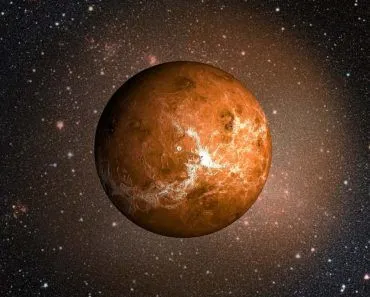
Only the bigger planets’ disappearance would cause changes over a period of time; namely, there would be a change in how some planets interact with each other.
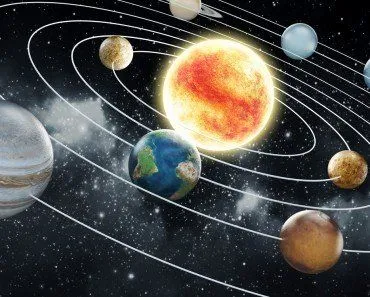
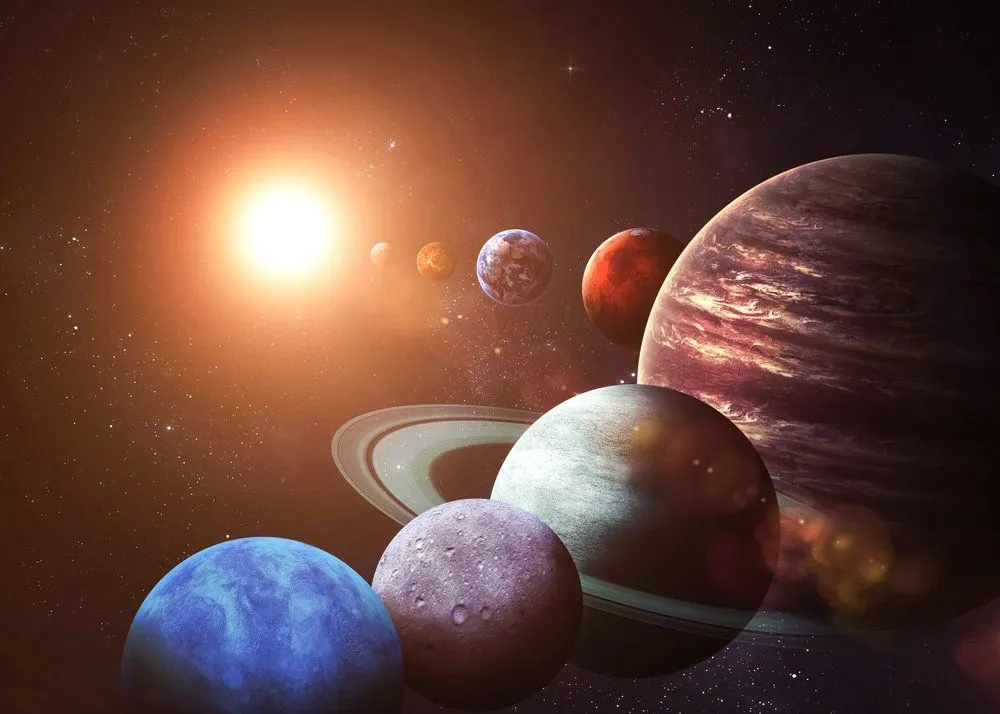
We think of our Solar System as a big family of celestial objects that interact with each other in various ways. With the Sun at the center, we have eight (nine, if you still want to count Pluto as a planet) planets that compose the main members of this family. Each planet maintains its own orbit around the Sun, along with a series of satellites revolving around each one. All these heavenly bodies live in perfect cohesion within the solar system, one of the critical factors that allow life to flourish on Earth.
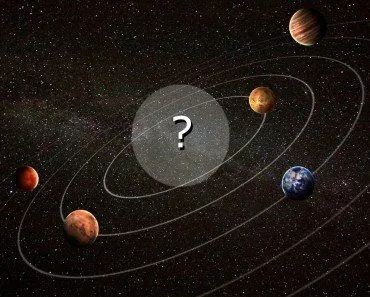
However, have you ever wondered what would happen if one of the planets suddenly disappeared? What would happen to the ‘perfect harmony’ of the solar system and what would be the effects?
To unravel this hypothesis, we must first take a closer look at gravitational interaction.
Gravitation And Its Effects On Planets
By now, most of us understand that gravitation is the force applied by any object having mass by which it attracts objects towards it. Every object with mass attracts other objects with gravitational force. The greater the mass of the objects, the greater the force. The distance between two objects also plays a huge role in determining their gravitational impact. Greater distances cause a weakening of the gravitational force between two objects.
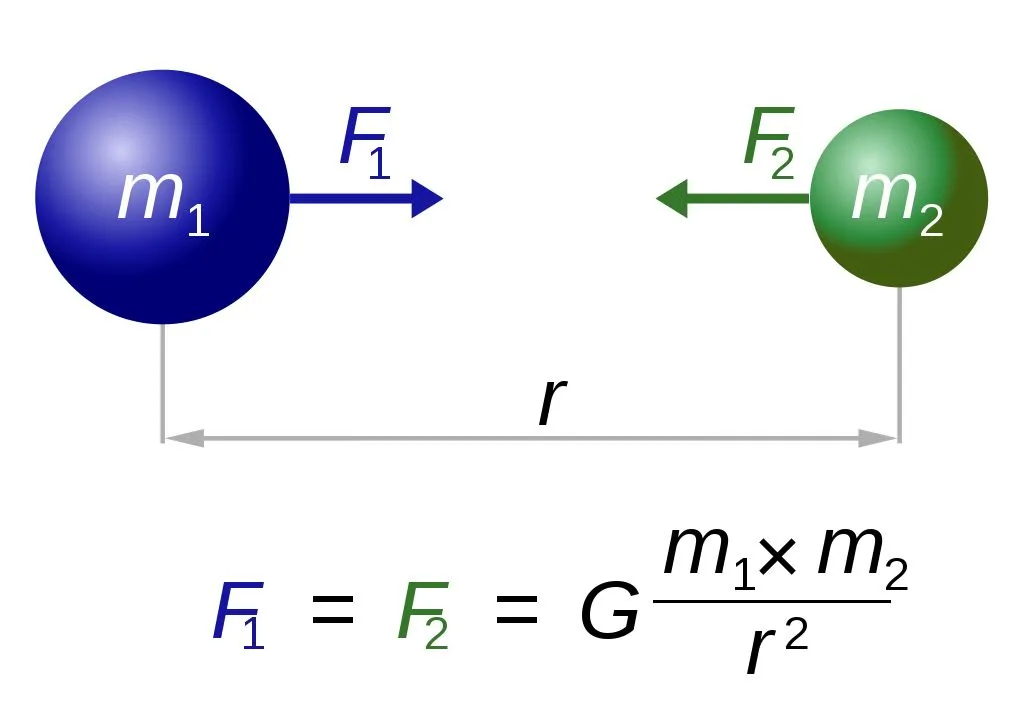
Let’s now increase the scale to that of our entire solar system. Each planet has a weight that is greater than 10^23 kg and the distances between each planet is also impressively vast. Planets do effectively influence each other’s gravity, but only by a fractional amount. The real driving force for gravity in the solar system is our Sun, which dictates planetary orbits. A disappearance of the Sun would result in chaos throughout the solar system.
So, with gravity—the main force existing in space—playing a side role in the interaction of planets, it becomes a question of which planet’s disappearance would have the most negative effect.
Effect Of The Disappearance Of Various Planets In The Solar System
The effect of the disappearance of a single planet comes down to the planet that actually disappears!
Let’s go through them one at a time.
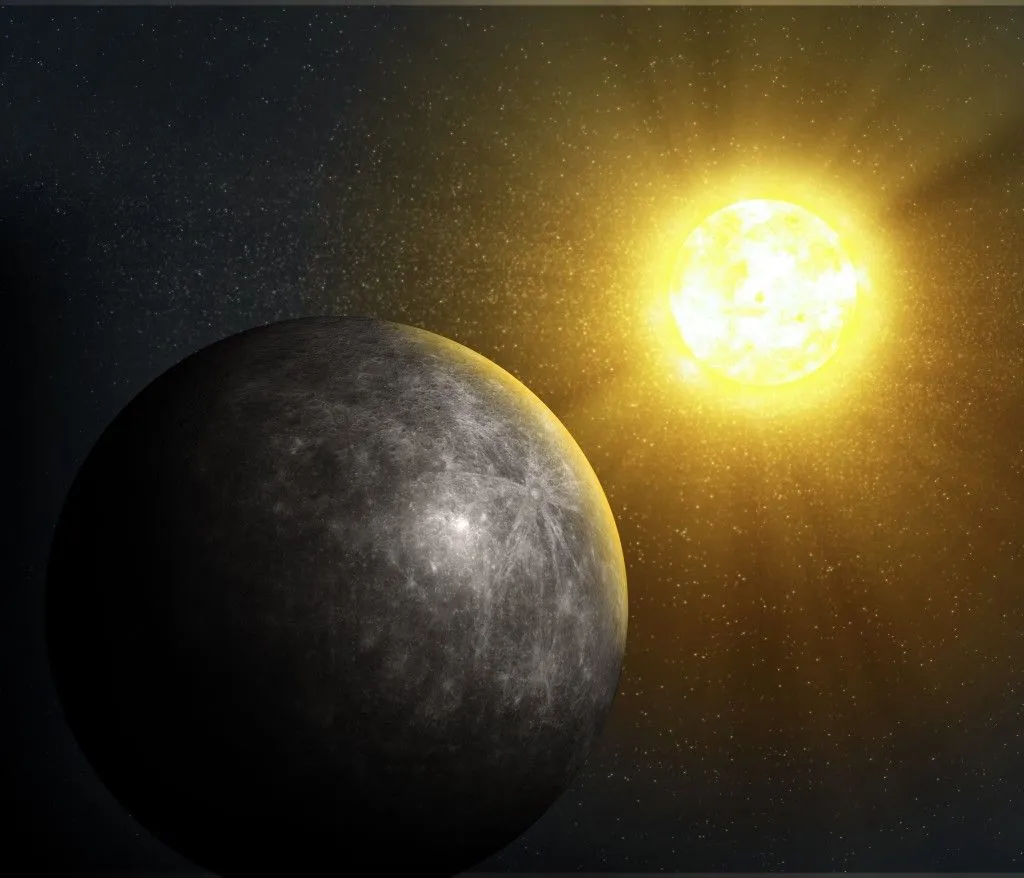
Mercury: Mercury is the first and smallest of all the planets in our solar system. It is closest to the Sun and its gravity is heavily influenced by the Sun. Mercury’s disappearance would cause negligible changes to the solar system’s order. The small size of the planet and its proximity to the Sun causes it to be merely a speck in the solar system.
Venus: Venus is the second planet of the solar system and is commonly hailed as Earth’s twin. It’s also the second-brightest object in the night sky after the Moon itself. The loss of Venus would not have many cosmological effects, but it would certainly hurt the night sky, as we would lose our “morning star”.
Earth: By this time, we should all be familiar with Earth. After all, Earth is our terra firma, our home! Earth is the only one of more than 6,000 planets we have discovered (NASA’s Exoplanet Archive crossed 6,000 confirmed exoplanets in 2025) to harbor life. What would happen if the Earth suddenly disappeared? Well, for one thing, nobody would be able to read this article.
Mars: Mars, also known as the Red Planet, is the fourth planet of the Solar System. The Red Planet has received a lot of interest from humans, evidenced by our 56 exploratory missions to Mars. If Mars vanishes, the threat of near-Earth asteroids decreases significantly. The Asteroid Belt, a massive belt of asteroids that lies between Mars and Jupiter, actually poses the greatest threat to Earth.
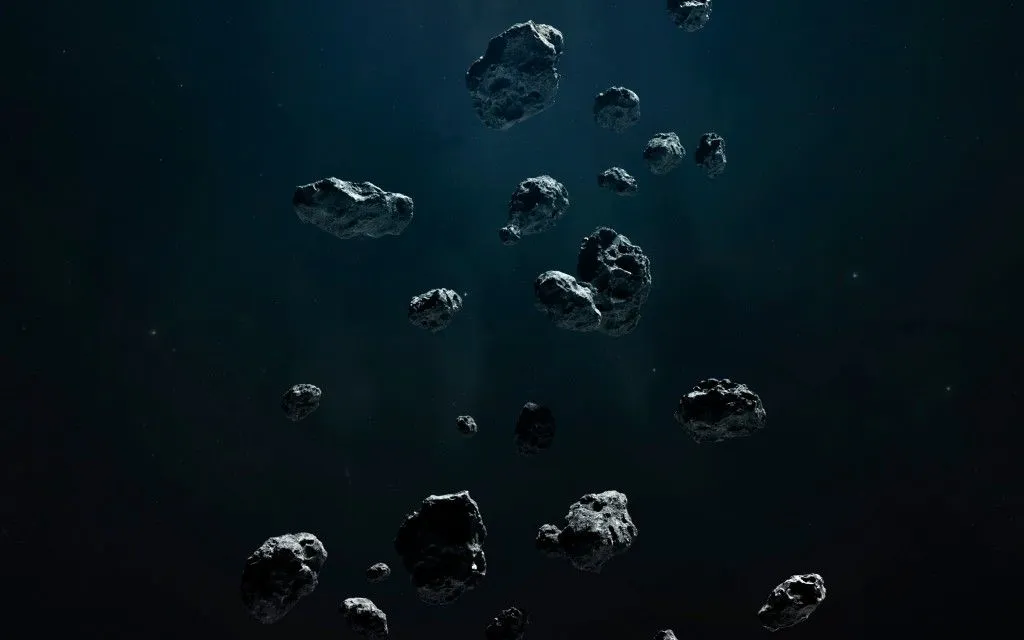
The asteroids are firmly held by Jupiter’s gravity, but sometimes, due to an effect called gravity resonance, they get pushed out of orbit. The Sun, exerting its huge gravity on this anomaly, pulls the asteroid towards it. Here, Mars’ gravity comes into play. Mars acts as a slingshot and hurtles the asteroids towards Earth. Even though these asteroids may fly by with several million miles to spare, Mars does increase the probability of Earth-bound asteroids.
Jupiter: Jupiter is the fifth and largest of all the planets in our solar system. The vastness of Jupiter allows it to have a commanding gravitational force over the objects near it. It is also considered to be Earth’s big brother, protecting it from space bullies. Indeed, Jupiter has protected Earth from countless asteroids over the past few billion years. The biggest planet in the solar system has a gravitational field that is vast and strong that it can derail the asteroids bound for Earth and cast them out of the solar system. Long-range comets frequently crash into the behemoth Jupiter, leaving some impressive scars. Jupiter’s massive gravity is also what keeps the asteroids in the Asteroid Belt in check. In terms of the order of the solar system, Jupiter’s disappearance wouldn’t have any noticeable changes. Some effects would be seen later on, but that would take thousands of years!

Saturn: Saturn is the sixth planet of the solar system and the second largest member. Most people recognize Saturn by its beautiful set of rings, which makes it look quite majestic. Saturn also has 274 confirmed moons (as of 2025), the most of any planet in the solar system—one of which is Titan, with a size greater than Mercury! Saturn’s disappearance would affect the orbits of Jupiter and Uranus by some degree, due to its sheer size and mass. However, given its distance from the inner ring of planets, it’s tough to imagine that Saturn would have a similar impact on the smaller inner planets.
Uranus: Uranus is the third-largest planet in the Solar System and lies much too far away to affect the inner ring of planets, but it definitely affects the outer ring of the solar system, including the Kuiper Belt. The only thing we would miss are all the Uranus jokes.
Neptune: Neptune is the final planet in our solar system. Beyond Neptune lies the Kuiper Belt, an asteroid belt, and many dwarf planets, including Pluto. Neptune dominantly controls the orbits and movements of objects in the Kuiper Belt with its gravity, as the Sun’s gravity is considerably less in these far extremes of the Solar System. Neptune also has a huge effect on Pluto’s orbit. Its disappearance could cause chaos and collisions in the Kuiper Belt, and would also affect Pluto, but its distance from the inner ring would result in negligible changes to us on Earth.
If A Planet's Gravity Link To The Sun Vanished, Would It Fly Off In A Straight Line?
So far we have talked about a planet simply vanishing. But there is a closely related puzzle that students get asked all the time: what if the planet stayed put, and instead the gravitational pull between it and the Sun suddenly switched off? The answer is one of the cleanest demonstrations of Newton's first law of motion you will ever meet.

A planet is not coasting along its orbit because something pushes it forward. It already has a sideways speed, and the Sun's gravity is constantly tugging it inward, bending that straight-line motion into a curve. As Penn State's astronomy course puts it, if a planet "were to just freely fall through space without experiencing any force, by Newton's first law, it would just continue to fall in a straight line." Take the inward tug away, and there is nothing left to bend the path. The planet keeps the velocity it had at that instant and shoots off in a straight line, tangent to its old orbit, at a constant speed. It would not spiral into the Sun, and it would not slow down and stop. It would simply stop turning.
These speeds are not small. Earth sweeps around the Sun at an orbital velocity of about 30 km/s (roughly 67,000 mph), and Mercury, the fastest planet, races along at nearly 47 km/s (about 105,000 mph). Cut the cord, and Mercury would set off across the solar system at that breakneck pace in whatever direction it happened to be pointing. This is exactly why, in a multiple-choice exam, the correct answer is always "the planet moves off in a straight line at constant velocity," never "it crashes into the Sun" or "it gradually slows down."
What If All The Planets Except Earth Disappeared?
Here is a reassuring thought experiment. Imagine every planet except our own quietly blinked out of existence overnight. Would Earth even notice? Almost not at all.
The reason comes back to the lopsided distribution of mass in the solar system. The Sun is roughly 1,000 times as massive as Jupiter, and Jupiter in turn is about 300 times heavier than Earth, so the Sun utterly dominates the gravitational budget. As a Virginia Tech astronomy explainer notes, if the Sun and Earth were the only things in the solar system, "our planet's orbit would be an ellipse of virtually constant shape and orientation in space." The other planets do tug on Earth, but only enough to nudge the orbit very slowly, "taking many, many centuries" for the orientation of Earth's ellipse to drift all the way around once.
So if the other seven planets vanished, the main thing that would change is that those slow, centuries-long wobbles in Earth's orbit would simply stop. Our year would stay 365 days, our seasons would stay put, and day-to-day life would carry on completely unbothered. The biggest loss would be cosmetic: no more Venus blazing as the "morning star," no Jupiter or Saturn to pick out with a telescope, and a much emptier night sky.
What If The Asteroid Belt Disappeared?
A surprising number of people ask not about a planet, but about the asteroid belt, the ring of rocky rubble orbiting between Mars and Jupiter. What would happen if that vanished too?

Gravitationally, the belt is a featherweight. NASA estimates it holds between 1.1 and 1.9 million asteroids bigger than 1 km across plus millions of smaller ones, yet "the total mass of all the asteroids combined is less than that of Earth's Moon." Spread that tiny mass across a vast doughnut-shaped region and its pull on the planets is essentially zero. Removing it would not shift a single planetary orbit in any way we could measure.
The interesting part is what shapes the belt in the first place: Jupiter. The giant planet's gravity carves out the so-called Kirkwood gaps, narrow lanes swept clean wherever an asteroid's orbital period falls into a simple ratio with Jupiter's. According to Britannica, an asteroid drifting into one of these resonant lanes "would be disturbed regularly by Jupiter's gravitational pull and eventually moved to another orbit," and some of those nudged-out rocks become the near-Earth asteroids that occasionally swing past us. So the belt disappearing would be a non-event for orbital mechanics, but it would erase one of the main nurseries for the asteroids that keep planetary defense teams busy.
Conclusion
Surprisingly enough, the removal of a planet—with the exceptions of Jupiter and perhaps Saturn—would not change the world around us as drastically as you may imagine. The changes brought about by their departure would be minuscule in the immediate moment, but over time, the changes might gradually increase. A million years down the line, it’s hard to say how those changes would interact and evolve.
To predict them, we would require a complex mathematical model that we do not yet possess. So, stay calm and relax. However bizarre the disappearance of a planet may sound, it won’t affect our daily life very much at all!
References (click to expand)
- Basu, B., Chattopadhyay ,. T.,& Biswas, S. N. (2013). Introduction to Astrophysics, An, 2nd ed.. PHI
- Astronomy: Lecture 5 Gravity & The Solar System. The Department of Physics at the University of Oxford
- Planetary Dynamics and Celestial Mechanics | www.cfa.harvard.edu/ - www.cfa.harvard.edu
- Newtonian Gravitation. ASTRO 801: Planets, Stars, Galaxies, and the Universe. Penn State University
- Chapter 3: Gravity & Mechanics. Basics of Space Flight. NASA Science
- Mercury: Facts. NASA Science
- Frequently Asked Questions About General Astronomy. Department of Physics, Virginia Tech
- Asteroid Facts. NASA Science
- Kirkwood gaps. Encyclopaedia Britannica