Uranus is closer to the Sun than Neptune (about 19 AU vs 30 AU), yet Uranus is the coldest planet in the Solar System, with minimum cloud-top temperatures around -224 °C (49 K) compared with Neptune's -221 °C (52 K). The leading explanation is that Neptune still radiates significant internal heat, while Uranus, possibly due to a giant impact that knocked it on its side, has lost most of its primordial heat.
Why should a planet situated a billion miles closer to the Sun than another planet be colder than it? What mischief is nature up to now?
Why Uranus Might Be Colder Than Neptune
Planets can be classified either as terrestrial or as gas giants. The terrestrial planets are the first four planets of our solar system, which have a solid, rocky core, whereas, the last four planets are the gas giants, which are named so because they are entirely made up of gas. They are so massive that they pulled, with their tremendous gravity, even gases as light as hydrogen and helium. However, Uranus and Neptune are so extraordinarily cold that even these volatile compounds that constitute them are frozen. They are therefore called the ice giants. More specifically, though, the gases are slightly more frozen on Uranus than they are on Neptune.
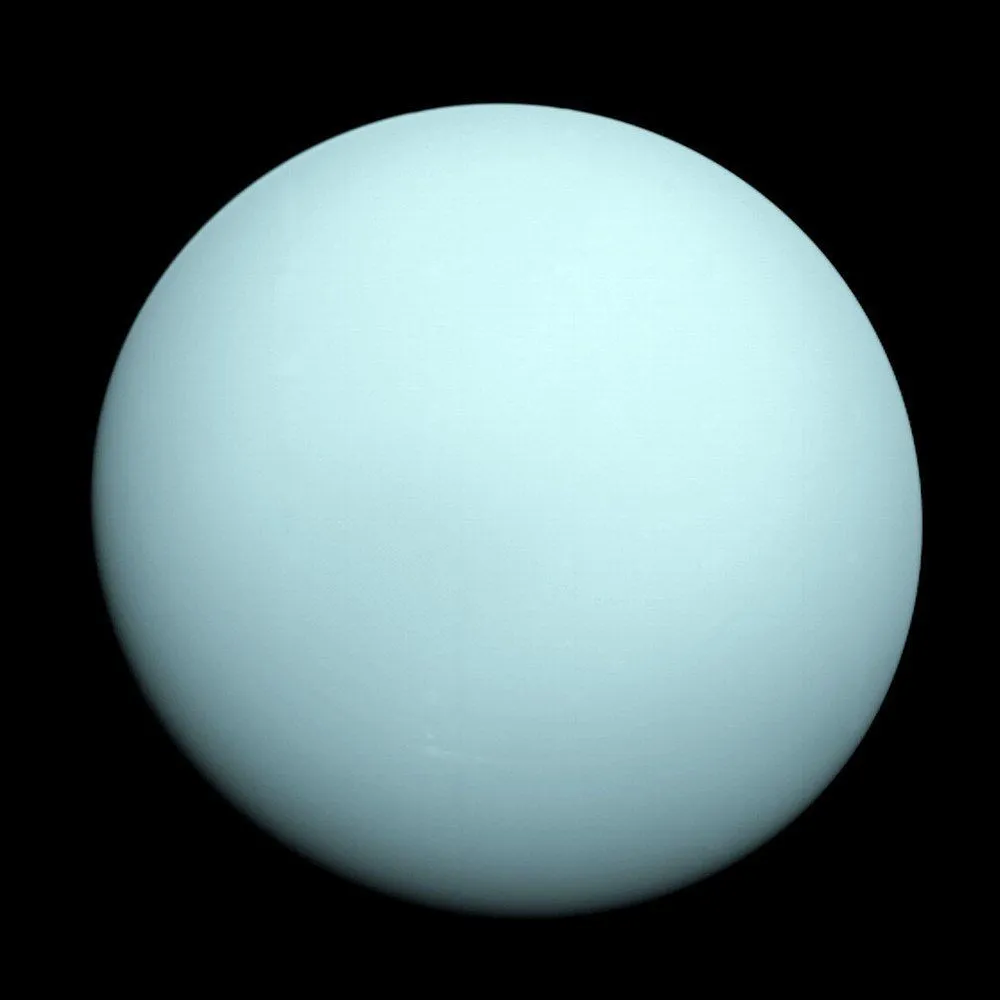
While Neptune, the most distant planet in our Solar System, is 4.5 billion kilometers away from the Sun, Uranus, the second-farthest planet, is just 2.88 billion kilometers away. Uranus is more than a billion kilometers away from Neptune, yet it finds itself colder than its bluer neighbor. The coldest temperatures on Neptune have been measured at -360 degrees Fahrenheit, while the coldest temperatures on Uranus have been measured at an even more perishing -370 degrees Fahrenheit.
This phenomenon defies one of the most elementary laws of the Universe: heat received decreases with an increase in distance from the source. Astronomers currently believe that the perplexity is a result of Uranus’ chaotic atmosphere and its anomalous orientation.
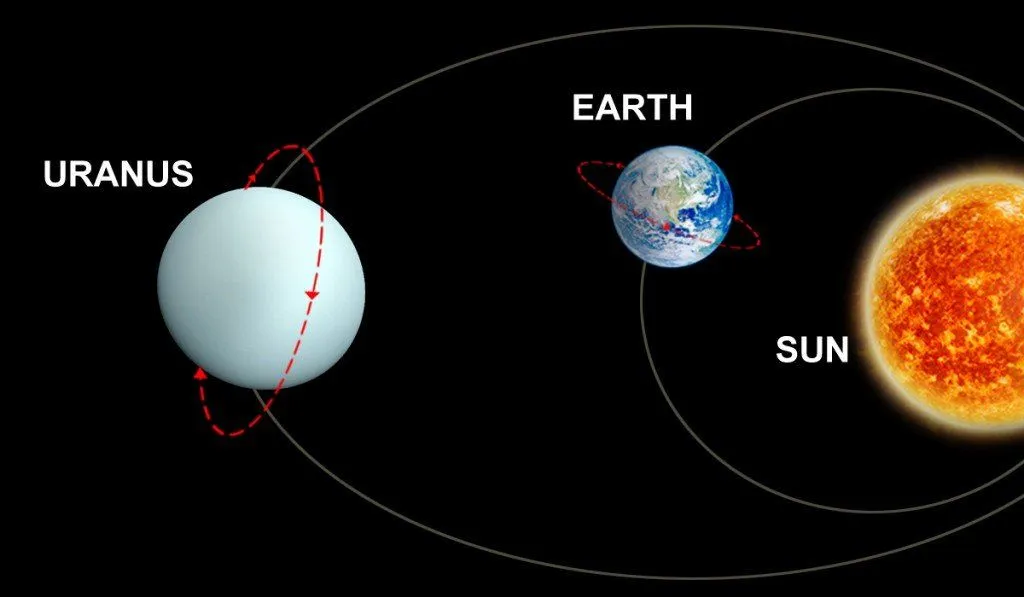
While Earth’s tilt is just 23 degrees, Uranus’ tilt is an astounding 98 degrees. As a consequence, Uranus doesn’t revolve around the Sun like a spinning top drawing a circle, but instead, it rolls ahead like a bowling ball! Currently, we believe that the planet tilted so severely after being pelted by massive celestial bodies following its formation. The blows forced much of the heat in its core to spill into outer space. For decades, Uranus was thought to be the one giant planet that gives off no more heat than it soaks up from sunlight, a claim drawn from the 1986 Voyager 2 flyby. That picture was revised in 2025: a study in Geophysical Research Letters re-analyzing a full Uranian orbit of data found that the planet does have a faint internal glow, radiating roughly 12.5% more energy than it absorbs from the Sun. The catch is just how feeble that is. While Jupiter’s core simmers near 25,000 K, Uranus’ core temperature is barely 5,000 K, and its leftover internal heat is a small fraction of what its sibling Neptune still pumps out.
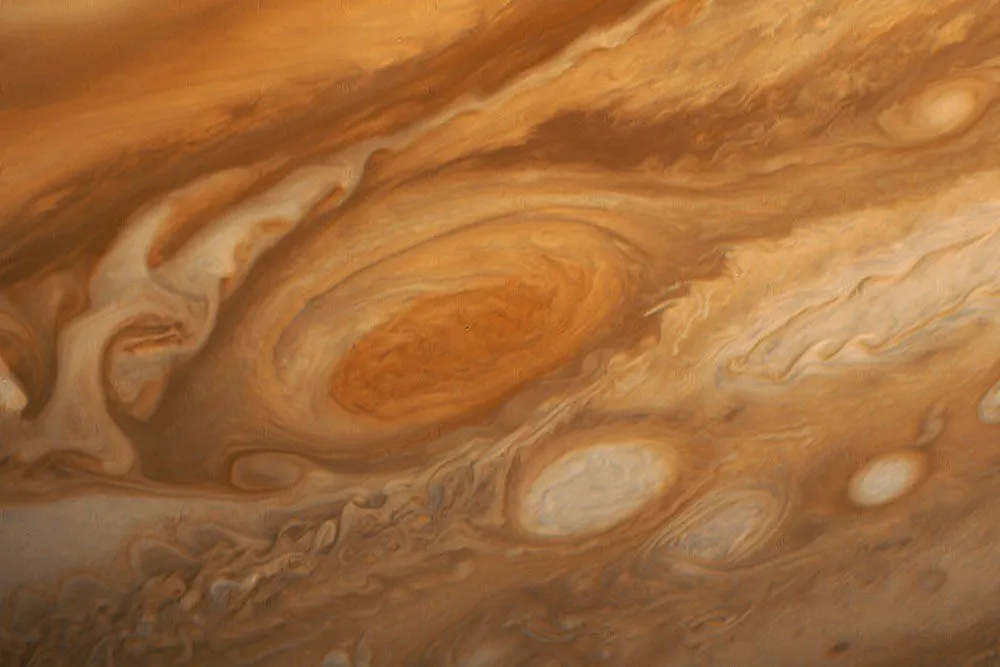
Further loss of heat is believed to be caused by its atmosphere, which was stirred by the blows and the consequent tilt. The stirred atmosphere effuses heat through furious zonal winds. The winds that blow near the equator move at 50-100 m/s in the opposite direction or against the rotation, while the winds that blow in the same direction as the rotation move at 250 m/s. However, the planet is rarely subjected to tempestuous storms, which is why, unlike other gas giants, it does not appear to be “spotted”. It appears to be a blue, extremely gigantic, smooth and featureless ball of ice.
The theories will turn into facts as soon as the evidence supporting them is gathered. While the Voyagers that flew by Uranus provided us with a great volume of knowledge about its composition, a dedicated mission might do the trick.
How Far Is Uranus From The Sun?
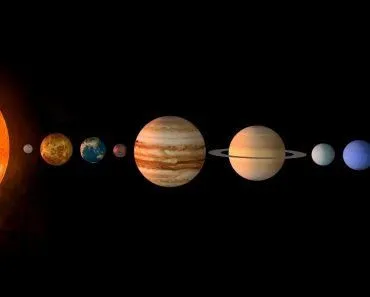
Let’s pin down the distances, because this is where the puzzle begins. Uranus orbits the Sun at an average of about 19 astronomical units, or roughly 2.9 billion kilometers (1.8 billion miles). One astronomical unit (AU) is just the Earth–Sun distance, so Uranus sits about 19 times farther out than we do. Neptune, the next planet along, orbits at roughly 30 AU, or 4.5 billion kilometers (2.8 billion miles). That leaves Uranus more than a billion and a half kilometers closer to the Sun’s warmth than Neptune.

Distance also sets the pace of the year. Uranus takes about 84 Earth years to complete one orbit, so a single Uranian year is longer than most human lifetimes. The remoteness shows up in the light too: sunlight that reaches Earth in roughly 8 minutes takes about 2 hours and 40 minutes to crawl out to Uranus, arriving so dim and diluted that the planet receives only a tiny fraction of the heat we enjoy. By the rule that warmth fades with distance, Uranus should still be the warmer of the two ice giants. It isn’t, and that contradiction is the whole story.
How Cold Is Uranus? The Temperatures By The Numbers
Uranus is the coldest planet in the Solar System, and the record-holder is a specific spot in its atmosphere. The lowest temperature ever measured in its upper atmosphere is about 49 K (-224 °C; -371 °F), recorded in a layer called the tropopause. That single reading is what earns Uranus the title of coldest planetary atmosphere anywhere in our cosmic neighborhood.
Averaged out, the planet’s effective temperature, the figure astronomers use to describe how much heat it radiates overall, is close to 59 K (about -214 °C). Neptune, by comparison, sits slightly warmer at its cloud tops, with a minimum around 52 K (-221 °C) and a deeper one-bar level near 72 K (-201 °C). The gap between the two ice giants is only a handful of degrees, but it runs the wrong way: the planet nearer the Sun is the chilly one.
Plunge inward and the numbers flip dramatically. Beneath those frigid clouds, pressure and gravity squeeze the interior until temperatures soar to roughly 5,000 K (about 4,700 °C; 8,500 °F) near the core, hotter than the surface of the Sun. The trouble for Uranus is that almost none of that buried warmth reaches the surface, which is exactly the riddle the next section untangles.
Why Isn’t Neptune, The Farthest Planet, The Coldest?
If sunlight were the only thing that mattered, Neptune would win the cold crown hands down. It doesn’t, and the reason is internal heat. Neptune radiates about 2.6 times as much energy as it receives from the Sun, the largest such excess of any planet. That leftover warmth is heat trapped from the planet’s violent formation, slowly leaking out, and it keeps Neptune’s atmosphere churning with the fastest winds in the Solar System, gusts that can approach 2,000 km/h (about 1,200 mph).

Uranus barely manages a tenth of that internal glow. Why the two near-twins differ so sharply is still debated, but the leading suspect is the same catastrophic impact thought to have tipped Uranus on its side. One idea is that the collision drained heat from the planet’s core. Another is that it left Uranus with compositionally distinct layers inside, a kind of internal barrier that traps the core’s warmth and stops it from convecting up to the surface. Either way, Neptune holds onto its formation heat while Uranus has largely surrendered its own, and that, far more than distance, is what makes the closer planet the colder one.
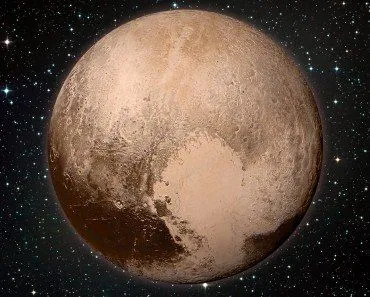
And Uranus isn’t even the coldest place in the Solar System. Pluto, far beyond Neptune, is colder still, and the permanently shadowed craters at the poles of our own Moon dip lower than any of them.
Lastly, Uranus is extremely cold, but it’s not the coldest celestial body in the Solar System. Pluto, which was relegated to the status of a dwarf planet in 2006, is colder, for the simple reason that it is the furthest body from the Sun. However, there exists a body that is even colder than Pluto. What’s more astonishing is that this body resides much closer to the Sun, and even closer to us! With shadowed caves and craters as cold as -400 degrees Fahrenheit, believe it or not, this frigid body is our closest neighbor – the moon!