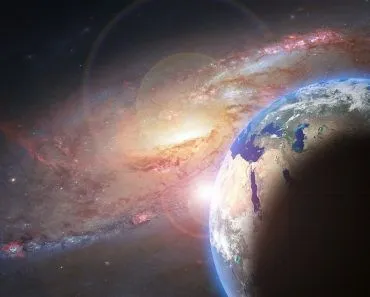
Probably not in the way you’d imagine. Most physicists think gravity split off from a single unified force in the universe’s first sliver of a second, around 10-43 seconds after the Big Bang. Asking what came before the Big Bang is slippery, since time itself appears to begin there, so the honest answer is that we can’t say for sure.
As the story goes, Sir Isaac Newton was sitting beneath a tree, minding his own business, when an apple inexplicably fell on his head.
Instead of cursing the tree for such treacherous behavior, the scientist instead wondered: what made the apple fall? Why did the apple not go up instead? What caused it to come crashing onto his head, rather than simply drifting up into the clouds? What force is pulling it down? He surmised that something strange must be at work.
This train of thought eventually led to one of the most important discoveries in physics: the fundamental force of gravity.
Today, we wholeheartedly and unconditionally accept the existence of gravity. It’s the force that keeps all of us grounded… literally. It is the force that ensures we stay firmly on Earth instead of drifting off into space. From skydives to bungee jumps and roller coasters… all of these thrilling experiences are only made possible by virtue of gravity. Even the movement of the planets around the sun, the circling of the moon around Earth and the formation of celestial bodies occur due to the insistent force of gravity.
However, has gravity truly existed for all time? What about before time? Before the concept of time and space? Did gravity exist at a time before the Big Bang? To answer these deep and pertinent questions, we should definitely get clear on the basics.
What Is Gravity?
According to Sir Isaac Newton, gravity is a force of attraction that exists between any two bodies, celestial or otherwise. Every object in the universe is exerting a gravitational force on other objects, the strength of which is directly proportional to the mass of the object.
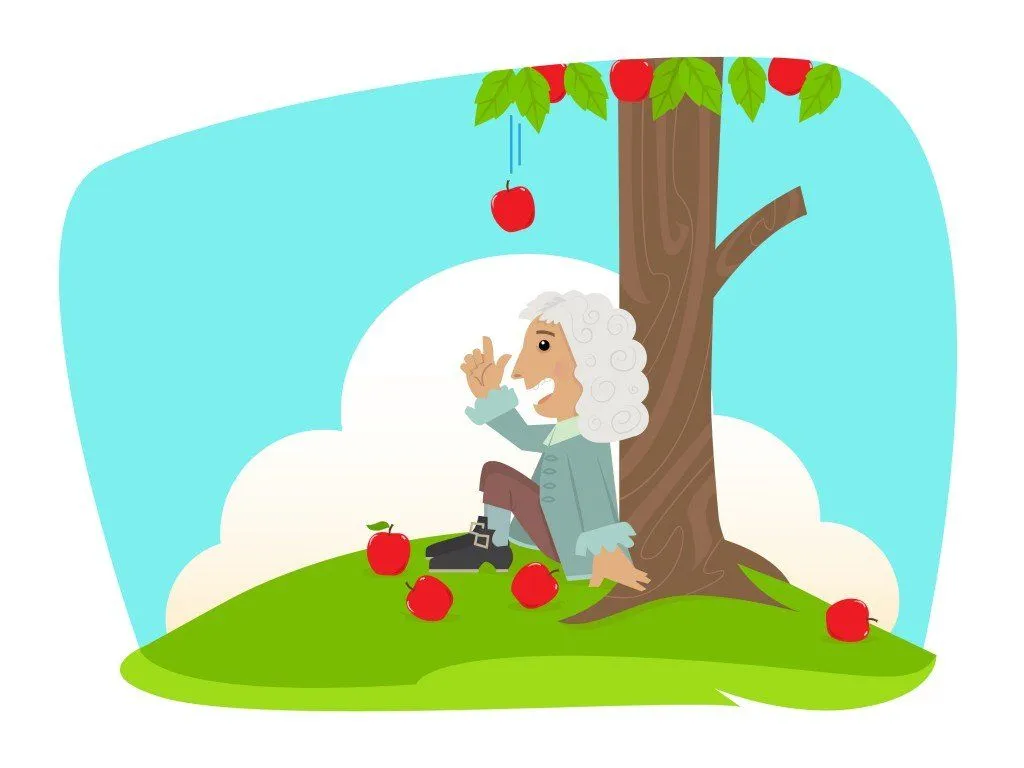
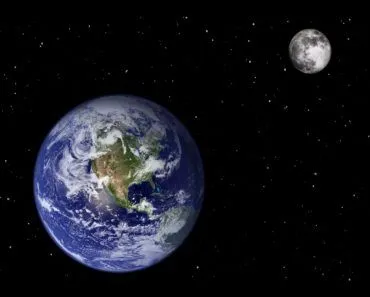
For example, when Newton sat beneath that tree and the apple fell on his head, the apple exerted a force of gravity on the earth, but owing to the astronomically higher mass of the earth, the planet won in this tug of war. In fact, our planet has been winning this constant game of tug of war against all of us since time immemorial, which brings us to the big question, was this tug of war being played before and during the Big Bang?
The Big Bang
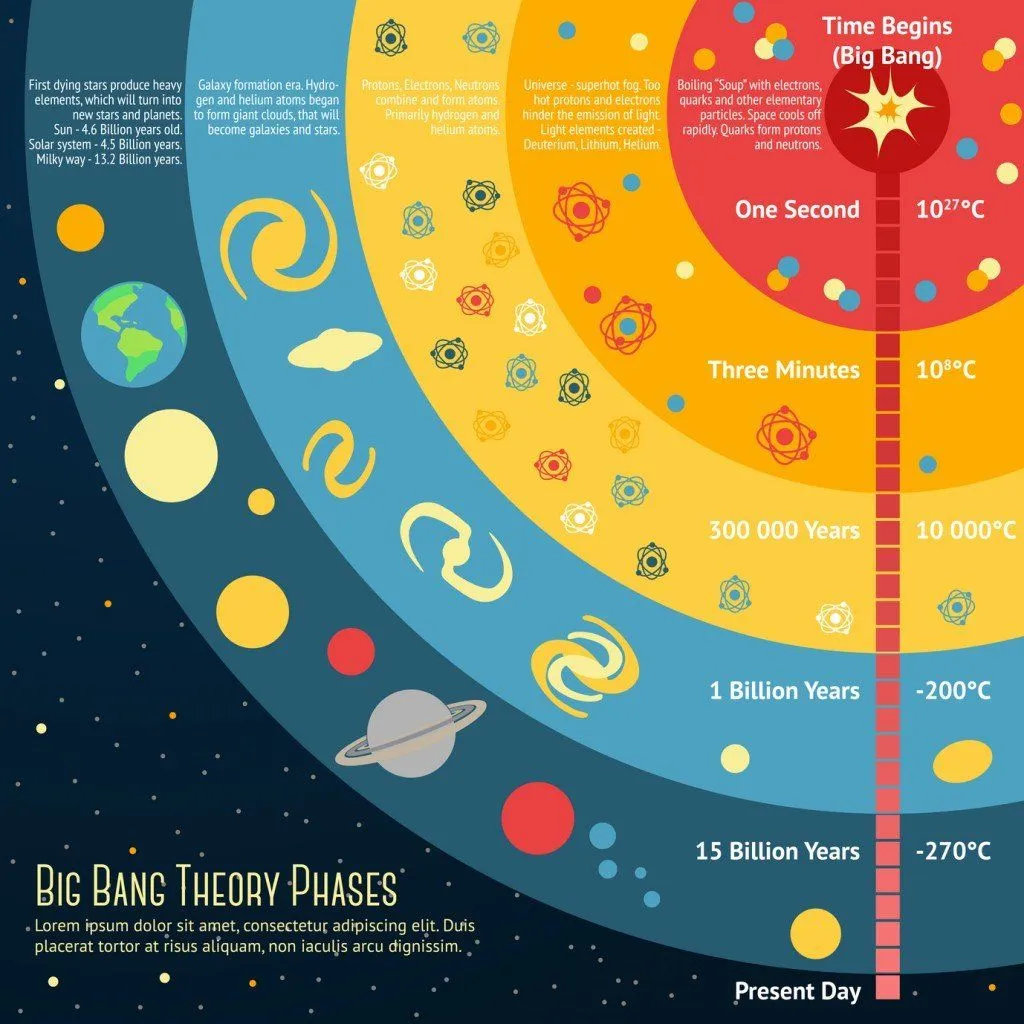
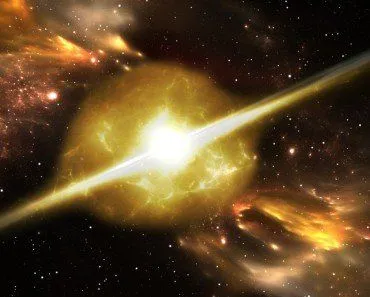
As renowned scientist Stephen Hawking described it, all of the matter and energy in the universe was once squeezed into an unimaginably tiny space, folded and compressed on top of itself. This was a state of near-infinite density and temperature, known as a gravitational singularity (a point so extreme that our current laws of physics break down there). It held everything the universe is made of, packed into a volume smaller than a single atom. A tiny fraction of a second later, space itself began stretching like a gigantic balloon, faster than the speed of light, in the phenomenon we casually call the Big Bang.
Now some of you may be thinking, wait a minute… faster than the speed of light?
As you’ve probably heard countless times, nothing can be faster than the speed of light… and you would be right. Einstein’s theory of relativity established a constant speed of light but only made this assumption for an object traveling through spacetime.
In the case of the Big Bang, there’s a subtle difference. The explosion of creation entailed the expansion of space itself, rather than the movement of mass through space. For example, imagine space itself to be a ship. All the objects in the universe are passengers on this ship. Einstein’s theory of relativity states that the speed limit for all passengers on the ship is the speed of light. No one on the ship is able to move faster than light.
However, Einstein’s theory says nothing about the speed of the ship itself. The ship could move faster than light speed and still maintain a speed limit within itself. Hence, without violating any laws of physics, the Big Bang created the infinitely large universe we reside in today.
Gravity Before The Big Bang?
Let’s rewind the clock to a time just one second before the Big Bang, right before the wheels of creation were set in motion. As mentioned earlier, the whole universe was constrained into an impossibly tiny space called a singularity. Surrounding it, there was nothingness. The question is, how did the entire universe manage to stay within such a constrained space? There must have been something… some force holding it all together.
In this case, the most intuitive answer is also a tempting one… gravity! In this picture, an immense gravitational pull acted on all that matter, squeezing the entire universe into a single gravitational singularity. Of course, that’s just one model, not settled fact.
This singularity is just one of the explanations about what was present before the Big Bang based on Einstein’s theory of relativity. Some scientists have criticized this idea, since it doesn’t take into account quantum mechanics. As we start to measure particles a million times smaller than the width of a human hair, we enter the quantum realm, which may not necessarily be governed by the traditional laws of physics.
Basically, any time before the Big Bang is a little murky. Whatever we predict about the time before the Big Bang would be an approximation and can never be 100% accurate. What we can do, however, is make a more informed prediction during the first moment of the Big Bang, when all of space-time blew up into existence.
Gravitational Waves
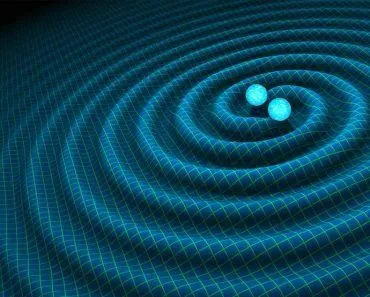
Einstein claimed that one could prove the existence of gravitational force during the Big Bang by looking for gravitational waves. These waves can be understood as ripples created by some of the most violent and energetic events in the universe.
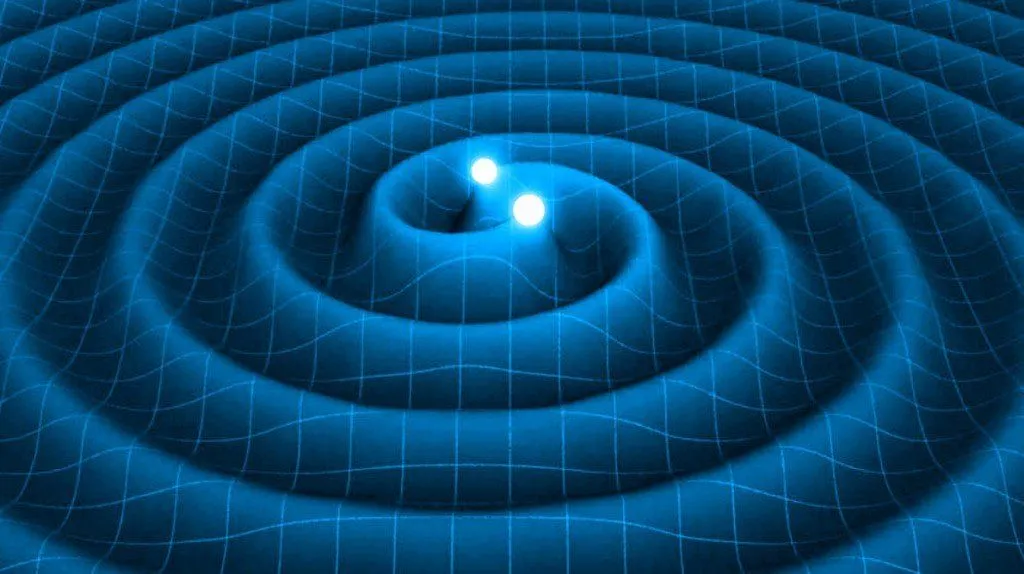
Einstein’s theory showed that huge cataclysmic events could disrupt the fabric of space-time, which would give rise to ‘waves’ of sorts that radiated from the source. The more violent the event, the larger the disruption would be and, in turn, the larger its gravitational wave would be. What could be a greater cosmological event than the Big Bang itself? Surely, the expansion of the universe at a speed faster than light would lead to substantially strong gravitational waves.
However, since the universe is about 13.8 billion years old, detecting a ripple that may have started its journey that long ago seems nearly impossible. One would need some extremely sensitive equipment that could pick up on these ancient ripples. In fact, gravitational waves that potentially originated from the Big Bang would have reduced about a billion times in intensity after all these years. Scientists claim that the disruption caused by such old waves would be smaller than the size of the nucleus of an atom.
LIGO: The Experiment That Caught Gravity In The Act
Such an experiment wasn’t possible until the year 2015. On September 14, 2015, LIGO (a lab dedicated to the observation of gravitational waves) successfully made physical contact with gravitational waves. Their sensitive apparatus was able to detect a mild disruption caused by the collision of two black holes 1.3 billion light-years away!
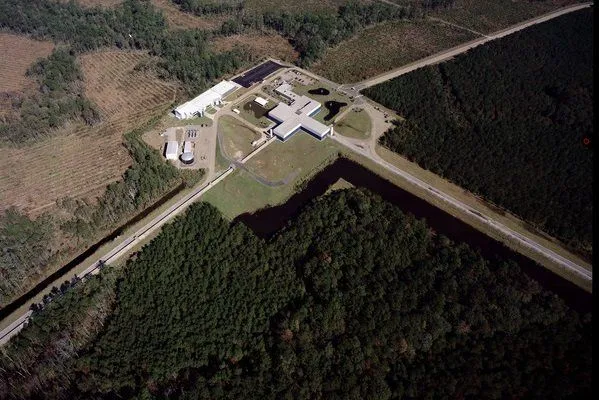
This was the first time anyone had ever detected gravitational waves directly, giving real, empirical proof of something Einstein had predicted a century earlier. It is worth being precise about what LIGO actually caught, though: ripples from two colliding black holes, not from the Big Bang itself. The faint waves that may have rippled out from the Big Bang are called primordial gravitational waves, and despite years of searching, no instrument has confirmed them yet. So LIGO did not prove that gravity existed during the Big Bang. What it did prove is that gravitational waves are real, which turns the hunt for those primordial ripples into a genuine experimental goal rather than pure speculation.
Whether gravity existed before the moment of creation may never be settled by experiment, since we still lack a working theory of the universe before space-time emerged. There is a deeper snag, too: if time itself began with the Big Bang, then “before” may not even be a meaningful word here. We may have to wait around for the next Einstein to deliver a new set of groundbreaking equations (a theory of quantum gravity) that can explain the state of the universe before the concept of “space” even existed.
Gravity After The Big Bang
So when did gravity actually start? The leading picture is that, in the very first instant, all four fundamental forces (gravity, electromagnetism, and the strong and weak nuclear forces) were fused into a single unified force. Gravity is thought to have split off first, at the end of the so-called Planck epoch, around 10-43 seconds after the Big Bang, before the other three forces went their separate ways. From that moment on, gravity has shaped the universe at the grandest scales. Here’s the twist, though: it is by far the weakest of the four forces. A small fridge magnet beats the gravity of the entire Earth when it lifts a paperclip. Yet because gravity always attracts and reaches across vast distances, it ends up running the cosmic show, pulling gas into stars, stars into galaxies, and planets into their orbits. As mentioned earlier, the strength you feel depends on mass. You and I can’t exert as strong a gravitational pull as Earth, but it’s wonderful to imagine that we are walking around with our own personal gravitational field, tugging ever so faintly on every other object in the world, reminding us that we truly are all connected!
How Old Is Gravity?
If you want a single number, here it is: gravity is almost exactly as old as the universe itself, which works out to roughly 13.8 billion years. The most precise reading we have comes from the European Space Agency's Planck satellite, which mapped the faint afterglow of the Big Bang (the cosmic microwave background) and pinned the age of the universe at about 13.8 billion years, or 13.787 billion give or take roughly 20 million.

Gravity did not quite arrive at the starting whistle, though. As we saw, physicists think all four fundamental forces were fused into a single unified force for the very first instant of existence. Gravity is believed to have peeled away first, at the close of the Planck epoch, around 10-43 seconds after the Big Bang. That figure is so small it barely counts as a head start. Written out, 10-43 of a second is a decimal point followed by 42 zeros and then a 1, so next to 13.8 billion years it is far less than a rounding error.
So when someone asks how long gravity has been around, the honest answer is "for essentially all of time." There was never a long stretch of cosmic history where matter sat waiting for gravity to show up. The moment there was a universe with distinct forces in it, gravity was already there, quietly getting to work. In that sense gravity is not just old, it is one of the oldest features of reality we can point to.
Did Gravity Exist Before Newton Discovered It?
This one trips a lot of people up, so let us clear it up: gravity absolutely existed before Isaac Newton. Apples had been falling, rivers had been running downhill, and planets had been circling the sun for billions of years before anyone thought to write an equation about it. What Newton did in 1687, in his book Philosophiae Naturalis Principia Mathematica, was describe gravity, not invent it. Discovering a law of nature is not the same as switching it on.

Newton was also far from the first person to puzzle over why things fall. More than a thousand years earlier, the Greek philosopher Aristotle argued that heavy objects drop because they are trying to reach their "natural place" at the center of the universe, and that heavier things fall faster. He was wrong on that second point, but he was already treating falling as something that needed an explanation.
The real breakthrough before Newton came from Galileo Galilei. In experiments around 1589 to 1592, Galileo showed that objects of different weights fall with the same acceleration, demolishing Aristotle's heavier-falls-faster idea. Newton then took that work and made a giant leap, realizing that the same force pulling an apple down also holds the Moon in its orbit, and that it acts between every pair of objects in the universe. More than two centuries later, Einstein reimagined the whole picture in 1915, describing gravity not as a pull but as the curving of space and time. Through all of it, gravity itself never changed. Only our story about it did.
References (click to expand)
- The other side of the Big Bang | University of Oxford. The University of Oxford
- The Beginning of Time - Stephen Hawking. Hawking.org.uk
- What Came Before the Big Bang? | DiscoverMagazine.com - discovermagazine.com:80
- Gravitational Waves Reveal the Universe before the Big .... Scientific American
- What are Gravitational Waves? | LIGO Lab | Caltech. The Laser Interferometer Gravitational-Wave Observatory
- The early universe. CERN
- Planck reveals an almost perfect Universe. European Space Agency (ESA)
- The Planck era: Imagining our infant universe. Astronomy.com
- Discovering Gravity - Galileo. University of Virginia
- History of gravitational theory. Wikipedia