Table of Contents (click to expand)
Planet 9 is still only a hypothesis at this point, based on the gravitational influence on certain celestial bodies in the Kuiper Belt. However, scientists are increasingly confident that a planet roughly 4 to 7 times Earth's mass exists in the far reaches of our solar system. The Vera C. Rubin Observatory, which achieved first light in 2025, is now conducting its Legacy Survey of Space and Time (LSST) and has an estimated 70-80% chance of detecting Planet 9 if it exists.
For most people over the age of 20, our understanding of the solar system has changed quite a bit in recent years. We grew up knowing exactly what the solar system looked like, from our central Sun all the way out to Pluto.
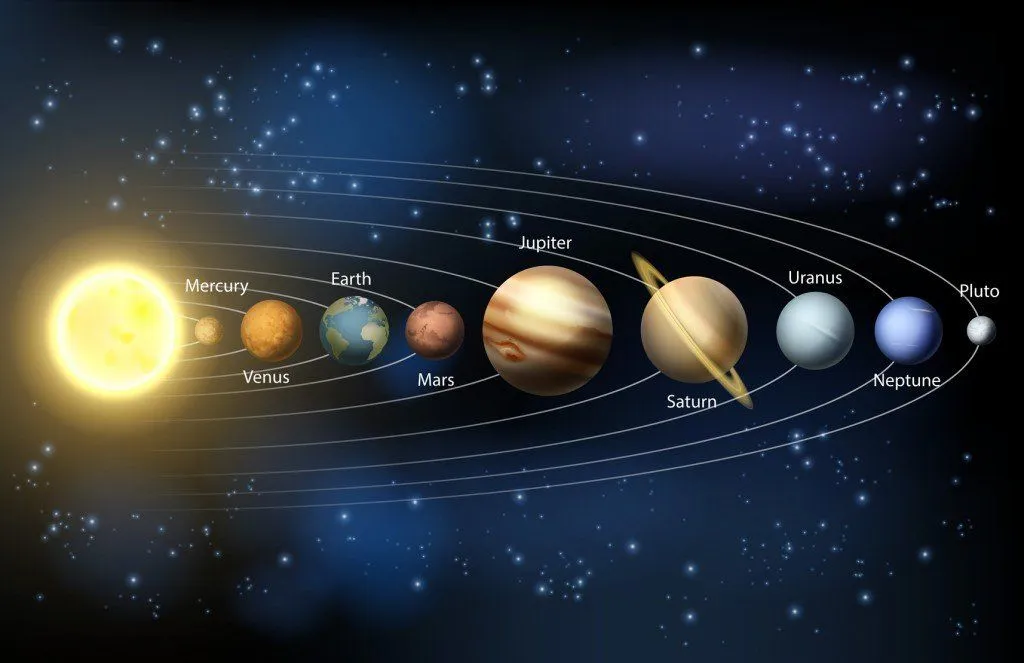
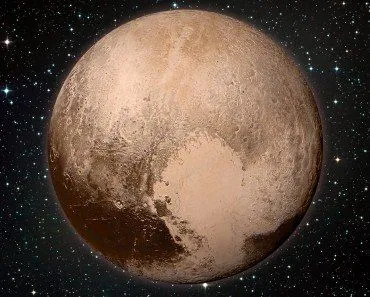
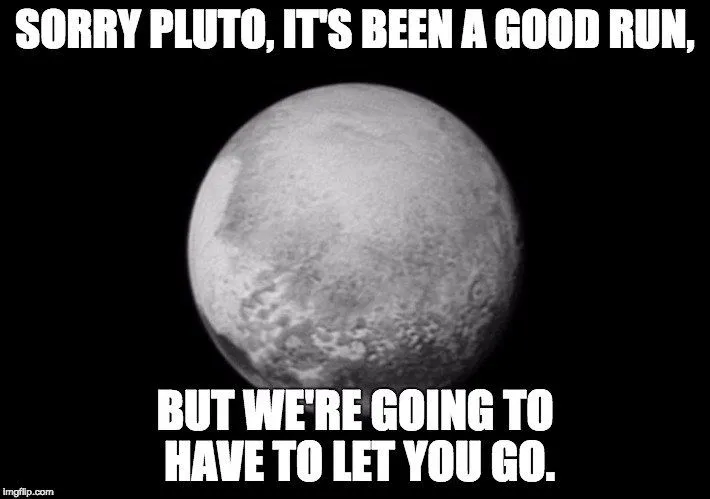
In August 2006, astronomers voted to demote Pluto, the smallest and most distant planet in our solar system, saying that it should no longer be considered a planet. Generations of people suddenly had to reprogram their understanding of the solar system; instead of 9 planets, we were now left with only 8. However, things got even more complicated for people in early 2016, when scientists suggested that a massive 9th planet may be orbiting the Sun that we’ve never seen before. To confuse those of us still mourning the loss of Pluto (our 9th planet), wrapping our heads around Planet 9 has been a bit tough.
So what the heck is Planet 9, and why are we only hearing about it now?
The Theory Of Planet 9
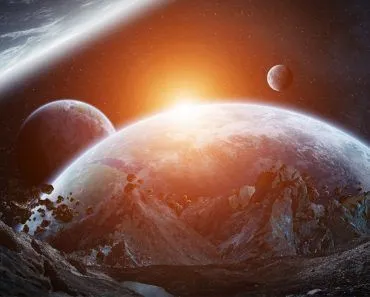
To begin with, we should make it very clear that Planet 9 still only exists as a hypothesis, according to NASA, so let’s not start re-drawing the solar system maps quite yet. However, some of the most brilliant minds in astronomy -- including Konstantin Batygin and Michael Brown of Caltech, who formally proposed it in January 2016 -- have suggested that a planet exists somewhere in the far reaches of our solar system, roughly 10 times further from the Sun than Neptune. Neptune is technically the furthest known planet, orbiting about 2.8 billion miles from our star.
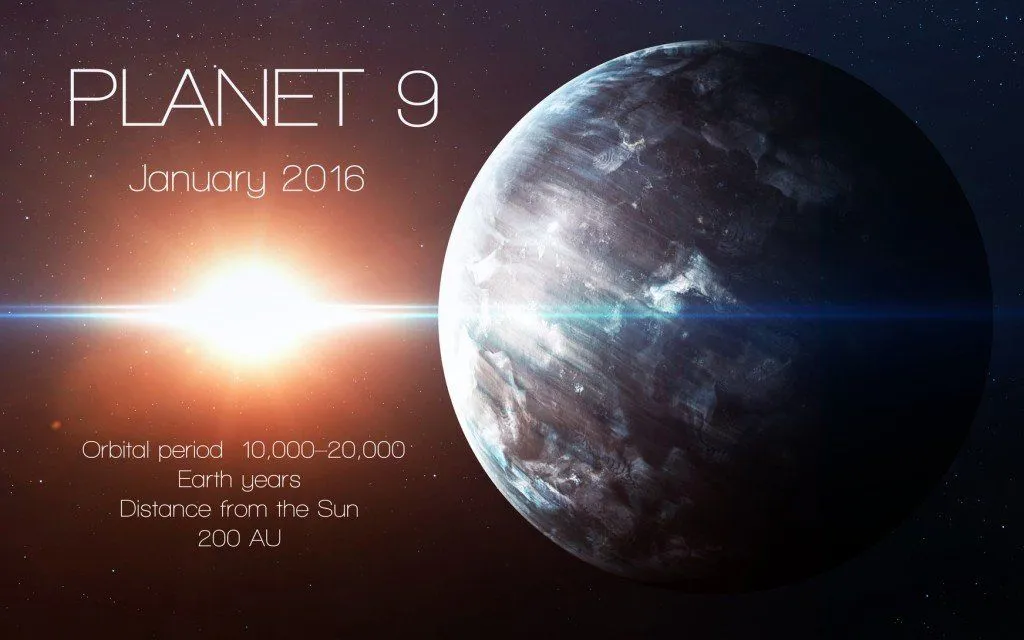
At that incredible distance, Planet 9 would orbit in a region beyond the Kuiper Belt, which is a disc-shaped region beyond Neptune’s orbit filled with hundreds of thousands of icy objects. Astronomers have detected unexplained orbital clustering of certain extreme trans-Neptunian objects (ETNOs) -- icy bodies like Sedna and 2012 VP113 that orbit far beyond Neptune -- in that distant area of space. Very often, astronomical discoveries are made based on witnessing unexplained behaviors of celestial bodies, and then seeking the cause. In fact, Neptune was discovered in a similar way, after its gravitational impact on Uranus was detected, but could not be explained.
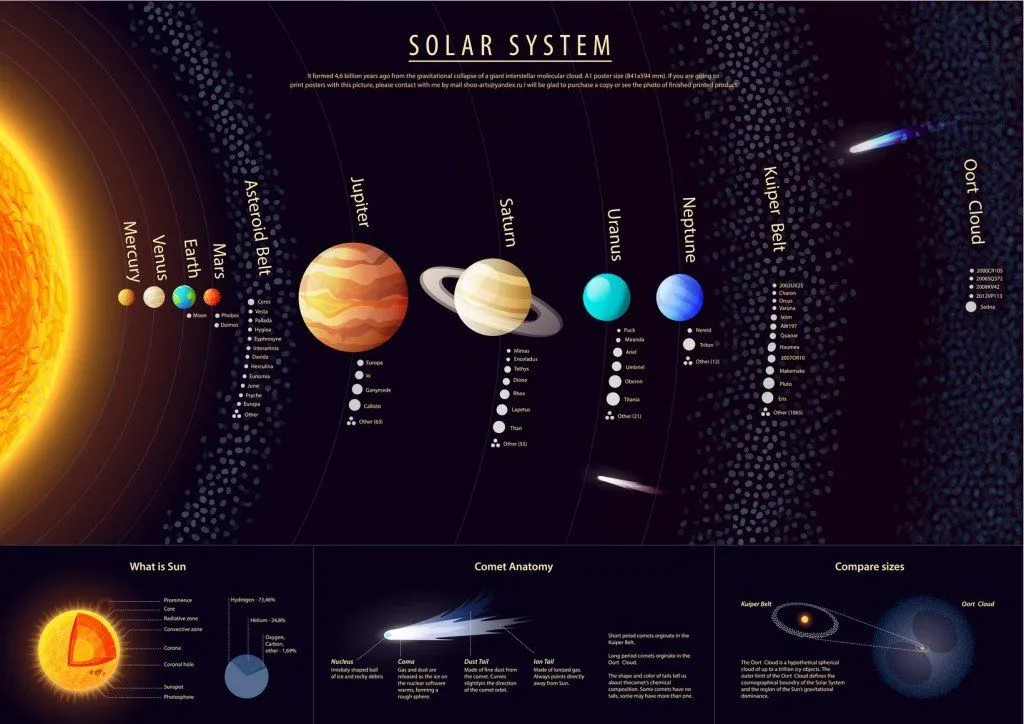
Based on these calculations and the movements of known bodies in the Kuiper Belt, astronomers believe that Planet 9 is likely a super-Earth or mini-Neptune. A 2025 study by Siraj, Chyba, and Tremaine, using data from 51 extreme trans-Neptunian objects, estimated its mass at roughly 4.4 Earth masses and placed its semi-major axis at about 290 AU, with an orbital period of approximately 5,000 years. Earlier estimates by Brown and Batygin suggested a mass of around 6.6 Earth masses. Although its size and orbital pattern would qualify it as a planet according to present standards, there must be a visual confirmation before it can be officially named as a known planet. Most researchers suggest that Planet 9 was a planetary core that was ejected from a much smaller orbit during the tumultuous formation of our Solar System, likely flung outward by gravitational interactions with Jupiter or Saturn.

Researchers are confident that Planet 9 exists, based on their tracking of its gravitational influence on distant Kuiper Belt objects, but confirming its existence could still take time. If Planet 9 is at its most distant point from the Sun, it would have minimal gravitational impact on the inner planets, making its movements harder to detect. Furthermore, the extreme distance means that it reflects very little sunlight, making direct observation extremely challenging. However, there is good news in the quest for Planet 9!
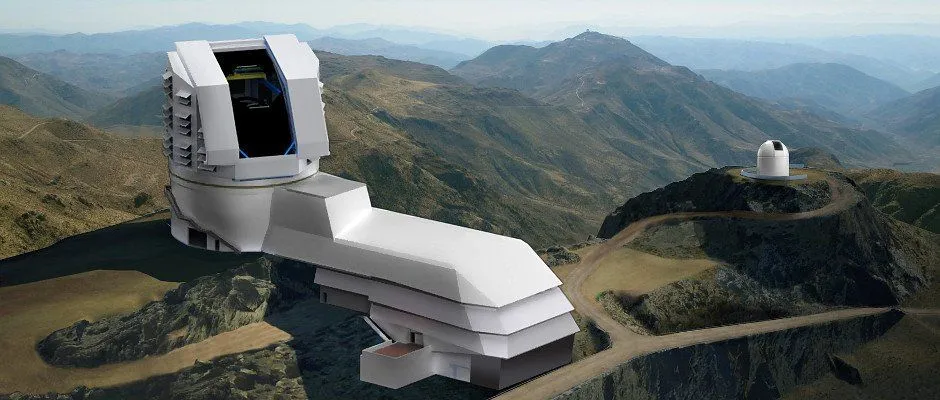
The Vera C. Rubin Observatory (formerly the Large Synoptic Survey Telescope) in the mountains of Chile achieved first light in 2025 and is now conducting its decade-long Legacy Survey of Space and Time (LSST). With its 3.2-gigapixel camera -- the largest digital camera ever constructed -- it photographs the entire visible southern sky every few nights. Simulations suggest the observatory has a 70-80% chance of detecting Planet 9 if it exists, potentially within the first year or two of full operations. Even if the planet is not directly spotted, Rubin is expected to discover roughly 37,000 trans-Neptunian objects -- expanding the current catalog tenfold -- which would vastly improve our ability to map gravitational influences in the outer solar system. In 2025, researchers also reported a possible candidate detection using archival IRAS and AKARI infrared data, identifying sources consistent with a planet of 7 to 17 Earth masses at 500-700 AU, though this remains unconfirmed. Additionally, the discovery of 2023 KQ14 ('Ammonite'), a Sedna-like object with an unusual orbit, has provided further indirect support for the Planet Nine hypothesis.
How Many Planets Are In The Solar System?
Here is the short answer that trips up almost everyone who grew up before the mid-2000s: our solar system has eight planets, not nine. In order of their distance from the Sun, they are Mercury, Venus, Earth, Mars, Jupiter, Saturn, Uranus and Neptune. If you were taught that there were nine, you were counting Pluto, which held the title of ninth planet from its discovery in 1930 right up until 2006.

So what changed? In August 2006, at a meeting in Prague, the International Astronomical Union (IAU) finally wrote down a formal definition of the word "planet". To qualify, a body has to do three things: orbit the Sun, have enough gravity to pull itself into a roughly round shape, and clear its orbital neighborhood of other objects of a similar size. Pluto sails through the first two, but it fails the third. It shares the Kuiper Belt with thousands of other icy bodies, so it has never swept its lane clean the way the eight planets have. (We tell that fuller story in why Pluto lost its planet status.)
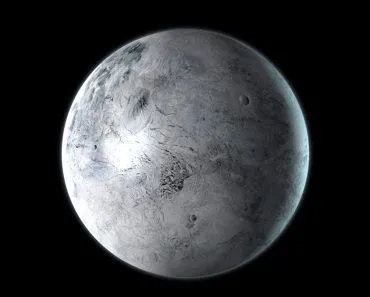
That single rule demoted Pluto to a new category called a dwarf planet, and the official count dropped from nine to eight. Pluto now shares that label with Ceres, Haumea, Makemake and Eris, the five bodies the IAU currently recognizes as dwarf planets. None of this, by the way, is the same thing as the hypothetical Planet 9 discussed above. If that distant super-Earth is ever confirmed, it would push the planet count back up to nine, but it would be an entirely different world from the Pluto that so many of us still miss.
Does Planet Nine Have A Name?
Not officially, and it cannot have one yet. The IAU only assigns an official name once an object has actually been observed and its discovery confirmed, and Planet 9 has so far only been inferred from the way its gravity tugs on distant icy bodies. For now, "Planet Nine" (or "Planet 9") is simply the working nickname that Caltech astronomers Konstantin Batygin and Michael Brown attached to it when they proposed it in 2016.

You may also see it called Planet X, but that name is older and slightly different. Astronomer Percival Lowell coined "Planet X" back in 1915 for a world he believed was tugging on the orbit of Uranus. The "X" is the letter, standing for unknown, not the Roman numeral for ten. Lowell's hunt never turned up his Planet X, but it did lead indirectly to a famous find: in 1930, a young astronomer named Clyde Tombaugh spotted Pluto on photographic plates at Lowell Observatory, and Pluto became the original ninth planet.
If a survey like the Vera C. Rubin Observatory finally catches today's Planet 9 in a telescope, the naming rights traditionally go to whoever makes the discovery, subject to approval by the IAU. And because the planets are all named after Roman and Greek gods, you can expect the ninth planet, should it prove real, to eventually trade its placeholder label for a name straight out of classical mythology.