Table of Contents (click to expand)
As a comet nears the sun, its ice sublimates into gas and dust. Sunlight pushes the dust into a curved dust tail, while solar wind and ultraviolet light ionize the gas into a straight ion (plasma) tail. Both tails point away from the sun, which is why a comet can have two tails at once.
Astronomy and the wonders of the cosmos seem to sweep us off our feet every day. This makes sense, of course, because the more we learn about celestial objects, the more fascinating they become. The best part about this field of science is that we never seem to run out of things to research. There are countless things that we don’t know or fully understand, which keeps us ready and eager for more.
For instance, have you ever wondered what those glimmering tails behind comets are? Well, you’re about to find out!
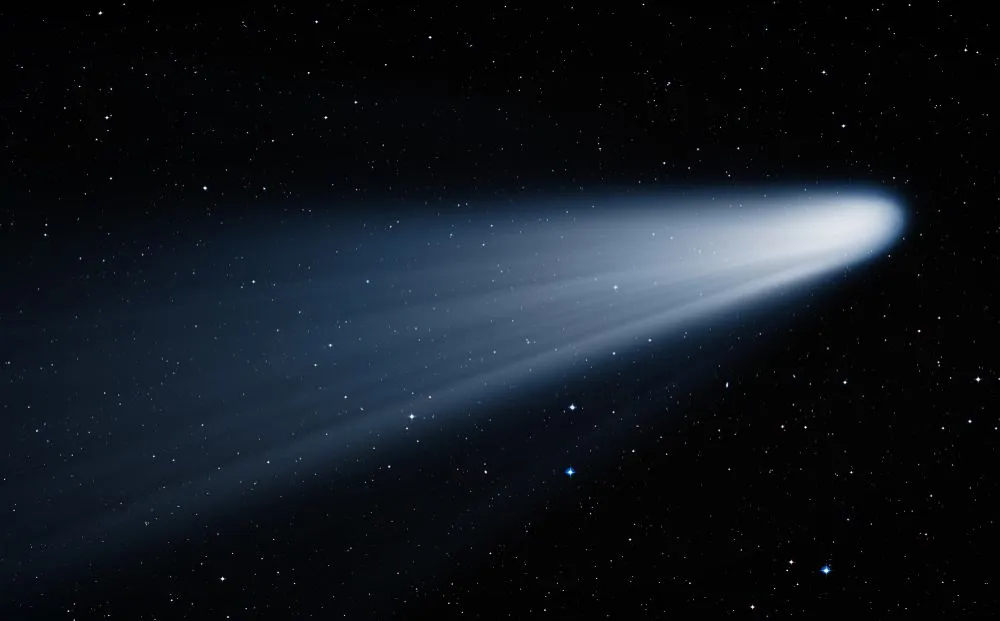
When a comet flies close past the sun, the sun’s heat turns the ice on its surface into gas and dust, forming a glowing cloud that streams away into a tail. Interestingly enough, a comet often has more than one tail. This isn’t because of any bump or dent on its surface. Rather, the gas and the dust are pushed by two different forces, so they spread out into two separate tails, both of them pointing away from the sun.
What Are Comets?
Like all other things in science, comets have long been associated with signs from God. In early ages, comets could have meant good omens for some kings, but a bad sign for the others! In 1910, people in Chicago sealed their windows in response to a rumor that the tail of the comet could inject poison into Earth’s atmosphere. However, our current knowledge discards such fictional ideas!
Comets are celestial bodies that are mainly composed of ice. A common name researchers use is “snowy dirtballs”. They are ‘snowy’ because they’re composed of ice, while ‘dirtball’ indicates the presence of a lot of dust. A majority of these comets are known to orbit the sun, but they’re known to generally inhabit a far-away area of the solar system called the Oort Cloud.
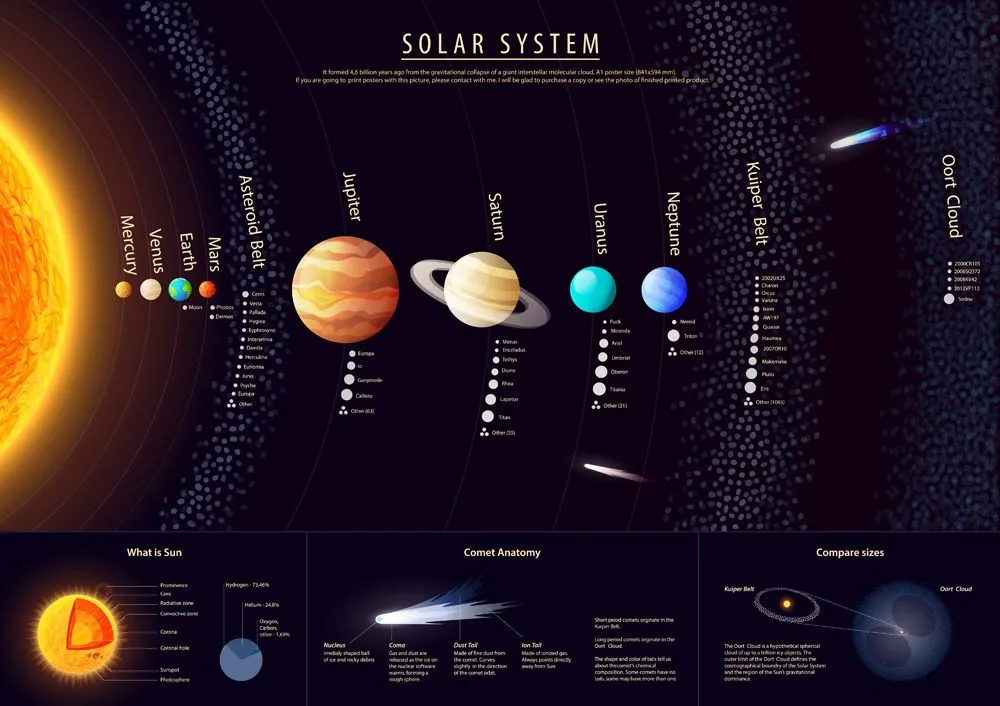
The structure of a comet can be divided into two parts: the nucleus and the coma. The nucleus is the dark part of the comet that consists of a rocky core and has dust, ice, and a variety of gases on its surface. These gases most commonly include carbon monoxide, ammonia, carbon dioxide and methane. The glittering part that shoots out from the nucleus is referred to as the coma. The word comes from the Latin coma, in turn from the Greek komē, meaning “hair of the head”, a nod to the fuzzy, hair-like halo it forms around the nucleus.
What Is Coma, And Why Do They Trail Out Like A Tail?
Every time you see a picture of a comet, you inevitably spot the fuzzy trail. This is because all the pictures of comets you’ve seen have been taken from Earth, and our planet is quite close to the sun. As such, it seems to be the sun that is responsible for the tail of the comets.
When a comet, while orbiting the sun, comes in close proximity to the star, the ice on the surface of the nucleus begins to turn into gas. If you’re wondering how that’s possible, allow me to explain with an example from our everyday experience.
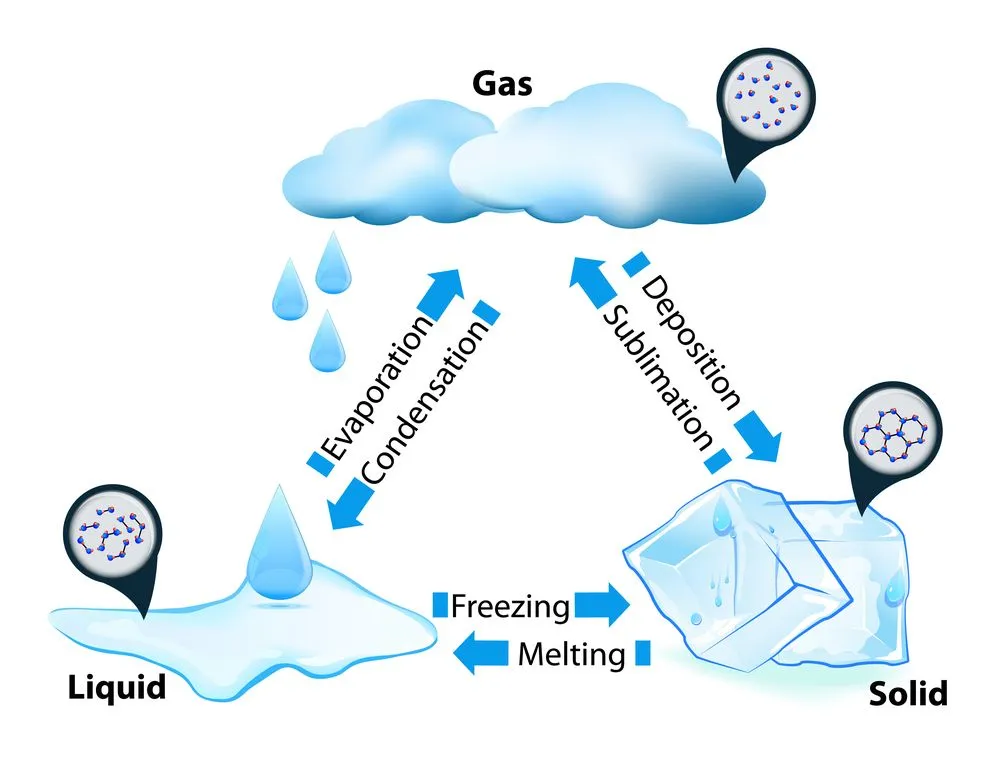
If the refrigerator stops working, the ice converts to water, which means that solids can convert to liquids. However, at the surface of a comet, how does ice converts to gas without passing through the liquid stage?
Sublimation
The simple answer to this question is sublimation. Sublimation occurs when there is enough absorption of heat for the molecules to overcome the attractive forces from adjacent neighbors and escape directly into the vapor stage. Sublimation is the hero of this story. As the ice sublimates, it releases both gas and dust, and these go on to form the comet’s two main tails. One is the ion tail (also called the plasma tail), made of gas molecules that the sun’s ultraviolet light has ionized and that the solar wind then sweeps straight back. The other is the dust tail, made of the dust grains freed as the ice sublimates, which sunlight gently nudges away through radiation pressure.
An important point to note is that these two forces act differently. The solar wind grabs the lightweight charged ions and drives them almost straight out, so the ion tail points directly away from the sun. The heavier dust grains respond more slowly to the gentle push of radiation pressure, and because each grain keeps a bit of the comet’s own orbital motion, the dust tail tends to lag behind and curve into a graceful arc. This is why the two tails often appear to fan out in slightly different directions.
Are Comet Tails Actually Poisonous?
It may sound strange, but people used to think this for many years! Oddly, if the nucleus of the comet contains a lot of carbon, then the tail after ionization may expel an eerie green color. For humans, who often associate green liquids with poison, confusion is bound to occur!
In May 1910, the earth passed through the tail of Halley’s Comet, but no damage was caused. Spectroscopy had revealed a deadly gas called cyanogen in the tail, which sparked genuine public panic at the time. In reality, a comet’s tail is so close to a vacuum that the few cyanogen molecules our planet swept up were nowhere near enough to affect anything on Earth.
With every passing decade, we tend to accumulate more facts about these migrating celestial objects that were once thought to either bring plague or a good harvest. From unfounded and unusual beliefs to understanding the chemical composition at the surface of these “hairy” dirtballs, science and astronomy have certainly come a long way!