Table of Contents (click to expand)
A moonquake is a tremor on the moon. Unlike earthquakes, moonquakes aren't driven by plate tectonics; they're caused by Earth's tidal pull, meteor impacts, or extreme temperature swings on the lunar surface. Shallow moonquakes are the strongest, reaching magnitude 5.5. Because the moon is dry and rigid, a single moonquake can last 10 minutes or more, with smaller trembling for hours afterward.
Around the world, there are billions of people living within the “danger zone” for earthquakes, and as history has shown us (along with plenty of Hollywood renditions), earthquakes can be incredibly devastating. From toppling buildings and cracking open the surface of the earth itself, these natural phenomena are terrifying and unpredictable.
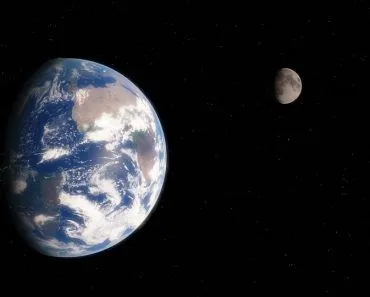
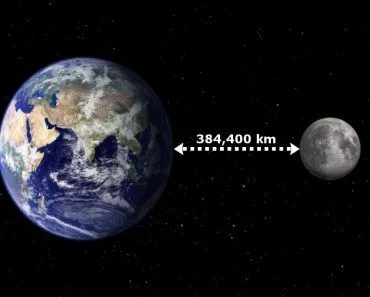
Nearly 384,000 km (240,000 miles) away from our planet, our beloved moon wrestles with a similar problem, but obviously, they’re called moonquakes. Since no one lives on our lunar neighbor, moonquakes don’t get much attention, but they can be incredibly powerful, and last far longer than earthquakes on Earth!
If we ever decide to colonize our nearest celestial companion, these quakes could prove to be quite a problem, so understanding them is crucial.
How Do We Know About Moonquakes?
Earthquakes on our planet come in one major variety, although the range of severity can be dramatic. They are caused by the shifting of tectonic plates, typically when a large chunk of that rock breaks, releasing the energy that has been building up over time. This releases seismic waves along the fault line (border between the massive tectonic plates), due to the rubbing and friction of the plates as they readjust and re-settle. Since the 1970s, tens of thousands of moonquakes have occurred on the surface of the moon.
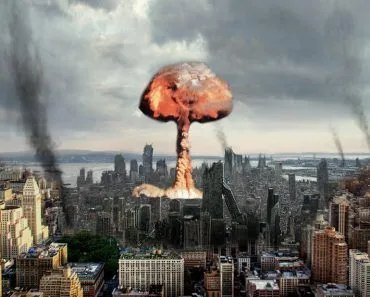
How do we know that, since no humans have walked on the moon since 1972? Well, across the Apollo 12, 14, 15 and 16 landings, astronauts left seismometers at four different sites on the moon, instruments that could detect seismic activity with great precision on the lunar surface. (Apollo 17, the final crewed landing, carried a separate seismic profiling experiment instead.) This network operated until it was switched off for budgetary reasons on September 30, 1977, but in those years it recorded more than 12,000 quakes! In comparison, there are about 20,000 earthquakes on Earth each year, but our planet is much larger, and many of those quakes are very weak and go completely undetected by humans; only sensitive instruments are able to detect them. (Note: sensitive instruments were not needed for the earthquake below….)
The 4 Types Of Moonquakes
On the moon, there are four different types of moonquakes: deep moonquakes, shallow moonquakes, meteor impacts and thermal moonquakes.
Deep moonquakes happen extremely often, typically on a cycle of roughly 27 days, and occur roughly 700 to 1,100 km (435 to 685 miles) below the surface of the moon. Most believe that these are caused by the tidal pull of Earth on the moon. The moon may cause the tides of our oceans to move, but the Earth also acts on the moon in even more dramatic ways, literally cracking the deep rocky core of the moon!
Meteor Impacts can also cause moonquakes, and since there is no atmosphere on the moon, every small meteorite that is headed for the moon will strike it, rather than burning up in the atmosphere, as they do on Earth. These impacts cause rippling earthquakes that can be detected by those seismometers.
Thermal Moonquakes are perhaps the most interesting of the four, caused by the change in temperature on the frigid surface of the moon. For two weeks at a time, half of the moon is enveloped in darkness, and the temperature can fall to around -130 °C (-208 °F). When that same surface returns to the sunshine, the temperature swings wildly back up to roughly 120 °C (250 °F). When the frozen crust suddenly expands, it can cause a moonquake. In fact, a 2023 reanalysis of Apollo 17 seismic data found that some of these tremors were coming from the lander itself: each lunar morning, sunlight warmed the abandoned spacecraft, which expanded and "popped" every few minutes for hours, a vivid demonstration of just how powerful thermal expansion is on the airless moon.
Shallow Moonquakes are the most powerful and the most worrisome for researchers and those eager to colonize the moon. Of the four types of quakes, these are the ones that could do some real damage. The exact cause of these shallow quakes is unknown, but they can reach a magnitude of 5.5 on the Richter scale and occurred 28 times between 1972 and 1977. The thing is, the moon is a “one-plate” celestial body, much like Mars, and lacks active tectonic plates.
Scientists posit that these shallow moonquakes may be caused by the collapsing rims of large, relatively recent craters (caused by meteor impacts), which send long reverberations throughout the surrounding areas. To put these shallow moonquakes into perspective, a 5.5 on the Richter scale is enough to crack plaster and move buildings, which could be potentially deadly for any permanent settlements on the moon, particularly since any crack in the oxygen seal could be catastrophic for a future colony.
How Long Do Moonquakes Last?
Quakes on our planet tend to last between 10 and 30 seconds, and some may last up to two minutes. The longest ever recorded on the planet was nearly ten minutes, but that is extremely rare. Moonquakes don’t seem to have such strict schedules, and on average, they last far longer than quakes on Earth.
When the tectonic plates rumble and an earthquake occurs, the huge amount of energy spreads out through the mineral-rich crust of the earth, which has largely been infiltrated by water in the stone. In effect, this makes the material slightly more compressible, and able to absorb energy and seismic waves, diminishing the power and slowing the shaking. Even so, they can still be scary – and unexpected!
On the moon, things are very different, as the entire ball is hardened, rigid and dry. When a tremor rocks the surface of the moon, it resonates powerfully, without anywhere to naturally dissipate. It isn’t uncommon for a moonquake to last for ten minutes or more, and for smaller trembling to continue for hours afterwards.
Moonquakes And The Future
Although this is still years away, a lunar colony would need to consider the potentially devastating effects of moonquakes on the structures and inhabitants. At present, all of the seismometers were placed in a rather small area near the Apollo landing sites. Very little is known about the moonquake activity near the lunar poles, or whether there are certain areas of the moon where moonquakes are less common.
That is finally starting to change. NASA's Farside Seismic Suite, a pair of seismometers (one repurposed from a spare built for the InSight Mars lander) up to 30 times more sensitive than the Apollo instruments, is slated to touch down in the Schrödinger basin near the lunar south pole in 2026. It will return the first seismic data ever recorded from the far side of the moon. Until we have that fuller map of where and how often the ground shakes, lunar colonists could be in for a dangerous and stressful experience if they choose to settle in a moonquake-prone region!
References (click to expand)
- Hamilton, W. L. (1972, June 16). Tidal Triggering of Moonquakes. Science. American Association for the Advancement of Science (AAAS).
- Moonquakes and Marsquakes - The Atlantic. The Atlantic
- Moonquakes. NASA Science. National Aeronautics and Space Administration.
- What are Moonquakes? Exactly What They Sound Like. The Weather Channel
- Farside Seismic Suite. NASA Jet Propulsion Laboratory (JPL).
- Lunar Seismic Profiling Experiment. Wikipedia.