Table of Contents (click to expand)
- Need To Dispose Of Radioactive Waste Safely
- Can Dumping Nuclear Waste In A Volcano Deactivate Its Radioactivity?
- Repercussions Of Dumping Nuclear Waste Into An Active Volcano
- How About Inactive Volcanoes?
- Are Volcanoes And Lava Actually Radioactive?
- Is Dumping Nuclear Waste In A Volcano Even Legal Or Ethical?
- The Problem Of Long Half-lives
No, you cannot safely dispose of nuclear waste in a volcano. Lava maxes out around 1,200 °C (2,200 °F), far below the millions of degrees needed to actually split radioactive nuclei. The waste's zirconium-clad containers would barely melt, while a volcanic eruption would aerosolize the radioactive contents into the upper atmosphere and rain them down globally. Long-lived isotopes like plutonium-239 (half-life 24,000 years) make a wait-for-it-to-erupt strategy a non-starter.
Since the middle of the 20th century, the world has been in the Nuclear Age. From nuclear weapons to massive power plants, radioactive elements have been leveraged for their incredible power and potential.
Need To Dispose Of Radioactive Waste Safely
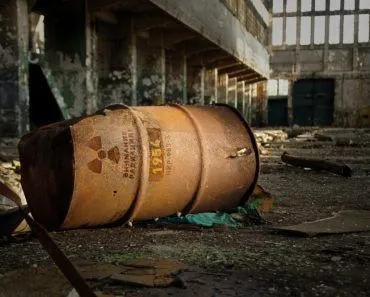
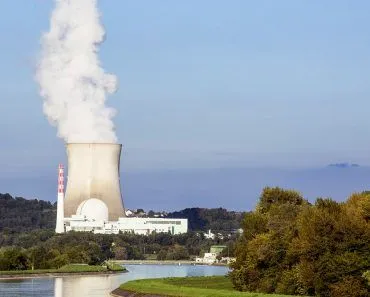
Unfortunately, using radioactive material in its many forms results in the production of nuclear waste. This nuclear waste is primarily released as a byproduct from nuclear energy-generating power plants. These power plants tap into the intense heat generated from nuclear fission reactions, during which unstable radioactive atoms like uranium or plutonium are split into smaller elements.
The heat generated is turned into steam, which makes the turbines rotate and thereby generate electricity.
However, generating nuclear energy also produces radioactive byproducts, mostly used-up uranium fuel rods and other contaminated material. As those isotopes decay, they emit subatomic particles called alpha or beta particles and electromagnetic radiation such as gamma rays. Beta particles and gamma rays are powerful enough to penetrate the skin. They can subsequently cause tissue damage and alter genetic composition, leading to cancer and birth defects.
Moreover, depending on the source, the radioactivity can last from a few hours to hundreds of years! Radioactive emissions don’t just harm our health, but also mess with air, water and soil, which adversely affects biodiversity in countless ways. Today, radioactive waste handling and disposal require complex and costly processes.
Last week, while enjoying the web series Chernobyl, one of my friends suggested dumping nuclear waste into a volcano? It made me think… would that really work? Would it be a safe and effective method of containment?
Can Dumping Nuclear Waste In A Volcano Deactivate Its Radioactivity?
This may seem like a tidy solution for getting rid of the roughly 430,000 tonnes of spent nuclear fuel that the IAEA estimates have accumulated worldwide so far (with about 12,000 tonnes added each year), plus the millions of cubic meters of lower-level waste sitting in storage. However, as they say, the devil is in the details. Volcanoes are incredibly powerful and molten lava is smoking hot, but surprisingly, the temperatures required to quaff radioactive material are much higher than even what the hottest volcanoes can offer!
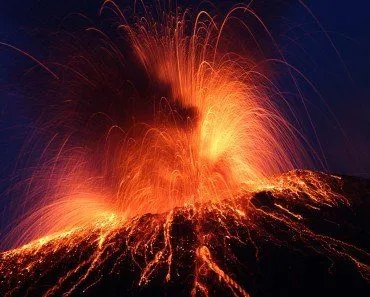
Our current storage and transportation methods for nuclear waste include the use of extremely strong, radioactive-resistant metals, such as zirconium. Those metal containers wouldn’t even be able to melt in the heat of a volcano. Supposing that the nuclear waste was exposed to those temperatures, “destroying” nuclear material would mean splitting the radioactive element’s nuclei, which would make it inert (no longer radioactive). That sort of forced fission would require temperatures of millions of degrees (the conditions inside a star or an atomic bomb), many orders of magnitude hotter than any volcano on Earth. Even the hottest basaltic lava only reaches about 1,200 °C (2,200 °F).
Repercussions Of Dumping Nuclear Waste Into An Active Volcano
Given that the center of boiling-hot volcanoes isn’t a place most people spend their time and the fact that volcanoes are often found in remote areas, not surrounded by large population centers, it would seem like volcanoes are still the perfect storage spots for our waste, even if they can’t “destroy” the waste. Volcanoes may be beautiful to look at, but they are infamous for exploding without any warning, which is where the trouble would start.
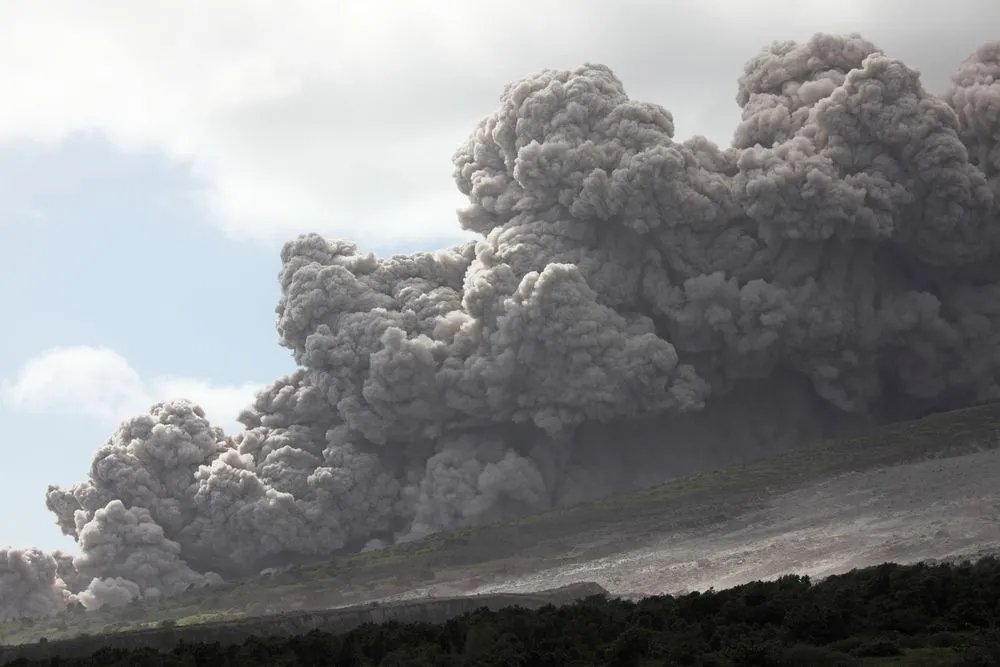
The force of volcano eruptions is measured in megatons, and an eruption can be more than 1,600 times greater than the force of the atomic bomb dropped on Hiroshima. We know that massive volcanic eruptions in the past have sent thousands of tons of ash and gas into the atmosphere, where it cycles through the global atmosphere before eventually settling back down to earth. While this can change weather patterns and global temperature, life can survive such interruptions of sunlight.
If we begin storing or dumping nuclear waste in volcanoes, however, those titanically massive eruptions will send that radioactive material soaring into the atmosphere and around the world, resulting in mass casualties and untold environmental destruction.
How About Inactive Volcanoes?
To counter the reason above, some might suggest using inactive volcanoes instead. However, bear in mind that volcanoes operate on geologic ages, not the usual time scale of years and decades that we use. A volcano may remain dormant for hundreds or thousands of years, commonly known as the cone-building phase, before once again becoming active.
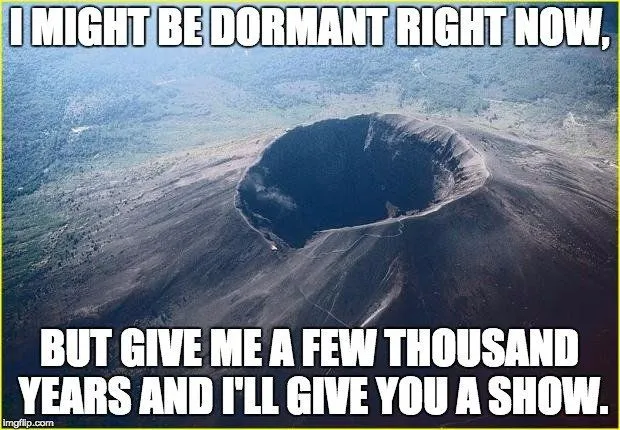
Over those thousands of years, volcanoes are known to shift and change, and also experience significant weathering and erosion. Given that, radioactive waste could eventually make its way into groundwater, or leak from the volcano in the form of small pyroclastic flows. Those lava flows will harden, eventually resulting in a barren, toxic wasteland wherever the lava travels. While volcanic ash and dirt are often considered to be rich and inspiring materials for life, this type of radioactive ash, dirt, and lava would do the exact opposite.
Are Volcanoes And Lava Actually Radioactive?
Here is a twist that catches most people off guard: a volcano is already slightly radioactive on its own, long before anyone dreams of tipping spent fuel rods into one. Nearly every rock on Earth carries a trace of naturally radioactive material. As the U.S. Environmental Protection Agency (EPA) points out, common crustal rocks like granite contain naturally occurring uranium, thorium, potassium and their radioactive decay products. Volcanoes are built from exactly this kind of igneous rock, so the lava they erupt inherits that faint, built-in radioactivity.

Before you picture a glowing hazard, though, the EPA is quick to add that the amount of radiation released from these everyday rocks is typically very, very low. Standing on a cooled lava field exposes you to a whisper of the same natural background radiation you would pick up from a granite countertop, not a dose worth worrying about. The uranium and thorium are present only as trace impurities, not in the concentrated, reactor-grade quantities we are actually trying to get rid of.
Volcanoes do have one more radioactive trick, however: they exhale radon. Radon is a radioactive gas produced when radium, itself a decay product of uranium, breaks down in the rock below. A 2017 review of volcanic environments found that radon is continuously vented from a volcano's main crater, from fumarolic fields, and diffusely through the surrounding soil, which is why communities living on active volcanic ground can face chronically raised radon levels. The takeaway for our thought experiment is simple: this natural, low-level radioactivity is nothing like the intense radioactivity of reactor waste, and a volcano's faint background glow does nothing to help it neutralize the real thing.
Is Dumping Nuclear Waste In A Volcano Even Legal Or Ethical?
Suppose the science somehow cooperated. Would we even be allowed to do this? Almost certainly not, and the closest legal parallel makes that clear. For decades, several nations really did dump barrels of radioactive waste into the deep ocean, treating it as a convenient, out-of-sight solution. The international community eventually slammed that door shut. Under the London Convention of 1972 and its stricter 1996 update, the London Protocol, the treaties prohibit the dumping of wastes with more than de minimis (negligible) levels of radioactivity at sea, according to the EPA. A volcano is not the open ocean, but the same principle applies: you cannot simply release high-level radioactive material into the shared environment and let the planet carry it wherever it pleases, which is exactly what an eruption column would do.

There is a thornier problem too. Most of the world's active volcanoes are not conveniently sitting in the country that produced the waste. They cluster along the Pacific "Ring of Fire" and other volcanic belts, running through nations such as Indonesia, the Philippines, Japan, Iceland and Chile. Shipping thousands of tonnes of hazardous waste across borders to bury it in someone else's backyard runs straight into the ethics that many people are really asking about: is it fair to hand the danger to another population, or to future generations who inherit a poisoned volcano long after the electricity it helped generate has been spent?
That intergenerational question is the heart of the ethical objection. Plutonium-239 stays hazardous for hundreds of thousands of years, far longer than any government, language or warning sign has ever lasted. Deliberately sealing that legacy inside a mountain we know will one day erupt is not just scientifically reckless; it pushes a very real danger onto people who never got a say. It is precisely why the mainstream strategy is the opposite of dumping: closely monitored dry-cask storage and deep geological repositories, engineered so the waste can be watched, retrieved and kept out of the biosphere. If you are curious, we cover how we actually deal with nuclear waste elsewhere.
The Problem Of Long Half-lives
Radioactive half-life is also important to consider. Half-life in nuclear physics refers to the time required for a radioactive material to reduce to half of its initial value. To learn more about this critical aspect of our nuclear understanding, refer to this article.
Over time, radiation does dissipate, but the half-life of certain nuclear material can often be tens of thousands of years (Plutonium-239 has a 24,000-year half-life). If we dump high-level nuclear waste into any volcano, regardless of how long it has been dormant, there is no way to know whether the volcano will someday pop its top again!
Shorter half-life nuclear material, such as strontium-90 (a half-life of roughly 30 years) could theoretically be stored/disposed of in volcanoes, but the most dangerous waste materials that humans need to dispose of are often those that have longer half-lives.
The bottom line is that storing or disposing of nuclear waste in a volcano isn’t a good idea, for a wide range of reasons. Additionally, transporting thousands of tons of nuclear waste to bubbling, boiling volcanoes doesn’t sound like the safest job in the world.
Now… what about sending nuclear waste into space?
References (click to expand)
- B Madres. Storage and 'Disposal' of Nuclear Waste - Stanford University. Stanford University
- (1990) Genetic Effects of Radiation - NCBI Bookshelf - NCBI. The National Center for Biotechnology Information
- Secretary of Energy - www.energy.gov
- Natural Radioactivity in Building Materials - U.S. Environmental Protection Agency
- Linhares, D., Garcia, P., & Rodrigues, A. Radon Exposure and Human Health: What Happens in Volcanic Environments? - IntechOpen
- London Convention and London Protocol - U.S. Environmental Protection Agency