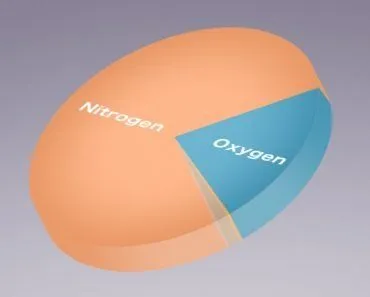
A biogeochemical cycle is the pathway by which a chemical element or compound moves between the living (biotic) and non-living (abiotic) parts of Earth. Cycles such as the water, carbon, nitrogen and phosphorus cycles continuously recycle these materials, making them available to every living organism.
If I ask you what your body is made of, what would you say? “Atoms” might be the answer you nonchalantly give, if you happen to be a geek like us at ScienceABC! There are trillions of atoms inside our body alone, but where did all these atoms come from?

If we travel back in time to examine the source of the fundamental elements that make up our body, we would find that they were all born from dying stars billions of years ago. Though this is an interesting origin, what have the fundamental elements that constitute your body been doing more recently, during their time on planet Earth? For that, we need to understand the flow of energy and chemical component recycling.
Now, the flow of energy is directed into the Earth’s ecosystem. It comes from the Sun and exits as heat, but the chemical components that constitute living organisms are simply recycled through food chains or food webs.
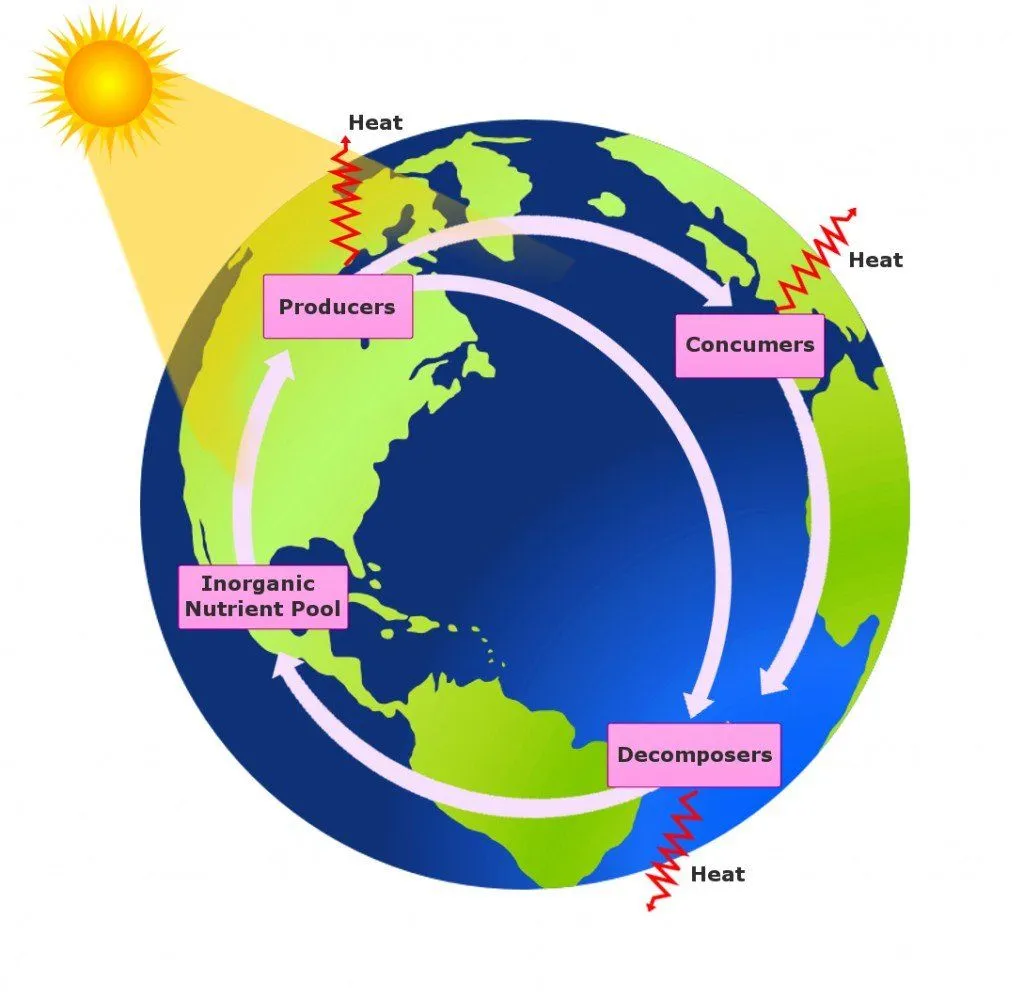
Basically, the atoms that build up your body aren’t brand new. Instead, for eons, they’ve been going through countless cycles in the biosphere. They have been part of many living organisms and non-living compounds through a journey of millions of years! You might be a disbeliever of ‘reincarnation’ as a spiritual concept, but it’s indisputable that the atoms in your body were once a part of many different living organisms and non-living things in the vast span of time!
Biogeochemical Cycle
Carbon, oxygen, hydrogen, nitrogen, phosphorus, and sulfur are the six most common and important elements of an organic body, and they can take a variety of chemical forms. The best part about them is that they can be preserved for both short and long durations in the atmosphere, land, water or even in the bodies of organisms. Each of these six elements is circulated through various biotic and abiotic components. Different geological phenomena, including soil erosion, rock weathering, water drainage etc., play their part in the recycling of materials. The ways in which elements or compounds travel through various living and non-living forms is called the biogeochemical cycle. The name itself reflects the prominence of biology, geology, and chemistry, the science fields that help us understand biogeochemical cycles better.
There are several biogeochemical cycles that operate as part of the ecosystem, such as the water cycle, carbon cycle, phosphorus cycle, nitrogen cycle, etc. All the chemical elements present in the living organisms form a part of one or more biogeochemical cycles.
Key Biogeochemical Cycles
The water cycle refers to the pathway in which water is circulated and recycled through Earth’s resources. Water, a compound made of hydrogen and oxygen, is indispensable for all living organisms, which is why the water cycle is one of the most important biogeochemical cycles.
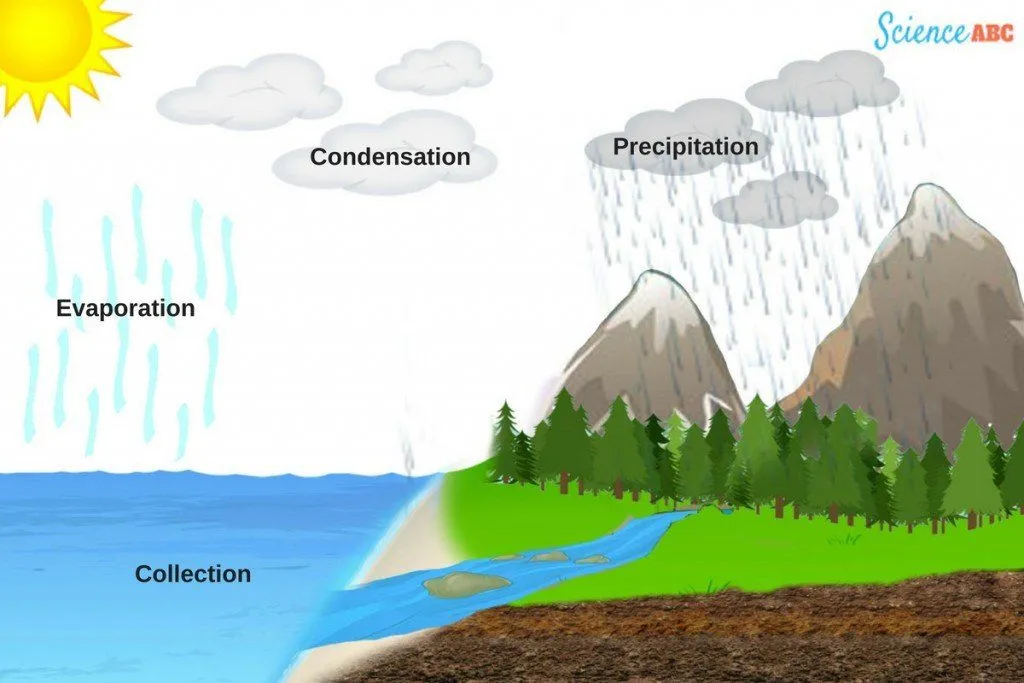
Undoubtedly, no organism can survive and grow without water. In a complex organism, water is essential to dissolve vital vitamins and other nutrients. It is later used in the transportation of these substances. It also assists in carrying out enzymatic and chemical reactions needed for metabolism.
When it comes to us (humans), water accounts for around 60% of our bodies. Despite its huge prominence, we cannot survive solely on water, so there are other key elements that are essential to keep our bodies running and are obtained through other biogeochemical cycles.
Carbon is a part of all organic macromolecules, is the main component of fossil fuels, and is obtained through the carbon cycle. Nitrogen and phosphorus are important components that make up our RNA and DNA, which are obtained through their respective nitrogen and phosphorus cycles. Sulfur is an important component in protein and is obtained through the sulfur cycle. These cycles cannot occur in isolation. The water cycle is the main driver of other biogeochemical cycles. For example, the movement of water is essential for the leaching of phosphate and nitrogen into lakes, rivers, and seas.
What Are The Main Types Of Biogeochemical Cycles?
If you line up all the major cycles side by side, a neat pattern jumps out. Scientists usually sort them into two families based on where each element spends most of its time, its main storage tank, or reservoir. The first family is the gaseous cycles, where the reservoir is the air or the oceans. The carbon, oxygen, nitrogen and water cycles all belong here, because each of these substances has a stable gas phase and can move freely through the atmosphere. The second family is the sedimentary cycles, where the reservoir is the Earth's crust. The phosphorus, sulfur, iron and calcium cycles sit in this group, as these elements are stored mainly in rocks and soil and lack a large atmospheric reservoir (sulfur is the partial exception, with a small gaseous component).

This split is more than just bookkeeping. Because gaseous cycles have a huge, well-mixed reservoir in the atmosphere, they tend to move quickly and respond fairly rapidly to changes anywhere in the biosphere. Sedimentary cycles are slower and more sluggish, since elements have to be released from rock by weathering before living things can use them, then eventually settle back into sediment that may stay buried for ages.
So how many biogeochemical cycles are there? There is no single magic number, because in principle every chemical element has its own cycle. In practice, biology textbooks focus on the handful that matter most for life: water, carbon, nitrogen, phosphorus and sulfur, with oxygen often counted alongside them. Those are the ones worth knowing, and they neatly span both the gaseous and sedimentary families.
Is The Water Cycle A Biogeochemical Cycle?
This one trips a lot of people up, so let's settle it: yes, the water cycle (also called the hydrologic cycle) is counted as a biogeochemical cycle, and it's usually treated as one of the most important ones. It earns its place because water continuously cycles between the atmosphere, the oceans, the land and living organisms, exactly the kind of movement between biotic and abiotic reservoirs that defines a biogeochemical cycle.
There is one quirk that makes water a slightly unusual member of the club. In the carbon or nitrogen cycle, the element is chemically transformed as it goes around, for example, carbon shuttling between carbon dioxide gas, sugars and limestone. Water, by contrast, mostly just changes its physical state. It evaporates into vapor, condenses into clouds, and falls as rain or snow, but the H2O molecule itself stays chemically the same through almost all of it. Even so, water is the workhorse that keeps the other cycles turning: rain and runoff are the main way that nutrients such as nitrogen and phosphorus get leached out of soil and carried into rivers, lakes and the sea. Without that flow of water, the other biogeochemical cycles would largely grind to a halt.
How Is The Phosphorus Cycle Different From The Others?
The phosphorus cycle is the odd one out, and the reason comes straight from the gaseous-versus-sedimentary split. Carbon, nitrogen and oxygen all have a gas phase, so they can ride the winds and spread around the globe through the atmosphere. Phosphorus does not. Under normal conditions at the Earth's surface, phosphorus does not form a stable gas, so it has essentially no atmospheric step. Instead it moves almost entirely through rock, soil, water and living things, which makes it a textbook sedimentary cycle.

Phosphorus enters the living world mainly when rocks containing phosphate minerals are slowly broken down by weathering, releasing phosphate ions (PO43-) into the soil. Plant roots take up that phosphate, animals get it by eating plants, and when organisms die and decompose, the phosphorus returns to the soil to be used again. A lot of it eventually washes into rivers and the ocean, settles into sediment, and may stay locked away for an extraordinarily long time. The average phosphate ion is estimated to spend somewhere between 20,000 and 100,000 years in the ocean before cycling back. That snail's pace, with no atmospheric shortcut, is exactly why phosphorus is so often a limiting nutrient for growth, especially in freshwater ecosystems, and why agriculture leans so heavily on phosphate fertilizers dug from the ground. It's worth understanding why we may be running out of phosphorus.
Human Impact On Biogeochemical Cycles
Human actions, especially in the last few decades, are having a drastic impact on biogeochemical cycles, especially the carbon cycle. Fossil fuels, which have been used recklessly for decades, took millions of years to emerge. These fossil fuels serve as a vast repository of carbon, but they’re being carelessly burnt as a fuel. This burning rate is too rapid for it to be returned back to their old carbon sinks. Instead, it’s being released as carbon dioxide and methane into the atmosphere, which ultimately worsens the greenhouse effect.
Furthermore, other menacing practices, such as deforestation, are also releasing carbon preserved within plant matter. It is also reducing the number of plants available to capture and store it, particularly in tropical rainforests and peat bogs.
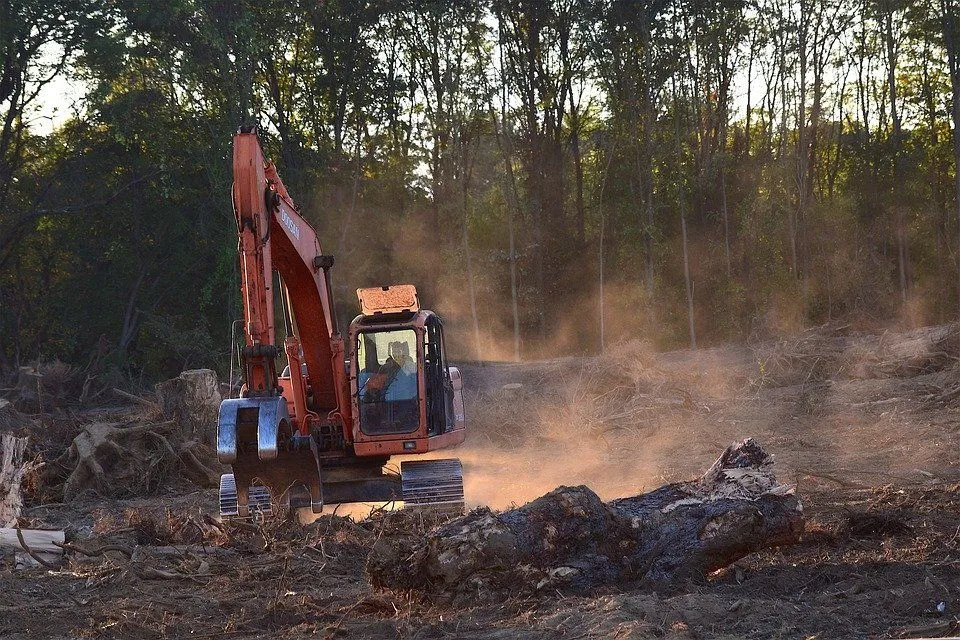
This unnatural interference with the delicate biogeochemical cycles by humans could lead to drastic consequences in the very near future.
References (click to expand)
- Biogeochemical Cycles | Center for Science Education.
- Biogeochemical Cycles. Rutgers University Department of Marine and Coastal Sciences (archived).
- Global Biogeochemical Cycles and Ecosystems.
- Biogeochemical cycle | Definition & Facts. Encyclopaedia Britannica.
- Teacher Background: Biogeochemical Cycles. NOAA Global Monitoring Laboratory.
- Biogeochemical Cycles. Concepts of Biology. OpenStax.
- Cycles of Matter. Human Biology (Wakim and Grewal). Biology LibreTexts.
- Biogeochemical Cycles. Biology for Majors II. SUNY / Lumen Learning.