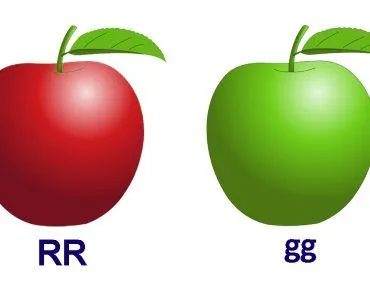
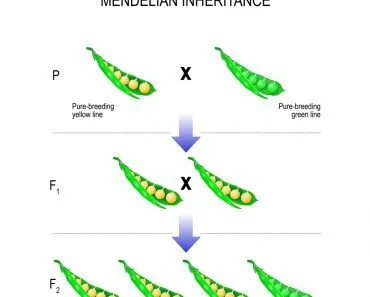
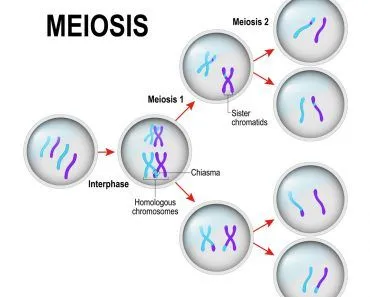
Hybrid vigor (heterosis) is the boost in growth, size, fertility, or yield seen in offspring of two genetically distinct parents. It's why mules outwork donkeys and hybrid corn out-yields its inbred parents. Hybrid vigor occurs because the hybrid offspring’s traits are enhanced due to the mixing of genetic contributions of its parents.
Hybrid vigor (heterosis) is the boost in growth, size, fertility, or yield seen in offspring of two genetically distinct parents. It's why mules outwork donkeys and hybrid corn out-yields its inbred parents. Hybrid vigor occurs because the hybrid offspring’s traits are enhanced due to the mixing of genetic contributions of its parents.
Hybrid vigor and inbreeding depression are two phenomena that were first examined in a systematic manner by legendary biologist and geologist Charles Darwin. You may have heard about inbreeding depression in discussions relating to risks associated with marrying within the family. (We have also written an article related to that subject, which you can read here).
While inbreeding depression refers to the decline in certain characteristics upon self-fertilization or certain other forms of inbreeding, hybrid vigor is quite different. In fact, it is just the opposite!
Hybrid Vigor Definition
Hybrid vigor refers to the increase in biomass, stature, and fertility of offspring compared to its parents. In simpler terms, it refers to the improved activity and survival of the hybrid offspring. In the world of genetics, the phenomenon of hybrid vigor is called heterosis.

Before we get into the details, let’s do a quick recap of what hybrid organisms actually are.
What Are Hybrid Organisms?
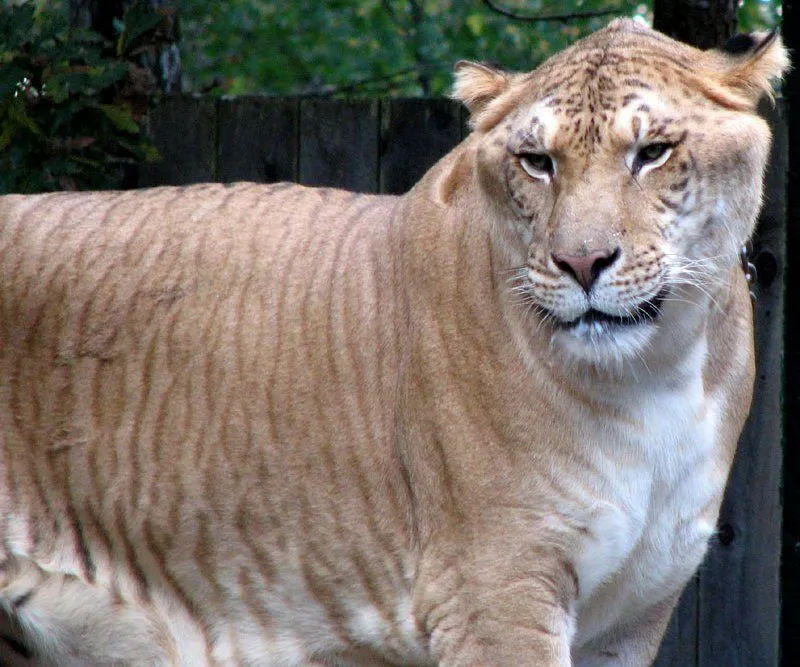
Hybrid organisms are those born as a result of the combination of the traits of two organisms of distinct varieties, breeds or species through sexual reproduction. Not just plants, but animals also form hybrids in nature. For instance, when a male lion mates with a female tiger, the resulting offspring is a hybrid – a liger.
Similarly, take the example of hooded and carrion crows. These are different groups of crows that usually mate within their own group, but sometimes, they mate with each other and hybridize. The offspring of such a union usually possess physical traits of both hooded and carrion crows.
It’s important to note that not all hybrid organisms, or simply hybrids (or crossbreeds), are intermediates between their parents; some hybrids only show hybrid vigor, which means that they can grow taller or shorter, or demonstrate other traits at a different degree of intensity than their parents,
Genetic Basis Of Hybrid Vigor
When a given population is very small, and its members inbreed, it tends to lose its genetic diversity because of inbreeding depression. Hybrid vigor is often discussed as the opposite of inbreeding depression, wherein reduced biological fitness in a given population is attributed to the breeding of related individuals.
In order to develop a healthy population, it’s essential that the members of the population interbreed with other groups.
Interestingly, however, humans have been conducting selective breeding of animals and plants before they even understood how breeding worked. However, after Mendel’s laws were proposed and accepted in the early 20th century, scientists began to explain hybrid vigor of many plant hybrids.
Two competing hypotheses came to the forefront:
Dominance Hypothesis
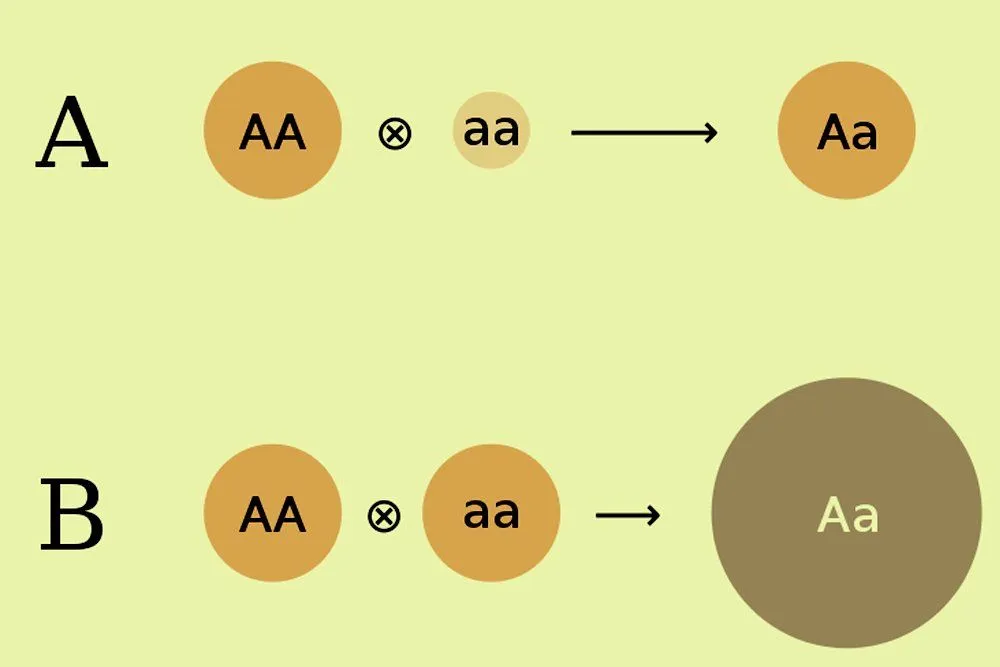
This hypothesis claims that the superiority of the hybrid can be attributed to the fact that the dominant alleles (an allele is a variant form of a given gene) from one parent can suppress the undesirable recessive alleles from the other. This hypothesis was first proposed by geneticist Charles Davenport in 1908.
Overdominance Hypothesis
According to the overdominance hypothesis, the inbred strains perform poorly in the offspring because they have a high percentage of harmful recessive alleles.
Hybrid Vigor: Effects And Examples
The effects of heterosis in plants can be classified as quantitative, physiological and biological: increase in size, yield, and genetic vigor fall under the quantitative effects of hybrid vigor. Such hybrids generally grow larger and healthier than their parents. For instance, fruit size in tomatoes, head size in cabbage, cob size in maize etc. Greater adaptability, greater resistance to diseases and pests, and greater flowering and maturity (tomato hybrids develop ‘earlier’ than their parents) fall under physiological effects, while enhanced biological efficiency falls under the biological effects of hybrid vigor in plants.
All in all, hybrid vigor can play a crucial role in agricultural practices. Many crops are planted to enhance the produce over open-pollinated varieties. In addition to that, hybrid vigor plays a crucial role in evolution as well!
Hybrid Vigor In Animals
Plants make the textbook examples, but animals show hybrid vigor too, and breeders have leaned on it for generations. The classic case is the mule, the offspring of a male donkey and a female horse. A mule pairs the horse's size with the donkey's hardiness, producing an animal with greater stamina and surefootedness than either parent. The catch, of course, is that mules are almost always sterile, so that vigor cannot be carried forward by breeding two mules together.

Beef cattle are where the effect really earns its keep. Crossbreeding two distinct breeds, say an Angus with a Hereford, gives a crossbred calf that outperforms the average of its purebred parents. According to Mississippi State University Extension, that individual heterosis typically lifts weaning weight by roughly 4 to 5 percent. The larger gains, though, come from the crossbred mother: a well-designed crossbreeding system can add up to about 24 percent more weaning weight per cow exposed, because heterosis boosts fertility, milk yield, and calf survival on top of growth. Reproductive traits respond most strongly to crossbreeding, which is exactly why commercial herds across the United States, the United Kingdom, and Australia are rarely purebred.
Dogs are the example most people get wrong. It is widely claimed that mixed-breed "mutts" are automatically healthier than purebreds thanks to hybrid vigor, but the evidence is more nuanced. A large University of California, Davis study of more than 90,000 dogs (Bellumori et al., 2013) examined 24 inherited disorders: purebreds were significantly more likely to carry 10 of them, mixed breeds were more prone to just one (a ruptured cranial cruciate ligament in the knee), and for the remaining 13 there was no meaningful difference. So crossing breeds does dilute some recessive disease risks, but it is not a blanket health guarantee, and crossing two dog breeds is not the same dramatic effect as crossing two species.
Is Hybrid Vigor A Thing In Humans?
This is one of the most searched questions on the topic, and the honest answer is: probably yes, but the effect is small and far less understood than in crops or cattle. The underlying genetics are the same. Children of parents from genetically distant populations tend to carry more heterozygous gene pairs, which can mask harmful recessive alleles in just the way the dominance hypothesis predicts.
The clearest evidence comes from a study by Zhu and colleagues, published in the journal Economics and Human Biology in 2018, which drew on China's national census data. The researchers compared the children of "hybrid marriages" (spouses born in different, geographically separated provinces) with the children of parents from the same area. After controlling for the parents' own height, education, and environment, the offspring of these unions were on average slightly taller and reached higher educational attainment, a measurable heterosis effect. Comparable patterns have long been reported for human height, where the mixing of previously isolated populations tracks with modest gains.
A word of caution belongs here, because this topic attracts a lot of pseudoscience. Hybrid vigor in humans is about genetic distance and heterozygosity, not about race, and the documented effects are subtle averages rather than a recipe for "superior" individuals. It also does not run in only one direction, which brings us to the flip side of crossing populations.
Hybrid Vigor Vs. Outbreeding Depression
If inbreeding depression is the cost of breeding too close, you might assume that crossing distant populations is always the safe bet. It usually is, but not always. When two populations have grown genetically too different, their gene combinations can clash in the offspring, lowering fitness instead of raising it. Biologists call this outbreeding depression, and it sits at the genuine opposite end of the scale from hybrid vigor.
Outbreeding depression shows up when a cross breaks apart coadapted sets of genes, or combines chromosomes that do not pair well, so the hybrid ends up less fertile or less suited to its environment than its parents. Strikingly, the very same cross can swing either way depending on conditions. A 2024 study in the journal Genetics found that one hybrid catfish cross showed strong hybrid vigor when raised in earthen ponds, yet flipped to outbreeding depression in tank culture, a vivid reminder that "more genetic mixing" does not automatically mean "better". Hybrid vigor, then, lives in a sweet spot: distant enough to mask recessive faults, but not so distant that the two parental genomes stop working together.
References (click to expand)
- Crossbreeding and Hybrid Vigor - Iowa Pork Industry Center. Iowa State University of Science and Technology
- Plant and Soil Sciences eLibrary - passel.unl.edu:80
- Defining a species - Understanding Evolution. The University of California, Berkeley
- Don’t Ignore Hybrid Vigor | North Carolina Cooperative Extension - sampson.ces.ncsu.edu
- Hybridization. Stanford University
- Crossbreeding Systems for Beef Cattle. Mississippi State University Extension Service
- Purebred dogs not always at higher risk for genetic disorders, study finds. University of California, Davis
- Hybrid marriages and phenotypic heterosis in offspring: Evidence from China. Economics and Human Biology (2018). PubMed
- From heterosis to outbreeding depression: genotype-by-environment interaction shifts hybrid fitness in opposite directions. Genetics (2024). Oxford University Press