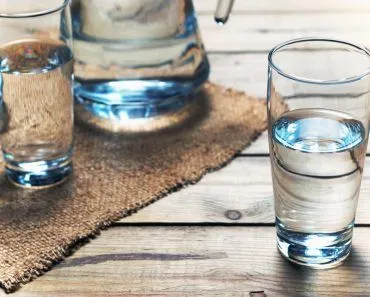
Most “experts” have converged on the consensus that lukewarm water temperature lies between 98º and 105º F, although there are some skeptics who believe it is colder.
How often have you used the word ‘lukewarm’ to either describe someone who’s not as excited as you are or the warmth of the water that springs from the head of your shower? After years of deliberate practice, you’ve mastered the art of rotating the knobs to that perfect temp. Just the right amount so that the sudden splash of water is neither too hot to traumatize you nor too cold to send shivers down your spine!
The warmth of lukewarm or tepid water lies in the Goldilocks Zone; just the right amount to freshen your morning and kickstart the day. However, have you ever wondered how hot is that “right” hot? Have you ever considered the actual temperature of something described as lukewarm?

Lukewarm Water Temperature
So how hot is lukewarm water, really? Most experts settle on a range of about 37 to 41°C (98 to 105°F). That’s warmer than the water your kitchen tap pours out on a cool morning, but cooler than the steaming mug you wrap your hands around in winter. A smaller camp pushes the range a touch lower, somewhere between 27 to 32°C (80 to 90°F), arguing that anything closer to body temperature already crosses into “warm.” Either way, lukewarm is the narrow band where water feels noticeably above room temperature without ever flirting with hot.
That 37°C anchor isn’t a coincidence. Your body’s core temperature sits right around 37°C (98.6°F), so water in the lukewarm range feels gently above neutral the moment it touches your skin. It’s the temperature your tongue accepts without complaint, the temperature your hands don’t yank back from, and the temperature recipes call for when they ask you to “warm” the milk or “soften” the butter without actually cooking either.
Lukewarm Water vs Cool, Warm, Hot, and Room Temperature Water
A lot of the confusion around lukewarm comes from the words sitting next to it on the dial. “Room temperature,” “warm,” “hot”: they’re all points on the same spectrum, and the boundaries are fuzzier than you’d think. Here’s a rough map of where lukewarm fits in:
| Description | Approximate temperature | What it feels like |
|---|---|---|
| Cold tap water | 4 to 15°C (40 to 60°F) | Crisp, drinkable cold |
| Cool | 15 to 20°C (60 to 68°F) | Refreshing, slightly cool to the touch |
| Room temperature | 20 to 22°C (68 to 72°F) | Neutral, the water sitting in your glass overnight |
| Lukewarm / tepid | 37 to 41°C (98 to 105°F) | Faintly warm, body-temperature-ish |
| Warm | 41 to 49°C (105 to 120°F) | Noticeably warm bathwater |
| Hot tap water | 49 to 60°C (120 to 140°F) | Uncomfortable for a long touch, scalding for kids |
| Hot (cooking, tea) | 70°C and above (160°F and above) | Steam rising, painful at any duration |
A few useful landmarks. A comfortable shower sits around 38 to 41°C (100 to 106°F), which is essentially lukewarm pushing into warm. The U.S. Consumer Product Safety Commission recommends setting home water heaters no higher than 49°C (120°F) precisely because anything hotter slides quickly into burn territory. And “room temperature” in a recipe means the bottle on your counter, not the lukewarm water you’re being asked to use for the yeast.
Tepid and lukewarm are interchangeable in everyday English, by the way. “Tepid” tends to show up in older cookbooks and scientific writing; “lukewarm” is the kitchen-table version. They mean the same thing.
How To Tell If Water Is Lukewarm Without A Thermometer
You almost never need a thermometer for this. Lukewarm water sits so close to body temperature that your skin is already a decent gauge. You just have to know what you’re feeling for.
The cleanest test is the inside of your wrist. Run a few drops there. If the water feels neutral or barely-there, it’s around body temperature, which is the low end of lukewarm. If it feels distinctly warm but you can hold your wrist under it for a full ten seconds without pulling back, you’re in the sweet spot. The moment your wrist flinches, you’ve crossed into “warm” or “hot.”
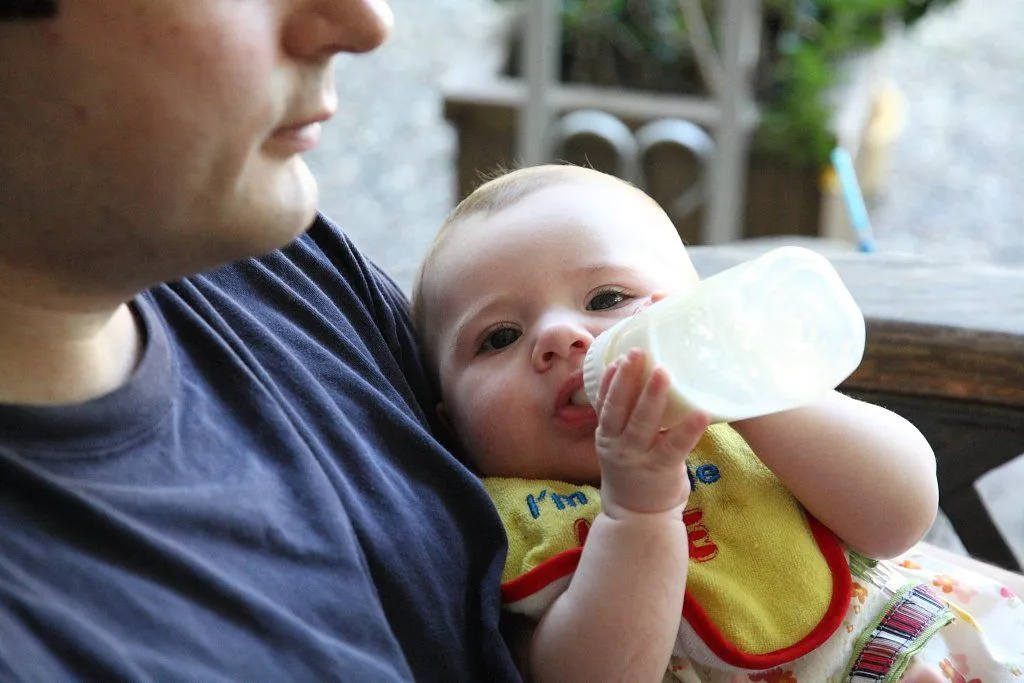
The baby bottle test works on the same principle and is the most familiar version most people have already used: a drop on the inside of your wrist should feel neutral, not hot. New parents have been calibrating lukewarm this way for generations.
A few other useful checks:
- Touch the outside of the glass or mug. If the container is gently warm without being uncomfortable to hold, the water inside is in the lukewarm zone.
- Watch for steam. Lukewarm water does not steam. Visible steam means you’re at least 50°C (120°F), well past lukewarm.
- Compare to a freshly run hot tap. If the water is noticeably cooler than the hot tap but distinctly warmer than your cold tap, it’s lukewarm.
A mild fever runs about 38 to 39°C (100 to 102°F), which sits squarely inside the lukewarm range. So if the water feels “feverish warm” on your skin, you’ve nailed it.
How To Make Lukewarm Water At Home
If a recipe or remedy calls for lukewarm water and you don’t feel like checking with a thermometer, there are a few reliable shortcuts:
- The two-to-one mix. Combine two parts cold or room-temperature water with one part freshly boiled water. The result lands in the 35 to 40°C (95 to 105°F) range almost every time, which is exactly the lukewarm sweet spot. This is the method most bakers use when activating yeast.
- Run the hot tap, then wait. Run your hot tap until it’s actually hot, fill the vessel, then let it sit for a minute or two. By the time you can comfortably hold the glass without flinching, it has cooled into the lukewarm range.
- Microwave a glass of room-temperature water for 15 to 20 seconds. Stir, do the wrist test, and add a few seconds if it’s still cool. Stop the moment you feel warmth on the wrist test, because overheating happens fast in a microwave.
- Mix hot kettle water with cold tap water in roughly equal parts. A quick blend of freshly boiled and cold-tap water also lands close to lukewarm, though the ratio depends on how cold your tap runs.
For lukewarm lemon water (a popular morning drink), the same rules apply: aim for water that feels barely warm on the wrist, then squeeze in the lemon. Water that’s too hot will dull the vitamin C in the lemon and pull a bit of bitterness out of the peel oils, so you want it warm enough to feel pleasant but cool enough to drink straight away.
For baking specifically, anything in the 35 to 43°C (95 to 110°F) range will activate dry yeast without killing it. Water hotter than about 49°C (120°F) starts to damage yeast cells; water cooler than about 27°C (80°F) slows activation to a crawl.
The Interesting History Of ‘Lukewarm’
At first, the magnitude of warmth seems subjective. If you investigate the origins of the word, you would find that the word “luke” is derived from the Middle English word “lew”, which meant slightly warm or “tepid”.
Tracing back further, you’ll find that “lew” itself was derived from an Old English adverb “hleowe”, which meant “warm” or “sunny”. Sunny is an appropriate description for the refreshing warmth of spring, which could readily be associated with lukewarm, as seasons go.
Similarly, the word “tepid” comes from “tepidus”, which is a Latin word meaning “moderately warm”. This, in turn, shares a common origin with the Sanskrit word “tapati” (meaning “makes warm”), both deriving from the Proto-Indo-European root *tep-.
Now, let’s look into some of the benefits and applications of lukewarm water.
Benefits Of Lukewarm Water
Better For Digestion And Easing Of Constipation
Drinking lukewarm water is a long-standing morning ritual in many traditions, but its actual effects on the body come down to ordinary physiology. Warm liquid in the stomach has a vasodilating effect: the blood vessels in the gut widen, circulation through the digestive system picks up, and food moves along a little more smoothly.
This is the bodily response of widening the blood vessels and stimulating the flow of blood towards the intestines, which in turn bolsters the digestive process. That’s why some doctors suggest sipping warm water on an empty stomach for people prone to constipation.
There’s a real upper limit on “helpful” here. The U.S. Consumer Product Safety Commission recommends keeping household hot water at or below 49°C (120°F), and the same threshold is a reasonable ceiling for drinking. Water above that range can scald the soft tissues of the mouth, throat, and esophagus on contact, and burn risk climbs steeply with each extra degree.
Clearing Out Your Sinuses
One of the most effective home remedies for a stuffy nose is lukewarm or warm water. A widely cited study in the journal Chest measured nasal mucus velocity before and after subjects sipped hot water, cold water, or hot chicken soup. Hot water sipped from a cup raised mucus velocity from 6.2 to 8.4 millimeters per minute. Cold water did the opposite, slowing it from 7.3 to 4.5 millimeters per minute. The warmth, not the chicken, is what gets things moving, and an earlier paper from the Journal of Laryngology & Otology attributes the effect to vasodilation in the nasal mucosa.

Good For Dental Care
Interestingly, lukewarm water can also help in improving dental hygiene. It turns out that tepid water is better than cold water for teeth and restorations. If you have fillings due to cavities, certain white filling material contracts if the water used while rinsing is too cold. It may even de-bond from the tooth, in some cases. However, remember that going to the opposite extreme and using very hot water is detrimental too! You’ll need to consult your dentist for the right lukewarm water temperature range to maintain the right dental hygiene for your teeth
Pain Relief
Drinking lukewarm water improves blood flow to the tissues, helping to relax the muscles. This can help with pain associated with joint aches or menstrual cramps.
Cooking
Lukewarm temperatures find applications in cooking too, especially for dishes involving yeast. When cooking a dish that includes yeast, one is required to add lukewarm liquid (usually water or milk) to activate the yeast. Cold water deprives the yeast of the necessary energy to rise, while overly hot water will over-activate and kill the yeast.
Only liquid that is lukewarm will activate the yeast, which will react with the sugar in the dough to create carbon dioxide and cause the dough to rise. Recipes usually suggest that such an optimal temperature be achieved by mixing two parts room-temperature water with one part boiling water and then shouting voila! when you’re done.
References (click to expand)
- Saketkhoo, K., Januszkiewicz, A., & Sackner, M. A. (1978, October). Effects of drinking hot water, cold water, and chicken soup on nasal mucus velocity and nasal airflow resistance. Chest, 74(4), 408-410.
- Cole, P. (1954, September). Respiratory Mucosal Vascular Responses, Air Conditioning and Thermo Regulation. The Journal of Laryngology & Otology. Cambridge University Press (CUP).
- U.S. Consumer Product Safety Commission. Tap Water Scalds (Publication 5098).
- Schaefer, T. J., & Szymanski, K. D. Thermal Burns. StatPearls Publishing. NCBI Bookshelf NBK430773.