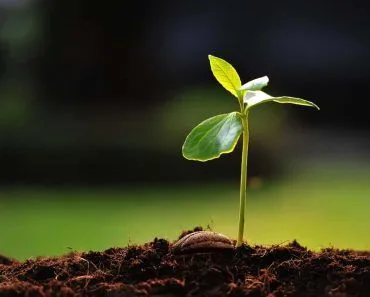
Thigmotropism is the directional growth of plants in response to the stimulus of touch. A plant alters its normal direction of growth as the result of physical contact with an external object.
Plants, like us, rely on their senses to survive. Their activities are largely controlled by external stimuli, which makes them good at adapting to their environment. They react to stimuli in various forms, including light (phototropism), water (hydrotropism), gravity (geotropism), chemicals (chemotropism) etc.
Like humans, another thing that plants react to is touch. In fact, some plants are remarkably sensitive to physical contact. Certain tendrils can detect forces as small as a few milligrams and begin coiling within seconds of touching a support.
Thigmotropism Definition
Thigmotropism is defined as the directional movement of plants in response to the stimulus of touch. This basically means that a plant alters its normal pattern or direction of growth or movement as the result of an external touch stimulus. As with other forms of tropism, this can be both positive or negative.
When a plant grows towards the stimulus of touch, it is said to exhibit positive thigmotropism. Conversely, when a plant grows away from the stimuli, it exhibits negative thigmotropism
Positive Thigmotropism
This type is exhibited by parts of the plant like the tendrils. Tendrils are specialized leaves, stems or petioles of plants. They are used for support in climbing plants. They tend to coil around the object, which acts as the touch stimulus, thus “climbing” on the object.
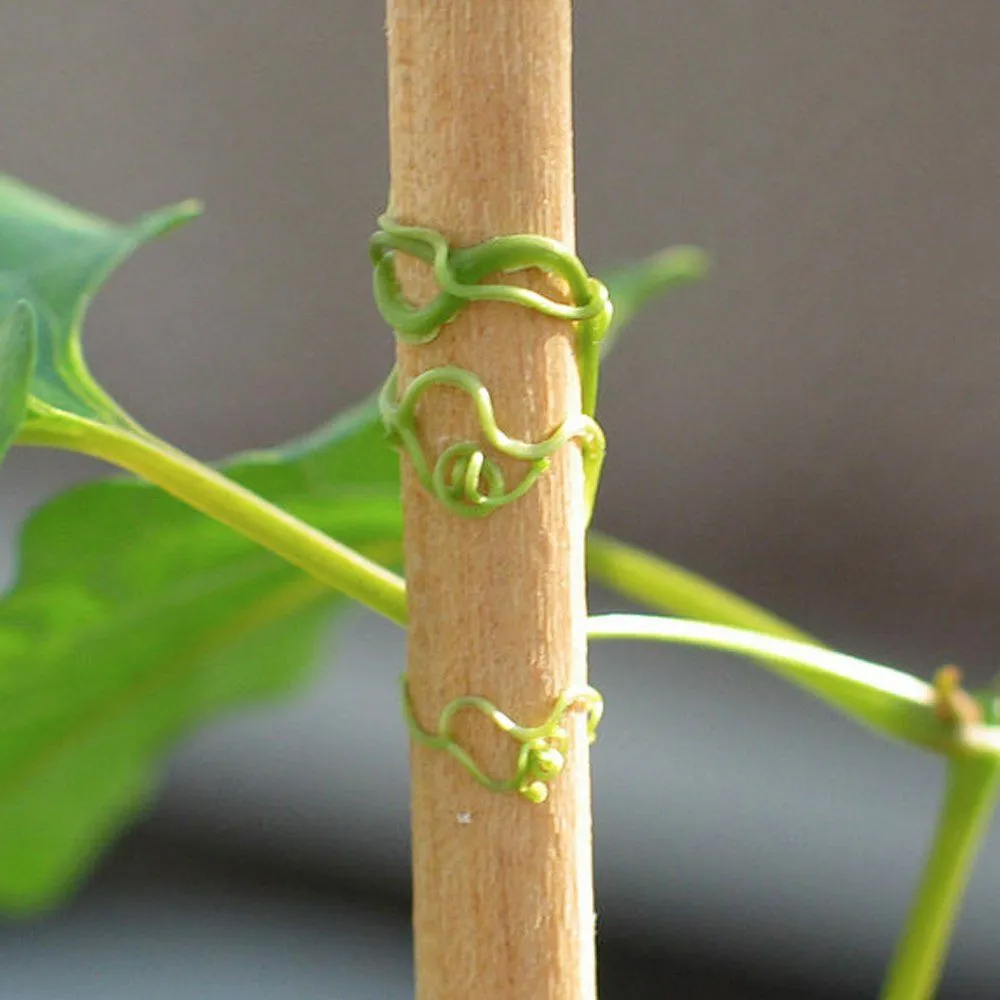
When growing, one side of the tendril touches the object, for instance, a stick. This signal is transmitted to the side that isn’t in contact with the stick and curling occurs. The rate of growth on the non-contact side increases, while the rate slows down on the side that is in contact with the stick. This is called differential growth. It leads to elongation of the non-contact side, which eventually leads to curling of the tendril.
This phenomenon is also responsible for plants like ivy, which cling to fences or some form of support and grow along it.
The mechanism behind thigmotropism involves the plant hormone auxin. When a tendril touches an object, the touch signal causes auxin to migrate to the non-contact side. The higher concentration of auxin on that side stimulates cell elongation, causing the tendril to bend and coil around the support. Additionally, calcium ions play a key role in the initial detection of touch. Specialized mechanoreceptors in cell membranes open calcium channels upon contact, triggering the signaling cascade that leads to differential growth.
Negative Thigmotropism
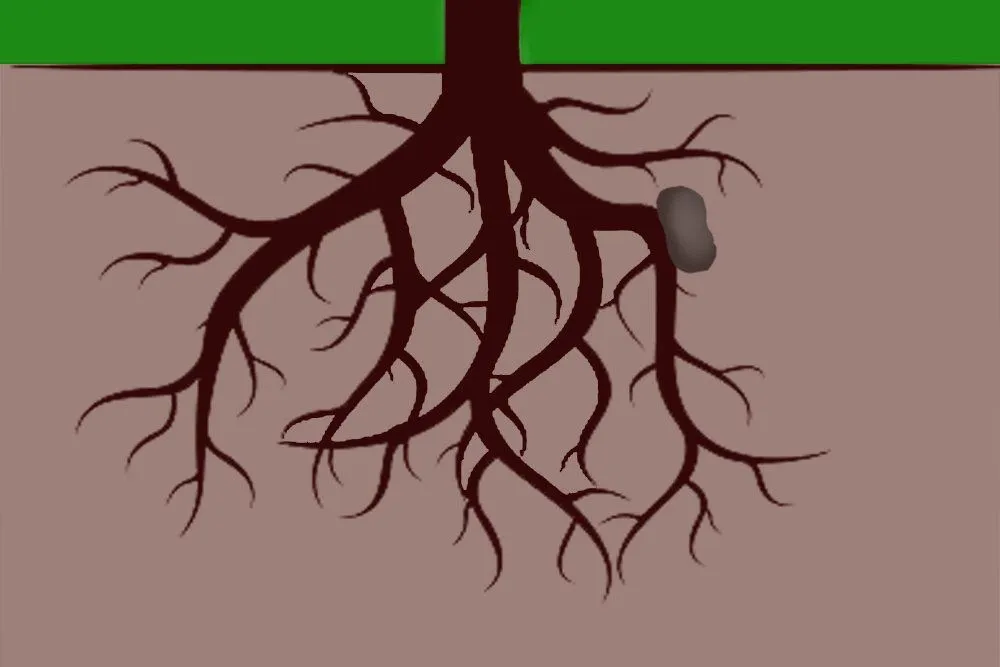
When a plant, or a part of it, grows away from the touch stimulus, it is called negative thigmotropism. This is shown by the roots of plants. While growing, if the roots touch something, they change their direction and grow away from the touch stimulus. This helps them to navigate under the soil and grow into areas of least resistance.
Negative thigmotropism in roots is sometimes strong enough to trump other factors, like the pull of gravity. For example, in a vertical bean root, the stimulus of touch is enough to change the direction of growth of the vertical roots.
What Are Some Examples of Thigmotropism?
Most of the well-known examples of thigmotropism are cases of positive thigmotropism, where a part of the plant grows towards and wraps around whatever it touches. Almost all of these are climbing plants that use tendrils or twining stems to haul themselves upwards in search of light:
- Pea (Pisum sativum) and sweet pea (Lathyrus odoratus): The slender tendrils at the tips of the leaves curl around any stick, wire or neighboring stem they brush against.
- Grapevine (Vitis vinifera): Tendrils coil tightly around trellis wires and supports, anchoring the heavy vine in place.
- Passionflower (Passiflora) and cucumber (Cucumis sativus): Both grip supports with spring-like coiled tendrils, which can develop enough tension to lash the plant firmly to its substrate.
- Twining stems: Plants such as morning glory, honeysuckle and bindweed do not have separate tendrils. Instead, the whole growing tip of the stem circles around a support and winds up it.
- Ivy and Virginia creeper: These cling to walls and fences and grow along the surface they touch.

The classic example of negative thigmotropism is the growth of roots. As a root pushes through the soil and meets a stone or another hard obstacle, it grows away from the contact and threads its way around the barrier into looser soil. This response can even override the root's tendency to grow downwards with gravity, steering the root through the path of least resistance.
Positive vs. Negative Thigmotropism: What Is the Difference?
Both types are responses to the same stimulus, touch, and the only thing that separates them is the direction of the growth relative to the object:
- Positive thigmotropism is growth towards the object. The plant part bends into the point of contact and curls around it. Tendrils, twining stems and climbing vines are the textbook cases, and the response helps the plant grab onto a support and climb towards sunlight.
- Negative thigmotropism is growth away from the object. The plant part turns aside from the point of contact. Roots are the textbook case, and the response helps them dodge obstacles and find the easiest route through the soil.
So if someone asks whether thigmotropism is positive or negative, the honest answer is that it can be either. A single plant often shows both at once: a climbing pea curls its tendrils around a cane (positive) above ground while its roots steer around rocks (negative) below it.
Thigmotropism vs. Thigmonasty: Why Mimosa Does Not Count
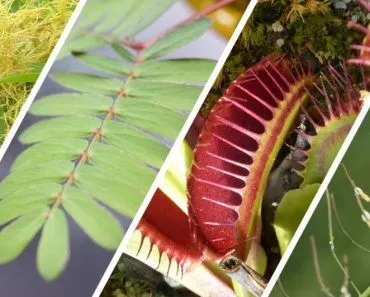
A common misconception is that the snapping shut of the Mimosa pudica, or touch-me-not plant, is an example of thigmotropism. It is not. That rapid folding of the leaves, along with the closing trap of a Venus flytrap, is a different response called thigmonasty.

The difference comes down to two things, direction and speed:
- Thigmotropism is directional and slow. The direction of the growth depends on where the plant was touched, and it plays out over minutes to hours as cells actually grow. It is also a more or less permanent change in shape.
- Thigmonasty is non-directional and fast. The movement is the same no matter which side is touched, it happens within a second or two, and it is driven by sudden changes in water pressure (turgor) inside cells rather than by growth. Once the threat passes, the plant resets, so the movement is reversible.
In short, a curling pea tendril is growing in a particular direction (thigmotropism), while a folding Mimosa leaf is briefly deflating its cells in a set pattern (thigmonasty).
Plants depend on a number of biotic and abiotic factors to moderate their growth. These factors jointly influence the plant, occasionally taking precedence over each other. There is no fixed rule as to which factor dominates over another; it simply differs from plant to plant.
References (click to expand)
- Thigmotropism - Wikipedia. Wikipedia
- Thigmotropism in Tendrils - Biology - Kenyon College. Kenyon College
- Tendril. Encyclopaedia Britannica
- Sensitive plant (Mimosa pudica). Encyclopaedia Britannica
- Plants on the Move: Towards common mechanisms governing mechanically-induced plant movements. Plant Signaling & Behavior. PMC.
- Jaffe MJ. Physiological Studies on Pea Tendrils. Plant Physiology. PubMed.