Table of Contents (click to expand)
Solid waste from our homes is hauled to landfills, burned in waste-to-energy incinerators, or sorted for recycling, while a small share is treated by plasma gasification. Wastewater flushed down our drains travels through sewers to treatment plants, where primary, secondary and tertiary stages clean it before it is released back into rivers and the sea.
Ever wondered where the black bags of trash go after they’re taken out of your home? Waste management is a global issue and no nation on the planet can say that this problem has never bothered them. According to the Environmental Protection Agency, each person in the United States alone generates about 4.9 pounds (2.2 kg) of municipal solid waste every day, which adds up to roughly 292 million tons a year. It may amaze you to learn that high-income countries are home to only 16% of the world’s population yet generate roughly 34% of its waste, much of it paper, cardboard and packaging.
It’s ironic that as countries become more urbanized, their volume of waste tends to climb. That means more paper, packaging from consumer products, newspapers and magazines, disposable takeaway food containers, one-time-use plastics, diaper waste and so on. According to the World Bank’s What a Waste 2.0 report, wealthier and more urban societies generate far more dry, recyclable waste per person than rural or low-income ones.
Methods Of Waste Disposal
Landfills
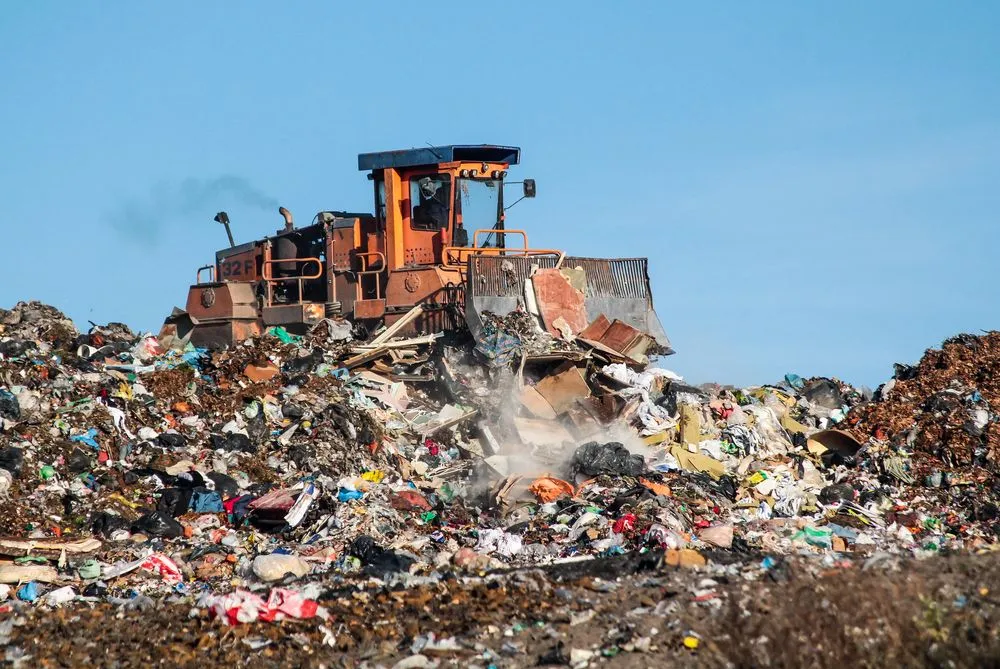
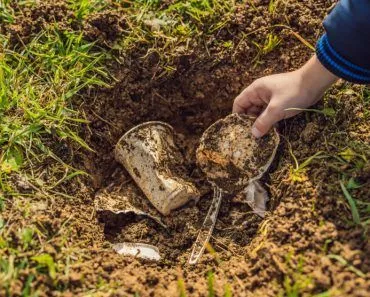
Landfills, as the name suggests, are sites where waste is buried in the ground, usually well away from homes and water supplies. A modern sanitary landfill is far from a simple hole in the ground, though. It must be carefully engineered so that hazardous material does not leak out and contaminate the environment. Landfills are used mainly for solid waste, and there are several types, depending on what is being dumped.
Municipal landfills are for household wastes, bioreactor landfills are used for organic waste, and industrial waste landfills are used for dumping commercial and industrial waste.
C&D debris landfills are for construction waste and demolition debris landfills are specifically used for waste generated from constructing buildings, bridges and renovation projects. The waste comprises metals, heavy materials, glass, concrete and wood.
Coal Combustion Residual landfills (CCR), as the name suggests, are specifically used for waste generated by burning coal.
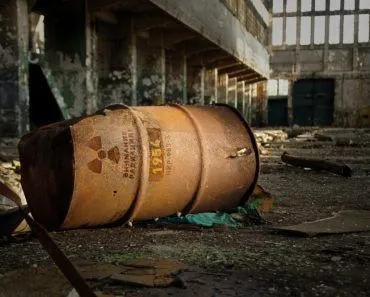
Hazardous waste landfills are used for hazardous waste like batteries, paints, flammable liquids and other chemicals, fluorescent lamps, motor oils etc.
So how does a landfill stop all that buried trash from poisoning the ground beneath it? Modern landfills are lined at the bottom with thick layers of clay and tough plastic. As rain trickles through the waste, it picks up dissolved chemicals and forms a nasty liquid called leachate, which the liner traps so it can be piped out and treated instead of seeping into groundwater. Meanwhile, the organic waste buried inside has no air to rot in, so bacteria break it down and release landfill gas, which is roughly half methane, a potent greenhouse gas. Many sites now drill a network of wells into the buried waste to capture that gas and burn it for electricity, turning a pollutant into power.
Incineration Or Combustion
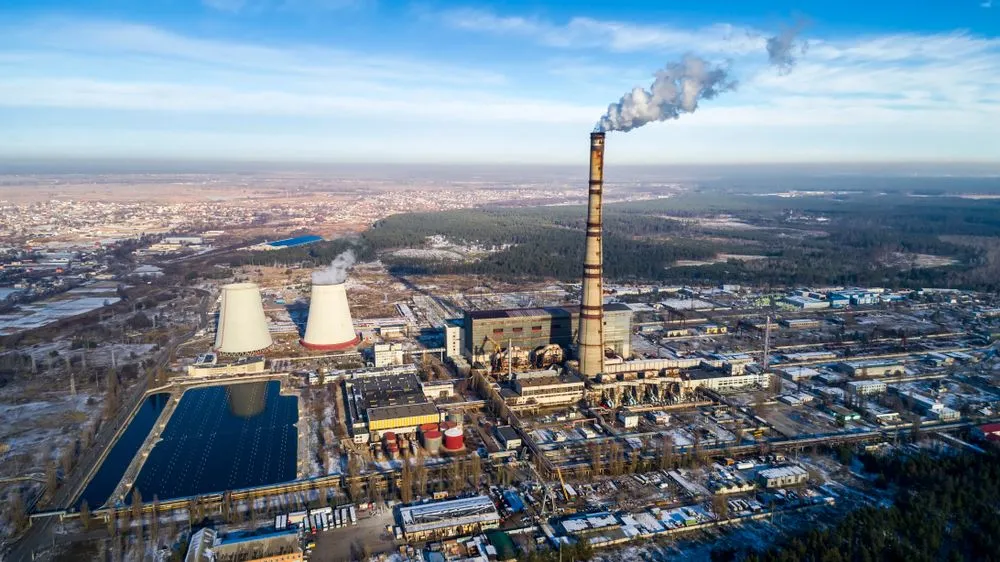
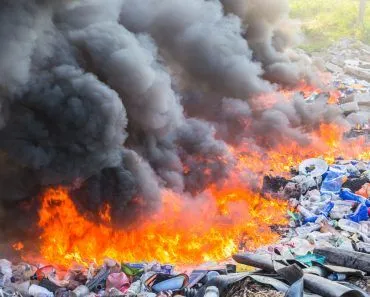
Incineration is a thermal treatment in which waste is burned at high temperatures, and the heat is used to boil water, spin a turbine and generate electricity. This is why these plants are often called waste-to-energy facilities. The smoke produced is not simply vented out; it passes through an air-pollution control system that scrubs out toxins and particles before the cleaned gas leaves the smokestack.
Incineration is especially common in land-scarce places like Japan, where there is little room to spare for landfills. According to the U.S. Energy Information Administration, burning shrinks the volume of garbage by about 87%, turning 2,000 pounds (about 900 kg) of trash into just 300 to 600 pounds of ash. That does not let incineration replace landfills entirely, since the leftover ash still has to be buried, but it dramatically cuts how much space the waste takes up. Incineration is also valuable for safely destroying hospital and other potentially infectious waste.
Plasma Gasification
Plasma is an extremely hot, electrically charged gas that readily conducts electric current. It is often called the ‘fourth state of matter’, and it occurs naturally in lightning and in the searing gases at the surface of the Sun. Plasma gasification, a technology developed over decades by the Westinghouse Plasma Corporation, uses a plasma arc to treat municipal and industrial waste. Like incineration, it shrinks the volume of waste heading to landfills, but it does not simply burn the trash. Instead, the intense heat breaks organic waste down into a fuel gas called syngas (a mix of hydrogen and carbon monoxide), while the inorganic leftovers are melted into an inert, glass-like solid known as slag.
Where Does Our Wastewater Go?
So far we have followed the solid trash, but not everything you throw away comes in a black bag. Every time you flush the toilet, drain the bath or empty the sink, you create wastewater, and it has a journey of its own. From your home it flows through a network of underground sewers to a wastewater treatment plant (also called a sewage works), where, according to the U.S. Environmental Protection Agency, it is cleaned in stages before being returned to the environment.
In primary treatment, the dirty water sits in large settling tanks. Screens first catch big debris like rags and grit, then heavier solids sink to the bottom as sludge while greases and oils float to the top to be skimmed off. Next comes secondary treatment, where biology does the hard work. The water is pumped into aeration tanks and mixed with air and helpful bacteria. This is the activated sludge process, and those bacteria feast on the dissolved organic matter, dramatically lowering the pollution load. Many plants then add a tertiary (or advanced) stage to polish the water further, removing leftover nutrients like nitrogen and phosphorus and disinfecting it with chlorine, ultraviolet light or ozone to kill off harmful microbes.
Only after this multi-step clean-up is the treated water, now called effluent, released back into a river, lake or the sea. The sludge collected along the way is not wasted either; it is often processed into biosolids that can fertilize farmland, or broken down in sealed tanks that capture methane to generate power, much like a landfill does.
The 3 R’s – Reduce, Reuse And Recycle
Reduce: The first step before waste accumulation is to stop it in the first place by not producing waste whenever possible. Therefore, Reduce is the first R in the realm of waste management. Better not create so you don’t have to destroy or manage it at all! Reducing waste saves billions of dollars for every country. The simple way of doing this is to operate based on your needs, rather than your wants. Buy only what is necessary, shop for high-quality items, don’t indulge in fast fashion and use a minimal amount of packaging material.
Reuse: Trash for you can be a treasure for someone else. We are conditioned to think that old things are useless, spoiled and ugly. Remember back in your school days when you would have projects like ‘making something beautiful out of waste’ and you would get all creative and dorky? It’s time to bring that dorky side of us out again for the sake of the environment. Packing materials can be reused. Carry reusable cloth bags instead of buying plastic bags every time you go to the store.
Recycle: Things like paper, plastic, aluminum and cardboard can be recycled. Recycling has created an industry within itself. In order to create something from recycled products, a new manufacturing industry must be set up. This, in turn, will lead to the creation of more jobs. In fact, recycling and reprocessing a given amount of material supports many more jobs than simply burying it in a landfill, by some estimates several times as many for every 10,000 tons handled. Recycling can be started at home by separating your waste from recyclable materials. There are drop-off centers made especially for this purpose where you can drop off your recyclable materials so they can be handled properly.
Isn’t it jaw-dropping that governments need to spend billions of dollars just managing the waste created by every country? This problem is so massive that we need to allocate huge chunks of land and set up entire industries and plants to treat our waste and do our best to keep this planet clean.
References (click to expand)
- National Overview: Facts and Figures on Materials, Wastes and Recycling. US EPA
- What a Waste 2.0: A Global Snapshot of Solid Waste Management to 2050. The World Bank
- Basic Information about Landfills. US EPA
- Basic Information about Landfill Gas. US EPA
- Waste-to-energy (MSW) in depth. U.S. Energy Information Administration
- Primer for Municipal Wastewater Treatment Systems. US EPA
- Plasma gasification of municipal solid waste. Discover Sustainability (Springer Nature)
- F Abdul-Rahman. Reduce, Reuse, Recycle: Alternatives for Waste Management. New Mexico State University
- Waste Management. Environmental Health & Safety, University of California, Riverside