Table of Contents (click to expand)
Yellow journalism is a sensational, exaggerated style of news reporting that prizes eye-catching headlines over facts to lure readers and boost circulation. The term comes from the 1890s circulation war between Joseph Pulitzer’s New York World and William Randolph Hearst’s New York Journal. Their inflammatory coverage of Cuba helped push the United States into the Spanish-American War in 1898.
Imagine opening the newspaper in the morning to find a myriad of stories splashed across its pages. You see a lot of crime headlines and think, “Our city has become so unsafe”. Over the next few weeks, they stop printing as many stories about crime and you suddenly feel safer again.
The media, in its various forms, is a time capsule. It captures the world in words and images at one particular moment. It shows us the current situation of the city, country and world we live in, while also shaping the way we feel about everything. In addition to reporting the news to the current audience, it also captures the moment for posterity. Thus, the media is not only in a position to shape what we believe today, but is also capable of perpetuating a distorted image of today’s events for generations to come.

What Is Yellow Journalism?
Yellow journalism is the term used for a style of journalism based on presenting sensationalized news to try and make the newspaper more exciting, with the ultimate aim of luring more readers and increasing circulation. It uses eye-catching, multicolumn headlines, oversized pictures and dominant graphics, and is often based on distorted or incomplete facts. It often cooks up fake stories and interviews that tap into emotions and entertain, rather than educate.

The question is, why is this sensational style of reporting called yellow journalism? The answer lies, as it so often does, in history.
The Yellow Kid
The concept of a sensational press expanded considerably during the late nineteenth century. Media moguls wielded a lot of power and influenced politics in a major way through their newspapers. They painted a picture of national and global events in a way that would ensure that the public took a particular side.
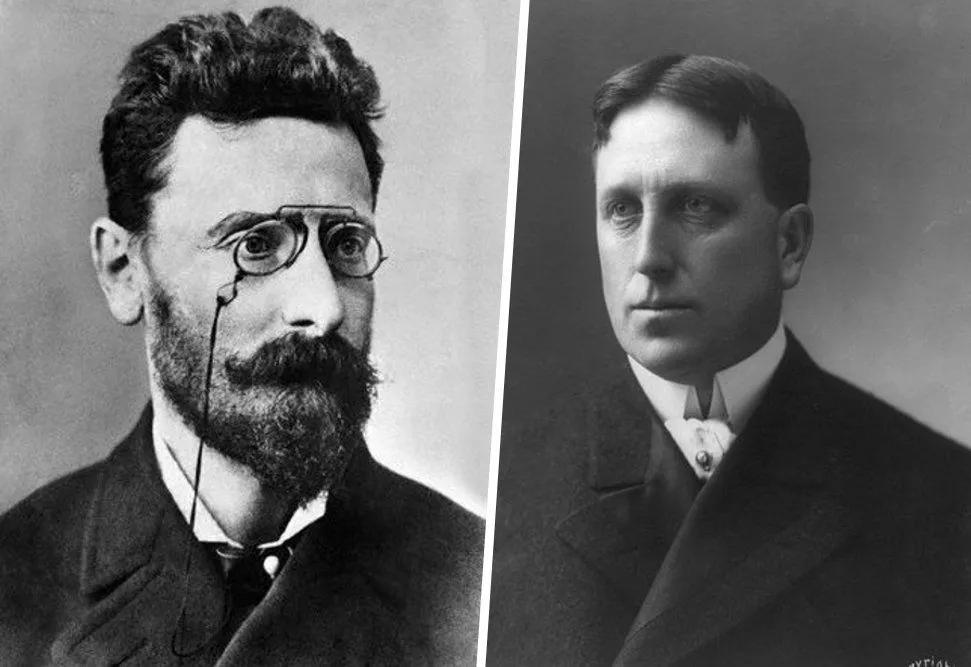
The two men accredited with the rise of this type of journalism were arch-rivals, Joseph Pulitzer of the New York World and William Randolph Hearst of the New York Journal. In a heated battle for the readers’ dollar, the two men printed exaggerated headlines loaded with excitement and semi-fabricated stories.
Pulitzer’s publications came with a cartoon strip called “Hogan’s Alley”, created by the cartoonist R.F. Outcault, of whom Hearst was a huge fan. This cartoon, and especially the main character ‘Yellow Kid’, became one of the many objects fought over between Hearst and Pulitzer during their long rivalry. Hearst later hired Outcault away from Pulitzer. However, unwilling to give up his trademark cartoon, Pulitzer hired another cartoonist, George Luks, to keep drawing the character, leaving New York with two rival Yellow Kids, one in each paper, perfectly symbolizing the rivalry between them.
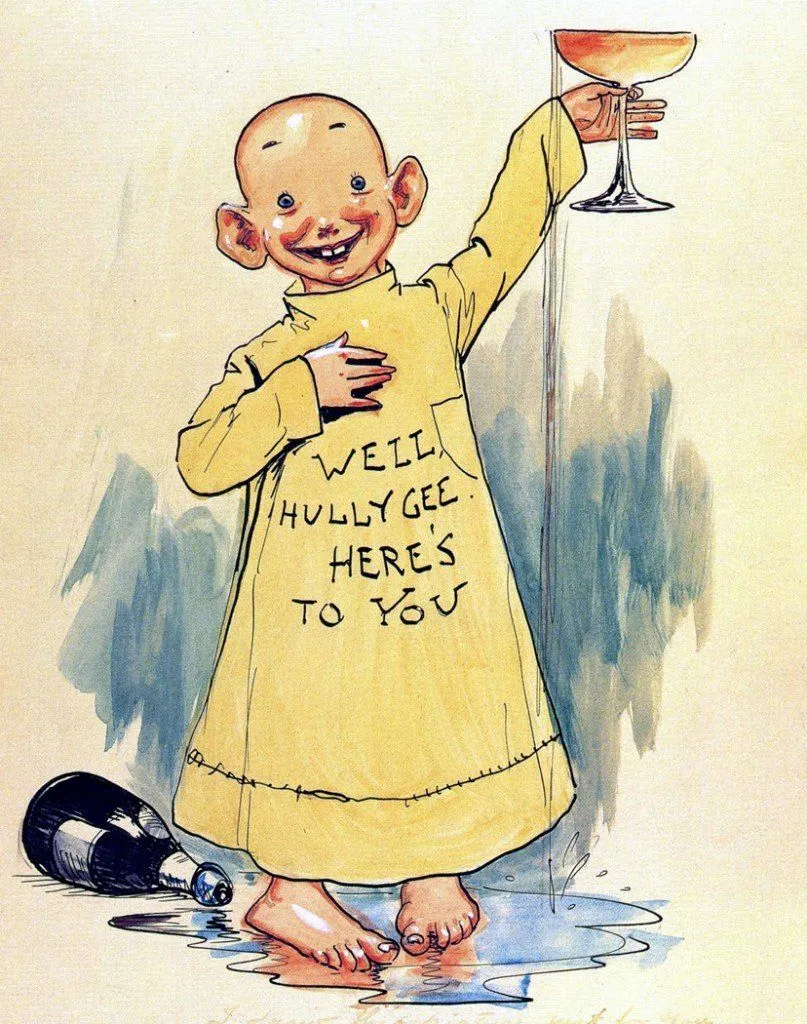
With so much competition, the news became more and more dramatized, so as to stir the most interest in the public and sell more newspapers. The Yellow Kids were used to sensationalize news and bring disrepute to other newspapers.
This widely publicized rivalry led to the label ‘Yellow Journalism’.
Yellow Journalism And The Spanish-American War
Cuba had long been a Spanish colony, but the revolutionary movement in Cuba, which had been simmering gently for most of the nineteenth century, intensified during the 1890s.
Pulitzer and Hearst dedicated a great deal of attention and effort towards the Cuban struggle for independence, at times accentuating the harshness of Spanish rule by printing inflammatory stories of brutality, cruelty and inadequate facilities. They stationed reporters and artists in Cuba to better understand the situation and monitor the events more closely. Among them was the eminent illustrator Frederic Remington, who, the story goes, cabled his boss Hearst in 1897 to say there was not much going on and asked to come home, only for Hearst to fire back: “You furnish the pictures and I’ll furnish the war.” It is the most famous line ever attributed to yellow journalism, yet historians treat it as almost certainly apocryphal. No copy of either telegram has ever surfaced, Hearst denied sending it, and the tale traces back to a single reporter who was in Europe at the time. True or not, it captures exactly how Hearst’s critics saw his appetite for a Cuban war.
Hearst played a major role in the American involvement with Cuba, as the war was a prime opportunity to boost newspaper sales. His New York Journal published a stolen private letter (the de Lôme letter) on February 9, 1898, written by Enrique Dupuy de Lôme, the Spanish minister to the United States, to Spain’s foreign minister. In it, de Lôme dismissed then-President McKinley as weak and a cheap politician. The leak inflamed American anger towards Spain and fed the public’s willingness for war.
On February 15, 1898, an explosion tore through the hull of the U.S. battleship Maine, sinking it in Havana harbor and killing about 260 of the roughly 350 men aboard. The cause was never proven at the time, but Pulitzer and Hearst, who had been thriving for years by fanning anti-Spanish opinion in the United States, published rumors blaming Spain for plotting the blast. Modern investigations, including a 1976 study led by Admiral Hyman Rickover, concluded the explosion was most likely an accidental internal fire in a coal bunker rather than a Spanish mine, though the question has never been settled beyond all doubt.

The rise of yellow journalism helped create an environment conducive to an international conflict, though historians agree it did not, by itself, cause the war. Prompted by mounting public pressure for intervention, the United States declared war on Spain in April 1898. Pulitzer and Hearst finally reached their goals: increased circulation, higher profits and war.
Yellow Journalism Today
Yellow journalism in the late nineteenth century was characterized by headlines that often stretched across the front page, the generous and imaginative use of pictures, graphic representations, the Sunday supplement, bold and experimental layouts sometimes enhanced by the use of color and other innovative techniques. There was a huge tendency to rely on anonymous sources and fake stories, as well as a penchant for self-promotion.
However, most of these characteristics faded after the turn of the twentieth century. Newspapers began adopting formal codes of conduct to push for more ethical coverage, starting with the Kansas Code of Ethics for Newspapers in 1910 and, more influentially, the American Society of Newspaper Editors’ “Canons of Journalism” in 1923. Objectivity became a guiding value in journalism following World War I, ushering in an era of independence, factuality and impartiality in news reporting.
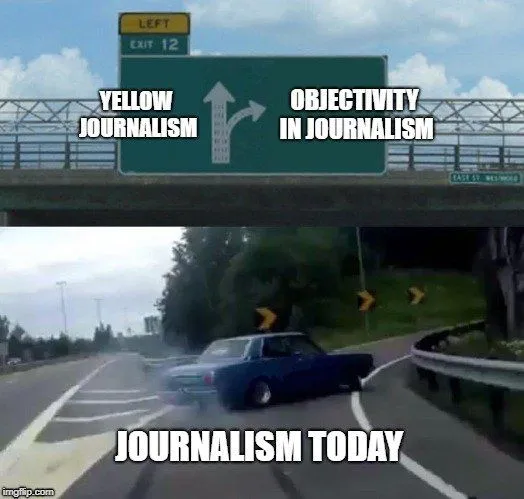
In spite of this, the characteristics of yellow journalism have not been completely lost. It progressed past its blatant and dishonest ways of reporting, but some of its other contributions remain, such as banner headings, heavy use of pictures, tabloids and the Sunday supplement.
Yellow journalism, which originated in the nineteenth century, continues to live on today, particularly in the “fake news” crisis of the past few years. Reading multiple sources of information and seeking the truth from reliable news outlets is the personal responsibility of every single person, provided you wish to be knowledgeable and avoid looking ignorant in front of your peers!
References (click to expand)
- Yellow Journalism - iml.jou.ufl.edu
- (2014) Its Yellow Beginnings, the Nineteenth " by Jessica E. Jackson. Notre Dame Law School
- De Lôme Letter (1898) - National Archives |. This result comes from www.ourdocuments.gov
- The Spanish American War and the Yellow Press. Library of Congress
- The Yellow Press - iml.jou.ufl.edu
- U.S. Diplomacy and Yellow Journalism, 1895–1898. The Office of the Historian
- Yellow Journalism | The First Amendment Encyclopedia. Middle Tennessee State University
- Yellow journalism. Encyclopaedia Britannica