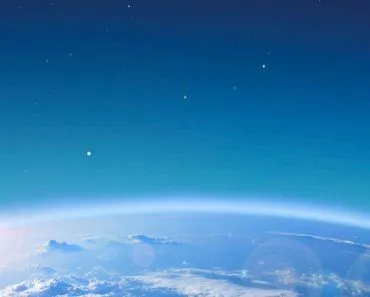
Carbon dioxide is a greenhouse gas because its molecules absorb and re-emit the infrared (heat) radiation given off by Earth’s surface. Nitrogen and oxygen, the main gases in air, are transparent to that radiation, so they let the heat escape. By trapping some of it instead, CO2 keeps the lower atmosphere warm.
It was the summer of 1856 and Eunice Foote was trying to identify the factors that influenced the heat from the Sun’s rays. Her experiments led to the conclusion that a closed environment rich in carbonic acid gas (now known as carbon dioxide) heated up much faster in sunlight than one with regular air. It also cooled down much slower when removed from direct sunlight.
In her paper, which she wasn’t even allowed to read aloud herself because she was a woman (a male colleague presented it on her behalf), she wrote: “An atmosphere of that gas would give to our earth a high temperature; and if as some suppose, at one period of its history the air had mixed with it a larger proportion than at present, an increased temperature… must have necessarily resulted.” This observation didn’t get much attention back then, but is staring back at us every day. That’s because we are apparently living in the not-so-pleasant future Eunice had imagined.
Unless you’ve been living under a rock for over a decade, you know that carbon dioxide is a greenhouse gas responsible for global warming (although technically, “we” are responsible). But what qualifies it to be a greenhouse gas, while the other major components of air are not? Let’s get to know how the gas that makes your soda pop also makes glaciers plop!

A Brief History Of Greenhouse Gases
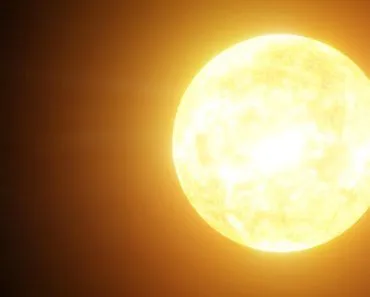
Every hour our planet receives roughly 430 quintillion joules of energy from our favorite fiery medallion in the sky. Life-giving sunlight is a cocktail of ultraviolet, visible, and infrared rays.
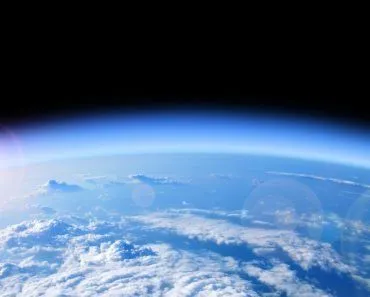
Before all the rays reach the Earth’s surface, our atmosphere, a 5.5 quadrillion ton gas blanket floating above our heads, filters out roughly 99% of the most harmful UV rays, with the help of the ozone layer (not 100%, so don’t forget sunscreen). It then lets in the visible rays that light up our world. Last but not the least, the infrared rays make the earth a warm and cozy pocket of life in the vast cold void.
The infrared rays that hit the surface of the earth are absorbed by different objects and radiated back out in the form of heat. The reflected heat tries to move away from the heated surface to the colder regions in the sky, which is when they face the gatekeepers of heat: the greenhouse gases.
Certain gases like carbon dioxide, water vapor, oxides of nitrogen, methane, and chlorofluorocarbon prevent the heat from completely escaping into space. If not for them, our planet would be a frozen ball of ice with an average temperature of about -18 °C (0 °F), some 33 °C colder than the comfortable 15 °C (59 °F) we actually enjoy!
What Makes Carbon Dioxide A Greenhouse Gas?
In this context, when we say infrared or IR radiations, we mean the IR rays reflected by Earth’s surface, not the ones that enter with sunlight.
The major components of air, such as nitrogen and oxygen, are transparent to IR radiation, meaning that they do not interact with those rays. However, carbon dioxide or CO2 gas is IR active, meaning that it interacts with the IR radiation and stops some of it from leaving the planet (not all of it though). So what happens when these molecules interfere with the path of IR rays? For that, we need to zoom into the individual gas molecules.
Gas molecules are in a constant state of vibration, even under normal temperature and pressure conditions. These movements become more intense when hit by an external energy source. Now, imagine a CO2 molecule where carbon and oxygen atoms are ping-pong balls and the bonds connecting them are springs. Under normal circumstances, these bonds are bending and stretching at a particular frequency and hanging out in the atmosphere.
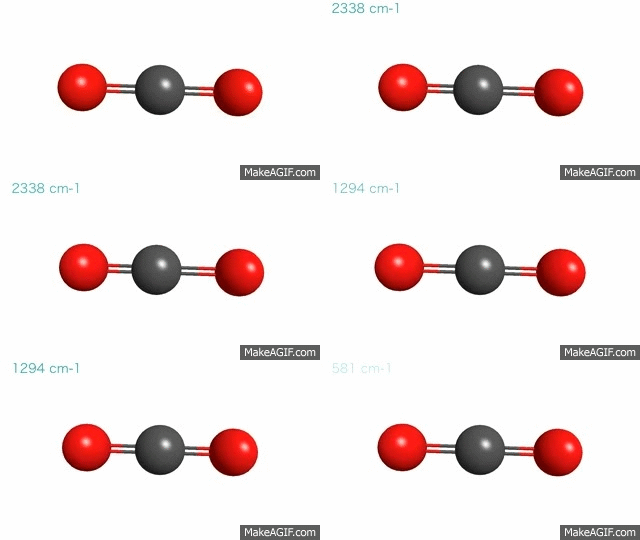
Then…. BAM! A photon of IR radiation hits the gas molecule, which soaks up the photon, gets excited, and starts vibrating at a faster speed. However, the gas molecule cannot keep up this faster motion for long and must relax back to its original state. It relaxes by emitting the energy back into the air or by transferring it to a nearby CO2 molecule.
The same phenomenon takes place over and over for trillions of CO2 molecules. The continuous absorption, excitation, and re-emission of energy is what traps the heat inside.
Why Aren’t Nitrogen And Oxygen Greenhouse Gases?
In every molecule, there are positive and negative charges due to the nucleus and electron clouds. When heteroatomic molecules like carbon dioxide, methane, or nitrogen dioxide vibrate, there is a shift in their charge distribution. Sometimes they are evenly distributed, and sometimes not. The unequal distribution of charges between bonds creates an electric field that makes them sensitive to electromagnetic radiations, like IR.
However, in the case of diatomic gases like N2 and O2, even when the bonds are stretching, there is no change in the electric field. Thus, the electromagnetic radiations pass them unhindered. Also, molecules are very choosy when it comes to which frequency of radiation they interact with. CO2 readily absorbs the lower-energy, longwave IR radiation that Earth emits, whereas N2 and O2 only soak up much higher-energy radiation in the ultraviolet range, well outside the heat band leaving the planet.
Is CO2 The Most Dangerous Greenhouse Gas?
A single molecule of chlorofluorocarbon can create a footprint equivalent to thousands of molecules of CO2, methane traps roughly 30 times more heat over a century, and water vapor is the most abundant greenhouse gas of all, accounting for the largest share of the natural greenhouse effect.
Even though these gases are far more powerful as greenhouse gases than CO2, their concentrations aren’t affected drastically by human activity. The same cannot be said for CO2, as it is a major byproduct of many manmade activities. There has been a 90% increase in CO2 emissions since 1970, and the gas now makes up more than 430 parts per million (ppm) of the air, up from about 280 ppm before the Industrial Revolution. So while it is not inherently the most dangerous greenhouse gas, it has become the focal point of concern due to its excessive and largely unregulated release into the atmosphere.
Conclusion
Carbon dioxide is a very important factor in maintaining our status as the Goldilocks planet. It has kept our waters liquid and our home habitable, but the summers keep getting hotter with every passing year because of the imbalance we have introduced via excessive emissions. Fortunately for us, nature has provided us with colossal carbon sinks in the form of soil, forests, and oceans. The least we can do is preserve and restore them and let them do their job!
References (click to expand)
- Earth Temperature without GHGs - Energy Education. energyeducation.ca
- Is carbon dioxide a major contributor to global warming?. The University of Wisconsin–Madison
- Climate and Earth's Energy Budget. NASA Earth Observatory
- The Greenhouse Effect - CES/FAU. Florida Atlantic University
- Overview of Greenhouse Gases. U.S. Environmental Protection Agency
- Trends in Atmospheric Carbon Dioxide (Mauna Loa). NOAA Global Monitoring Laboratory