Ozone depletion is worst over Antarctica because the region's extreme cold and isolating polar vortex create the perfect conditions for destroying ozone. Frigid temperatures form polar stratospheric clouds, whose surfaces convert harmless chlorine compounds into reactive forms that wipe out ozone once spring sunlight returns.
The simple reason is that the chemical and atmospheric conditions of this region are very good at increasing the effectiveness of ozone destruction by reactive halogen gases.
I remember back in high school, when my science teacher asked if I knew about the ozone hole. She asked if I knew how big the hole was, and where exactly did it exist.
I didn’t know the answers to those questions, but I certainly knew a thing or two about the ozone layer, and how it protected us from the ‘bad’ sunlight.
I now know that the ozone hole is situated roughly above the continent of Antarctica, as the depletion of ozone is the worst there, but do you know why that’s the case?
A Little Something About Ozone…
Ozone is a molecule containing three oxygen atoms. Molecular oxygen gas, i.e., the one we breathe, contains two oxygen atoms, but ozone contains another. It’s actually a pale blue gas with a pungent smell. It’s highly unstable, and thus very reactive.
Ozone is formed in the upper atmosphere when UV rays from the sun split diatomic oxygen (which is abundant in the atmosphere). The lone oxygen atoms then collide and react with other O2 molecules to make ozone.
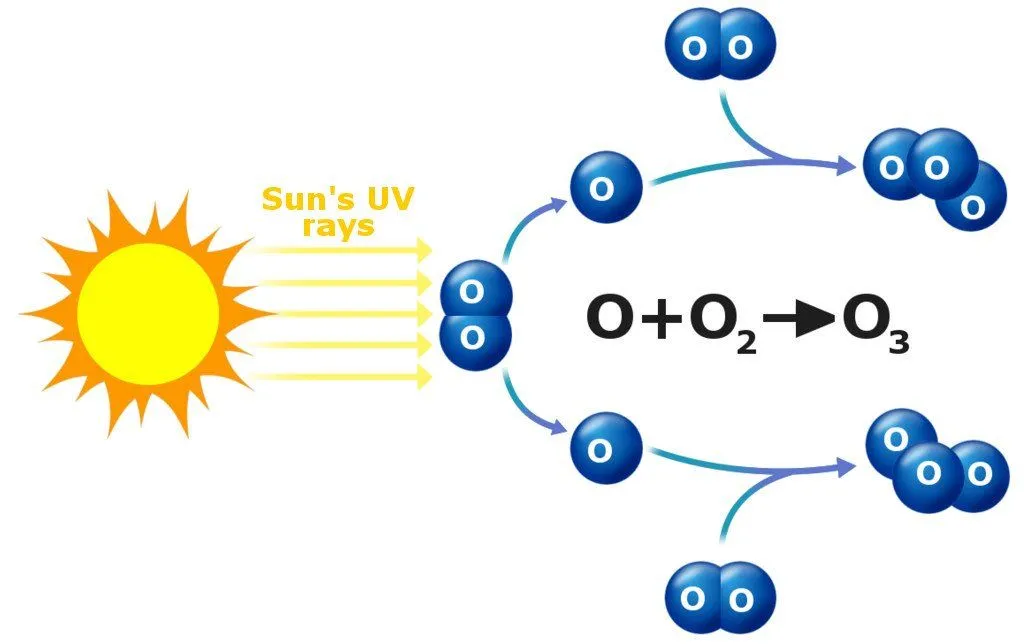
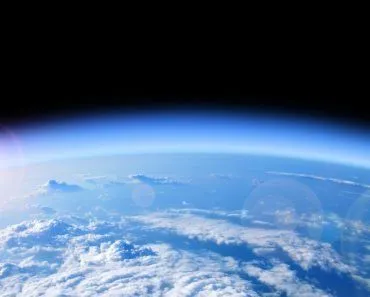
The upper layers of the atmosphere have higher levels of ozone, which is a good thing, because the ozone layer shields the planet from harmful UV rays from the sun.
What Is The Ozone Hole?
The ozone layer has depleted significantly due to certain industrial activities in the past century or so. Ozone depletion actually refers to two related events: a steady decrease of around 4% of the total amount of ozone in the atmosphere, and the severe depletion of stratospheric ozone in late winter and early spring in the Antarctic. The latter is also called the ‘ozone hole’.

Well, first of all, let me tell you that the ozone hole is not really a ‘hole’; it’s just a region of exceptionally depleted ozone in the stratosphere over the Antarctic that occurs at the beginning of the southern hemisphere spring (around the months of August-October).
Why Ozone Layer Depletion Is Prominent Over Antarctica?
The simple reason is that the chemical and atmospheric conditions of this region are very good at increasing the effectiveness of ozone destruction by reactive halogen gases.
In other words, the conditions over Antarctica are the most suited for depletion of the ozone layer.
Firstly, strong winds blowing around the continent form a polar vortex, which seals off the air above Antarctica from the rest of the world. You see, strong winds in the stratosphere form a sort of ring of moving air above the continent, which prevents substantial air motion into or out of the polar stratosphere. Trapped inside this whirlpool of wind, the air gets colder and colder through the long polar winter, with the ozone-destroying chemistry locked in place rather than diluted by warmer air from elsewhere.
Then, there is the formation of Polar Stratospheric Clouds (PSCs).
Also known as nacreous clouds, these are the shimmering, mother-of-pearl clouds that form in the winter polar stratosphere. They only appear when temperatures fall below roughly -78 °C (-108 °F), so cold that water and nitric acid freeze out into tiny crystals high above the ground.
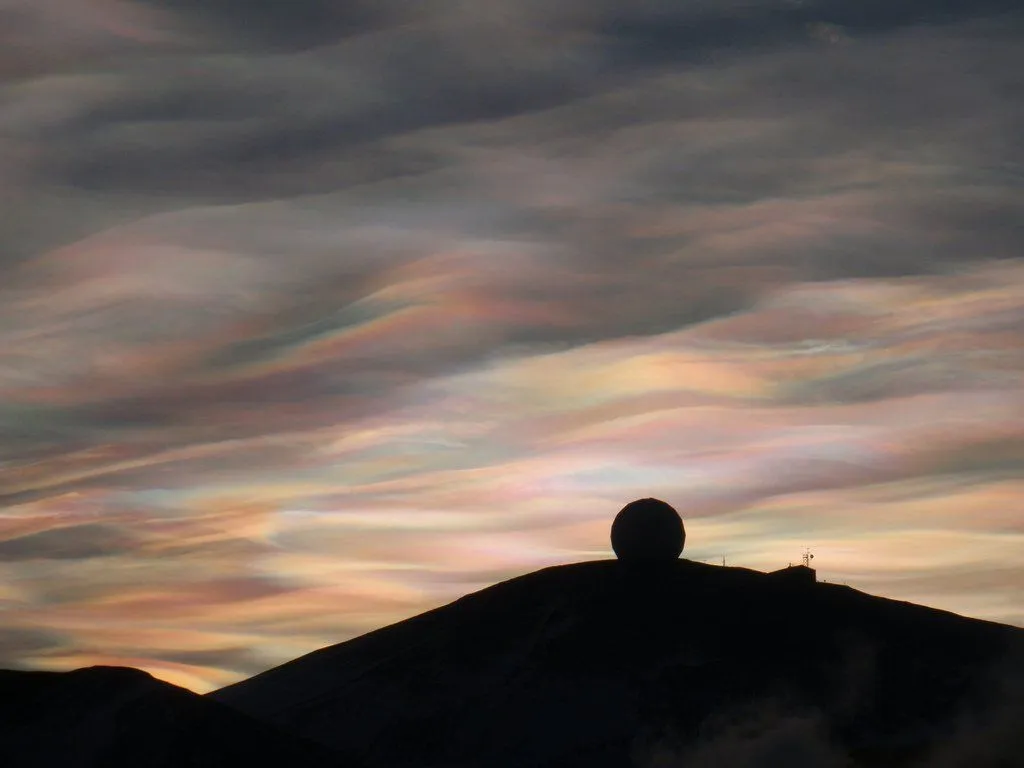
These clouds also contribute to ozone depletion over Antarctica, as reactions on the surfaces of solid and liquid PSCs can significantly increase the abundance of the most reactive chlorine gases. These reactions then lead to the formation of certain compounds that chemically destroy ozone in the presence of sunlight.
Antarctica is one of the coldest places in the world, and severe ozone depletion requires just that. For ozone depletion to occur, low temperatures must be present over a range of stratospheric altitudes, over large regions and for an extended period of time. Antarctica fulfills all these conditions, which is why ozone depletion is at its worst there.
Here’s the good news, though: the ozone hole is healing. After the world banned ozone-destroying chemicals like CFCs under the 1987 Montreal Protocol, the amount of chlorine in the Antarctic stratosphere has fallen by about a third since it peaked around the year 2000. NASA and NOAA reported that the 2025 ozone hole was the fifth smallest since 1992, reaching a peak area of roughly 22.9 million square kilometers (8.83 million square miles) before breaking up nearly three weeks earlier than usual. If the layer keeps recovering at this pace, scientists expect the Antarctic ozone hole to close for good around the late 2060s.
Why Doesn’t The Arctic Get An Ozone Hole Like Antarctica?
Here is a question that trips up a lot of people: the Arctic sits over the North Pole, it is freezing cold, it has a polar vortex of its own, and the same ozone-eating chlorine is spread all over the planet. So why does the deep, recurring ozone hole appear over the South Pole and almost never over the North? The short answer is that the two poles are built very differently, and only one of them stays cold and sealed-off long enough to do the damage.

It comes down to geography. The Southern Hemisphere is mostly ocean, and Antarctica sits alone at the bottom of the world, ringed by open sea. The Northern Hemisphere, by contrast, is packed with land and big mountain ranges. According to NASA, those mountains and the contrast between continents and oceans launch large planetary-scale waves into the stratosphere. When those waves ‘break’, much like ocean waves on a beach, they nudge the Arctic vortex off-centre, let in warmer air from lower latitudes, and warm the region. The Southern Hemisphere has no comparable mountain barriers (the Andes are tall but very narrow), so the Antarctic vortex stays nearly centred on the South Pole and undisturbed through mid-winter.
The result is a sharp difference in temperature and stability. NASA notes that wind speeds in the southern vortex reach roughly 60 metres per second, far stronger than in the north, and that stratospheric temperatures fall below 190 K (about −83 °C, or −117 °F) over a wide area. The Arctic stratosphere usually does not get that cold, and it does not stay cold for as long. As the World Meteorological Organization puts it, the Arctic stratosphere is normally less isolated than the Antarctic one, and its temperatures “usually do not fall as low” or stay low for an extended period. Fewer polar stratospheric clouds form, so less chlorine gets switched into its ozone-destroying form, and any losses are diluted by mixing with milder air.
That is why scientists do not normally even call the Arctic’s yearly springtime dip a “hole”. But it is not impossible. In the spring of 2020 a freakishly strong, cold and persistent Arctic vortex held together far longer than usual, and ozone over parts of the Arctic dropped to a record low of about 205 Dobson units on 12 March, below the 220-unit mark used to define the Antarctic hole. NASA’s Paul Newman noted that such severe Arctic loss happens only “about once per decade”. In other words, the Arctic can briefly mimic Antarctica when the weather lines up, but it lacks the steady, year-after-year cold isolation that makes the Antarctic hole a fixture of every southern spring.
References (click to expand)
- What is the Ozone Hole? - NASA Ozone Watch. The National Aeronautics and Space Administration
- Discovering the Culprits Causing Ozone Holes - UCAR Center for Science Education. The University Corporation for Atmospheric Research
- The Ozone Layer - UCAR Center for Science Education. The University Corporation for Atmospheric Research
- NASA, NOAA Rank 2025 Ozone Hole as 5th Smallest Since 1992. The National Aeronautics and Space Administration
- Polar vortex facts (Northern Hemisphere) - NASA Ozone Watch. The National Aeronautics and Space Administration
- NASA Reports Arctic Stratospheric Ozone Depletion Hit Record Low in March. The National Aeronautics and Space Administration
- Arctic ozone depletion reached record level. World Meteorological Organization