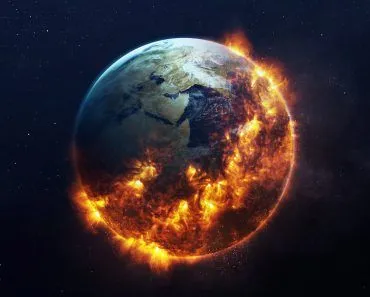
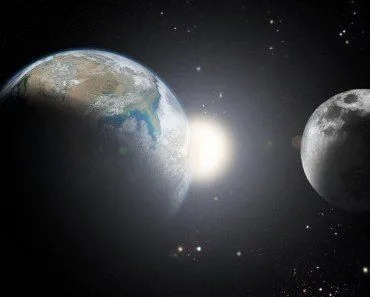
1) The sky during the day would get dark. 2) Earth’s crust would crumble. 3) Everyone chilling out at the beach would get extremely sunburned. 4) Everyone’s inner ear would explode. 5) The oceans and other water bodies would start evaporating into space. 6) Vehicles with internal combustion engines would stop working. 7) Pieces of untreated metals in contact would instantly become welded to each other. 8) Every structure made of concrete would crumble.
Oxygen may not be the most abundant gas in the atmosphere (that’s nitrogen), but it is certainly the most important one. Without it, no living being can survive. Have you ever wondered what would happen if the whole world was cut off from its oxygen supply for a mere 5 seconds?
You might think that holding your breath for 5 seconds isn’t a very big deal. I mean, come on, it’s just 5 seconds after all!
In reality, however, if the whole world was deprived of it for that long, the results would be catastrophic.
Some Debilitating Changes Would Occur If That Were To Happen:
1) The Sky During The Day Would Get Dark
Light from the Sun reaches the Earth’s surface as a result of multiple reflections that occur when light particles bounce off the particles in the air (dust, oxygen molecules, other impurities in the air). The absence of oxygen means less particles for the light to bounce on, so the sky would appear dark, almost black, actually. Essentially, light would reach the Earth, but it would seem as if though it were being emitted from a point source, as opposed to what we normally see (the rays of the Sun spread in every direction).
2) Earth’s Crust Would Crumble
Oxygen makes up about 46% of the Earth’s crust by mass, locked into the silicate minerals (think SiO2) that give rock its rigidity. Pull those oxygen atoms out and the crust loses the chemical bonds holding it together, so the ground below us would lose its structure and we would free fall. That’s why we require those futuristic flying cars…. PRONTO!
3) Everyone Chilling Out At The Beach Would Get Extremely Sunburnt.
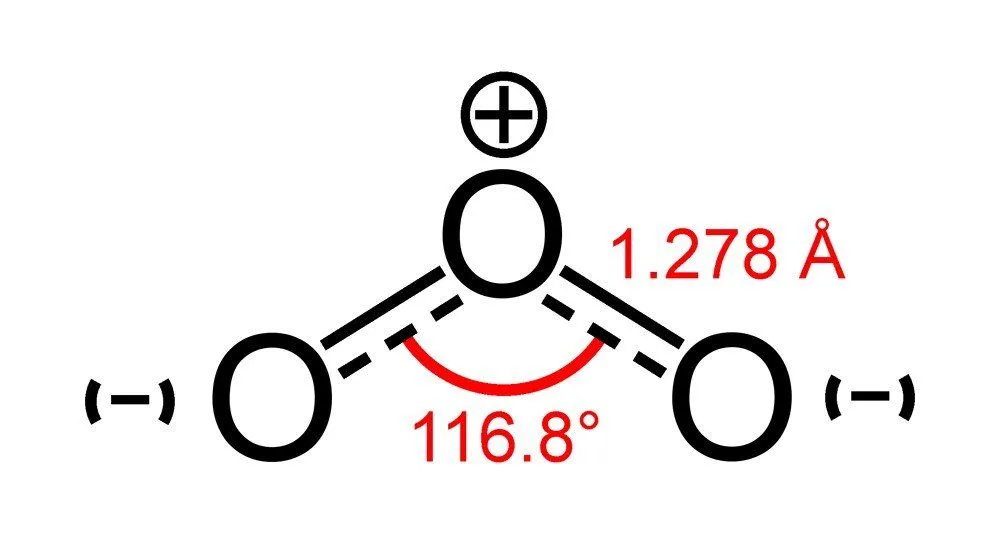
Ozone is the gas that prevents most of the UV from sunlight from reaching the troposphere. It is composed of three oxygen atoms (ozone = O3), so basically…. it would be like living inside a toaster.
4) Everyone’s Inner Ear Would Explode.
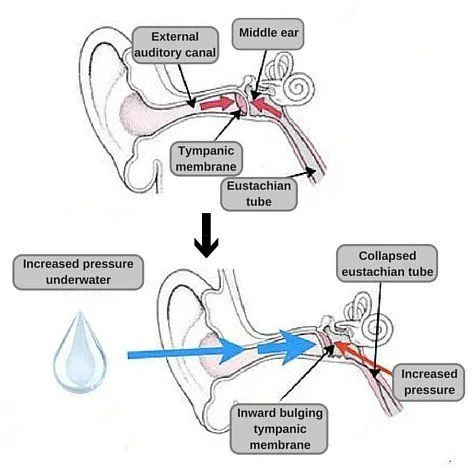
We would lose about 21% of the air pressure in an instant, which would be similar to jumping from sea level to nearly 2000m almost instantly. This would prevent the eardrums from becoming acclimated to the changes in pressures. We would experience something called barotrauma (refers to injury sustained from failure to equalize the pressure of an air-containing space with that of the surrounding environment). Barotrauma usually occurs when there is a sudden change in pressures. For example, during deep sea diving or air travel, we feel as though our ears have gotten clogged up. In the absence of oxygen, we would experience something like this, but on a much larger scale. Therefore, expect some serious hearing loss.
5) The Oceans And Other Water Bodies Will Start Evaporating Into Space.
Water has two constituents – 2 parts hydrogen and 1 part oxygen. Without the 33% oxygen, water would just be free hydrogen gas. Hydrogen gas, being the lightest of all the elements, will rise to the upper troposphere and slowly bleed out into space. So, potentially, the Earth could become a huge planet of only deserts in almost no time at all without our precious oxygen.
6) Vehicles With Internal Combustion Engines Would Stop Working.
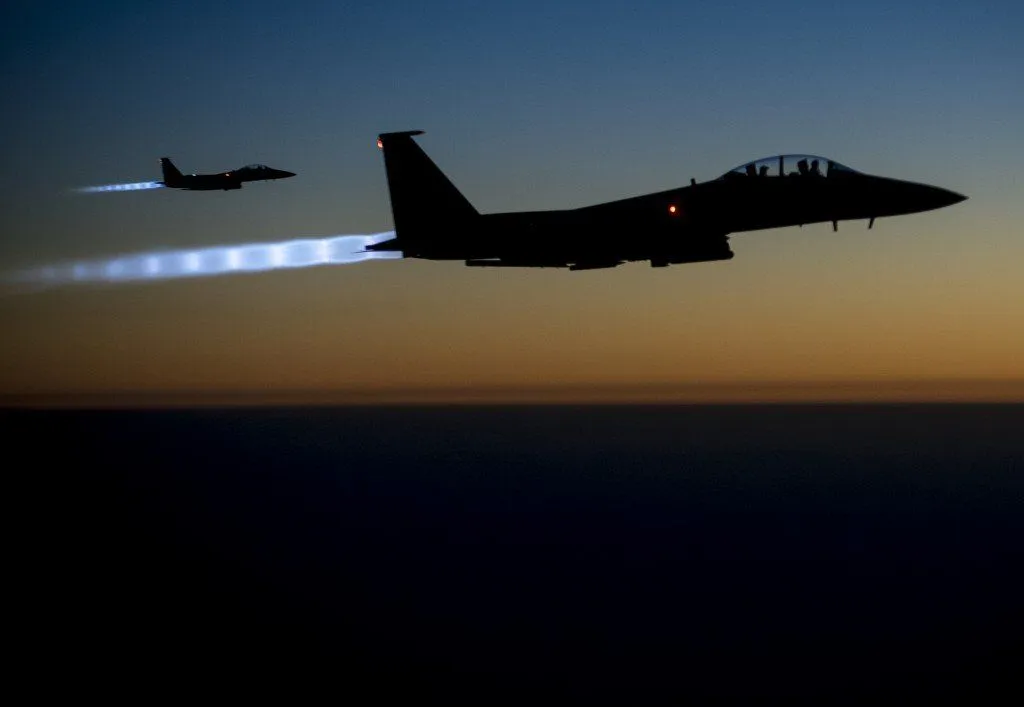
All cars running on any type of fuel that relies on internal combustion engines (everything except electric cars) would just stop, since there isn’t any oxygen for the combustion process to occur. We would see planes, helicopters and even space shuttles falling from the sky for the same reason.
7) Pieces Of Untreated Metals In Contact Would Instantly Become Welded To Each Other.
The reason metals don’t weld on contact is that they are coated in a layer of oxidation. In vacuum conditions, metal welds without any intermediate liquid phase. This is the principle used in cold welding. In this process, small metallic objects are welded together directly, without melting the interface between the two objects. These metals are placed in a vacuum so that the absence of oxygen aids in fusing the metals together.
8) Every Structure Made Of Concrete Would Crumble.
Oxygen is an important binder in concrete structures, and without it, the compounds do not hold their rigidity.
We already know that oxygen is important for survival, but losing it even for a mere 5 seconds can be dangerous, if not fatal.
Thank you, Oxygen, for existing and letting us exist!
Is Earth Actually Running Out Of Oxygen?

Losing it for 5 seconds is pure fantasy, but a slow version of this scenario is real science. In 2021, researchers Kazumi Ozaki (Toho University) and Christopher Reinhard (Georgia Tech) published a study in Nature Geoscience that ran an Earth-system model more than 400,000 times to ask one question: how long will our oxygen-rich air actually last? Their answer is that the atmosphere will stay breathable for roughly one billion more years (1.08 ± 0.14 billion years, to be precise), and then deoxygenate rapidly.
The culprit is not us, and it is not pollution. It is the Sun. As it ages, the Sun keeps getting brighter, which gradually heats the atmosphere and breaks down carbon dioxide. Strip away enough CO2 and photosynthesis can no longer run, so the plants and plankton that produce almost all of our oxygen simply switch off. Once that tipping point arrives, the models suggest oxygen could crash to less than 1% of today's level, leaving an atmosphere rich in methane and stripped of its protective ozone shield.
So yes, Earth will eventually run out of breathable oxygen, but not on any timescale worth losing sleep over. The viral headlines claiming "NASA says Earth is running out of oxygen" are technically rooted in this work yet wildly misleading. A billion years is longer than the entire history of complex animal life so far. When that day finally comes, the planet would look much as it did before the Great Oxygenation Event: a quiet world ruled once again by the kind of microbes that built the stromatolites pictured above.
Would It Matter If Oxygen Vanished For 1 Second Instead Of 5?
People run this thought experiment with every duration imaginable, from a single second down to a millisecond, a nanosecond, even a zeptosecond. The honest answer is that for most of the dramatic effects, the clock barely matters, because they are physics and chemistry, not biology.
Think of it as two separate stopwatches. The first set of consequences is instantaneous. The moment oxygen vanishes, you lose about 21% of the air, so atmospheric pressure drops by roughly a fifth in an instant, the ozone layer disappears and ultraviolet light pours through, and the sky stops scattering as much sunlight. None of that needs a full 5 seconds; it happens the instant the oxygen is gone and reverses the instant it returns. Whether the gap lasts a second or a microsecond, the pressure jolt and the unfiltered Sun are the same.
The second stopwatch is the biological one, and here duration does matter, just not on the scale people picture. Your body keeps its own oxygen reserve in your lungs and bloodstream, which is exactly why you can hold your breath for far longer than 5 seconds without harm. A 1-second or 5-second gap in the air supply would not asphyxiate anyone; the brain only begins to suffer irreversible damage after several minutes without oxygen, not seconds. So the breathing part of this scenario is the least of your worries. The real havoc, the welded metal, the unfiltered sunburn, the pressure drop, would all arrive in the very first instant, no matter how briefly the oxygen blinks out.
References (click to expand)
- Cerebral Hypoxia: How long can the brain survive without oxygen?
- What would happen if oxygen were to disappear for 5 .... Slate
- What Would Happen If the World Lost Oxygen for 5 Seconds? - gizmodo.com
- What if Earth Lost Gravity for Five Seconds? - HowStuffWorks
- Ozaki, K. & Reinhard, C.T. The future lifespan of Earth's oxygenated atmosphere. Nature Geoscience 14, 138–142 (2021).
- How much longer will the oxygen-rich atmosphere be sustained on Earth? EurekAlert! / AAAS.
- Cerebral hypoxia. MedlinePlus Medical Encyclopedia. U.S. National Library of Medicine (NIH).
- Abundance of elements in Earth's crust. Wikipedia (oxygen ≈ 46% by mass).