Table of Contents (click to expand)
- What Is Fire?
- The Fire Triangle: What Fire Actually Needs
- Which Element Is NOT Required For Fire?
- How Little Oxygen Does Fire Actually Need?
- Alternatives For Oxygen As An Oxidizer
- Pyrolysis: When Heat Breaks Down Fuel Without Burning It
- Oxidizers In Monopropellants And Hypergolic Combinations
- What About Nuclear Reactions?
- So Could You Actually Light A Fire In Space?
- A Final Word
Yes, fire can burn without oxygen. Combustion only needs a fuel, an oxidizer and an ignition source, and oxygen is just the most familiar oxidizer. Reactive substances such as fluorine, chlorine, chlorine trifluoride (ClF3) and nitrogen tetroxide can stand in for oxygen, which is how rockets, spacecraft thrusters, thermite welds and many industrial reactions produce flames in oxygen-free environments. Most ordinary fires in air do need a minimum oxygen level (roughly 11 to 13 percent O2) to keep going, but drop oxygen entirely and a stronger oxidizer will still sustain a flame.
Have you ever watched a piece of paper burn and asked yourself, “Would this be possible if there was no oxygen in Earth’s atmosphere?’ Or perhaps you’ve mused, “How do humans plan to live on Mars, as it won’t be possible to build a fire in the oxygen-depleted atmosphere of our neighboring planet?” If you’ve asked yourself a question like this, then you’re looking at the right article, as we’ll explore the details behind this common question: Can fire occur from non-oxygenated reactions?
What Is Fire?
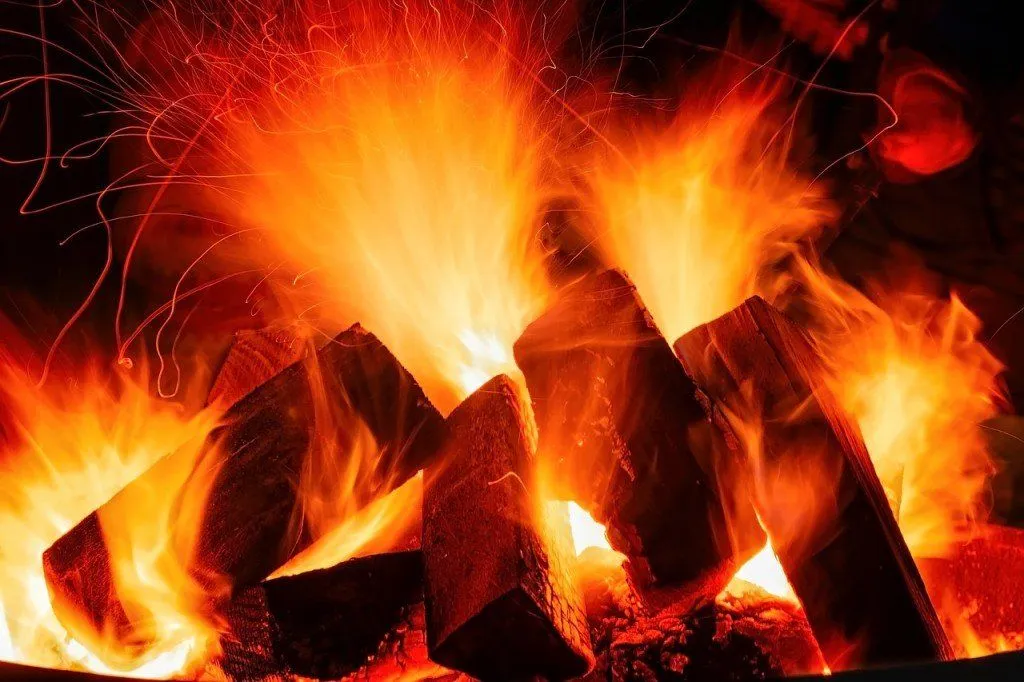
Sitting beside a campfire, staring into the burning pyre, you may have pondered over the nature of the fire… ‘Why is it so appealing? What are these flames made of and why do they have different colors? Does fire have a chemical composition, and thus a chemical formula, like every other entity on the planet? Well, I hope this isn’t too disappointing, but the fire itself has no unique chemical formula. Fire is nothing but the outcome of a chemical reaction commonly known as combustion.

The two main components of fire are fuel and an oxidizing agent or oxidizer. Fuel is a substance that loses electrons or accepts oxygen atoms, whereas an oxidizer is a material that provides those oxygen atoms or accepts the electrons. This process of transferring electrons from the fuel to the oxidizing agent is known as oxidation, which basically constitutes combustion!
One of the most common oxidizing agents is oxygen, primarily due to its relative abundance on the planet and the six valence electrons in its outermost shell, which readily accept two more electrons to complete its octet. However, oxygen is not the only oxidizing agent around.
Flames are the visible portion of the fire, and it mainly consists of gases, such as carbon dioxide, water vapor, oxygen, nitrogen and soot particles. The color of a fire can provide a lot of information regarding what is being burned. The light produced by different elements being burned comes off as different wavelengths, and therefore appears as different colors to our eyes. An analytical chemist can easily detect a compound by the color of its flames.
The Fire Triangle: What Fire Actually Needs
If you took a high school chemistry class, you probably remember the fire triangle. It’s a simple diagram fire researchers use to show the three things every fire requires: a fuel, heat (or an ignition source), and an oxidizer. Take away any one of these legs and the flame goes out. That’s why blowing on a match starves the flame of fuel vapor, why a soaking wet log refuses to catch, and why a lid clapped over a frying pan smothers a grease fire by cutting off the oxidizer.
Notice what isn’t on the list: oxygen. The third leg of the triangle is oxidizer, which is a broader category. Oxygen happens to be the cheapest, most abundant oxidizer on Earth, but it isn’t the only one, and that small distinction is the whole reason this article exists.
Fire scientists often use a fuller version called the fire tetrahedron, which tacks on a fourth requirement: an uninhibited chemical chain reaction. A flame is, at heart, a runaway radical reaction, and interrupting those free-radical chains is exactly how dry-chemical fire extinguishers (and the old Halon-class agents) put out fires they couldn’t drown or smother.
Which Element Is NOT Required For Fire?
This one turns up constantly in chemistry quizzes: which of the following is not a required element for fire? The options usually read something like fuel, heat, oxygen and a chemical chain reaction, and the answer the question is fishing for is almost always oxygen.
That feels wrong until you remember the distinction we just drew. Fire needs an oxidizer, not oxygen specifically. Oxygen is simply the cheapest, most abundant oxidizer on Earth, so in everyday life the two get treated as the same thing. Swap in fluorine, chlorine, chlorine trifluoride or a metal oxide and the fire burns perfectly well without a single oxygen molecule from the air. So the strict list of requirements is fuel, heat (an ignition source) and an oxidizer, plus an uninhibited chain reaction if you use the fuller fire-tetrahedron version. Oxygen, specifically, is the odd one out.
The same logic settles another popular textbook prompt: fuel does not need oxygen to burn, true or false? Taken literally, it is true. A fuel needs an oxidizer, and that oxidizer does not have to be oxygen. The catch is that for the everyday fires you actually meet (wood, paper, gasoline) the oxidizer is the oxygen in the air, so taking it away really does put the flame out.
How Little Oxygen Does Fire Actually Need?
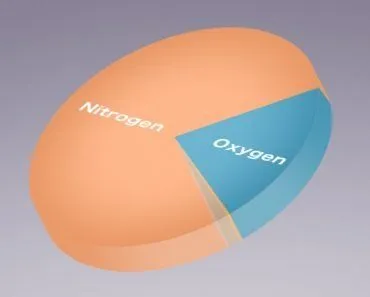
Fire’s relationship with oxygen isn’t all-or-nothing. Earth’s atmosphere sits at about 20.9 percent oxygen, but a flame doesn’t blink out the moment the level dips below that. Each fuel has a threshold called the limiting oxygen concentration, or LOC: the minimum percentage of oxygen in a gas mixture that can still support flame propagation. Drop below the LOC and you can spark all you want; nothing will catch.
For most common fuels burned in nitrogen-diluted air, the LOC sits somewhere between roughly 10 and 13 percent. Methane comes in around 12.3 percent and propane around 11.3 percent, based on experimental studies of alkane combustion. This is exactly why nitrogen flooding (or CO2 flooding) is a standard industrial fire-prevention trick: you don’t have to evacuate all the oxygen from a tank or process line, just enough to push the atmosphere below the LOC of whatever fuel might leak into it.
It also explains a curious bit of spaceflight history. Astronauts on the International Space Station live in a roughly Earth-like atmosphere and still rate fire as their single largest in-flight hazard. The Apollo 1 crew tragically demonstrated the other extreme: a pure-oxygen cabin at elevated pressure made even Velcro and nylon fiercely flammable. Push the oxygen percentage up and almost anything becomes fuel.
Alternatives For Oxygen As An Oxidizer
As we saw earlier, oxygen plays the role of an oxidizer in the combustion reaction, but any chemical species that can replicate that role is a possible substitute for oxygen. For example, fluorine and chlorine are excellent oxidizers. Compounds containing these reactive non-metals, such as chlorine trifluoride, can burn metals in the absence of oxygen.
Fluoropolymers are being used to supply fluorine as an oxidizer of metallic fuels, e.g., in the magnesium/Teflon/Viton composition. Other halogens, such as bromine and iodine, can also act as oxidizing agents, but they’re less effective due to their large sizes.
A favorite classroom demonstration drives the point home. Light a jet of pure hydrogen gas, then lower it into a jar of chlorine. The flame doesn’t go out; it actually burns brighter. The reaction H2 + Cl2 → 2 HCl proceeds rapidly above about 250 °C (480 °F), giving off heat and producing hydrogen chloride gas. No oxygen is involved at any step. So if you have ever wondered whether hydrogen can burn without oxygen, the answer is yes; it just needs a different oxidizer. That same hydrogen will burn fiercely in fluorine too, and the familiar hydrogen flame that lifts rockets off the launch pad is simply the case where oxygen happens to play the oxidizer.
Thermite is an even more dramatic example. The classic mixture of iron(III) oxide and powdered aluminium, Fe2O3 + 2 Al → Al2O3 + 2 Fe, reaches about 2,400 °C (4,400 °F) once ignited; easily hot enough to weld railway tracks together in the field. The aluminium tears oxygen atoms straight off the iron oxide. The surrounding atmosphere is irrelevant; thermite will burn just as enthusiastically in a sealed jar, in pure argon, or even underwater.
Nature runs slow versions of the same trick. Underground coal seam fires, like the one beneath Centralia, Pennsylvania (smoldering since 1962), can keep going for decades partly because the rock above seals them off from ordinary air. They subsist on a trickle of oxygen seeping through cracks plus oxidizers locked into the coal and surrounding minerals, and they resist anything short of digging up the entire seam.
Pyrolysis: When Heat Breaks Down Fuel Without Burning It
There’s a related question that often gets tangled up with “can fire burn without oxygen?” What do you call it when something heats up and falls apart, but doesn’t actually combust? The answer is pyrolysis.
Pyrolysis is the chemical decomposition of an organic material by heat alone, with little or no oxygen present. It isn’t combustion, because there’s no oxidizer doing the electron stealing; the molecules simply break apart under thermal stress. The products are usually a solid residue (char), a tarry liquid (bio-oil), and a mix of gases such as carbon monoxide, methane and hydrogen. Industrial pyrolysis typically runs at 430 °C (about 800 °F) and above.
If you’ve ever made charcoal by smoldering wood under a mound of earth, you’ve used pyrolysis. The same chemistry runs commercial biomass-to-fuel plants, gives barbecue smoke its flavour, and quietly drives the early stage of any wood fire before the wood gases actually ignite. The visible flame above a burning log is mostly the wood gases (released by pyrolysis) reacting with air; the solid wood underneath isn’t burning so much as cooking itself into gas.
So when a chemistry textbook asks for the name of “burning without oxygen”, pyrolysis is usually the term they’re fishing for, with one caveat: pyrolysis isn’t really burning at all. It’s the heat-driven breakdown that combustion needs as its opening act.
Oxidizers In Monopropellants And Hypergolic Combinations
Monopropellants are fuels that do not require an oxidizer for combustion because the oxidizer is bound to the molecule of the fuel itself. For instance, consider a system of hydrogen and oxygen in which the hydrogen acts as the fuel and the oxygen functions as an oxidizer. Such a system would be called a bipropellant system, as the reaction would require a separate chemical species as an oxidizing agent, as opposed to a monopropellant system, which does not require any external oxygen (or any oxidizer, for that matter) for combustion. Hydrazine is the most commonly used monopropellant.
Hypergolics are combinations of two materials that ignite spontaneously without the need for an ignition source, and therefore do not require any oxygen. As they do not depend upon external ignition sources, they can be readily controlled, which makes them ideal rocket propellants.
Aerozine 50 + Nitrogen tetroxide (NTO) have been used in many American rockets, including The Titan II and Apollo Lunar Module.
What About Nuclear Reactions?
You must be wondering by now, what about nuclear reactions? Visually, they produce the same results (heat and light) as fire and even take place on faraway stars like our sun (we always say the sun is burning) where there is no oxygen. What is happening on these stars is nothing but a nuclear fusion reaction. For those who aren’t wildly familiar with nuclear fusion, let’s dig into this idea a bit deeper.
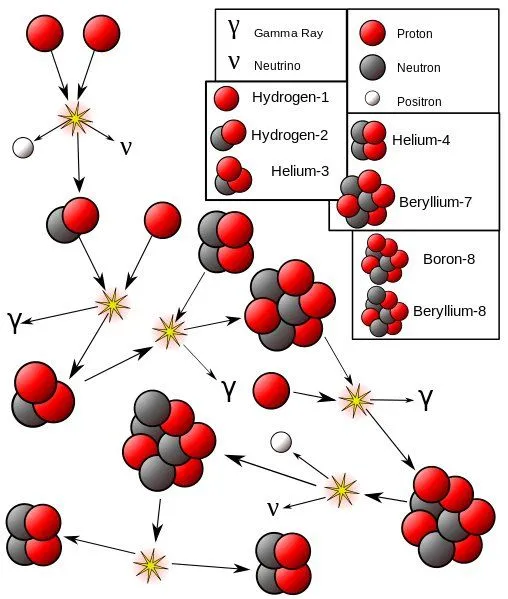
In nuclear fusion reactions, two light atomic nuclei combine to form a heavier atomic nucleus, releasing an enormous amount of light and heat energy. Fusion is what powers the sun. In the sun's core, hydrogen nuclei (protons) fuse through a multi-step process called the proton-proton chain. Through this chain of reactions, four protons are ultimately converted into a helium-4 nucleus, releasing energy in the form of gamma rays and neutrinos. Unlike combustion, fusion is a nuclear process; it involves changes to the atomic nuclei themselves rather than an exchange of electrons between atoms.
So Could You Actually Light A Fire In Space?
People often ask how there can be fire in space when space has no oxygen, and the honest answer comes in two halves. Out in the vacuum between the planets you cannot light an ordinary fire at all: there is no surrounding oxidizer to feed it, and the hot gases would just disperse into the void. The “fires” we like to point at out there are not really fires. A star like the Sun is running nuclear fusion rather than combustion, and a rocket coasting through space is carrying its own oxidizer on board, exactly like the hypergolic and monopropellant systems we met earlier.
Inside a spacecraft, though, the story flips. The crew cabin is full of oxygen, so fire is not only possible but one of the most feared emergencies in spaceflight; the Apollo 1 disaster and the constant fire drills aboard the International Space Station are proof of that. What changes is how the flame looks. Without gravity there is no buoyant convection, the upward rush of hot, less dense air that gives a candle its familiar teardrop shape. Take that away and the flame settles into a small, dim, blue sphere that burns cooler and slower than anything you would see on Earth. NASA has spent years deliberately lighting flames like these aboard the ISS, and they behave so strangely that researchers even found flames that keep reacting after they appear to have gone out.
A Final Word
Although the feasibility of fire on any other planet remains a matter of discussion, as several factors must be considered, don’t let your imagination refrain from building settlements on Mars or planning space expeditions to explore an Earth-like planet in some other part of the universe.
Having said this, oxygen remains to be of prime importance on planet Earth for many processes, including the burning of fire, owing to its abundance and efficiency. Over the past 800,000 years, atmospheric oxygen levels have declined by about 0.7%, but fortunately, not enough to trigger any significant problems for life on Earth. However, the human race has plenty of other problems to which we are definitively contributing, so there is plenty of work to be done!
References (click to expand)
- Fire Tetrahedron. NIST Glossary. National Institute of Standards and Technology.
- Fire Triangle. NIST Glossary. National Institute of Standards and Technology.
- Pyrolysis. Encyclopaedia Britannica.
- Thermit (Aluminium–Iron Exothermic Reaction). Encyclopaedia Britannica.
- Hydrogen chloride. Encyclopaedia Britannica.
- Experimental Study on Flammability Limits Behavior of Methane, Ethane, and Propane with Dilution of Nitrogen. ACS Omega (2023). PubMed Central, NIH.
- Emissions from Coal Fires and Their Impact on the Environment. USGS Fact Sheet 2009–3084. U.S. Geological Survey.
- Nufer, B. (2010). Hypergolic Propellants: The Handling Hazards and Lessons Learned from Use. NASA Technical Reports Server.
- Why NASA Is Studying Flames in Space. NASA Science (Biological & Physical Sciences).
- Candle Flames in Microgravity. NASA Technical Reports Server.