Table of Contents (click to expand)
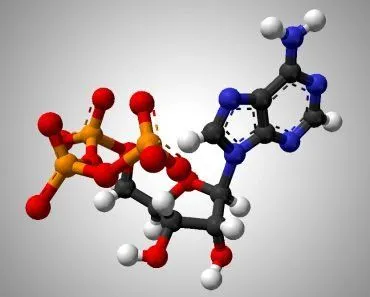
Passive transport moves molecules across the plasma membrane down the concentration gradient, from high to low, and needs no cellular energy. Active transport moves them the other way, up the gradient, and the cell pays for that uphill work by spending ATP. Simple diffusion, facilitated diffusion and osmosis are passive; endocytosis, exocytosis and membrane pumps are active.
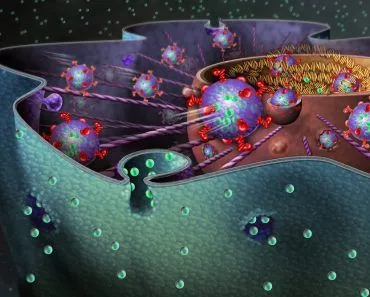
Our bodies are made up of not billions, but trillions of cells (roughly 36 trillion in an average adult man and 28 trillion in an average adult woman, according to a 2023 analysis published in PNAS). Even more incredibly, those cells fall into hundreds of distinct types operating in your body at any given time (the same study counted around 400). Each cell serves a specific purpose, and can behave rather autonomously, having its own set of genetic directions and infrastructure to execute complex tasks and ensure our survival.
When we look at a human as a whole, we often forget that we are marvelous machines composed of incredibly small parts, but looking deeper is important if you wish to understand the whole. With that in mind, if you were to approach a single cell, the first thing you would encounter is the plasma membrane. Movement across this membrane can take a number of different forms, generally classified into methods of active transport and passive transport. Without these two forms of transport, cellular function as we know it would be impossible, as would our existence!
Before we dig into the intricacies of these two forms of transport, let’s take a quick look at the plasma membrane itself.
What Is A Plasma Membrane?
If a cell is compared to a small city, then the plasma membrane is the wall that surrounds it, ensuring that the interior (cytoplasm and organelles) is kept separate from the exterior (extracellular fluid), and that any passage through the wall is closely controlled.
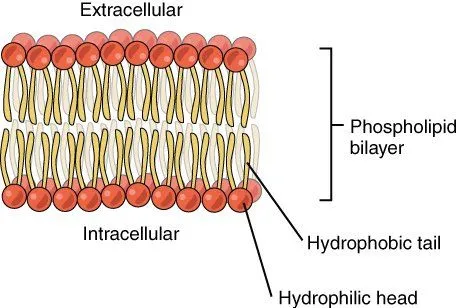
The plasma membrane itself is a lipid bilayer—a highly polar membrane composed of two layers of lipids. These two phospholipid layers have their hydrophobic tails pointed inwards, and their hydrophilic heads pointed outwards, creating a barrier that can only be crossed under special circumstances. These membranes are therefore known as selectively permeable. The membrane is not solely composed of such phospholipids; there are also larger structures, such as protein complexes and other forms of lipids, such as cholesterol.
This barrier serves a very important purpose, as cells are in constant need of new nutrients, and are also constantly exporting things as well, from waste products to enzymes and neurotransmitters. To continue the analogy of the cell as a city, there is a perpetual flow of materials entering and leaving the gates, and in the case of the cell, this is namely water, ions, amino acids, sugars and other molecules/products. While some of the objects may be small, harmless and easy to admit, others require more effort or attention before they can enter or leave the cell. This is where the methods of molecular movement come into play—active and passive transport.
What Is Passive Transport?
Of the two types of movement across cellular membranes, passive transport is certainly the easier option. Utilizing the process of diffusion, which describes the movement of molecules from a region of higher concentration to lower concentration, passive transport requires no energetic input from the cell—no direct consumption of resources. The membrane still plays a part in the movement, in the sense that they can act as a filter, slowing the entrance of some molecules, or being more resistant to their passage, but the membrane will not control the direction of movement. That relies on the gradients present both within and outside the cell.
There are three main types of passive transport that occur in a cell membrane: simple diffusion, facilitated diffusion and osmosis.
Simple Diffusion
At the simplest level, oxygen and carbon dioxide need to be constantly exchanged across the cell membrane, and can do so at any point along the plasma membrane, i.e., there are no set areas where this needs to take place. The rate of passage through the membrane is dependent on a number of factors, such as its lipid solubility, size and structure of the molecule, and the concentration gradient of that molecule between the cytoplasm and the extracellular fluid. As mentioned, this process is not dependent on any energy being consumed or spent.

(Meme – Guy Strolling through an open gate – “Well, that was surprisingly easy”)
Facilitated Diffusion
Unlike the process of simple diffusion, facilitated diffusion is for larger or charged molecules that cannot slip through the lipid layer on their own, and instead piggyback on a transmembrane protein to get in or out of the cell. In the case of key ions (potassium, sodium, calcium etc.), narrow channel proteins are used, since these ions cannot diffuse through like gases, as described above. These protein channels often have a specific shape and amino acid composition, such that only specific molecules can pass through specific channels. Amino acids and sugars, by contrast, ride across on carrier proteins: the carrier binds the molecule on one face of the membrane, flips its shape, and releases it on the other side. Crucially, facilitated diffusion is still passive, it always runs down the concentration gradient and requires no ATP. The moment a transporter starts burning ATP to push something the other way, we have left facilitated diffusion behind and entered active transport.
Osmosis
Similar to the “simple diffusion” described above, the movement of water into and out of a cell is known as osmosis. Water moves across the membrane from the side with the lower solute concentration (more “free” water) to the side with the higher solute concentration, in an effort to even things out. This movement of water does not require any energy consumption.
What Is Active Transport?
While passive transport is the simple option for moving molecules across the membrane, active transport is no less essential to cell function and survival. Now, as explained above, passive transport involves moving molecules “down” the concentration gradient, from areas of high concentration to low concentration. Active transport, however, is when molecules are moved “up” the concentration gradient. This is more difficult to achieve, which is why energy is required to perform this action. That energy comes in the form of ATP.

Similar to passive transport, there are three main forms of active transport: endocytosis, exocytosis and membrane pumps. We will explore each in a bit more detail below.
Endocytosis
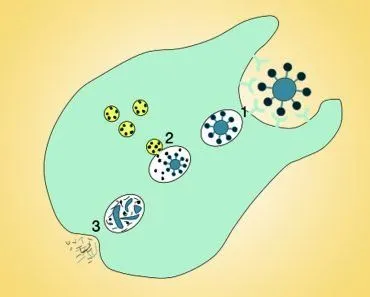
This is a form of vesicle movement in which things can be physically brought into the cell. In simple terms, imagine a cell opening its mouth and taking a gulp of the external environment, whether that gulp is simply composed of fluids (pinocytosis – “cell drinking”), or even a molecule or an entire other cell (phagocytosis – “cell eating”). Simply put, a patch of the plasma membrane folds inward around the desired substance or molecule and pinches off as a vesicle, a tiny bubble of bilayer enclosing the cargo. That vesicle can then be ferried through the cytoplasm and emptied wherever the cell needs the contents.
Exocytosis
This is a form of vesicle movement in which things can be physically pushed out or removed from the cell. When a vesicle forms inside a cell, it is made of similar materials as the plasma membrane, namely phospholipids. That vesicle and its contents can move to the plasma membrane and bond with it, the phospholipids can rearrange, and the contents can essentially be “dumped” outside into the extracellular fluid, and the vesicle will simply form part of the membrane. As with endocytosis, this action requires ATP, both to traffic the vesicle to the membrane along the cytoskeleton and to drive the fusion machinery (SNARE proteins) that stitches the vesicle into the bilayer.
Membrane Pumps
When we discussed facilitated diffusion before, we mentioned carrier proteins. In that previous example, the molecules were moving “down” the concentration gradient, but for active transport, the cell must actively work to keep the concentration gradient uneven; in some cases, this is exactly what specific cell functions require. Holding potassium at roughly 30 times its outside concentration inside the cell, and keeping sodium about 10 times more concentrated outside than inside, is the textbook example of this imbalance. The protein that maintains it is the sodium-potassium pump (Na⁺/K⁺ ATPase): each time it burns one ATP, it shoves three sodium ions out and pulls two potassium ions in, both directly against their gradients. That single class of pump alone is estimated to consume roughly one-third of the resting energy of an average human (and up to about three-quarters in neurons), which is a useful reminder of how expensive “uphill” transport really is.
A Final Word
At first glance, the plasma membrane may look like nothing but a protective shell for the cell, but it is a dynamic and perpetually active series of gates and passageways, enabling the smooth and efficient movement of critical molecules into and out of the cell. Understanding the reasons for such movements, as well as the different forms that such movement takes, provides a better sense of cellular metabolism and a greater respect for both the microcosm and macrocosm of life!
References (click to expand)
- Transport of Small Molecules. The Cell: A Molecular Approach. NCBI Bookshelf.
- Physiology, Sodium Potassium Pump. StatPearls. NCBI Bookshelf.
- Transport into the Cell from the Plasma Membrane: Endocytosis. Molecular Biology of the Cell. NCBI Bookshelf.
- Hatton et al. The human cell count and size distribution. PNAS, 2023.
- General Biology (Boundless). LibreTexts.