Table of Contents (click to expand)
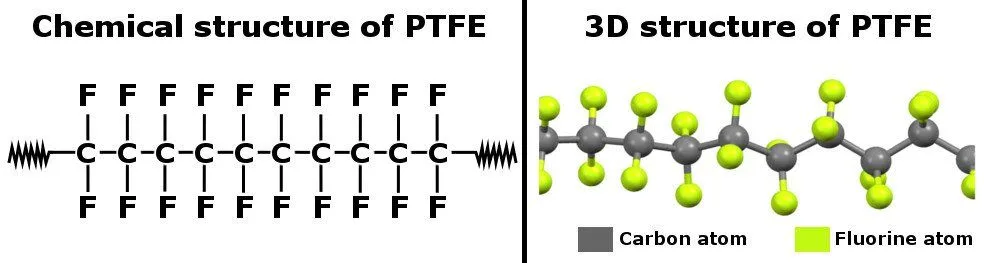
Teflon cookware is coated with polytetrafluoroethylene (PTFE), formula (C2F4)n: long carbon chains wrapped in a sheath of fluorine atoms. That symmetric fluorine shield makes PTFE non-polar and chemically inert, and gives it an extremely low surface energy. With almost no attraction (adhesion) to other molecules, food, water, and oil have nothing to grip, so nothing sticks.
Just like anything else, cooking is fun if you’re good at it. However, doing dishes after the meal, which is a natural component of the process of cooking, is not something that most people look forward to. Fortunately, thanks to the advent of non-stick cookware, people who are not experts at the art of cooking food are somewhat encouraged to have a go at it, as they know that even if they mess the recipe up, their cookware will not bear the price of their sloppiness by having bits of burnt food stuck to the pots and pans.
The question is: why doesn’t stuff stick to certain types of utensils? What makes them non-stick?
Short answer: Non-stick cookware is covered with a layer of PTFE, commonly known as Teflon, whose fluorine-wrapped surface has such low surface energy that almost nothing can grip it.
What Is Teflon?
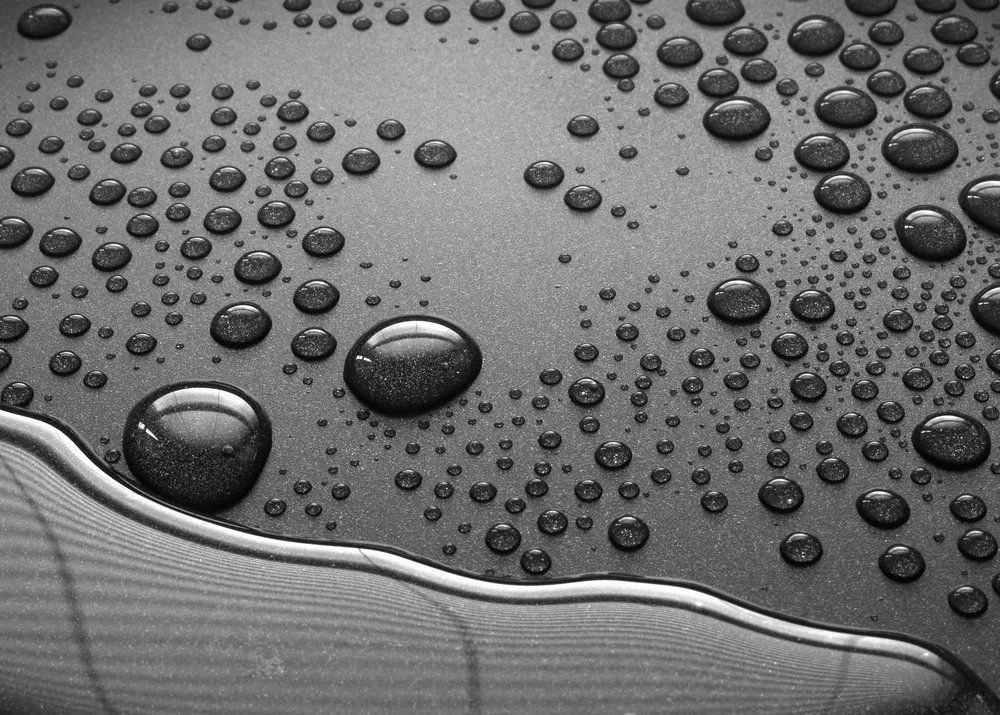
Teflon is a synthetic material that can be used to coat the surface of an object and impart nonstick properties to it. The name ‘Teflon’ is actually a brand name (trademarked by DuPont) for polytetrafluoroethylene (or PTFE), a non-stick chemical substance discovered in 1938 by DuPont chemist Roy Plunkett, who stumbled on it by accident while working with refrigerant gases. Its chemical formula is (C2F4)n, a long repeating chain of the unit CF2. Although it’s most commonly seen in nonstick cookware in everyday life, PTFE turns up in a myriad of objects, including waterproof clothing, high-frequency circuit boards, coaxial cables, stadium roofs, synthetic body parts and spacesuits.

Now, that’s an interesting question, isn’t it? The trick is that the pan isn’t smooth underneath: manufacturers roughen or etch the metal first, then bake the PTFE on at high temperature so it locks into all those tiny pits and grooves. The coating grips the rough metal mechanically, even though almost nothing grips the coating.
Why Is PTFE Non-stick?
With a number of incredible physical and chemical properties, PTFE could be called a magic material. It is highly inert, meaning that it doesn’t react with other substances easily. It has a very high melting point (around 327 °C, or 621 °F) and shows exceptional electrical properties, which makes it an excellent choice for the wiring used in computer and aerospace applications. However, that attribute that it’s most commonly known for is its non-stick quality, which is why it’s used in numerous frying pans, pots, and other culinary tools.
The non-stick property of PTFE can be ascribed to its chemical structure. It is a fluorocarbon solid that consists of long chains of carbon and fluorine atoms.
Now, the thing about PTFE is that it’s an introvert, chemically speaking. This means that PTFE doesn’t want to be in contact with other objects, so it doesn’t let anything (including food, water etc.) stick to it. There is a reason behind that too.
Strong Cohesive Forces In PTFE
You see, the carbon-fluorine bond is one of the strongest single bonds in all of organic chemistry (roughly 485 kJ/mol). Those rugged bonds, plus the way the fluorine atoms wrap the carbon backbone in a tight, symmetric sheath, are what make PTFE so chemically inert. The same fluorine shield is the secret to its slipperiness, but the reason is a little more subtle than “strong bonds.” Fluorine holds its electrons very tightly, so the surface barely tugs on anything that touches it. In chemical terms, PTFE has a very low surface energy and almost no adhesive forces, which is why any foreign molecule has a hard time sticking to it. Its constituent atoms still cling to each other (strong cohesive forces), but the surface offers almost nothing for an outside molecule to grab, giving PTFE the lowest coefficient of friction of any known solid.
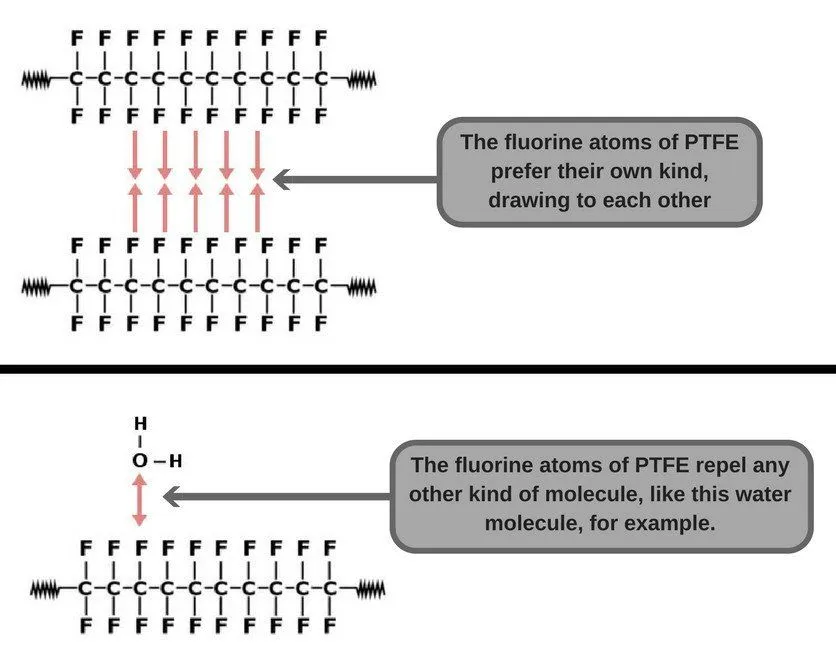
Additionally, it’s non-polar, since the symmetric ring of C–F bonds cancels out, which leaves the surface electrically neutral and adds to its chemical inertness. This property is highly desirable, as it ensures that the PTFE in our cookware doesn’t react with any food item that’s kept or cooked in it.
Although Teflon is the most popular of all non-stick coatings, it is certainly not the only one available. Many cookware manufacturers have their own PTFE-based formulas, including a titanium-reinforced PTFE formula, a diamond-reinforced PTFE formula and so on, which relies on a slightly different manufacturing process to make non-stick coatings.
The scope of practical applications for PTFE is enormous; it’s used in making plain bearings, slide plates and gears (due to its low coefficient of friction), wiring for aerospace and computer equipment, the production of carbon fiber and fiberglass composites, and in many other areas.
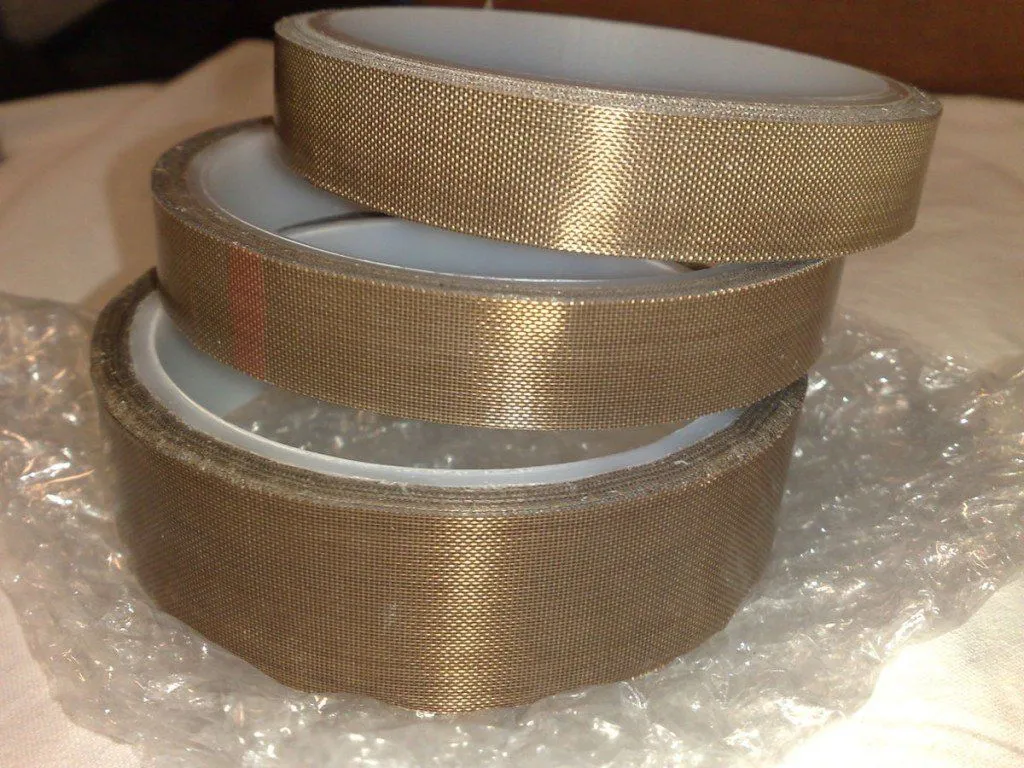
Clearly, the reassurance that you won’t have to spend hours scrubbing the cookware if you mess up the recipe while trying something new definitely motivates people to experiment in the kitchen, thanks to PTFE!