Table of Contents (click to expand)
A competitive inhibitor binds the free enzyme at its active site, so it raises Km but leaves Vmax unchanged. A non-competitive inhibitor binds an allosteric site on the free enzyme or the enzyme-substrate complex, lowering Vmax while Km stays the same. An uncompetitive inhibitor binds only the enzyme-substrate complex, lowering both Vmax and Km.
Whenever the word “enzyme” pops up in a discussion, there are certain words that will always be found in relation to it, including catalyst, substrate, inhibition, metabolism etc. The term catalyst is especially important, as enzymes are essentially catalysts, but specifically ones that are formed organically, and are therefore called “biological catalysts”. With that in mind, let’s get into some of the finer details.
What Is A Catalyst?
If you have a lot of work that needs to get done, doing it alone will take a significant amount of time. However, if someone helps you do the work, it speeds up the process and the work gets done at a faster rate. A catalyst does the same thing as an extra person; it makes a process or chemical reaction begin or finish faster. An enzyme, which is also a catalyst, makes the human body’s work easier by making the minute processes in the body occur faster.
For example, a routine peptide bond break reaction would take approximately 400 years at room temperature, so we clearly need something to speed up the process. Enzymes speed up the reaction so dramatically, they might as well be our biological superheroes.

That example should give you some idea about the extent to which enzymes are required for bodily processes and sustainability. Given that enzymes are so significant for our metabolism, let’s explore the details of their functioning and purpose.
How Do Enzymes Work?
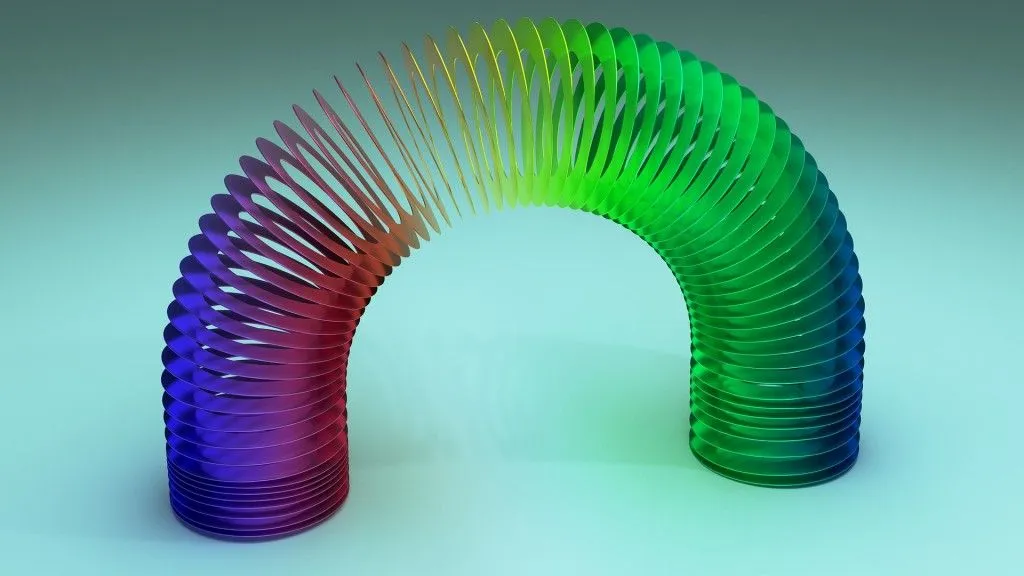
Think of enzymes as a spring. While in use, the spring stretches and changes its shape, but once the work is done, it returns to its original shape. Enzymes work in a similar way. During a chemical reaction, the enzyme may change its composition or form to promote the reaction, and once the task is done, it returns to its original state, leaving no permanent change in the enzyme.
Inhibition
In the example of you working with someone else (mentioned above), once you think the work is done, you can ask the other person to stop working, but an enzyme cannot be asked to stop working. Fortunately, there are materials, called inhibitors, which make enzymes stop working. This process of stopping is called inhibition.
Two Types Of Inhibition:
- Reversible
- Irreversible
Think of it this way… imagine that you’re trying to light a fire with logs. If there is a strong wind, it would put out the fire, but if the strength of the wind is reduced, you could light and continue the fire again. On the other hand, if you splashed water over your fire, you would not only put out the fire, but also wet the logs and everything else, meaning that you would not be able to light a fire again with those same materials.
It’s the same principle in reversible inhibition. In the presence of an inhibitor, the enzyme is unable to make the product, but in the absence of the inhibitor, the enzyme would be able to make the product!

In irreversible inhibition, once the inhibitor stops the enzyme for a moment, even in the absence of the inhibitor, the enzyme will be unable to produce the product.

An enzyme, by nature, has different sites: the active site, where the substrate binds and the reaction happens, and one or more allosteric sites elsewhere on the molecule.

Imagine two roads, one that is wider and used often, and another much narrower road that is used very rarely. Both connect to the same junction, but they’re different roads. That is the case of the active and allosteric sites, respectively. The wider road is the active site, mainly used for substrate binding and the reaction itself; a competitive inhibitor jams up this road by parking in the active site where the substrate should go. The narrower road is the allosteric site, a spot away from the active site where non-competitive and uncompetitive inhibitors bind to throw the enzyme off its work.
Three Types Of Reversible Inhibition
Before we get into the three kinds of inhibition, we need to imagine a scenario. Imagine that you want to do some work; when your body and your intent come together, the work takes place, which leads to the end product of the work getting completed. The enzyme here is you, the intent is the substrate (the chemical with which the enzyme reacts), you and your intent leads to working, and working is the equivalent of a complex formed by the reaction of the enzyme and substrate (called the enzyme substrate complex). The end product (the work getting completed) is the equivalent of the end product of the reaction.
Competitive Inhibition
Taking into consideration the scenario mentioned above, imagine that you have to work, but are feeling lazy, which competes with your intent to work. It might make you lazy to the extent that you won’t move and the laziness will fight your intent to do work, but if you could avoid the laziness, you would do the work. This is called competitive inhibition. The inhibitor binds only the free enzyme, slotting into the same active site the substrate wants, so the two compete for that one spot. Because flooding the enzyme with extra substrate can crowd the inhibitor back out, the apparent Km (the substrate level needed to reach half of top speed) goes up, while Vmax (the top speed) is unchanged.
Non-competitive Inhibition
Imagine another scenario in which you are healthy and have the intent to work, but your internet is slow. There are two ways this could play out: the slow internet affects your working and you’re unable to do it, despite your intent, or you eventually get frustrated with the slow internet and no longer want to do the work. This is called non-competitive inhibition, in which the inhibitor binds an allosteric site and can attach to either the free enzyme or the enzyme-substrate complex. Since extra substrate cannot dislodge an inhibitor sitting away from the active site, Vmax drops while Km stays the same.
Uncompetitive Inhibition
Finally, imagine a scenario in which you are present, with the intent to work, but due to the battery of your computer dying, your work didn’t get saved. This is called uncompetitive inhibition, in which the inhibitor binds only the enzyme-substrate complex, locking it in place once the substrate is already attached. This lowers both Vmax and Km, and unusually, it is the one type that adding more substrate makes worse rather than better.
In all three cases, in the absence of the laziness, the slow internet, or the battery dying, you could complete the work smoothly. In the same way, in the absence of the inhibitor, the enzyme would work perfectly and the reaction would go forward to completion. This is just a brief understanding of how tiny enzymes help our body to function!
References (click to expand)
- How many reactions do enzymes carry out each second?.
- http://web.archive.org/web/20220628181757/https://dls.ym.edu.tw/course/hb/doc/lecture4-(11)%2011-Enzymes.pdf
- Types of Inhibition: Competitive Noncompetitive ....
- The Central Role of Enzymes as Biological Catalysts.
- Physiology, Noncompetitive Inhibitor. StatPearls. NCBI Bookshelf.