Table of Contents (click to expand)
A deletion mutation is when one or more nucleotides are removed from a strand of DNA. If the number deleted isn't a multiple of three, it shifts the codon reading frame during translation (a frameshift), so every codon after the deletion is misread and the resulting protein is usually non-functional.
Every single one of our cells is a powerful machine that can carry out all of its tasks with impressive efficiency, but as one of the big-picture lessons of evolution and natural selection has shown us, our cells are not perfect. More specifically, our cells’ ability to replicate themselves into two identical daughter cells during cell division is not a 100% guaranteed process. Mistakes during DNA replication can happen, and one of the most common mistakes in this process is called a deletion mutation.
However, before we can get into the specifics of this type of mutation, it is important to take a brief look at the basic process of DNA replication in the nucleus of cells.
DNA Replication Overview
As you may already know, our DNA is composed of nucleotides, the subunit of our genetic material. Each of these nucleotides has three parts, a sugar called deoxyribose, a phosphate group and a nitrogenous base. When you look at the classic picture of a double-helix strand of DNA, the outsides of the “ladder” are made of the phosphate groups and sugars, while the “rungs” of the ladder are composed nitrogenous base pairs. This is where the action happens in terms of our genetic information, including its replication into new strands of DNA for the daughter cells’ nucleus before cytokinesis.
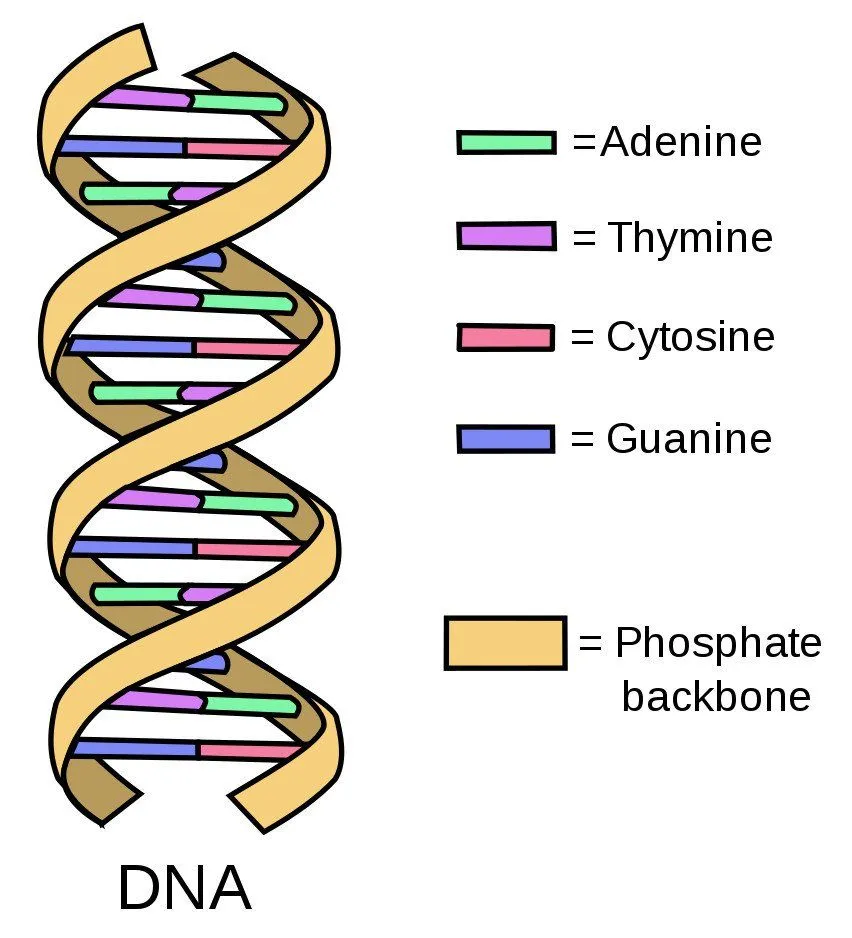
Now, these nitrogenous bases (depending on the number of hydrogen, oxygen and nitrogen molecules they contain) form the key differentiator between the four complete nucleotides, adenine, guanine, cytosine and thymine (represented by A, G, C and T). Thymine and Adenine always pair together, as do Guanine and Cytosine. Every strand of DNA has a master strand and a complementary strand, each of which contain nucleotides that pair across the rungs of the double-helix ladder. For example, a Guanine on the master strand will be paired with a cytosine on the complementary strand. Each of these nucleotide pairs is called a base pair, and every three base pairs forms something called a codon. Each codon “codes” for an amino acid, the fundamental unit of proteins.
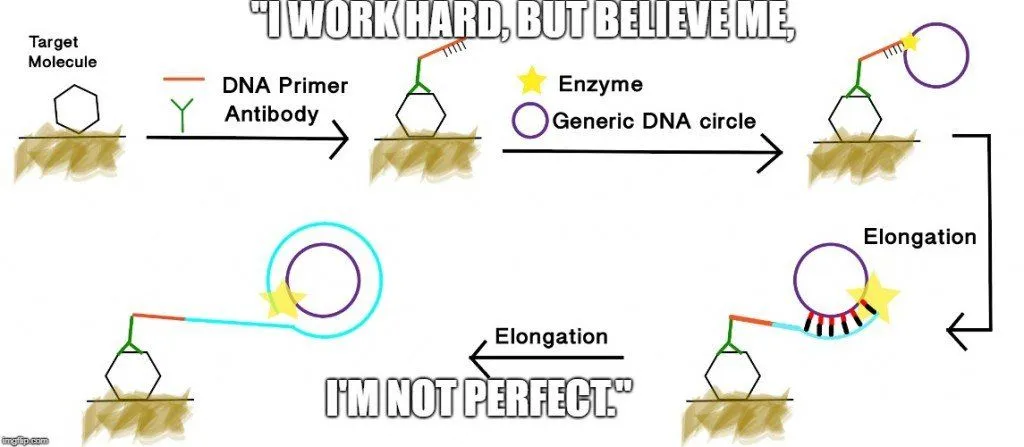
During DNA replication, the enzyme DNA polymerase begins at one end of the template strand and moves along it, adding the matching nucleotide (A opposite T, G opposite C) to build a new complementary strand. However, this copying does not always happen perfectly, and one of the resulting errors is a deletion mutation. (A closely related process, transcription, is when RNA polymerase reads a gene and copies it into mRNA; deletions in the underlying DNA carry over into the mRNA and, ultimately, into the protein.)
What Is A Deletion Mutation?
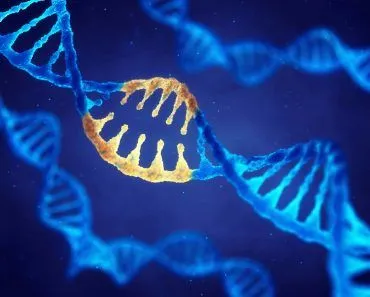
When DNA polymerase is moving down the template strand of DNA, it may occasionally slip, essentially skipping over one or more nucleotides. The shortened sequence then gets copied into mRNA during transcription, and mistakes carry through to the protein. If the number of nucleotides removed is not a multiple of three, the entire downstream sequence shifts in what biologists call a "reading frame" change, or a frameshift. As explained above, bases are read in sets of three (codons), and each codon codes for a specific amino acid. A frameshift disrupts this pattern, so every codon following the deletion gets misread, scrambling all of the subsequent amino acids in the protein.
The protein that is produced may therefore be unable to function. A non-functional protein can have a wide range of effects, from harmless to extremely detrimental, depending on where in the gene the deletion occurs and what type of cell it happens in. If exactly three nucleotides are deleted (a full codon), the reading frame stays intact and only one amino acid is dropped from the protein, which may or may not matter depending on which amino acid is lost. The classic example is the ΔF508 deletion in cystic fibrosis, where the loss of a single phenylalanine from the CFTR protein causes the disease. If one or two nucleotides are deleted, a frameshift occurs and the effects are much more far-reaching, often introducing a premature stop codon that truncates the protein altogether.
In the case of meiosis, long sections of DNA can be swapped from one strand to another (a process called crossing-over), and if these swapped sections are not the same length, or if they contain deletions, it can result in larger stretches of DNA failing to be transcribed properly.
Are Deletion Mutations Serious?
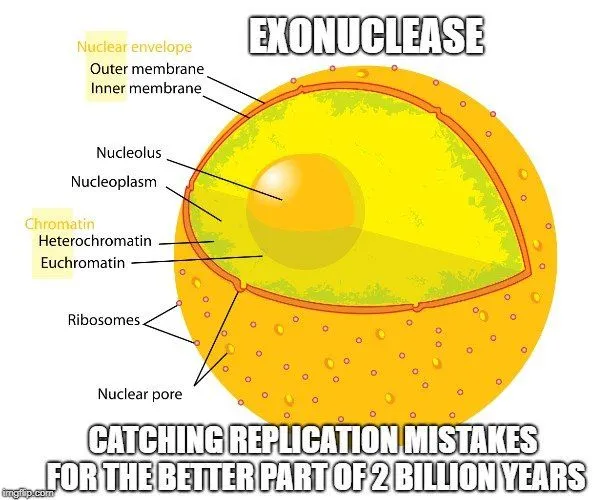
These types of genetic mutations should not be taken lightly, but as mentioned earlier, our cells are incredibly complex and efficient machines, so much so that they can catch many of their own mistakes before they have a negative impact. DNA polymerase itself has a built-in proofreading activity (called 3’-to-5’ exonuclease activity) that lets the enzyme back up and snip out a nucleotide it has just added incorrectly. Anything that slips past this first check can still be caught by a second system, called mismatch repair, that scans the freshly made DNA for errors and patches them. Together these systems catch the vast majority of slips, but neither is perfect, and the rare mistake that survives can become a permanent deletion.
Whether a deletion shows up in the next generation depends on which cells it occurs in. Deletions in the germline cells (the ones that produce eggs and sperm) are passed to the offspring, where small deletions may cause minor physical abnormalities, while larger ones can lead to miscarriage, serious genetic defects, and a higher risk of premature death. Deletions in regular somatic cells (skin, muscle, gut, and so on) aren’t inherited, but they’re not harmless either: somatic deletions in genes that control cell growth are one of the ways cancers get started. Even so, in humans most deletions are caught or tolerated, thanks to the precise repair machinery in each cell’s nucleus.
That being said, when a child is born with a serious inherited deletion, there are several well-known diseases linked to specific deletions. Hereditary neuropathy with liability to pressure palsies (HNPP) is caused by a deletion of the PMP22 gene on chromosome 17. Smith-Magenis syndrome involves a deletion on chromosome 17p11.2, and Williams-Beuren syndrome involves a deletion on chromosome 7q11.23. Cystic fibrosis, mentioned earlier, is most often caused by the three-nucleotide ΔF508 deletion in the CFTR gene, and Duchenne muscular dystrophy is frequently caused by larger deletions spanning one or more exons of the DMD gene. These conditions can also bring physical anomalies along with them, such as shorter stature.
A Final Word
We think of our bodies as self-sustaining machines, and we’re loath to admit that all of our moving parts don’t always work properly. However, accidents happen and mutations do occur. Understanding the mechanics behind such mutations and how they may affect our health provides a better perspective on both our inner workings and our overall functioning as humans!
References (click to expand)
- DNA Deletion and Duplication and the Associated Genetic Disorders. Nature Education / Scitable.
- Frameshift Mutation. National Human Genome Research Institute (NHGRI).
- DNA Replication Mechanisms. Molecular Biology of the Cell, 4th edition. NCBI Bookshelf.
- Hereditary Neuropathy with Liability to Pressure Palsies. GeneReviews. NCBI Bookshelf.
- Smith-Magenis Syndrome. GeneReviews. NCBI Bookshelf.
- Williams syndrome. MedlinePlus Genetics, National Library of Medicine.
- Cystic fibrosis. MedlinePlus Genetics, National Library of Medicine.
- Duchenne and Becker muscular dystrophy. MedlinePlus Genetics, National Library of Medicine.