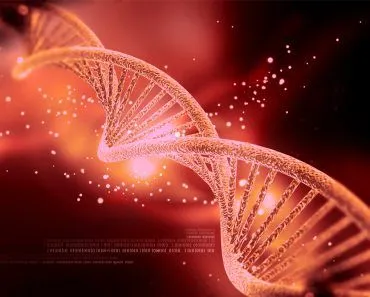
Yes, your DNA does change over the course of your lifetime, in three main ways: (1) random mutations creep in every time a cell divides (each newborn carries roughly 50–100 brand-new mutations not present in either parent), (2) epigenetic changes like DNA methylation switch genes on and off (newborns have notably more cytosine methylation than the elderly), and (3) somatic damage from UV, chemicals and radiation. The sequence you inherit is fairly stable, but it doesn’t stay perfectly identical.
DNA technology has become incredibly popular and important in recent years due to its ability to facilitate criminal investigations, paternity tests, and archaeology records, just to name a few of its areas of application. Who knew that a small double helix could contain so much potential?! Even Johann Friedrich Miescher, the Swiss scientist who discovered DNA (from white blood cells), was unsure how this one molecule could record all the diverse information about a particular species!
What Is DNA?
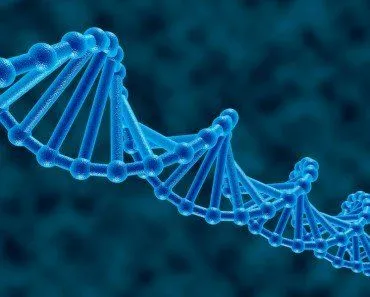
This is DNA.
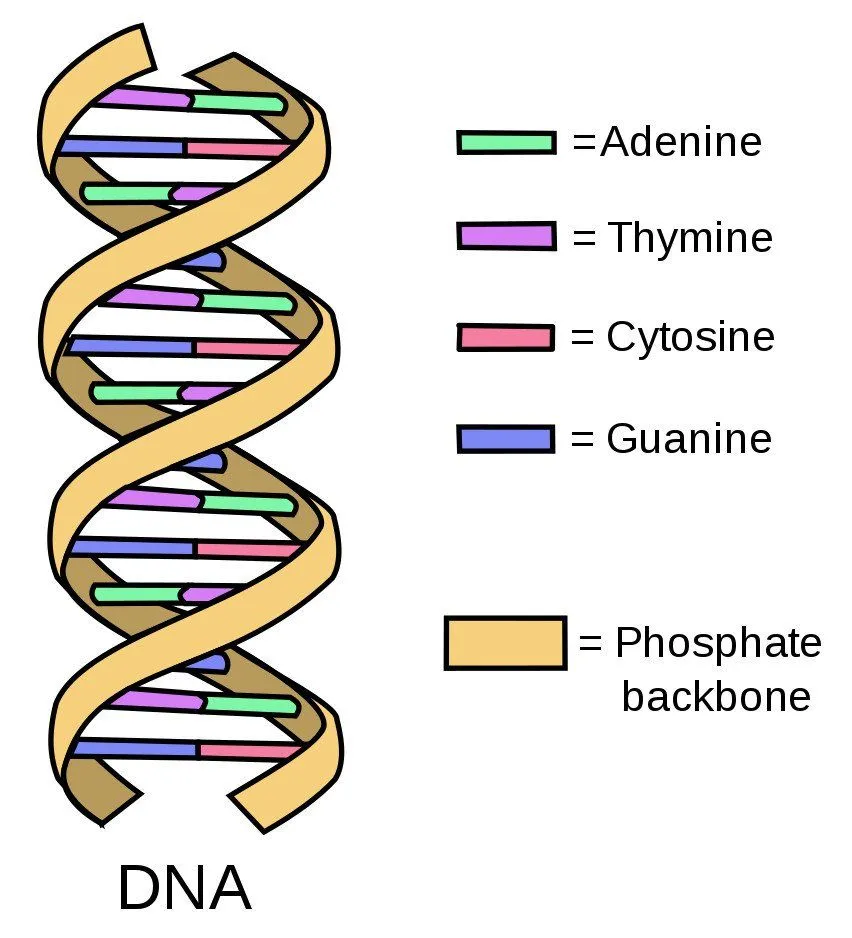
DNA is the abbreviated name for deoxyribonucleic acid, a biomolecule. Adenine (A), Thymine (T), Cytosine (C), and Guanine (G) are the 4 monomers (nucleotides) that combine to form DNA. What holds all these monomers in the sequence is the phosphate backbone structure. Now, unless you’re familiar with biology, you might not really understand what I’m rambling on about.
Putting it in even simpler words, DNA is why you got your mother’s eye color or your dad’s hair color, because DNA stores all the genetic information. Heredity exists because you have the DNA that stores all the features of your parents!
How Did We Learn That DNA Carries Genetic Information?
It wasn’t until the 1930s and 1940s that the importance of DNA was fully realized. Experiments on bacteria suggested that when bacteria traded their DNA, certain traits could be passed on from one bacterium to another.
Also, when the behavior of the virus was studied, it was found that viruses inject their DNA into a host cell, which compels the host cell to form copies of the virus.
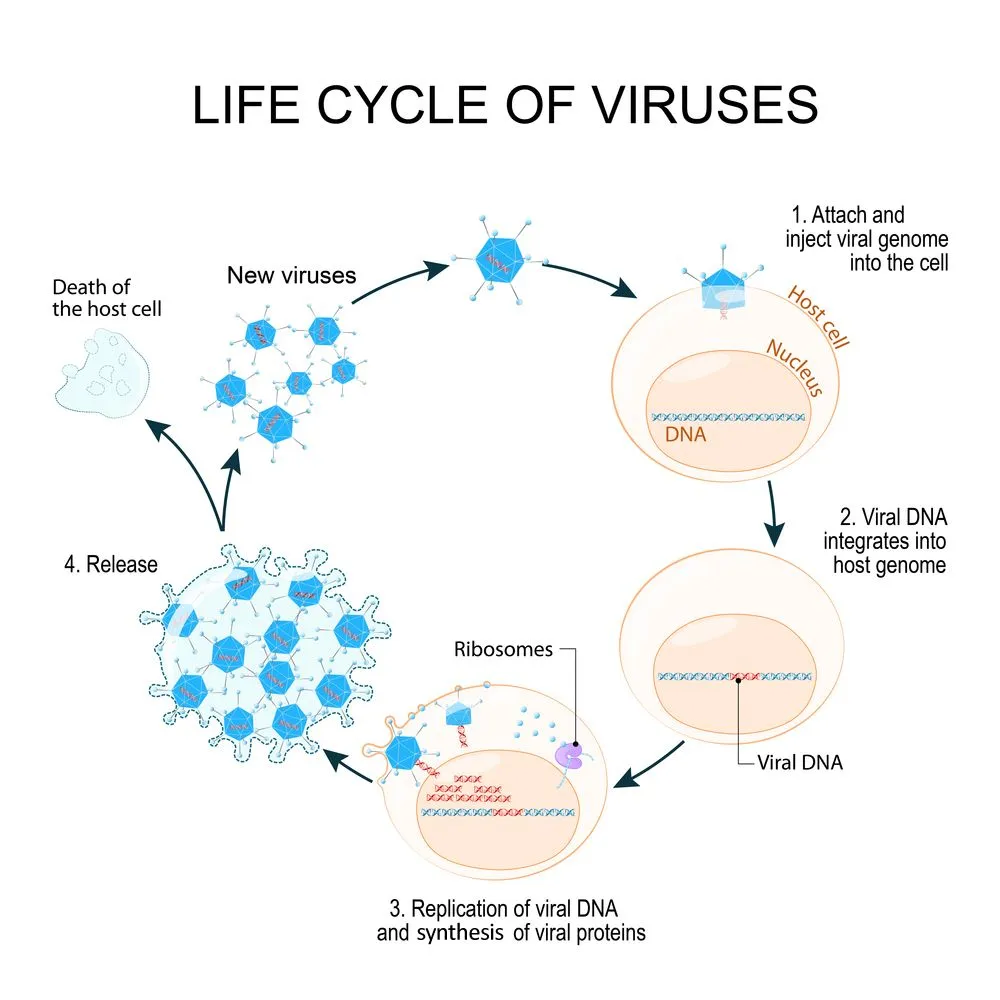
The results of these experiments demonstrate that DNA does contain information that instructs cells to do what they do.
Where Exactly Is This Genetic Information Stored?
The four monomers (A, T, C and G) bond to form a DNA molecule. Each monomer structure is made up of a sugar molecule, a phosphate molecule, and a nitrogenous base.
Does DNA Change?
DNA contains 4 different nucleotides and the sequence of these nucleotides in the genes instructs the cells to generate proteins. To control the amount of protein being generated, genes are periodically switched on and off. Epigenetic changes are chemical variations that help regulate genes without influencing the heredity information. These changes often include the addition of chemical compounds to the DNA structure that work as triggers to switch the gene on and off.
Manel Esteller, an epigenetics researcher at the Bellvitge Biomedical Research Institute in Barcelona, suspected that epigenetic modifications affect the DNA structure over the long term.
He noticed that the DNA of a newborn baby is structurally very different from the DNA of an older person. To study the effect of epigenetic changes on DNA, he studied the most common of the changes, methylation. Here, a methyl group is added to the nitrogenous base (cytosine) to switch off the gene.
DNA extracts from the white blood cells (WBCs) of an old man and the WBCs from the umbilical cord of a newborn baby were compared; there was a higher level of cytosine methylation in the newborn, as compared to the old man.
Additionally, the team studied the DNA structure, which has a similar nucleotide sequence, so that epigenetic changes are unaffected by nucleotide properties. It was realized that there are many differently methylated regions (DMR) that affect many genes. DMR changes have been linked with the development of cancer for a long time.
It has therefore been concluded that cytosine methylation decreases over time as people age. This decrease in methylation eventually leads to age-related cancer and diseases.
What Causes DNA To Change?
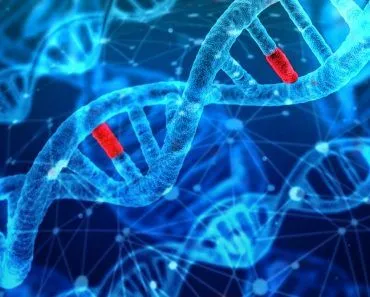
So far we’ve seen that your DNA does drift over a lifetime, but what actually knocks those letters out of place? A change in the DNA sequence has a name: a mutation. (Geneticists increasingly prefer the gentler word “variant”, since altering the code is not automatically a bad thing.) Put simply, a mutation is a permanent change in the DNA sequence, and it tends to arrive by one of three routes.

The first is a plain copying error. Every time a cell divides, it has to copy your entire genome, and while the proofreading is impressive, it isn’t perfect. The odd typo slips through, which is why each of us is born carrying dozens of brand-new mutations that neither parent had.
The second cause is a mutagen, meaning something in the environment that damages the code. The familiar culprits are ultraviolet light from the Sun, ionizing radiation such as X-rays, tobacco smoke and a long list of chemicals. Ultraviolet light, for instance, can fuse two neighboring “T” letters into a bonded pair called a thymine dimer, which kinks the helix and jams the copying machinery.
The third route is viral infection, when a virus stitches its own genetic material into ours.
Crucially, where a mutation lands decides how far it travels. A change in an ordinary body (somatic) cell stays with you but is not handed down to your children; only a change in an egg or sperm cell is inherited by the next generation. And happily, most damage never sticks at all, because our cells run a busy repair crew that spots and mends the majority of it.
How Has DNA Change Contributed To Evolution?
Well, epigenetic changes do not have a profound effect on the species as a whole, but a combination of DNA mutation and natural selection is the reason we have evolved differently from chimpanzees, with whom we share roughly 98.8% of our protein-coding DNA (around 96% when you also include the larger insertions, deletions and structural differences between the two genomes).
Now, DNA is a long double-helix structure. Some parts of this structure undergo epigenetic changes to regulate genes, some parts have no obvious function (work led by the ENCODE project suggests most of the genome is biochemically active even if its purpose isn’t yet clear), and other aspects of DNA still remain beyond our understanding. To observe the effect of a mutation on an organism, it is essential that mutations occur in those parts of the DNA that control other genes!
Most mutations that have helped drive evolution are those where a cell fails to make a perfect copy of the DNA. Mutations also arise due to the external effects of chemicals or radioactive elements, wherein the DNA breaks down due to extreme exposure. If the DNA is not repaired perfectly, the cell ends up with distorted DNA, which subsequently affects the organism as a whole.
Esther and Joshua Lederberg conducted an experiment where bacteria were grown on one parent plate. The bacteria colonies of the parent plate were replicated on two plates, where one of the plates was coated with a nutrient medium and penicillin (an antibiotic). The other plate contained only the nutrient medium.
Only some colonies from the penicillin-coated plate survived, which means that all the colonies generated from the same parent plate did not have the mutation to resist penicillin.
This experiment gave two important results:
- Mutations are random.
- Mutations are not the result of external conditions.
Additionally, for DNA changes to affect a species as a whole, it is necessary that:
- The mutation is naturally selected.
- The modifications are in the reproductive cells, otherwise the mutation is not transmitted.
The journey from a single-celled organism to the incredible diversity of organisms we see today spans billions of years. DNA modifications do lead to evolution, but there are multiple criteria that must be fulfilled for the mutation to survive.
Can We Deliberately Change Our DNA?
Everything above is nature doing the editing, quietly and at random. But here is the twist that would have stunned the scientists of the 1950s: we can now rewrite DNA on purpose. The umbrella term is genome editing (or gene editing), a family of tools that let researchers add, delete or swap specific letters of a living organism’s genome.
The best known of these tools is CRISPR-Cas9, and biology borrowed it from bacteria, which use it as a primitive immune system against viruses. In the lab, scientists design a short strand of “guide” RNA that homes in on a chosen DNA sequence. A protein called Cas9 then snips the double helix at that exact spot, and the cell’s own repair machinery patches the cut, adding or removing letters in the process. Because it is faster, cheaper and more precise than earlier methods, CRISPR has swept through genetics labs worldwide.

This is no longer just a laboratory trick. In December 2023, the US Food and Drug Administration approved Casgevy, the first medicine to use CRISPR editing, as a treatment for sickle cell disease in patients aged 12 and older. It works by editing a gene called BCL11A in a patient’s own blood-forming stem cells, switching fetal hemoglobin back on to compensate for the faulty adult version.
One important limit keeps this out of science-fiction territory: therapies like Casgevy edit somatic (body) cells, so they can help the patient but the change is never passed on to their children. Deliberately editing the DNA of eggs, sperm or embryos (the heritable, or germline, kind) is a very different matter, and it remains illegal in the United States and many other countries.
So yes, DNA does change over time. It is modified as we age and these modifications also lead to evolutionary changes over time. Who could have imagined that this minute double-helical molecule, which was almost indescribable until the 1950s, would revolutionize the entire field of genetic engineering and change the way we understand life on this planet!
References (click to expand)
- What is DNA?: MedlinePlus Genetics. MedlinePlus
- How is the DNA of an adult different from the DNA of an embryo?. The Tech Interactive
- ACGT - National Human Genome Research Institute. The National Human Genome Research Institute
- Deoxyribonucleic Acid (DNA) Fact Sheet. National Human Genome Research Institute (NHGRI).
- Aging Is Recorded in Our Genes | Science | AAAS. sciencemag.org
- Heyn, H., Li, N., Ferreira, H. J., Moran, S., Pisano, D. G., Gomez, A., … Esteller, M. (2012, June 11). Distinct DNA methylomes of newborns and centenarians. Proceedings of the National Academy of Sciences. Proceedings of the National Academy of Sciences.
- The discovery of DNA - YourGenome. yourgenome.org
- DNA and Mutations - Understanding Evolution. The University of California, Berkeley
- Mutation. National Human Genome Research Institute (NHGRI).
- Mutagen. National Human Genome Research Institute (NHGRI).
- What is a gene variant and how do variants occur?: MedlinePlus Genetics. MedlinePlus
- What are genome editing and CRISPR-Cas9?: MedlinePlus Genetics. MedlinePlus
- FDA approval of Casgevy and Lyfgenia: a dual breakthrough in gene therapies for sickle cell disease. Annals of Medicine and Surgery (PMC, National Library of Medicine).