Table of Contents (click to expand)
RNA (ribonucleic acid) is a single-stranded nucleic acid that carries out a cell's genetic instructions. It is not a protein, but it builds them: the three main types, messenger RNA (mRNA), ribosomal RNA (rRNA) and transfer RNA (tRNA), work together to read DNA and assemble proteins. Other non-coding RNAs, such as microRNA, control which genes are switched on or off.
In 1869, Friedrich Miescher discovered a molecule unlike any other previously known in a cell: nucleic acids. Since then, the nucleic acids in our cells (DNA and RNA) have risen in prominence among the molecules of life. The race to solve the structure of DNA is famous in the annals of scientific discovery, and decoding its secrets has earned many scientists their Nobel Prizes.
However, the other nucleic acid, RNA, is showing itself to be an equally interesting and challenging molecule to study. Its role in the cell isn’t as straightforward as it is for DNA, giving scientists some exciting avenues of investigation. So, what exactly does this molecule do in the cell?
What Is RNA?
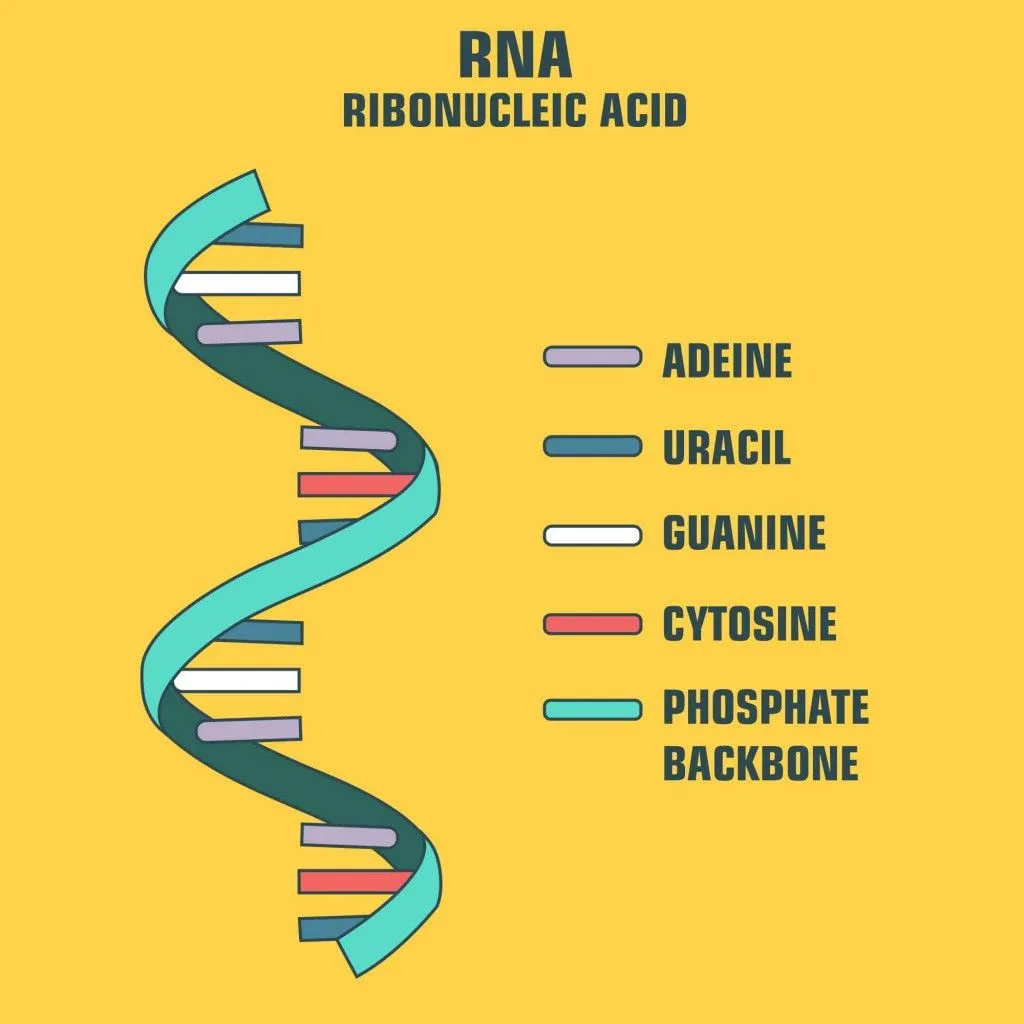
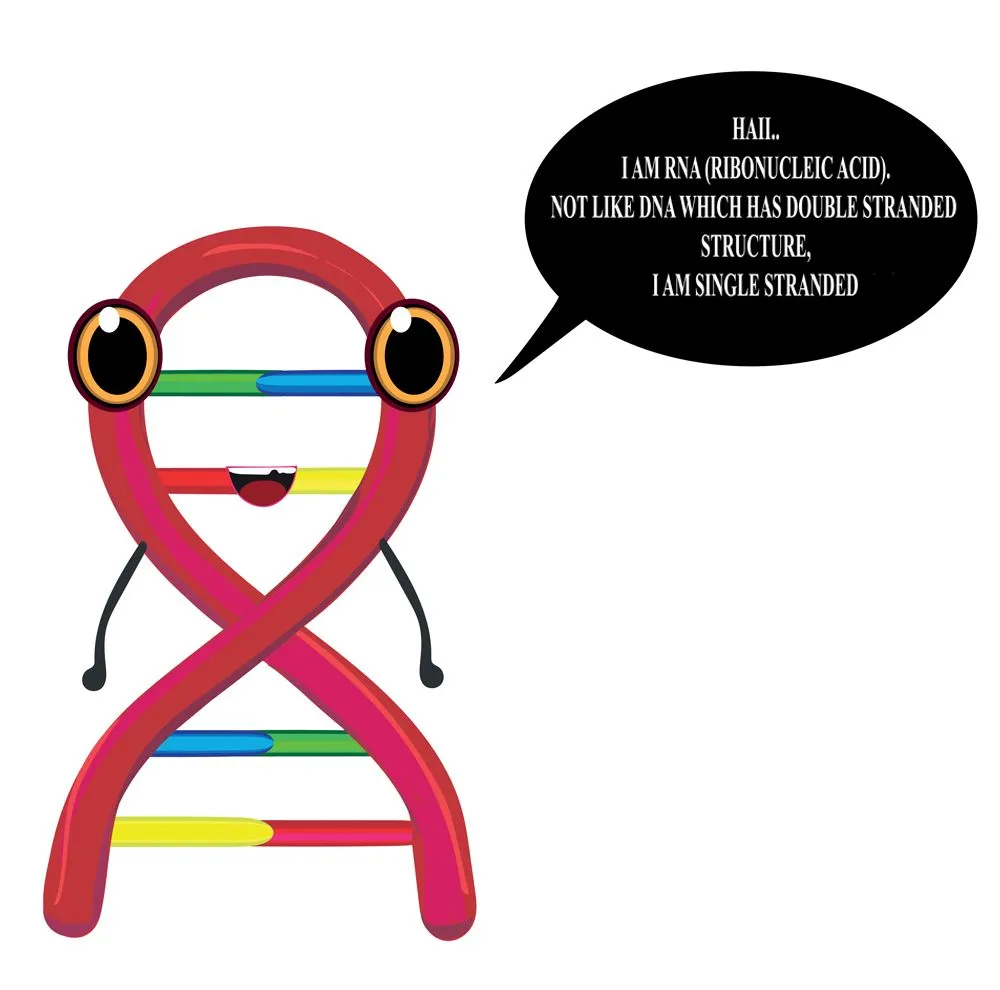
Structurally, RNA is the single-stranded cousin of DNA. Like DNA, it is built from four bases: Adenine (A), Uracil (which replaces the Thymine found in DNA), Cytosine (C) and Guanine (G). The key chemical difference lies in the sugar. RNA's ribose carries an extra oxygen atom (in the form of a hydroxyl group at the 2' position) that DNA's deoxyribose lacks. Hence the names: deoxyribonucleic acid and ribonucleic acid.
As a molecule, RNA is more flexible than DNA’s rigid double helix. It can be helical or fold into a variety of different shapes, such as the famous hairpin loop of tRNA.
Functionally, RNA’s most well-known function relates to protein synthesis.
The instructions that DNA represents are for making proteins. Proteins are the building blocks of life and help to make other building blocks, such as carbohydrates or lipid structures.
Think of DNA as an ancient book containing all the information of life. Such a precious document must be preserved at all costs, so there should be no careless flipping of its pages. RNAs are like photocopies of pages from the ancient book of DNA. The cell doesn’t need to worry about damage to the copies, since the original is intact.
Types Of RNA
Messenger RNA – mRNA
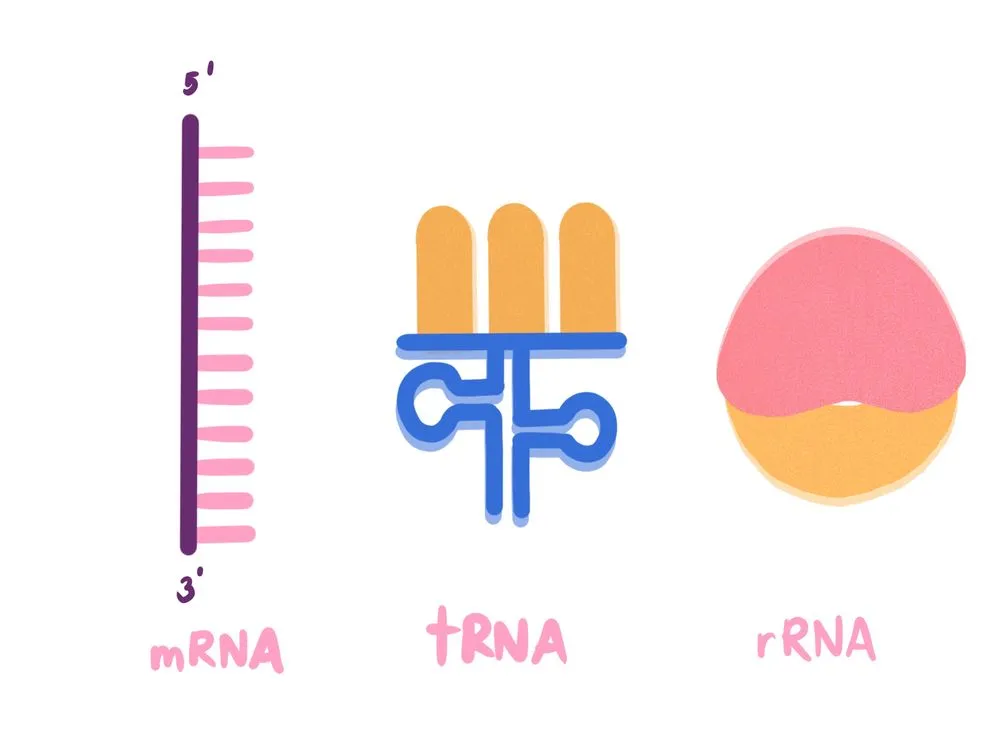
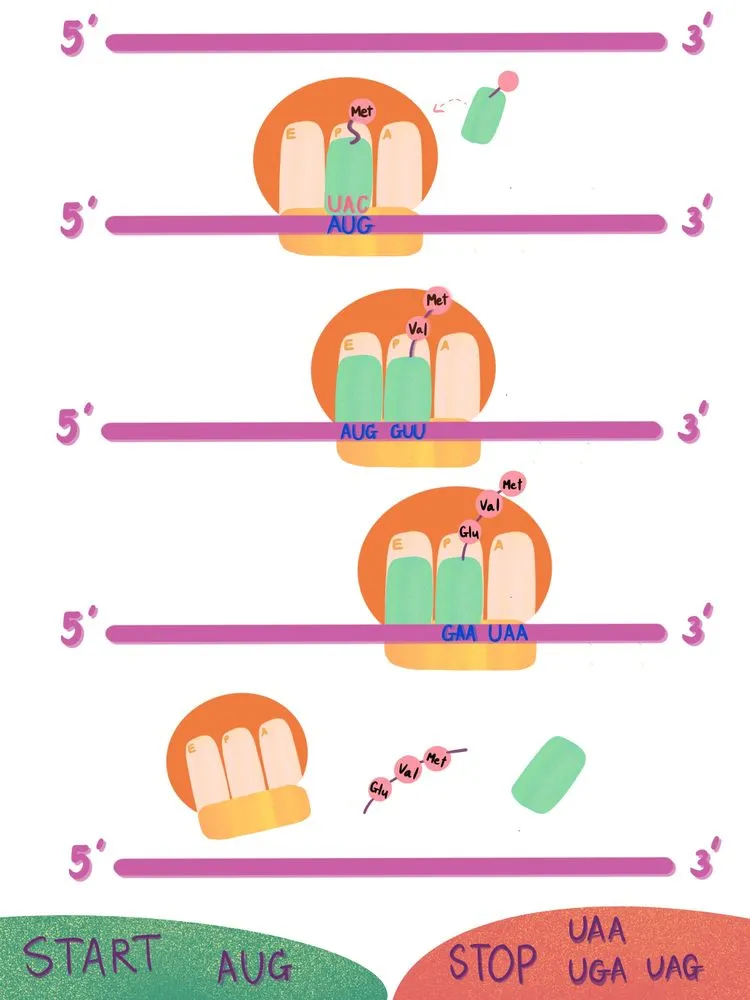
The first key RNA type involved in making proteins is messenger RNA or mRNA. An mRNA is a small photocopy of the DNA that holds the protein-making blueprint. mRNA is synthesized through a process called transcription. It is the messenger between the DNA and the machines that make the proteins, the ribosomes.
The mRNA transcript is made in the nucleus, where the DNA is located, and then moved to the cytoplasm, where ribosomes are located. The process of reading the mRNA and making a protein is called translation. This is the second step in protein synthesis. Here, in the cytoplasm, are the next two major RNAs of the cell: ribosomal RNA and tRNA.
Ribosomal RNA – rRNA
rRNA, like the name suggests, is part of the ribosome. The ribosome is composed of two parts, a smaller subunit and a larger subunit, each with their own RNAs. The ribosomal proteins, along with the rRNA, make sure the mRNA is read in the right direction and placed properly in the ribosome. The rRNAs also catalyze the addition of amino acids to make the final protein.
Transfer RNA – tRNA
tRNA makes sense of mRNA’s information. Proteins are made of amino acids, of which there are 20 common ones. These 20 amino acids are all joined like a long string and then folded. mRNA specifies which amino acid comes where and when. tRNA brings the right amino acids, according to the mRNA transcript, to the ribosome. The genetic code has 61 codons that specify amino acids, but cells don't need a separate tRNA for each one. Thanks to "wobble" flexibility in how the third base pairs up, roughly 30 to 45 distinct tRNAs are enough to read all 61 codons for the 20 common amino acids. The mRNA has information regarding which amino acid goes where, and the appropriate tRNA reads that information and adds the right amino acid.
For a more detailed look at how the genetic code is read, see how multiple codons can code for the same amino acid.
How Are RNA Made?
This is the function of the common three forms of RNA, but in the last two decades, scientists have uncovered a Pandora’s box of different RNAs that aren’t directly involved in protein synthesis. These RNAs are broadly dubbed “non-coding RNA” (ncRNA).
These small RNA (sRNA) are made of 18 to 30 nucleotides, and consist of various subtypes, such as microRNA (miRNA), small interfering RNA (siRNA) and piwi-interacting RNA (piRNA). There is unusually shaped RNA like hairpin RNAs and circular RNAs. There are RNAs for the nucleus, nucleolus, cytoplasm and even for outside the cell. There are RNAs that are derived from transposons and viruses, and finally, there are the big three involved in protein synthesis. The question is… Why are there so many other RNA types and what do they do in the cells?
What Do RNA Do In A Cell?
Gene Regulation
All genes aren’t always expressed in a cell, because cells only express a protein-coding gene when they require that specific protein. This control over when, how and how much of a gene is expressed is called gene regulation.
Imagine this process as “making notes” on the RNA photocopy. Since it isn’t the actual book itself, the cell can alter the RNA photocopy any way it likes. One could annotate it, strikethrough certain parts, create poetry out of it, or simply carry out the instructions in the chapter. We could also write on top of the photocopy, ‘DON’T MAKE THIS PROTEIN” or just archive the photocopy for a rainy day.
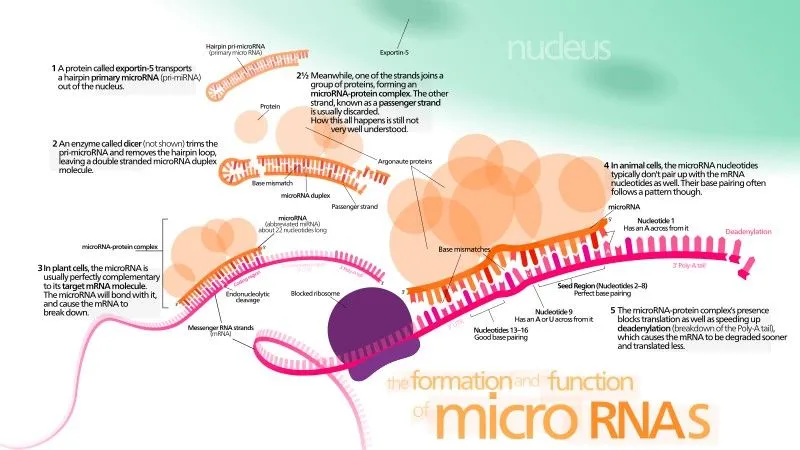
This is the essence of gene regulation. It appears that ncRNAs play a role in controlling genes, while microRNA (miRNA) and small-interfering RNA (siRNA) silence genes by targeting mRNA transcripts of genes that don’t have to be expressed. The targeted mRNA transcript is then destroyed or blocked, a fate that may await more than 60% of human protein-coding genes.
Other ncRNAs (like PIWI-interacting RNA, or piRNA, and small nuclear RNA, or snRNA) act through epigenetic mechanisms. Epigenetic literally means “on” or “additionally” to DNA. They are mechanisms that help the cell regulate the information of the DNA by making slight changes to the DNA externally, without changing the sequence of letters. This includes adding chemical tags or methyl groups to the DNA and coiling the DNA looser or tighter.
These mechanisms have implications when it comes to cells differentiating, such as becoming a skin cell or a liver cell from a stem cell. snRNAs play a key role in splicing pre-mRNA (trimming out non-coding stretches before a transcript is translated), and many other RNA types might be potential targets for drugs.
Are All RNAs Useful?
However, not all that glitters is gold. ncRNA represents a popular branch of genetics and epigenetics research, but it has an essential question looming over its head: is all the ncRNA functional? For the ncRNA listed above, scientists have delineated how they work well enough to say with certainty that they are important elements of the cell.
For many new ncRNAs that are still being discovered, the function seems a bit more questionable. Many scientists are questioning whether assuming function because of existence is Panglossian. Some of these RNAs might just exist as a by-product of another process!
This is an exciting field for biology. The world of epigenetics and RNAs has the potential to give us new therapies for diseases and better illuminate how many diseases work. As we find out more about how the genome’s function and mechanisms, we’ll establish a better understanding of why the cell has so many RNA types and what each variety is responsible for in the cell!
References (click to expand)
- Chemical RNA Structure | Learn Science at Scitable.
- Palazzo, A. F., & Lee, E. S. (2015, January 26). Non-coding RNA: what is functional and what is junk?. Frontiers in Genetics. Frontiers Media SA.
- Ozata, D. M., Gainetdinov, I., Zoch, A., O’Carroll, D., & Zamore, P. D. (2018, November 16). PIWI-interacting RNAs: small RNAs with big functions. Nature Reviews Genetics. Springer Science and Business Media LLC.
- Valadkhan, S., & Gunawardane, L. S. (2013, April 30). Role of small nuclear RNAs in eukaryotic gene expression. (M. A. Lindsay & S. Griffiths-Jones, Eds.), Essays in Biochemistry. Portland Press Ltd.
- From RNA to Protein. Molecular Biology of the Cell, 4th edition. NCBI Bookshelf.