Table of Contents (click to expand)
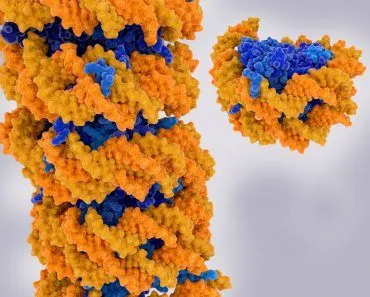
Deoxyribonucleic acid, or DNA, is the molecule that holds the instructions for building and running a living organism. It is made of two strands twisted into a double helix, with four bases (A, T, G and C) pairing up (A with T, G with C) to spell out those instructions. Cells read this code to build proteins, which do the work of life.
If there is one thing that both unites and separates all living organisms in the world, it is DNA.
Plants, animals and bacteria all contain the essential biological molecule known as DNA or deoxyribonucleic acid. DNA contains all the information required to build and maintain living organisms. You can think of it as nature’s very own top-secret instruction manual!
What Is The Structure Of DNA?
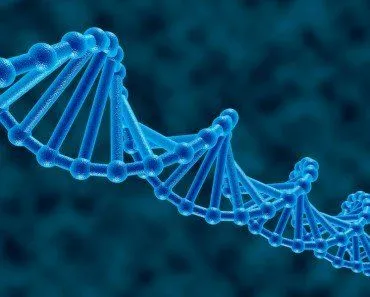
This manual is written in multiple combinations, but limited to just 4 letters: A, T, G and C. Each letter denotes a nitrogenous base: A for adenine, T for thymine, G for guanine and C for cytosine. Every living being has a huge supply of these 4 bases, each of which is attached to a pentose sugar and a phosphate molecule. Together, they are known as a nucleotide. These nucleotides are arranged in two long coiled strands like a hair braid. The bases on the two strands pair up with each other; A with T and G with C, forming base pairs.
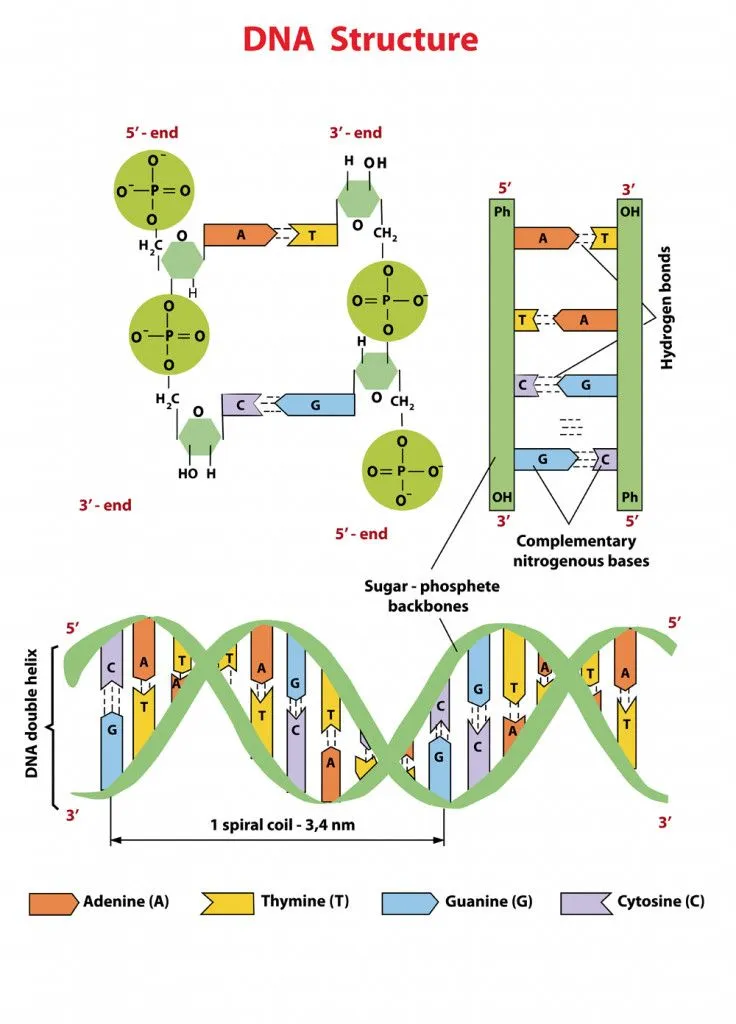
Thus, a DNA molecule is like a ladder that twists like a corkscrew, with the sugar and phosphate acting as the side rails and the base pairs acting as the rungs. This twisted-ladder shape is the famous double helix.
We have known about that shape since 1953, when James Watson and Francis Crick published the double helix model. They leaned heavily on the work of Rosalind Franklin, whose X-ray image of DNA (the celebrated “Photo 51”) and careful measurements revealed the helix, and on data from Maurice Wilkins. Watson, Crick and Wilkins shared the 1962 Nobel Prize, while Franklin, who had died in 1958, went unrecognized for decades despite her central role.
Where Do We Find DNA?
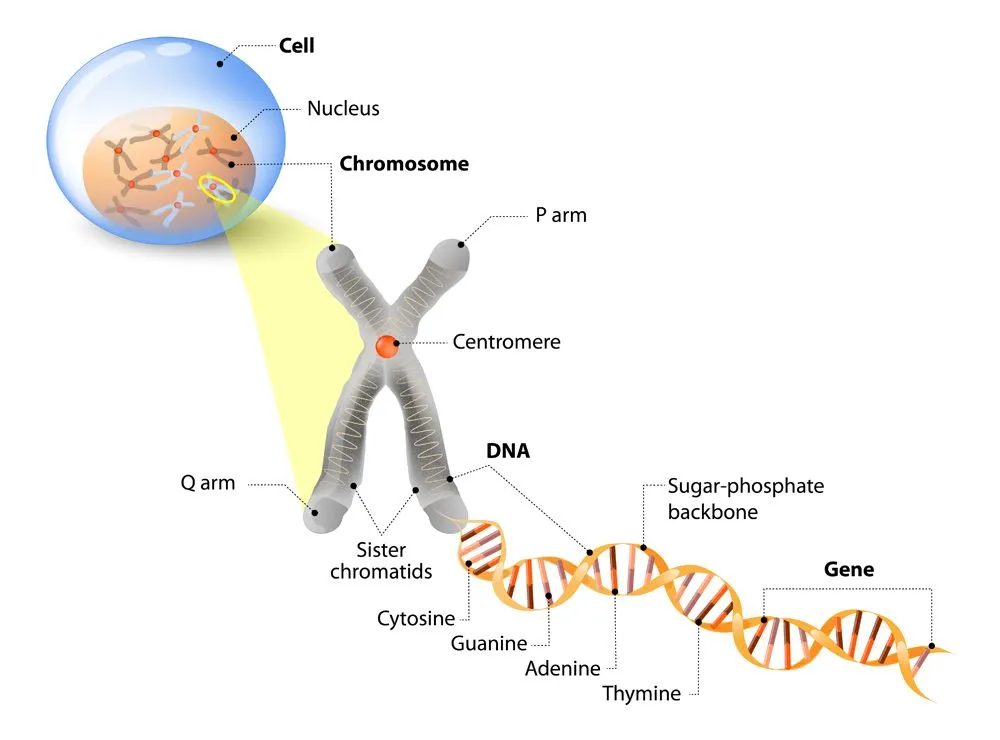
DNA is an extremely long molecule. A single human cell holds about 2 meters (roughly 6 feet) of it, yet it is also thousands of times thinner than a strand of hair. Multiply that by the tens of trillions of cells in your body and the total length runs to billions of miles, enough for many round trips out to Pluto and back! Locationally speaking, DNA is found inside the nucleus of each of the body’s cells, tightly packed into packages known as chromosomes.
What Does DNA Do?
A stretch of DNA that carries the instructions for one protein is called a gene, and humans have roughly 20,000 of them. Within a gene, the instructions are written in 3-letter codes called codons. Each codon needs to be interpreted in order to attain the correct amino acid. Think of it as a password that, if entered correctly, will give you an amino acid, like a tiny Lego block! When put together, all these blocks give rise to a protein. This is why amino acids are also known as the “building blocks of life”.
However, to understand exactly how codons are decoded, we need to travel to the HQ.
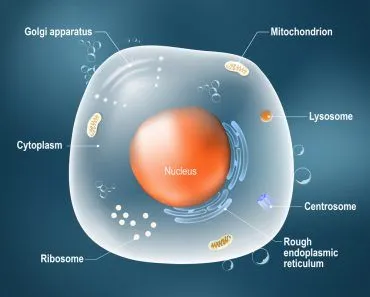
DNA is stored in the cell ‘HQ’, the nucleus, where various ‘secret agents’ called enzymes get their hands on this important document (DNA). They need the information stored in the DNA to build important machines known as proteins.
Unfortunately, these agents face a difficult hurdle. The raw material (amino acids) and the factory (ribosome) required to build the machines (proteins) are both found outside the HQ (nucleus). That may not initially seem like a problem, as the DNA could simply be taken outside the nucleus, right? However, that’s the problem… since the DNA is such a valuable ‘document’, it cannot leave the HQ!
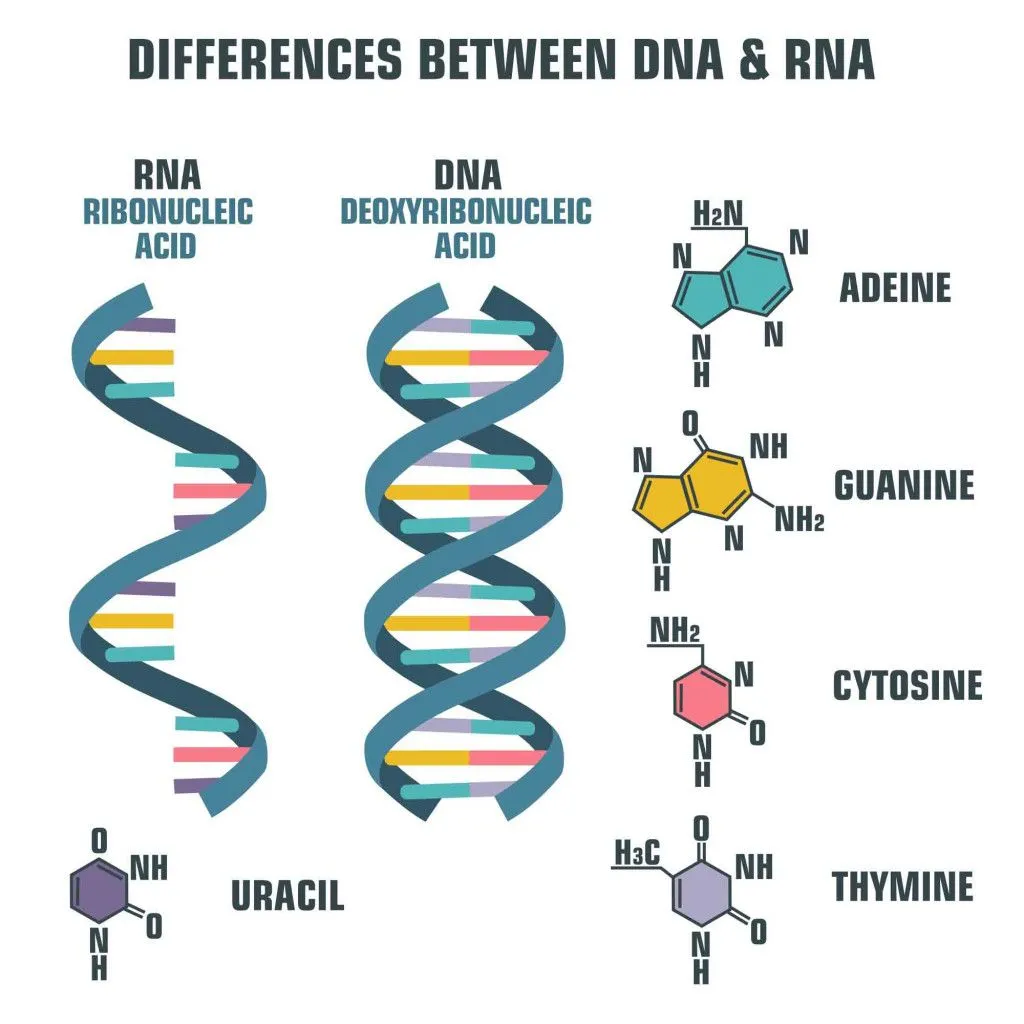
Instead, bits of the information from the DNA are copied into smaller, single-stranded molecules known as messenger ribonucleic acid (mRNA). This copying step is called transcription. The mRNA travels out of the HQ and finds its way to the protein factory, which is the ribosome. In the ribosome, the instructions for amino acid attachment encoded on the mRNA are interpreted to form a protein, a step called translation. The amino acids are attached one after the other like beads in a necklace until the process is terminated, as determined by the instruction codes.
This one-way flow of information, from DNA to mRNA to protein, is so fundamental that biologists call it the central dogma of molecular biology.
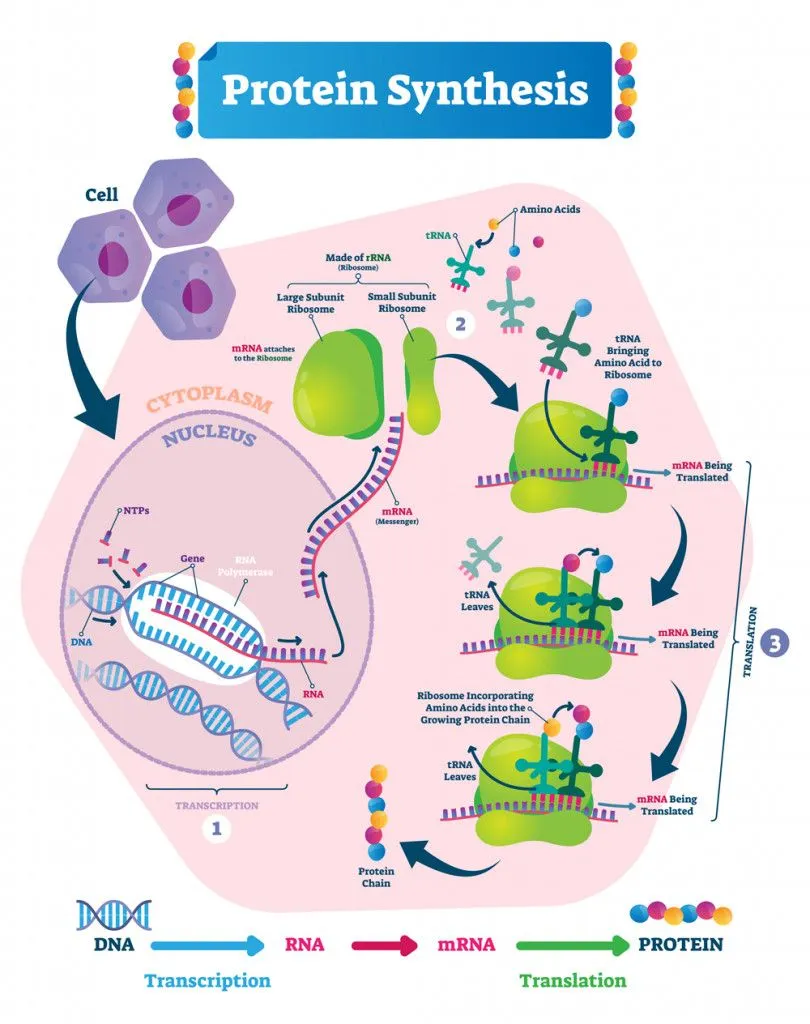
The newly built proteins, with a few changes along the way, go on to make up cells, which in turn form tissues, which then form organs. When combined, all these organs form a living being.
Now, the type of living being formed is entirely dependent upon the sequence and number of the aforementioned DNA bases. The complete instruction manual for human beings, for example, has 3 billion letters or bases. Around 99% of these bases are the same in all people. It is only the remaining 1% that makes each of us unique.
Where Do We Get Our DNA?
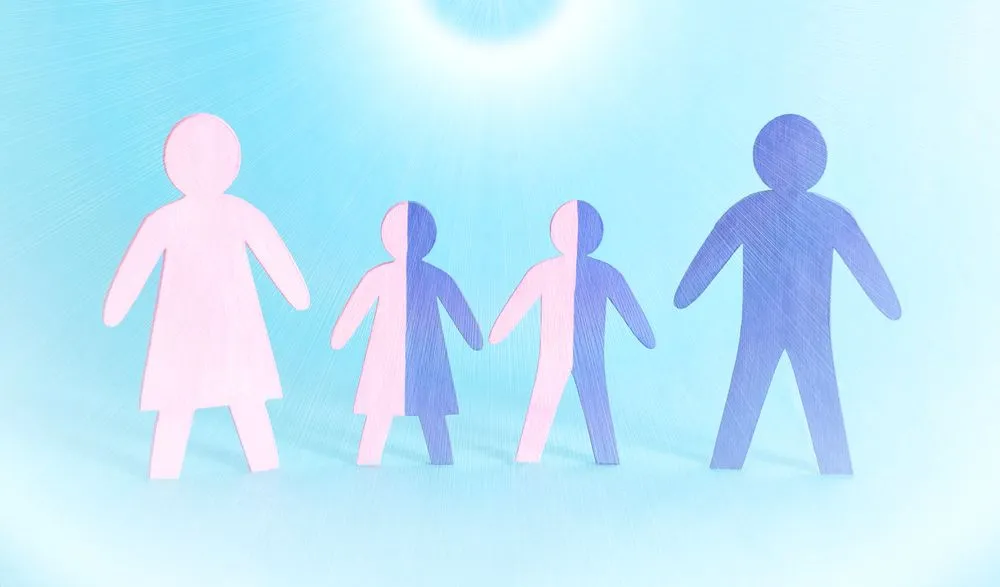
We inherit our DNA from our parents, who got their DNA from their parents, who got it from their parents and on and on all the way back a few billion years ago when the very first life form appeared. This is why you may have blue eyes like your father or curly brown locks like your mother. Several diseases like sickle cell anemia, cystic fibrosis, hemophilia, and others can also be passed down to offspring through the DNA.
No matter how versatile this single molecule is, it’s still very fragile! DNA has a half-life of about 521 years, meaning that even under good conditions, readable DNA cannot survive much beyond a million years or so! While it may disappoint some movie fans, this means that Jurassic Park will likely remain a work of fiction forever!
References (click to expand)
- DNA, genes and chromosomes - University of Leicester. le.ac.uk
- DNA, explained - National Geographic. National Geographic
- Deoxyribonucleic Acid (DNA) Fact Sheet. The National Human Genome Research Institute
- Double Helix. National Human Genome Research Institute
- Francis Crick, Rosalind Franklin, James Watson, and Maurice Wilkins. Science History Institute
- Central Dogma. National Human Genome Research Institute
- Dinos' DNA Demise: Genetic Material Has a 521-Year Half-Life. Scientific American